
2024
Maddalena Brozzi and Sara Moschini, IT
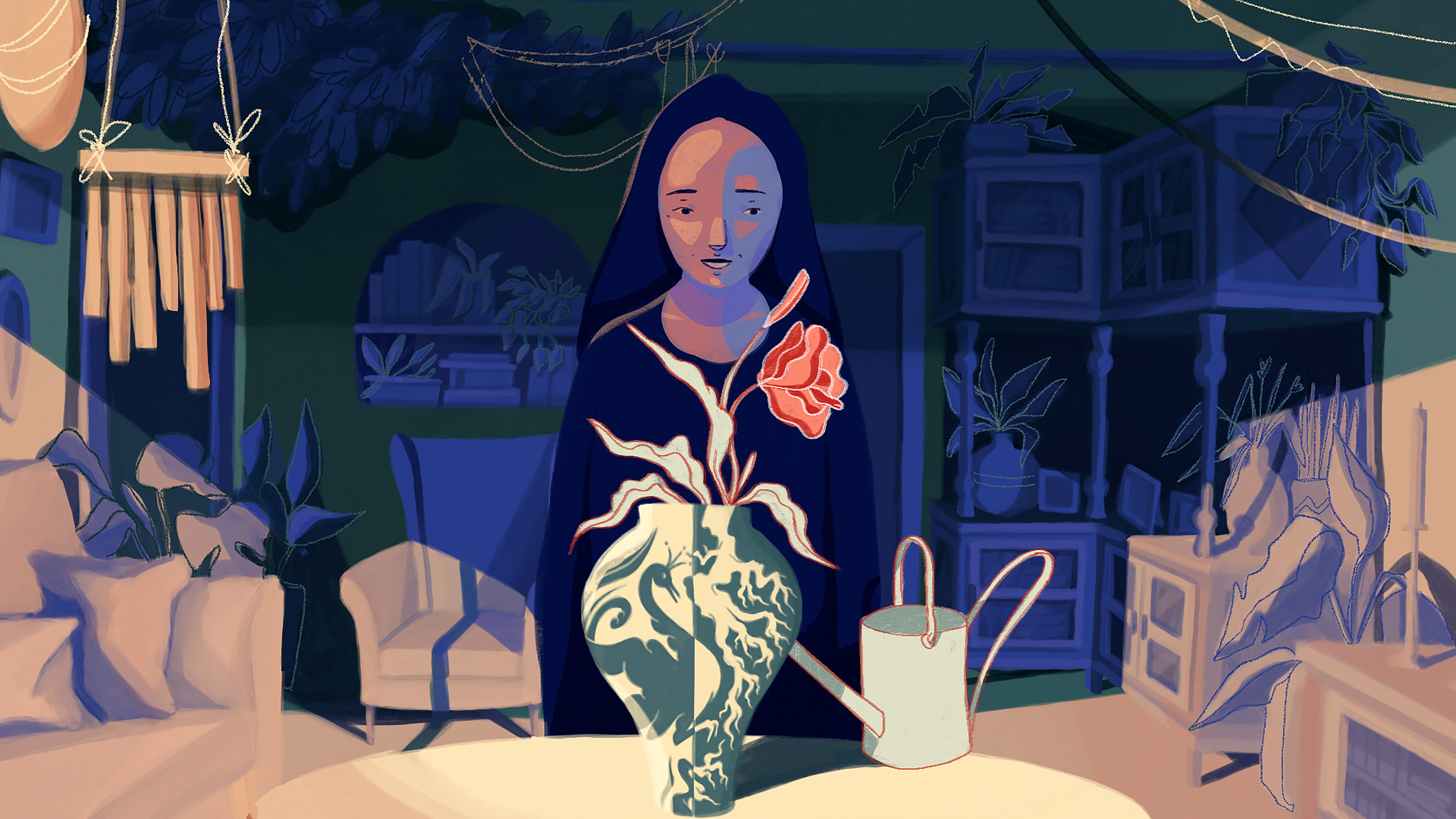
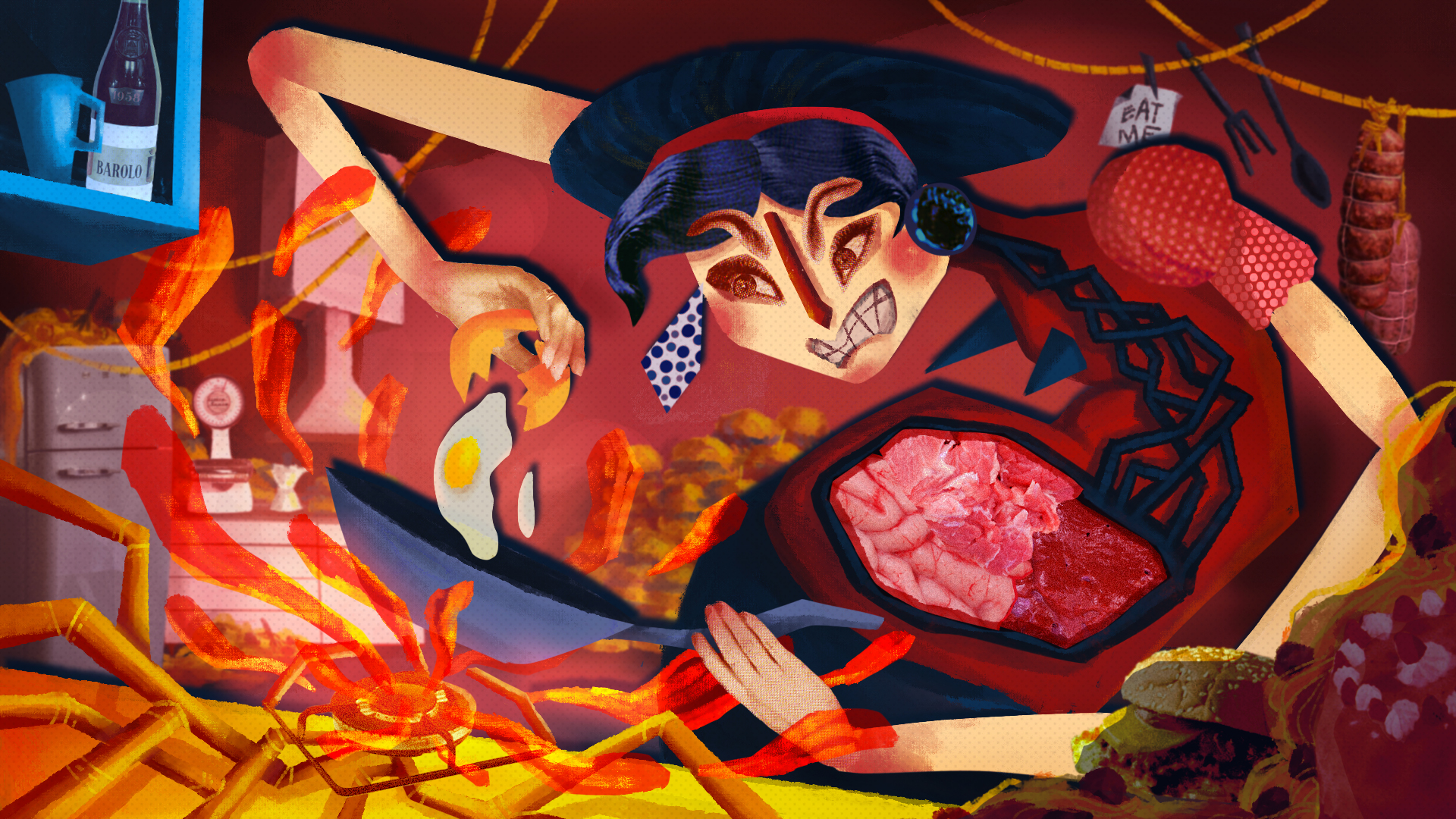
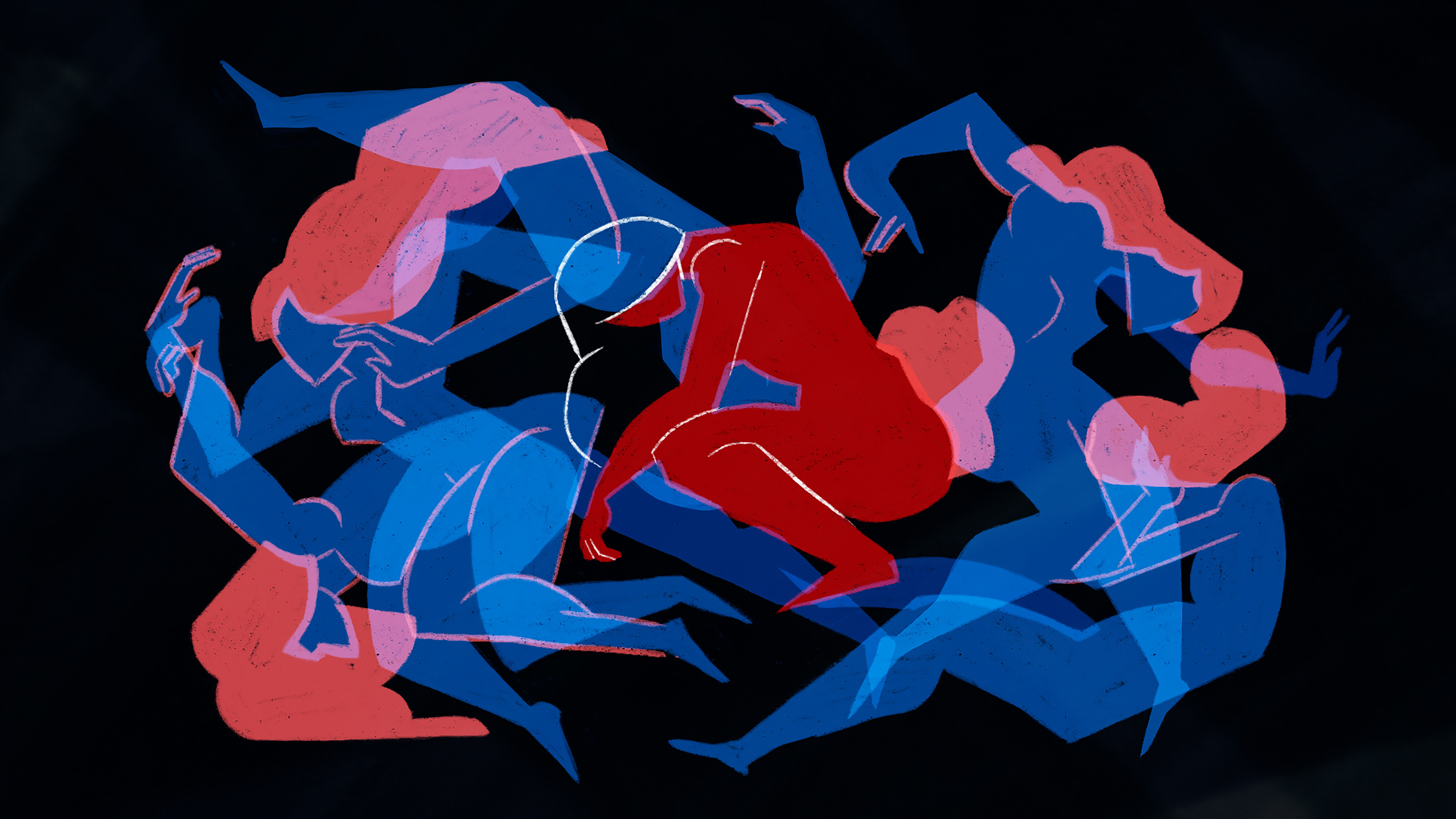
Maddalena and Sara are currently working as an artistic duo in creating Indigestion, a new animated short film with grotesque and surreal tones. The film follows a nightmare dinner between two lovers, and aims to explore – from a purely female point of view – a dysfunctional emotional management of couple dynamics, often expressed in impulsive and destructive actions.
Here at “33 Officina Creativa” Maddalena and Sara are carrying out the graphic development of the film. Maddalena is dedicating herself to her first directing tests, creating the storyboard of some of the initial sequences of the short film. Sara, on the other hand, is focused on bringing the characters to life, through the development of the first animation test, to study how they will move on the screen and how to integrate them into the scenography. The goal at the end of this month in Toffia will be to have a small trailer for Indigestion, to be able to bring the project to international presentations and events.
Clementine Oomes, NL
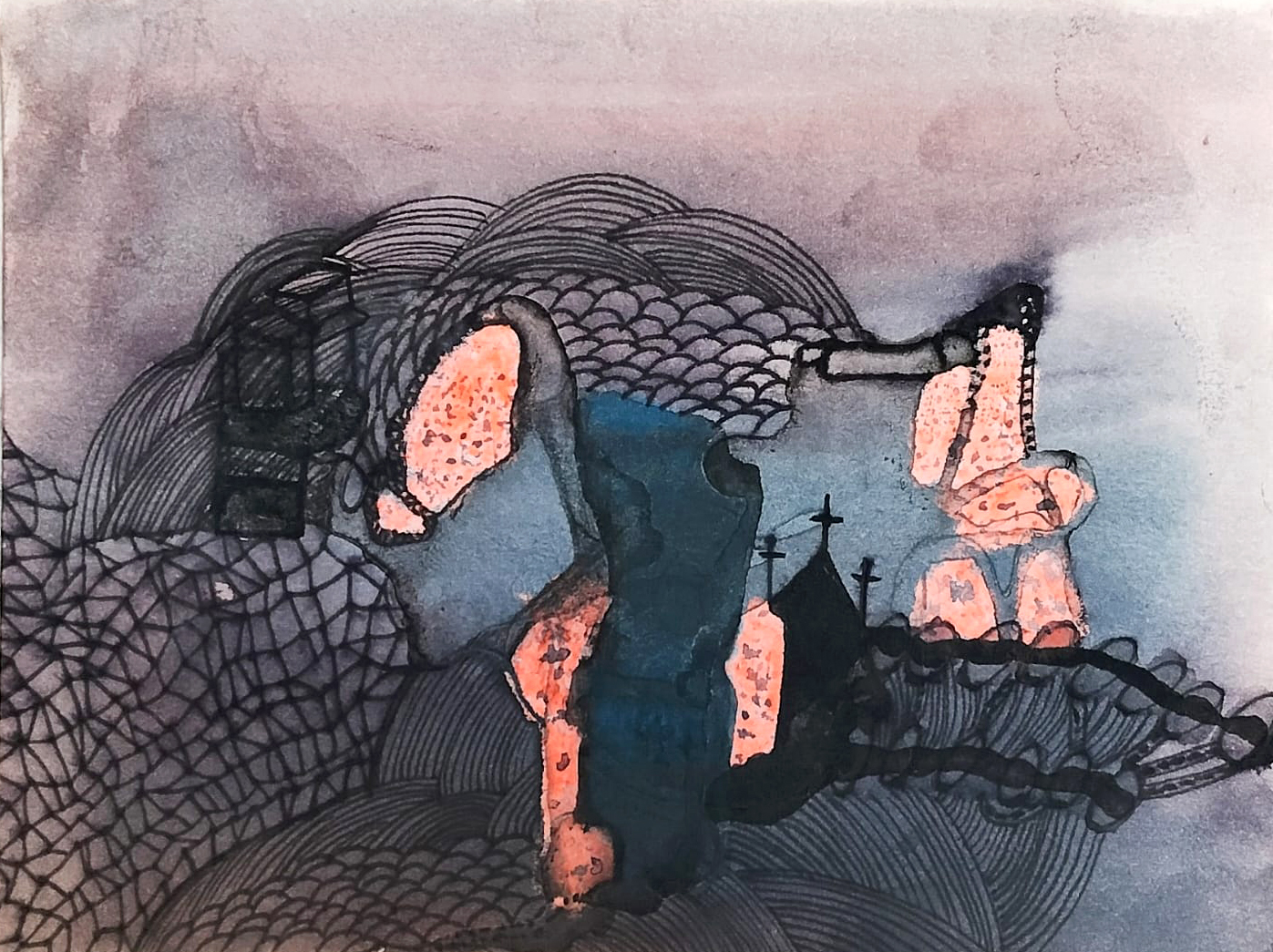
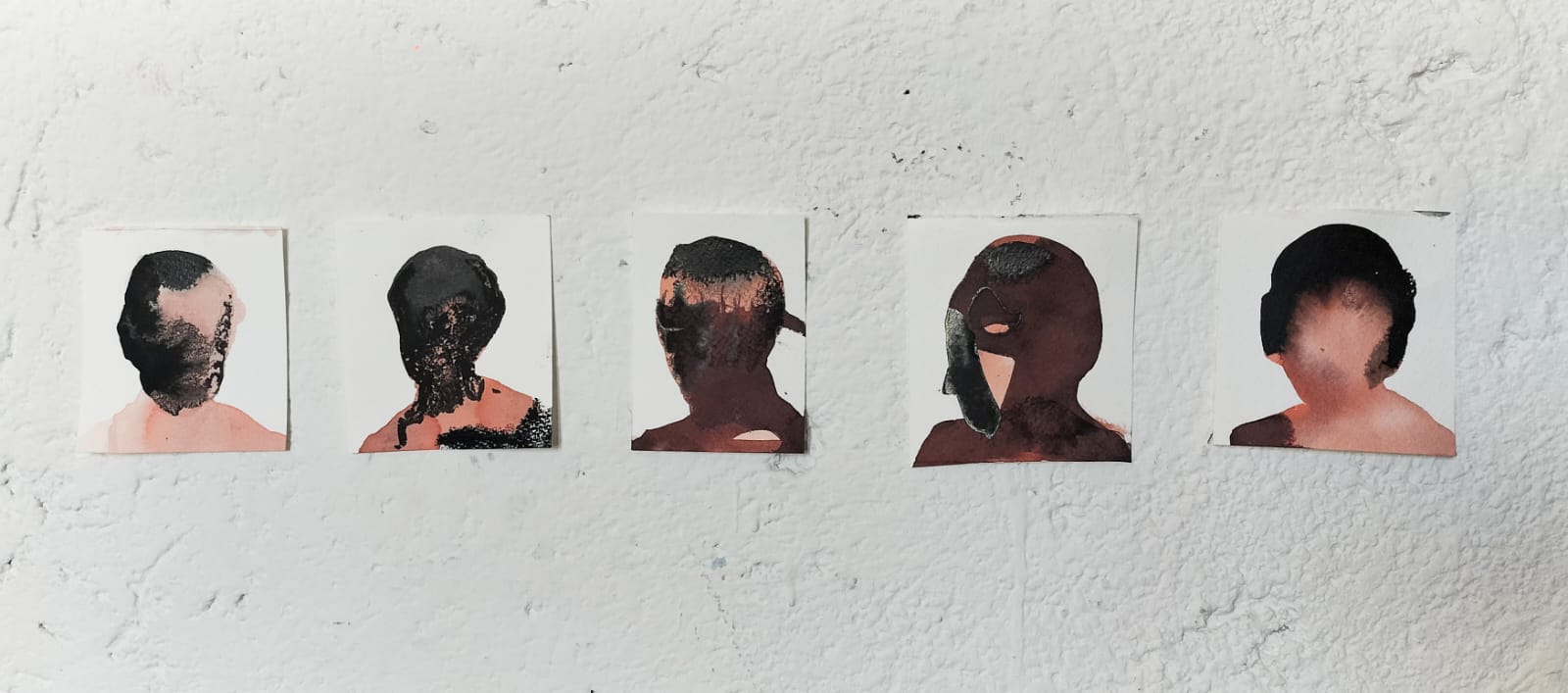
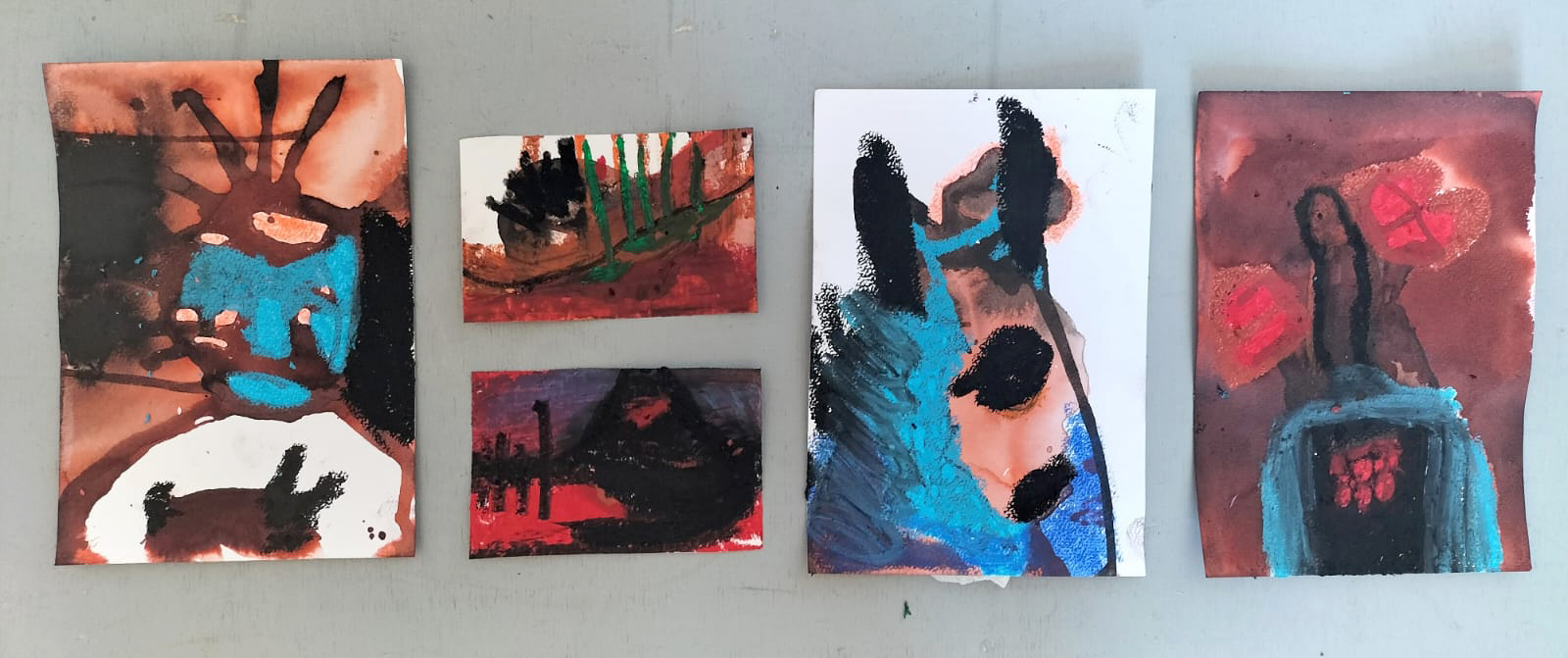
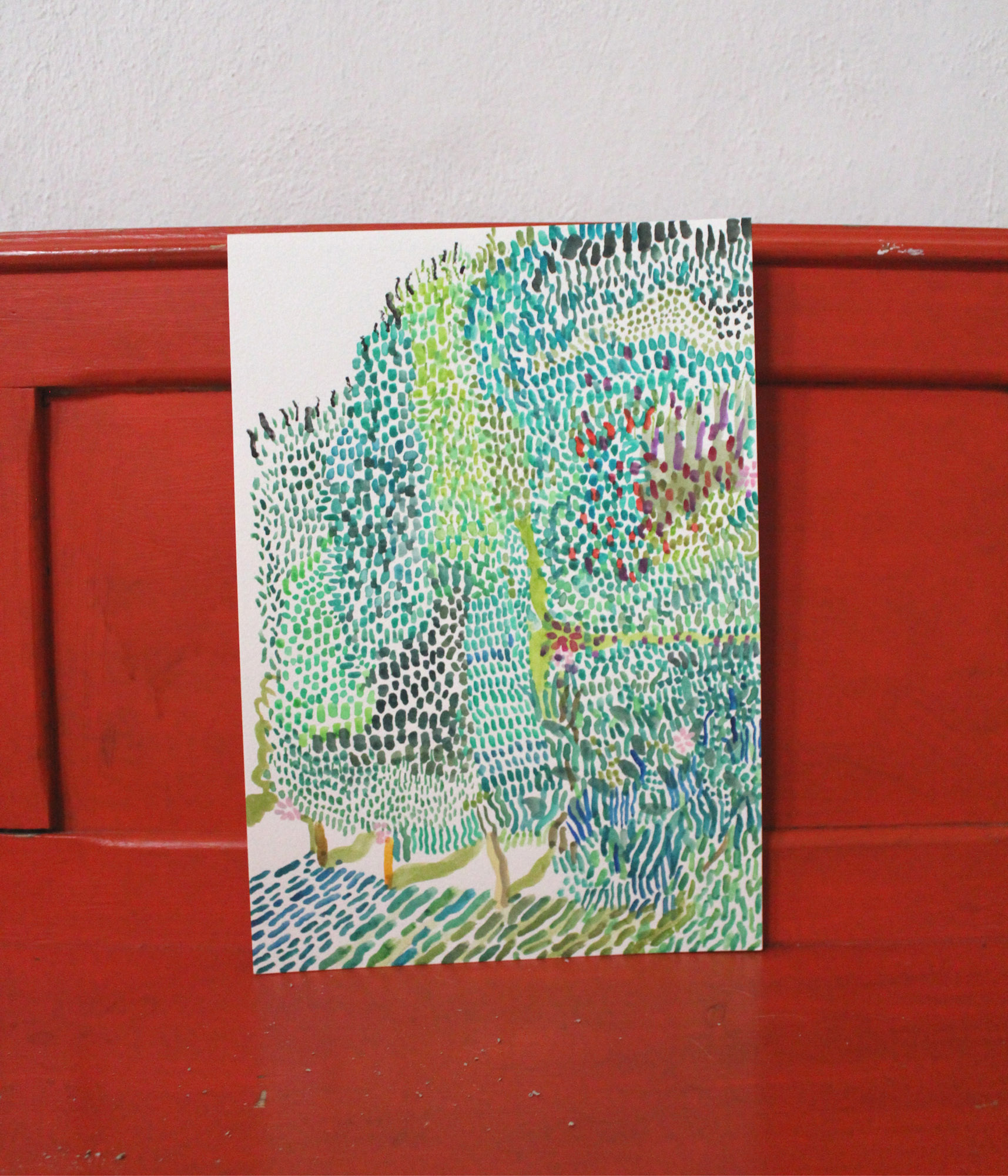
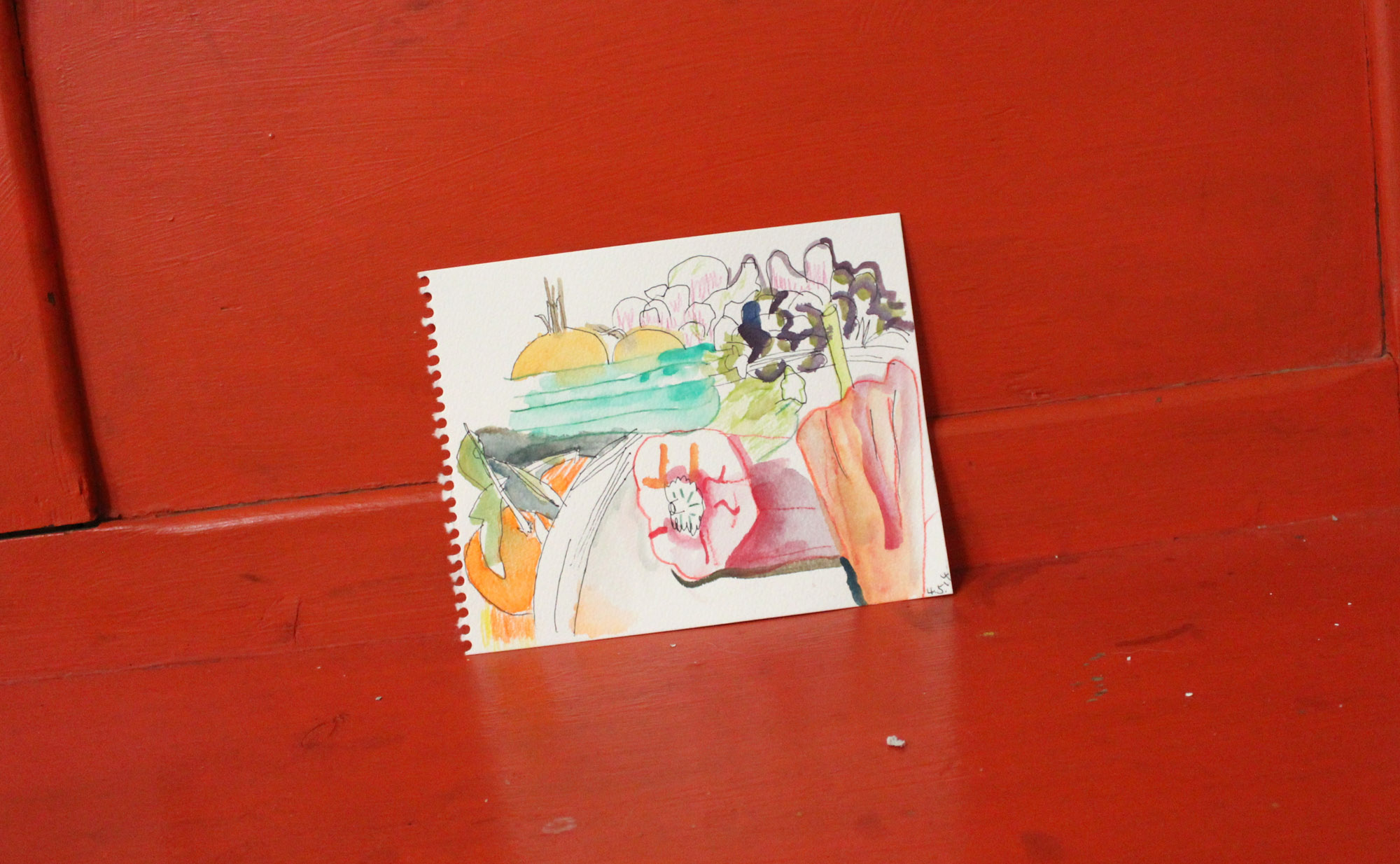
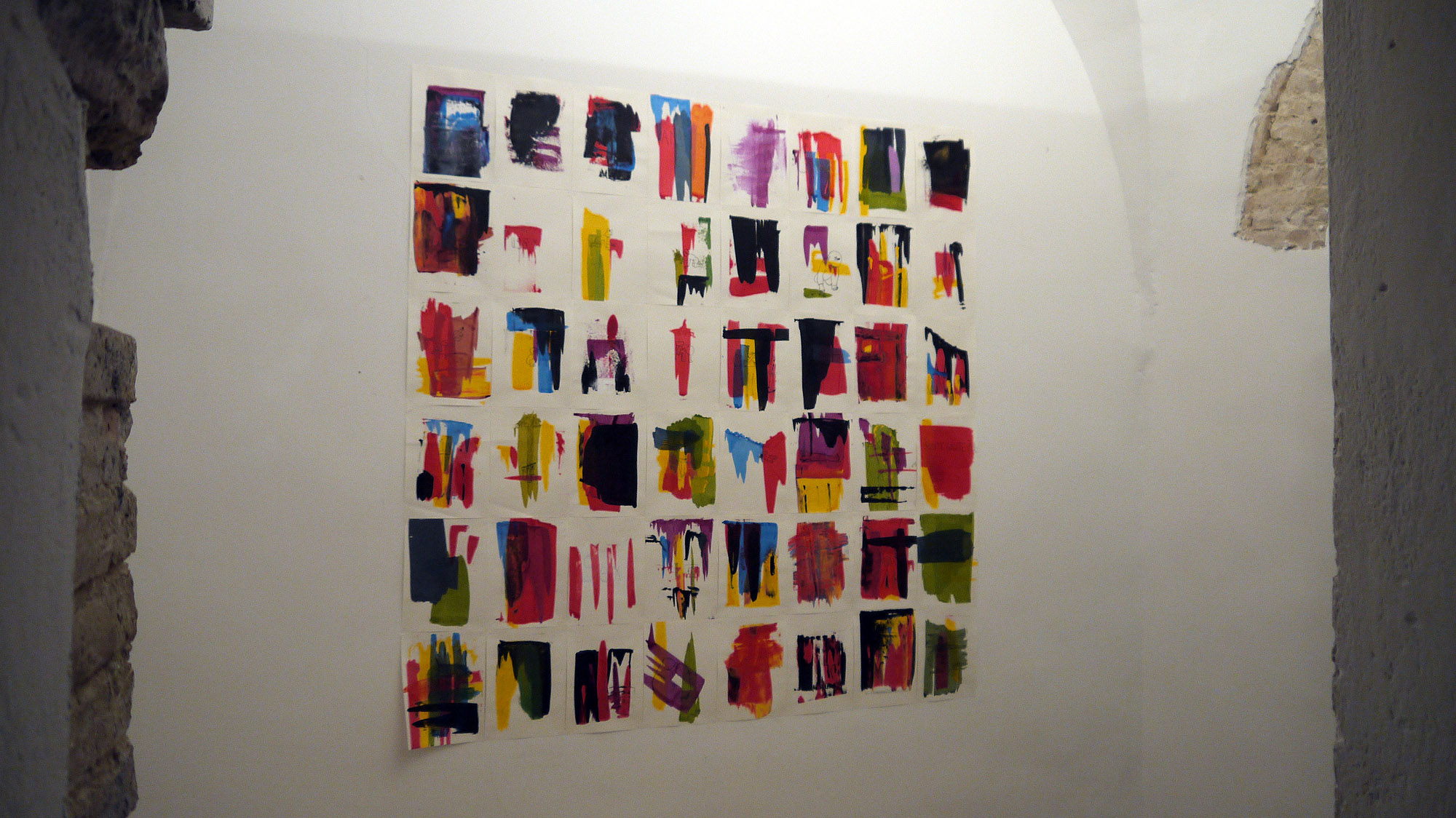
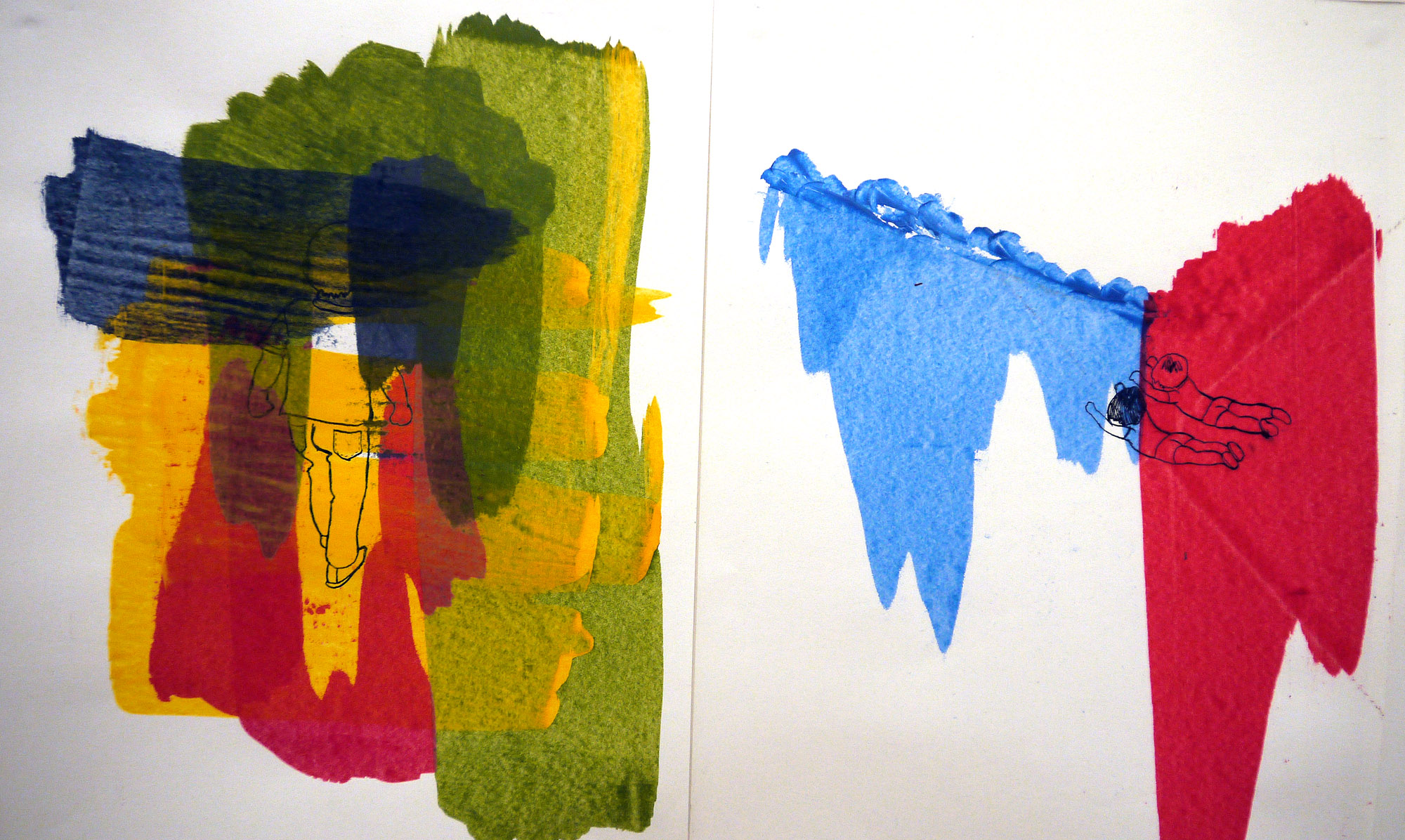
My artwork arises from an intuitive process. I start with ink and watercolor and use all kinds of different paper. A form naturally arises in which I seek recognition. I give direction to the process by giving more clarity to the shapes. The composition gradually begins to take on clearer shapes. I choose abstract, but also more recognizable compositions.
During my stay in 33OC, I opted for a small format paper, a series of portraits, and abstract drawings resulting from four weeks of non-stop studio work. Beyond the viewer’s interpretation, I wish to achieve a personal, fragile, and sensitive imagery.
Zhang Ting, CN
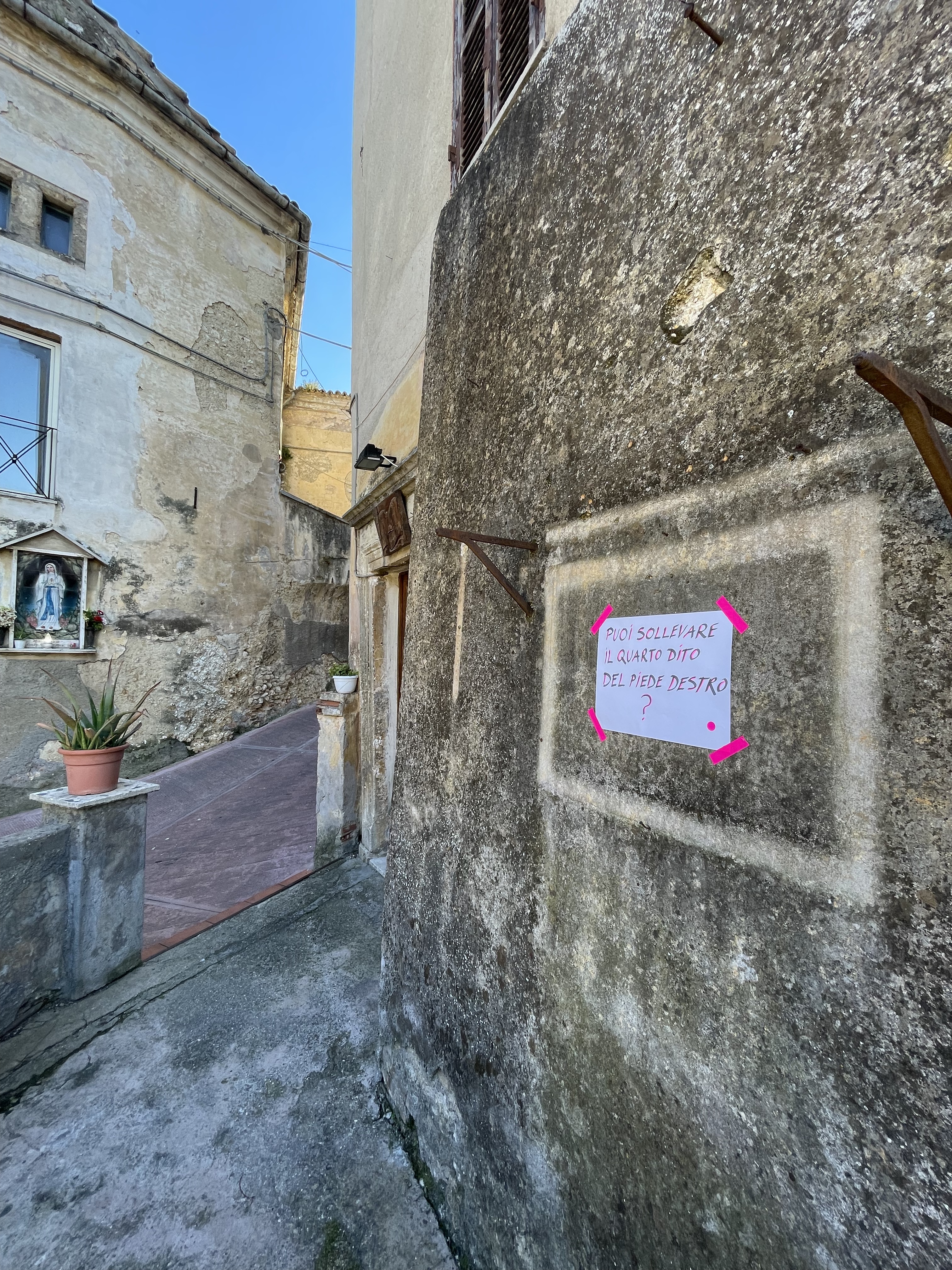
What do we do when we do nothing? What do we hear when we hear nothing? What happens when nothing happens?
Isabel Vazquez, USA
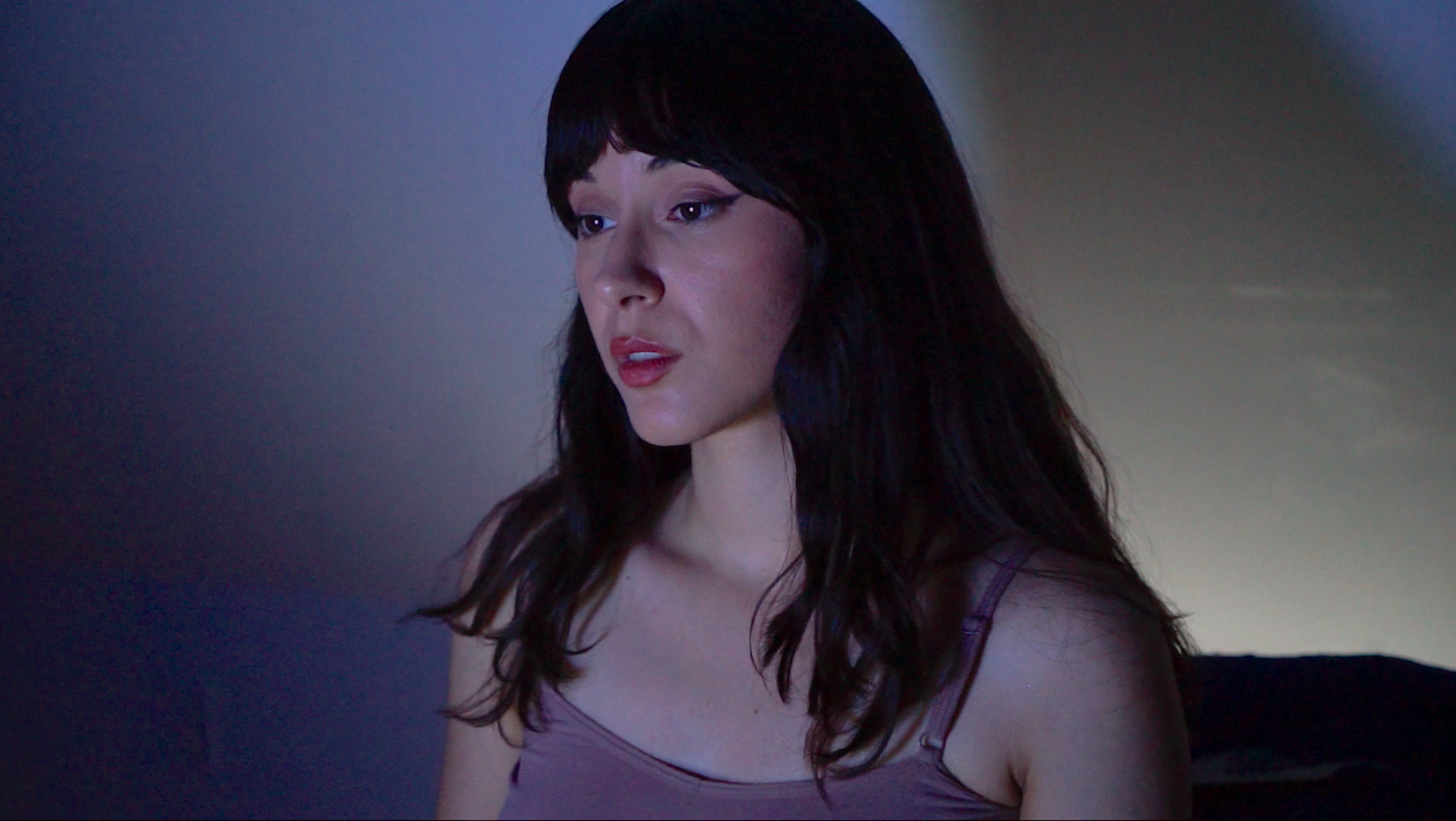
“Rain from Heaven” is the name of the music project of vocalist/composer/producer and video artist Isabel Vazquez. Her unique sound is an ethereal blend of influences from alternative rock, electronica, trip-hop, and the folk music traditions of her Italian and Indigenous American heritage.
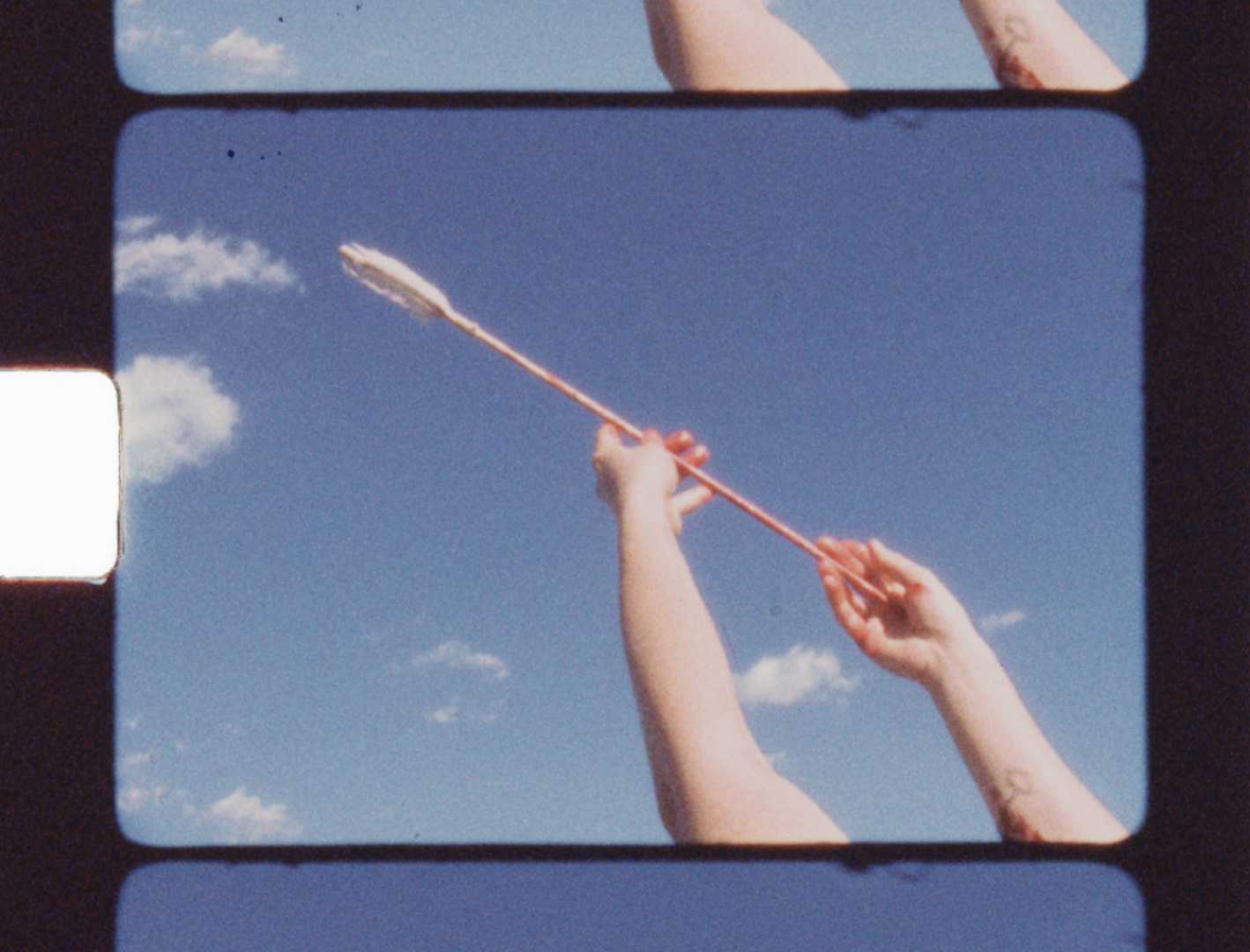
As a resident artist at 33OC she has been working on finishing the first album of her Rain from Heaven project (which will be released in September) as well as writing new material for the project’s second album. For the Open Studios, she will be playing material from both albums and debuting a music video for the first single from the first album.
Katarzyna Zarzycka, PL
All we have left is the place
The attachment to the place
We still hold the ruins of temples the spectres of gardens and houses
If we lose the ruins we will have nothing left.
- Zbigniew Herbert
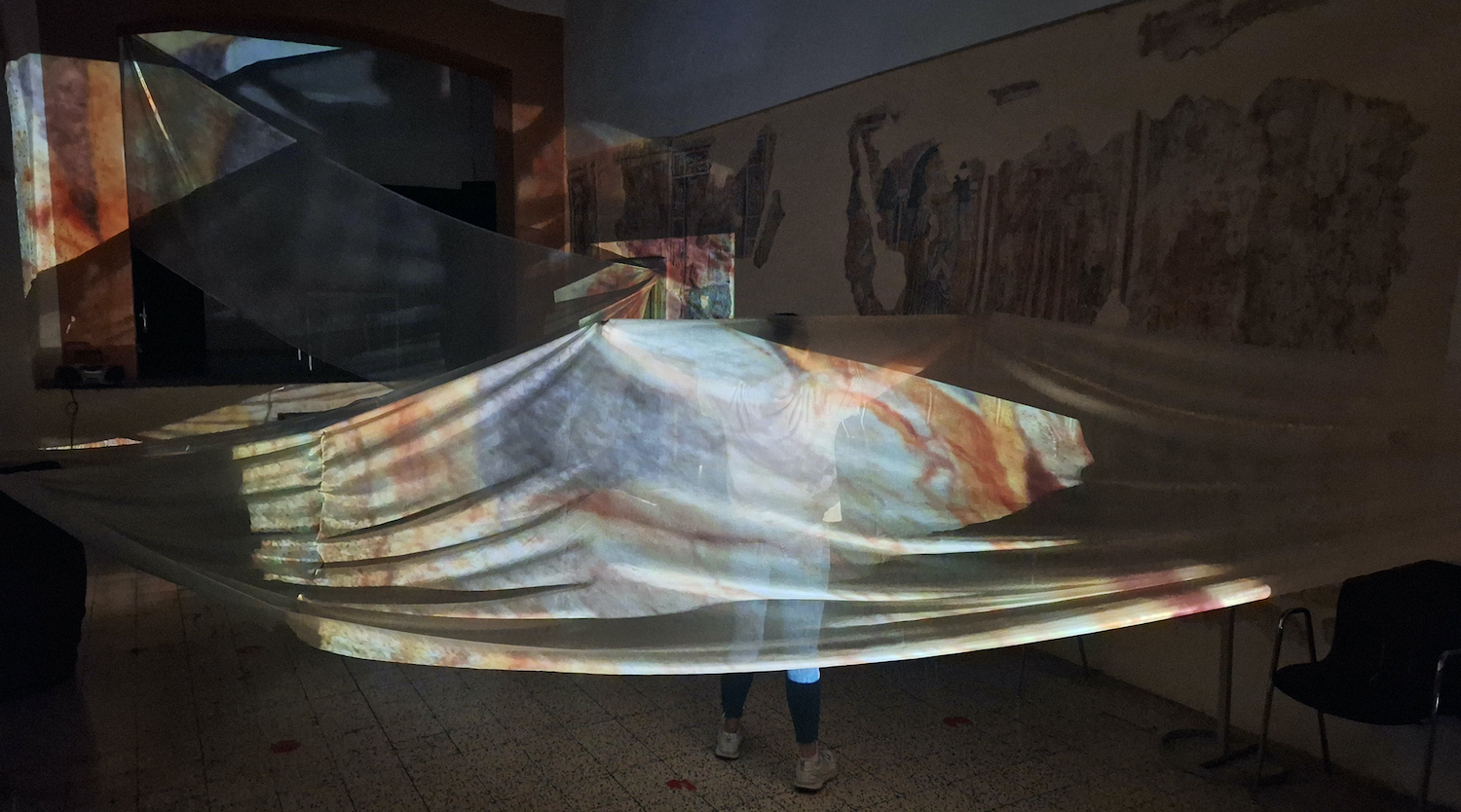
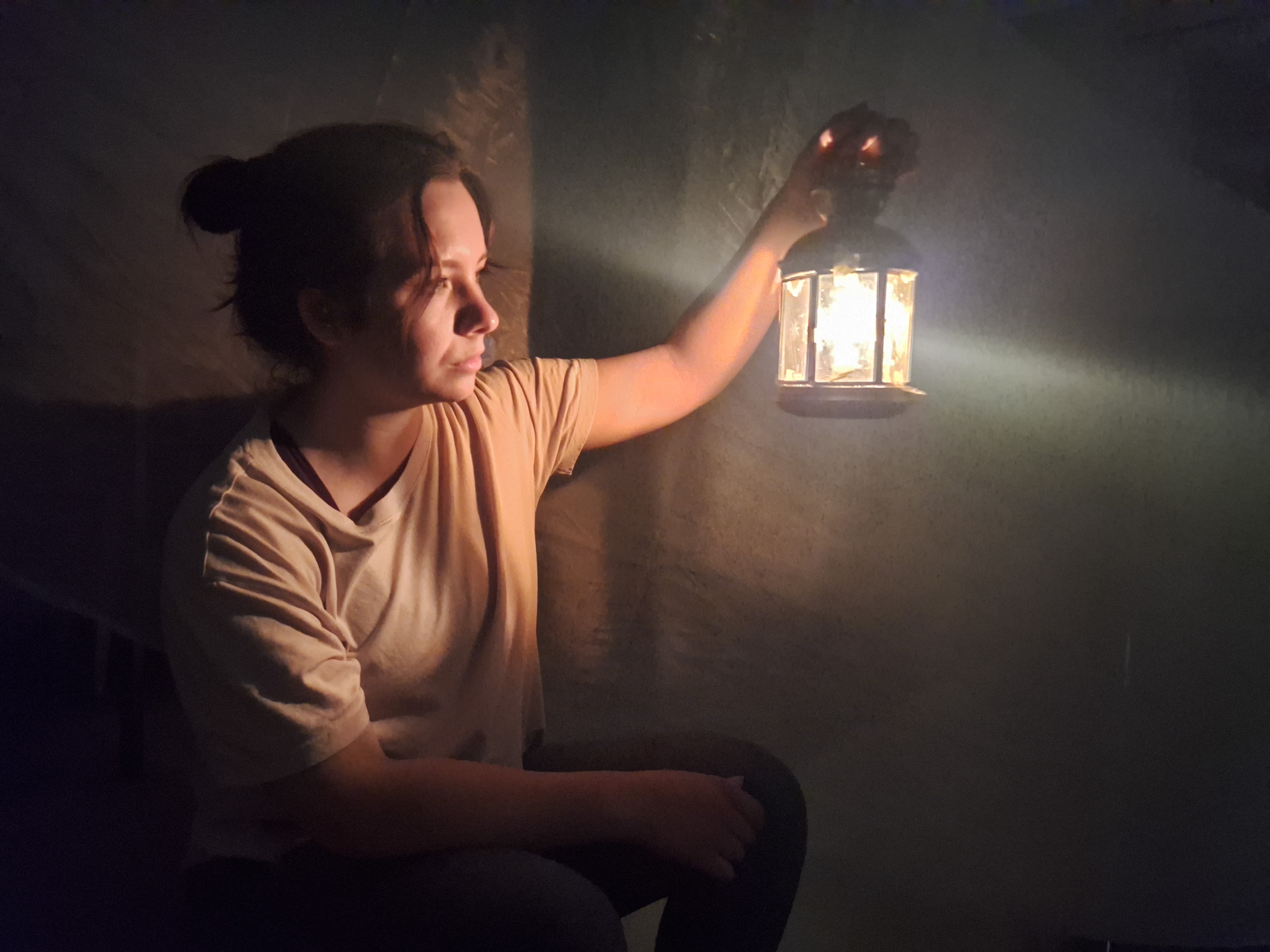
What memories does a space hold? How is the body activated in the encounter with the building? What does a theater have in common with a church? In a performance of returning memories, forgotten words, and echoing footsteps, the time falls apart, bringing alive the coexisting histories – that of the 13th century church, the old town hall, the current art space – through the living body of the artist. The body and the space hold memories, but only in the contact with each other can they once again bring back the sense of the sacred and magic which still reverberates in these walls.
2023
Patty Bartelstein, USA
As long as I can remember, I have always been drawn and moved by handwritten notes and letters. It must have stemmed from my experience with beautiful, handwritten letters that I received from my grandfather while I was growing up in the 70’s and 80”s. His notes were overflowing with words of love, adoration and the pride he had about being a grandfather, (Papa), not just to me but to all of my siblings and cousins, 13 in all. He showered me with words of love, wisdom and knowledge that has stayed with me over 50 years and counting. I still feel as impacted by these letters now as I did when I received them.
These precious notes are kept in a keepsake box, I cherish them and have shared them with the closest people in my life. I am so grateful and proud to have this part of my life documented in handwritten form. I see these letters as an authentic form of art, timeless, giving a feeling of life being lived. The words feel like they are moving in a timeless narration, the ink and the beauty of how it interacts with the paper, forming one word at a time, expressing personal, mindful thoughts from one person to another. I have four adult children who I have shared the letters with over time. They never had a chance to meet my Papa, he died before they were born, but I think if they were asked today if they knew their great grandfather, the answer would be yes. We have sat on my bed together, sharing the notes with them, and I find this to be the most authentic way to get to know someone back in time, a slice of history, a day in the life, in handwritten form, feeling the texture of the paper, while reading, it all seems to come alive, a deep connection to the past while being very present.
In today’s world, most are not familiar with the handwritten letter. A white computer screen, with any type of note written will never feel and translate what a handwritten letter brings to all of the senses.
This is the inspiration behind this ongoing series; mixed media, collage, handwritten letters, journals, notes, postcards…


Ian Breindenbach, USA
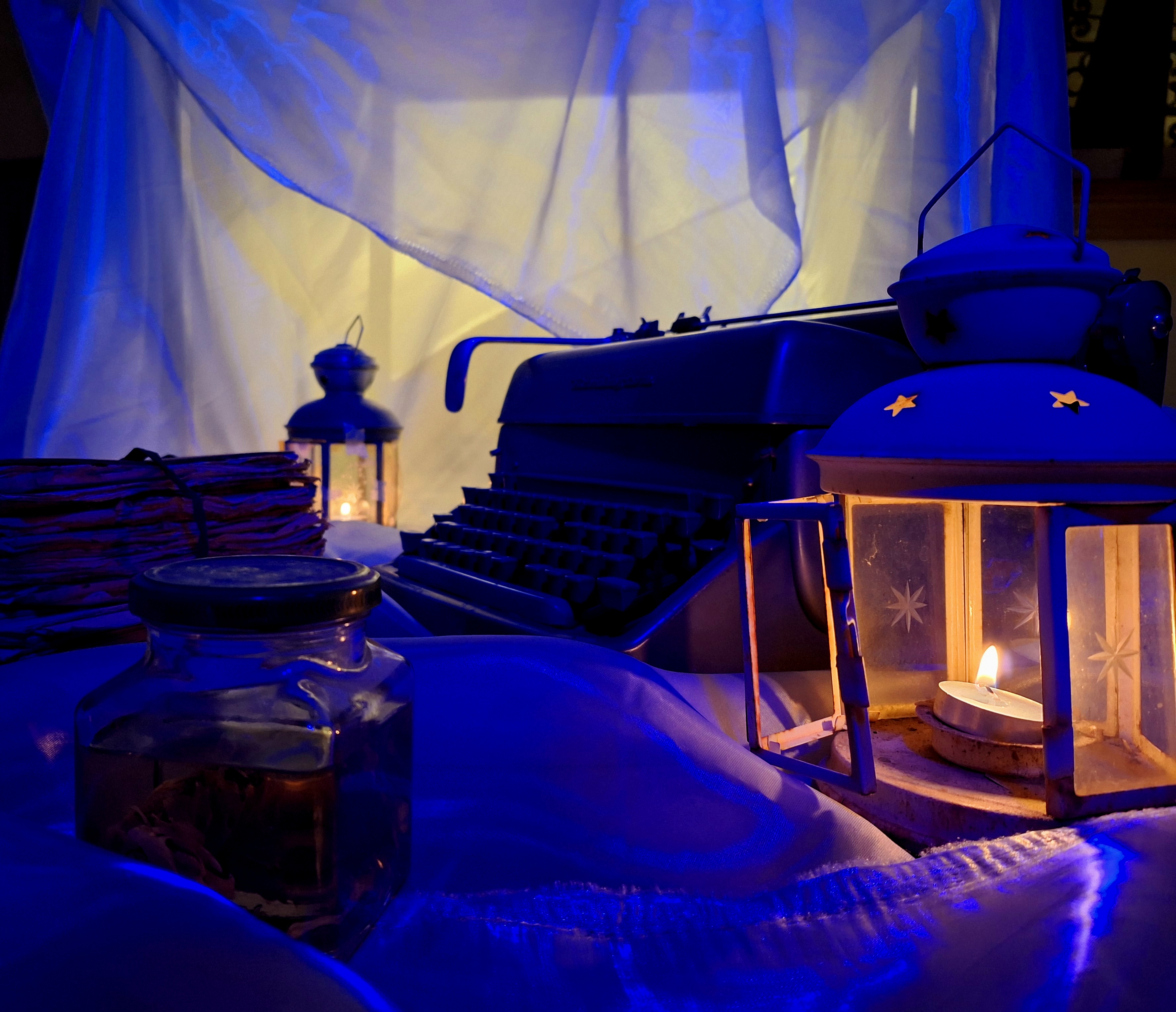
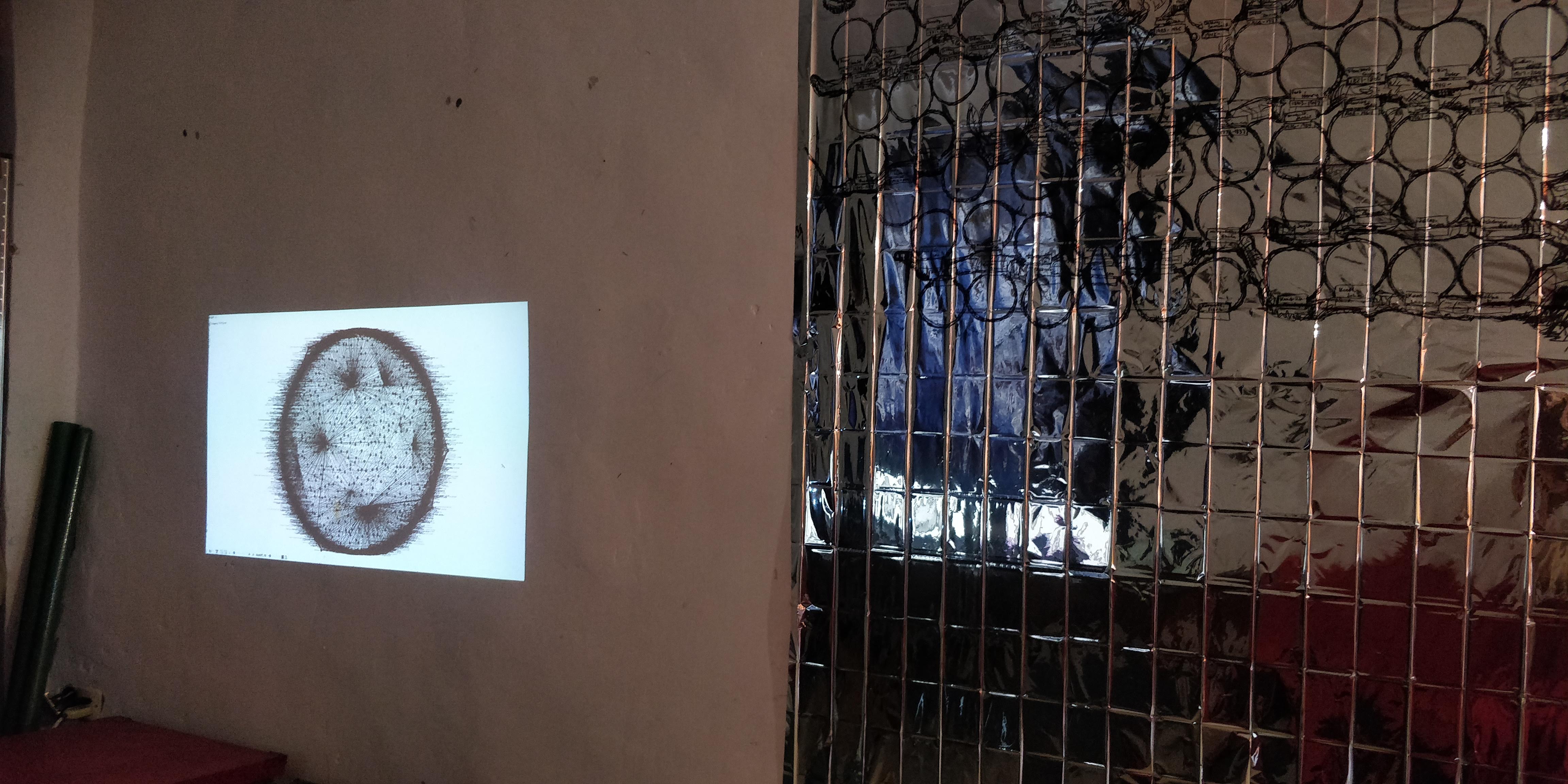
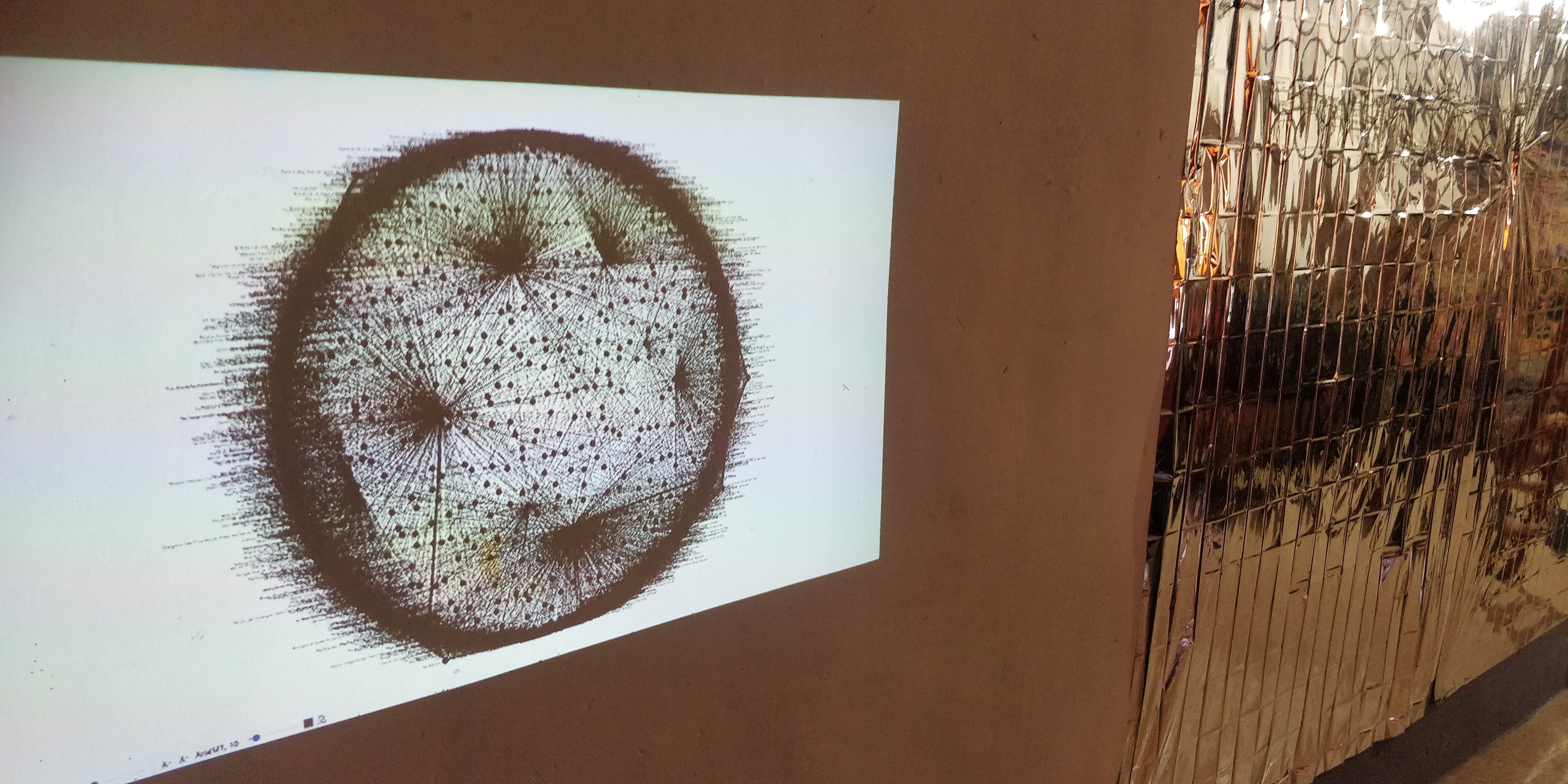
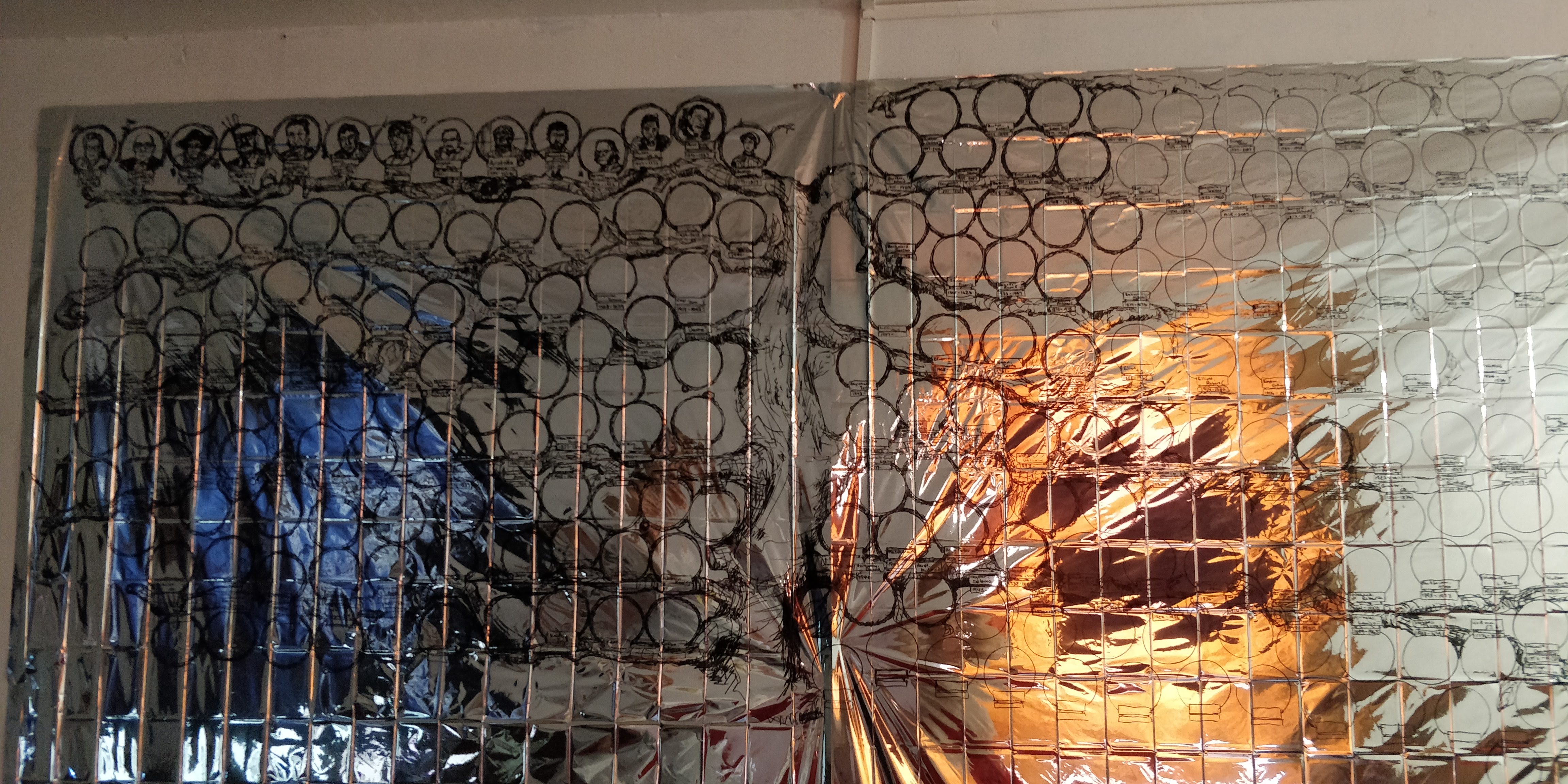
A Sketch for F. Jameson, the first of a series of drawings which represent the conceptual, cultural and theoretical thinking at the heart of the longform apocalyptic narrative work The Ferryman’s Chaos Engine.
Katherine Brock, USA
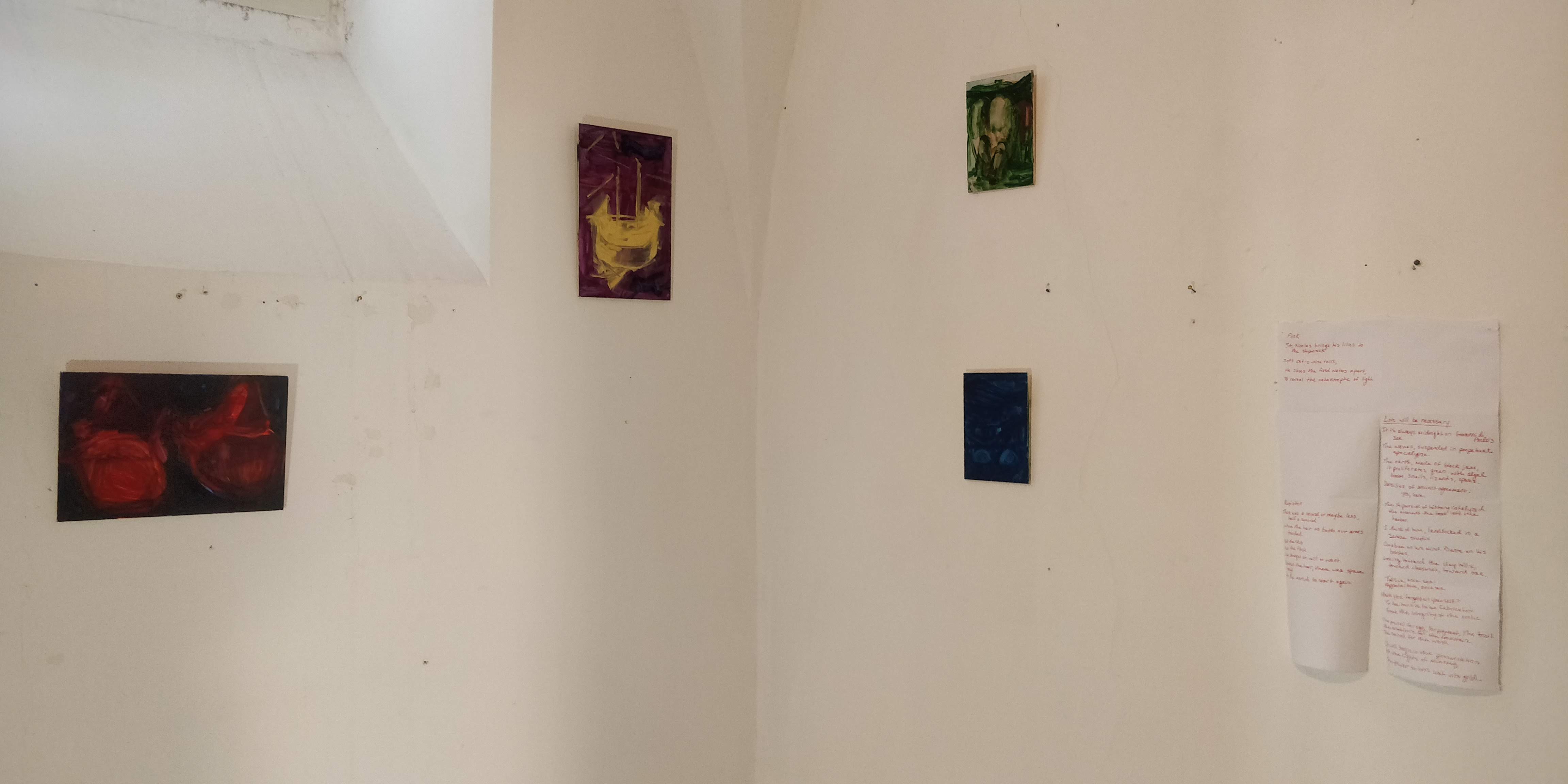
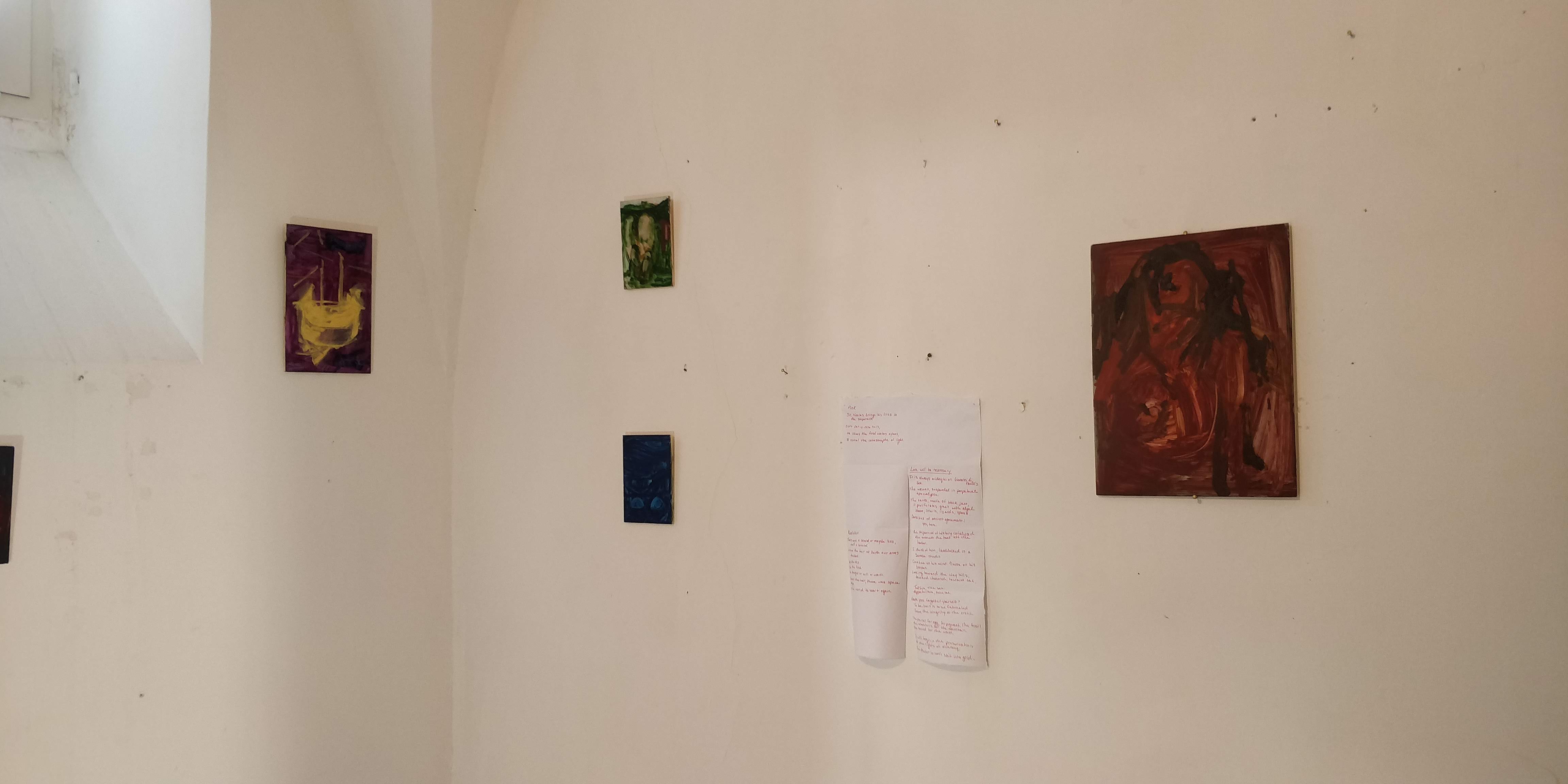
During my time at 33OC, I am writing, painting, and living in a collaged way—bringing each facet of research from one area into relation with the other. I came here to work on a long form book that weaves writing on art history with meditations on nature and autobiography. I have made progress on that project, while also experimenting with poetry and returning to practices of walking and painting that are informed by the town and its landscape.

Andy Bullard, USA
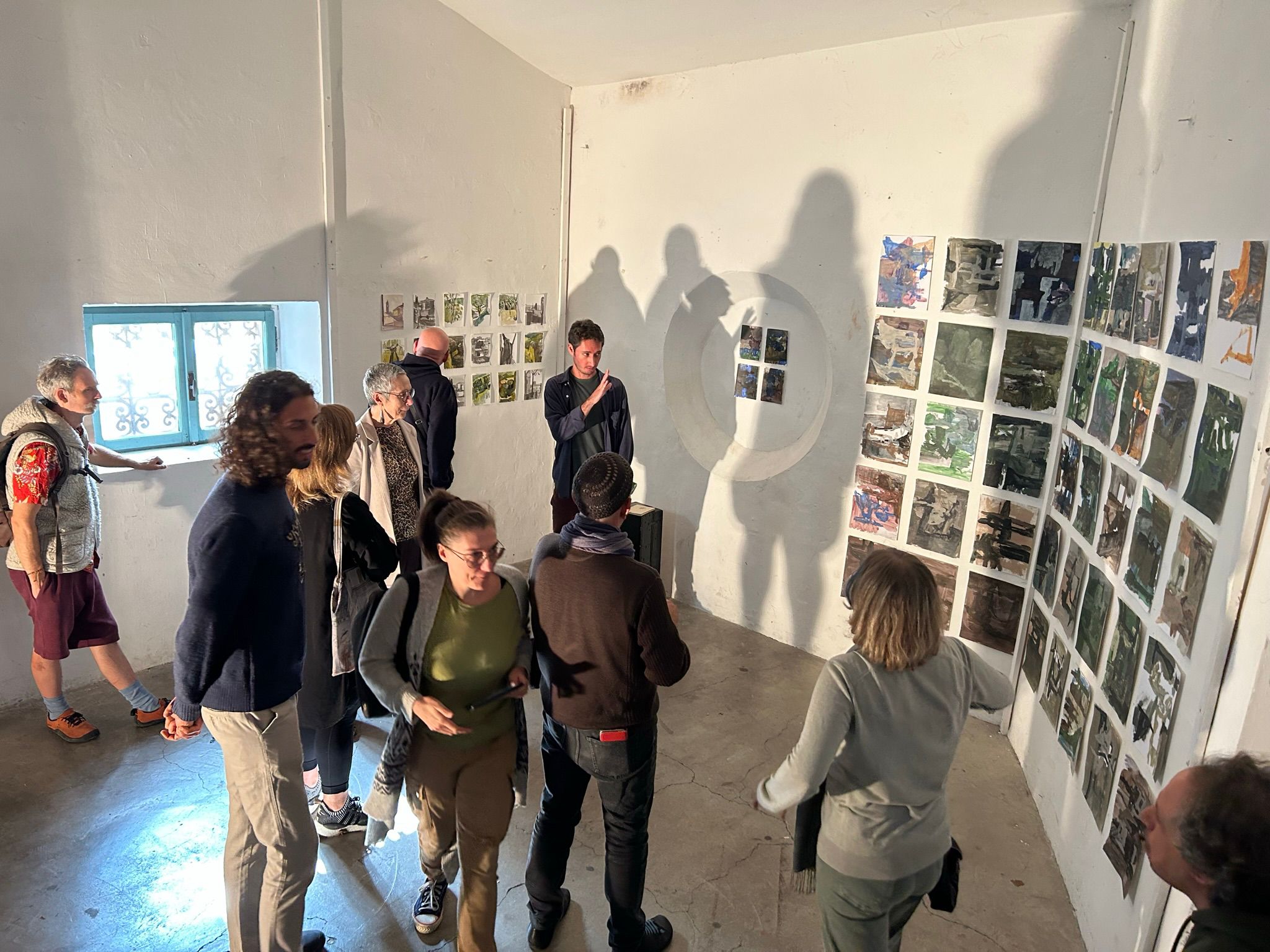
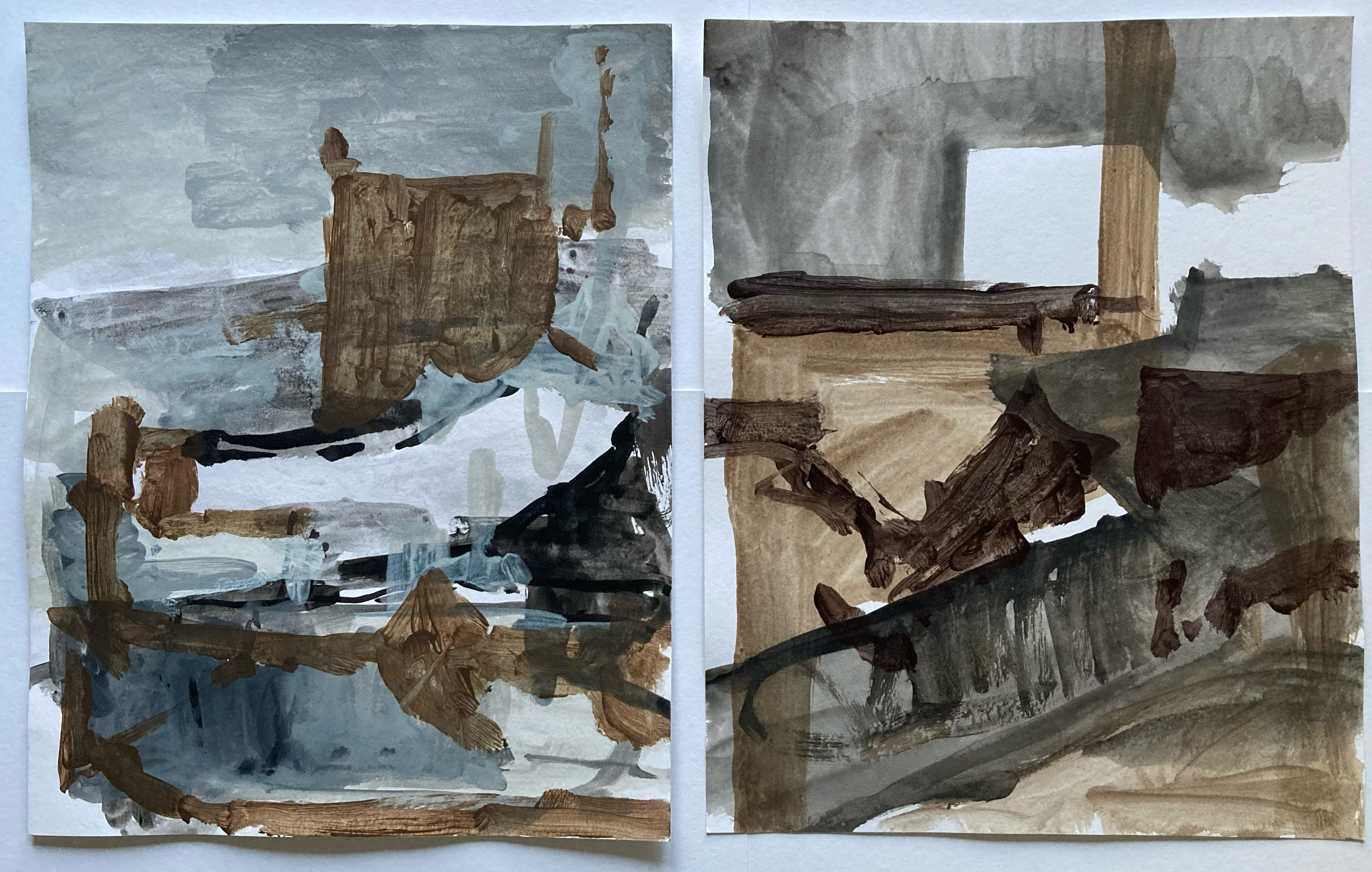
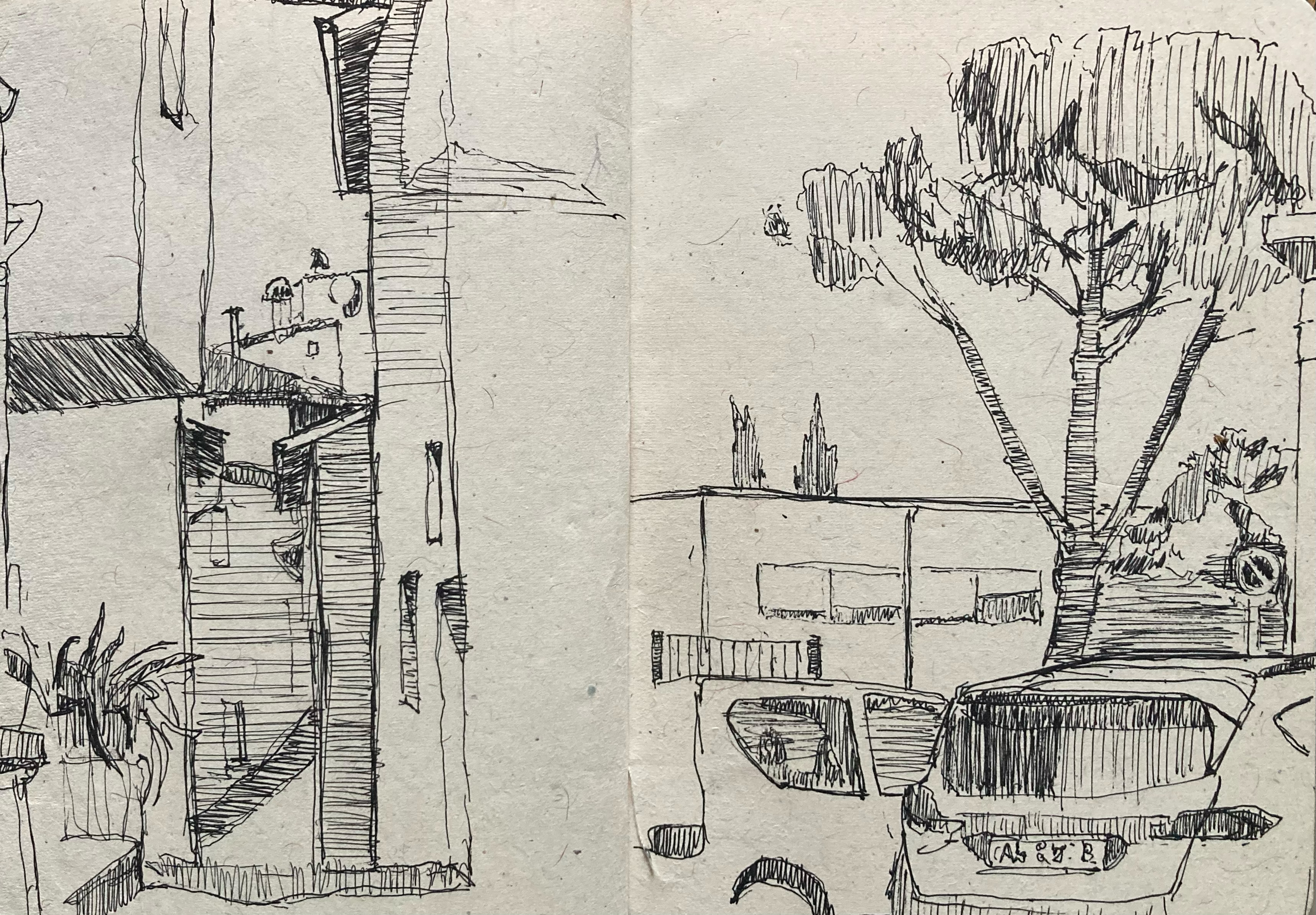
The dry visual weight of Italy’s past has always impressed its intoxicating heaviness on me in a way that makes it impossible to find a hard line that divides its natural landscape, its built environment, its past, and its present. It may not actually be possible in a direct way but this is what my work attempts to deal with. The paintings I’m making here in Toffia grow out of a process that I see as parallel to the way that Toffia’s present image is perpetually accumulating through the layering of generations, years, seasons, days, and moments. Quick observational drawings are made of the city and surrounding hills. These drawings are brought back to the studio and used as sources for slower and more abstract paintings.
Federico Fenucci, IT
In a period of confusion I felt that I needed to go somewhere else, to find a little magical place for work, thinking and experimenting. A former resident of 33 Officina Creativa told me about her experience in Toffia, and how it helped her to heal from a similar feeling and go back to the original simplicity of her practice.
Throughout this month in Toffia I am writing the beginning of a feature film screenplay on which I wanted to work since a long time. I spend my days listening to the music that the protagonist of my story listens to, thinking and writing detailed notes about characters and scenes.
The magical encounters I made in Toffia (usually during sunsets!) are helping me to go back to a slower pace and a feeling of peace that I needed for starting this new project.
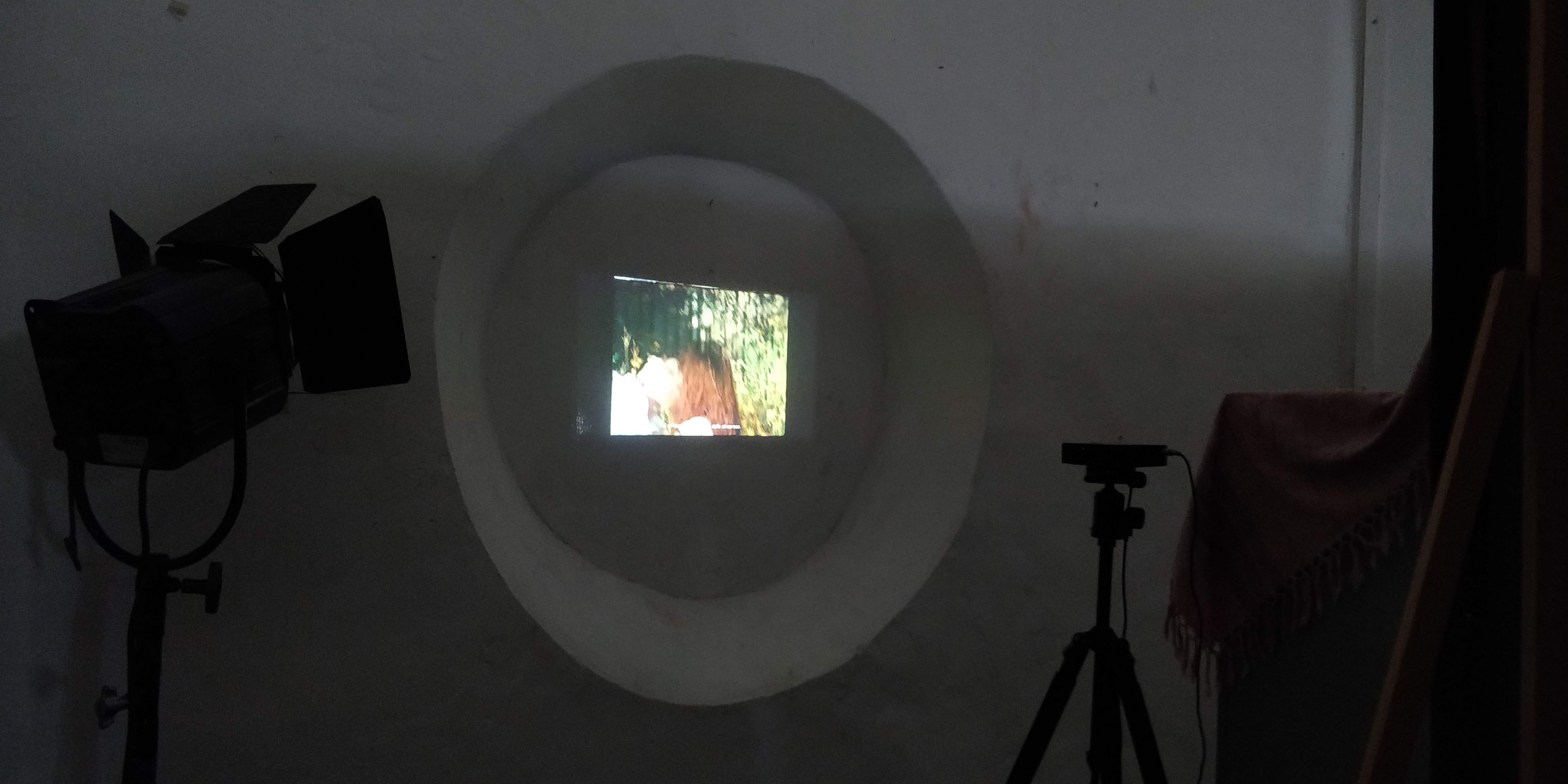
I am currently working also on two super 8 videos that reflect on the relationships between family memories and creative art, that I’m going to show during the open studio of 33 Officina Creativa.

Aaron Head, USA
Aaron Head is an artist and writer based in the UK. His practice combines forms of writing, collage and drawing to create and explore the role of fiction in our lives.
During his time in Toffia, Aaron has been developing a new project whereby he has both been documenting and fictionalising his time here. On Saturday May 27 he will present his writings, collages and a video documenting his residency at 33 Officina Creativa.
Solar Noon Collective, USA
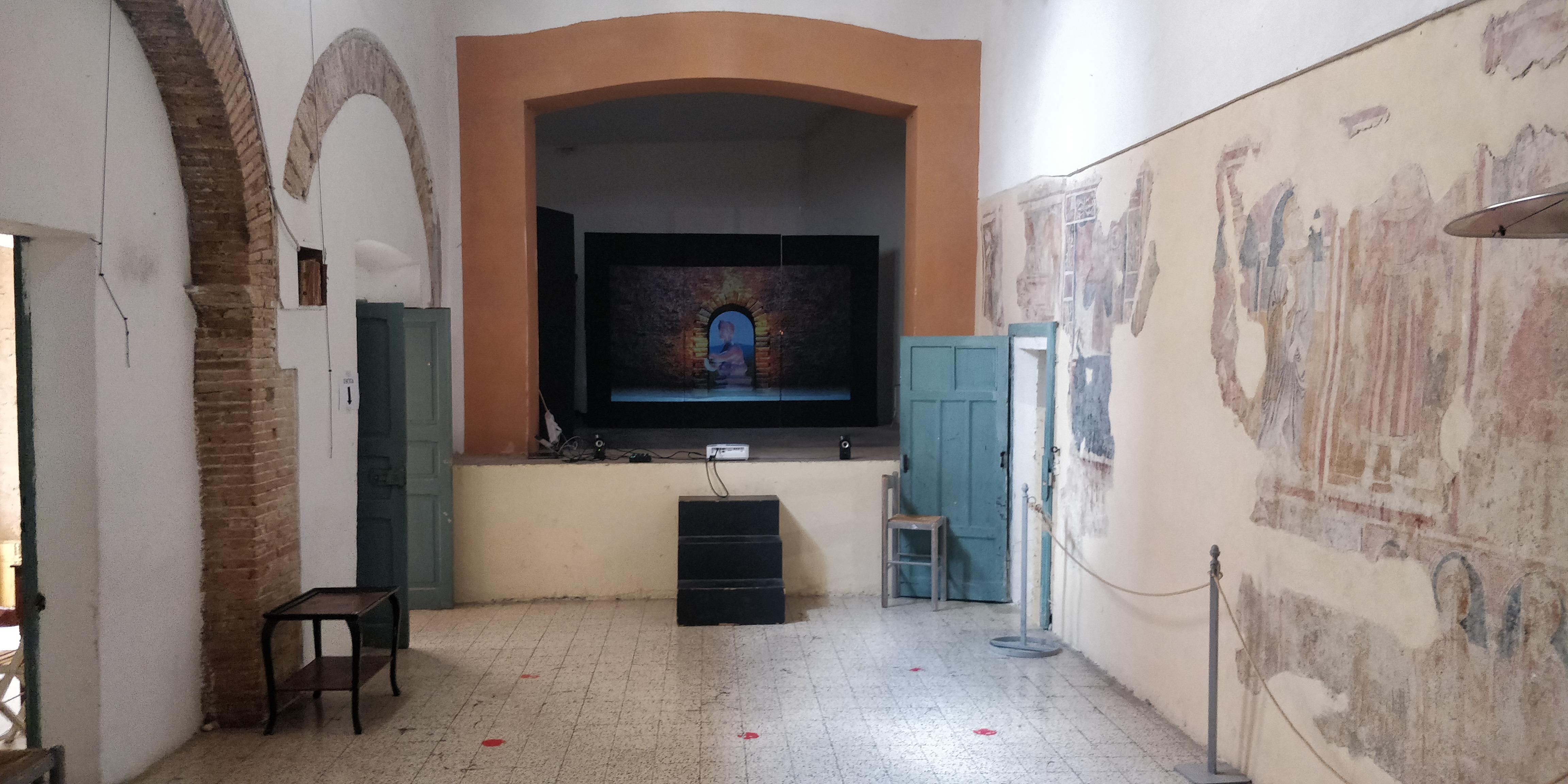
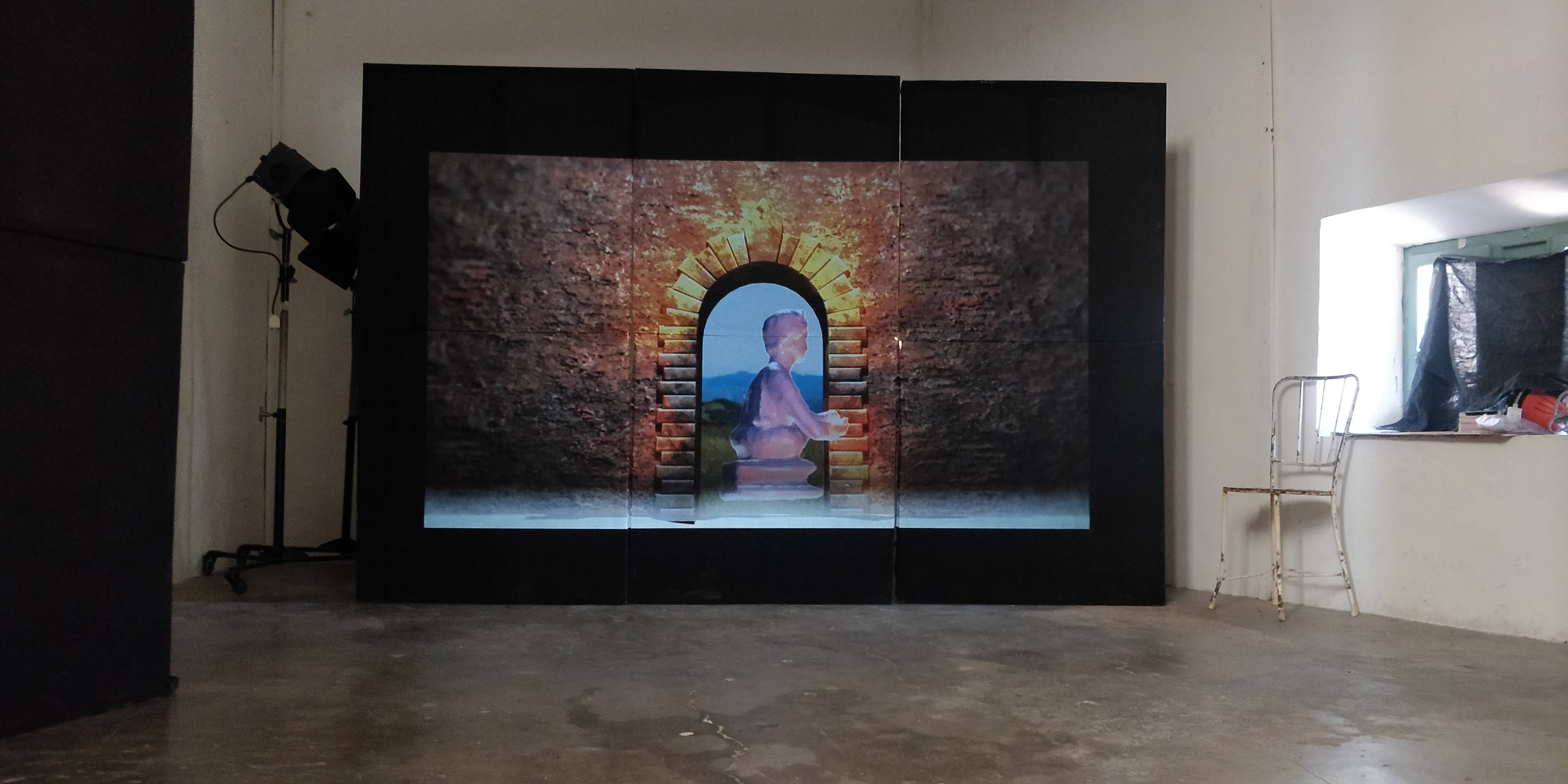
Arco di Mezzogiorno – the culminating work of their residency at 33 Oficina Creativo in Toffia, Italy. The interactive video and sound piece combines 3D scan data of artifacts from the surrounding region with a playable sonic interface in the Teatro.
Allison Svoboda, USA
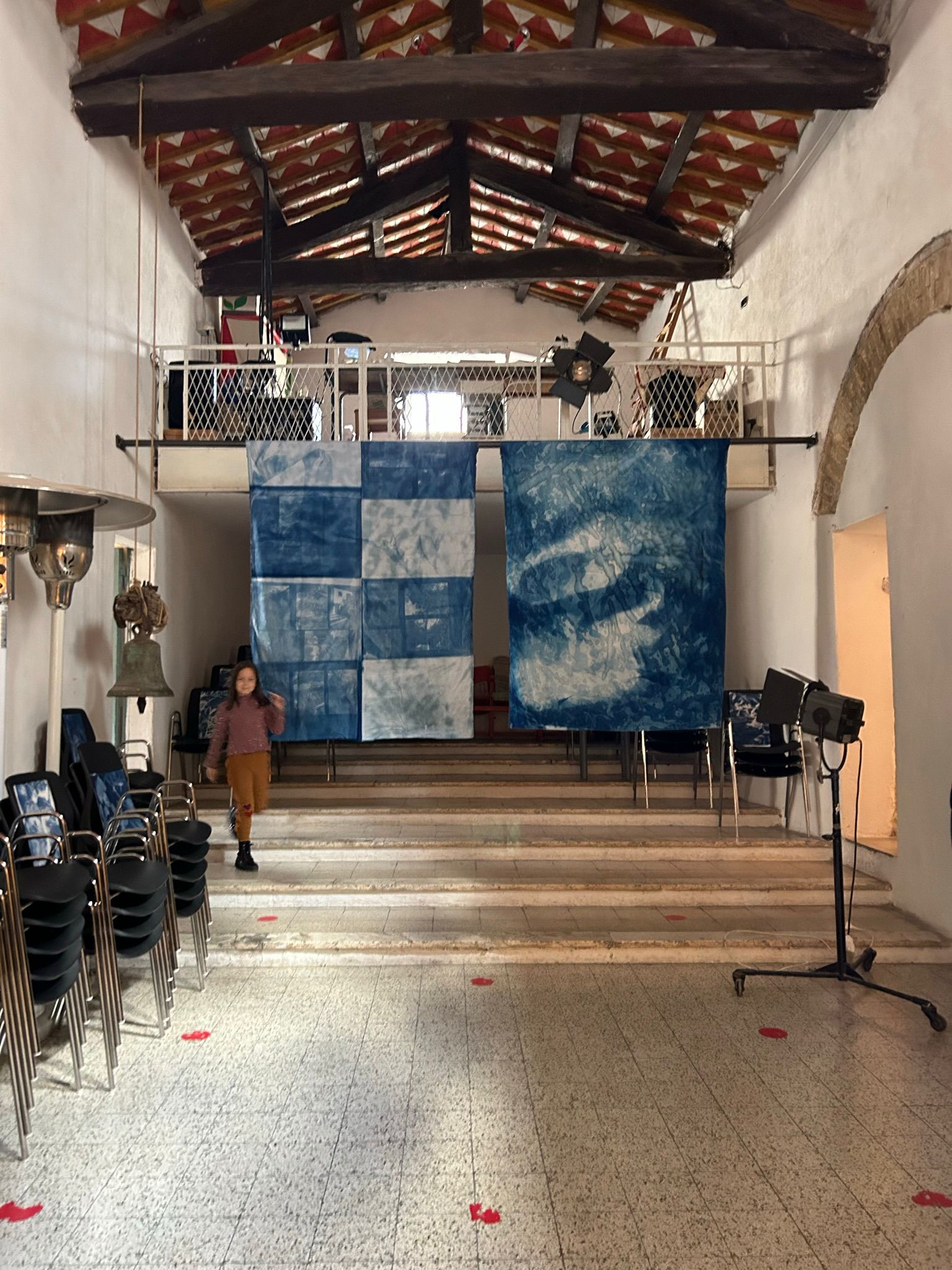
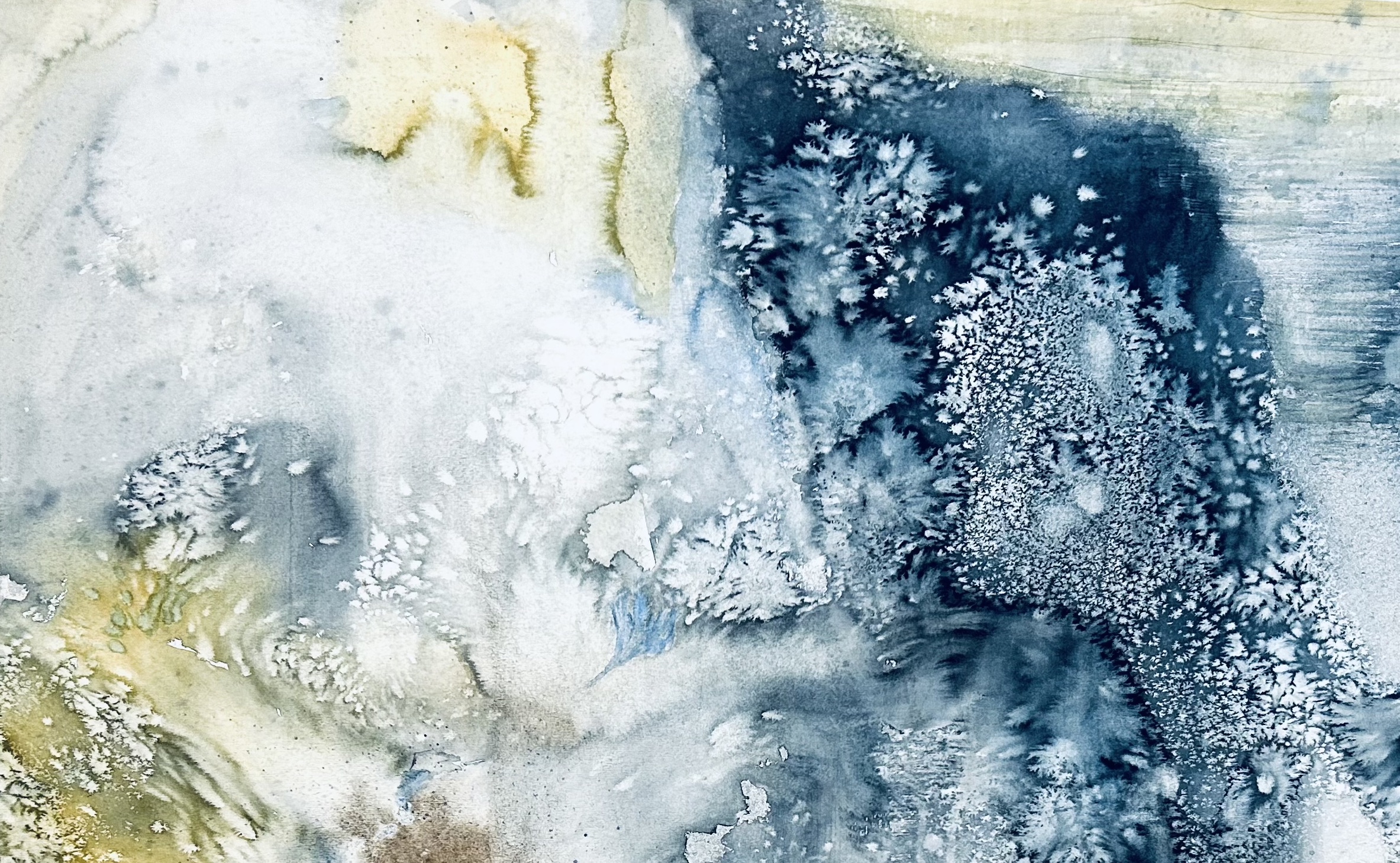
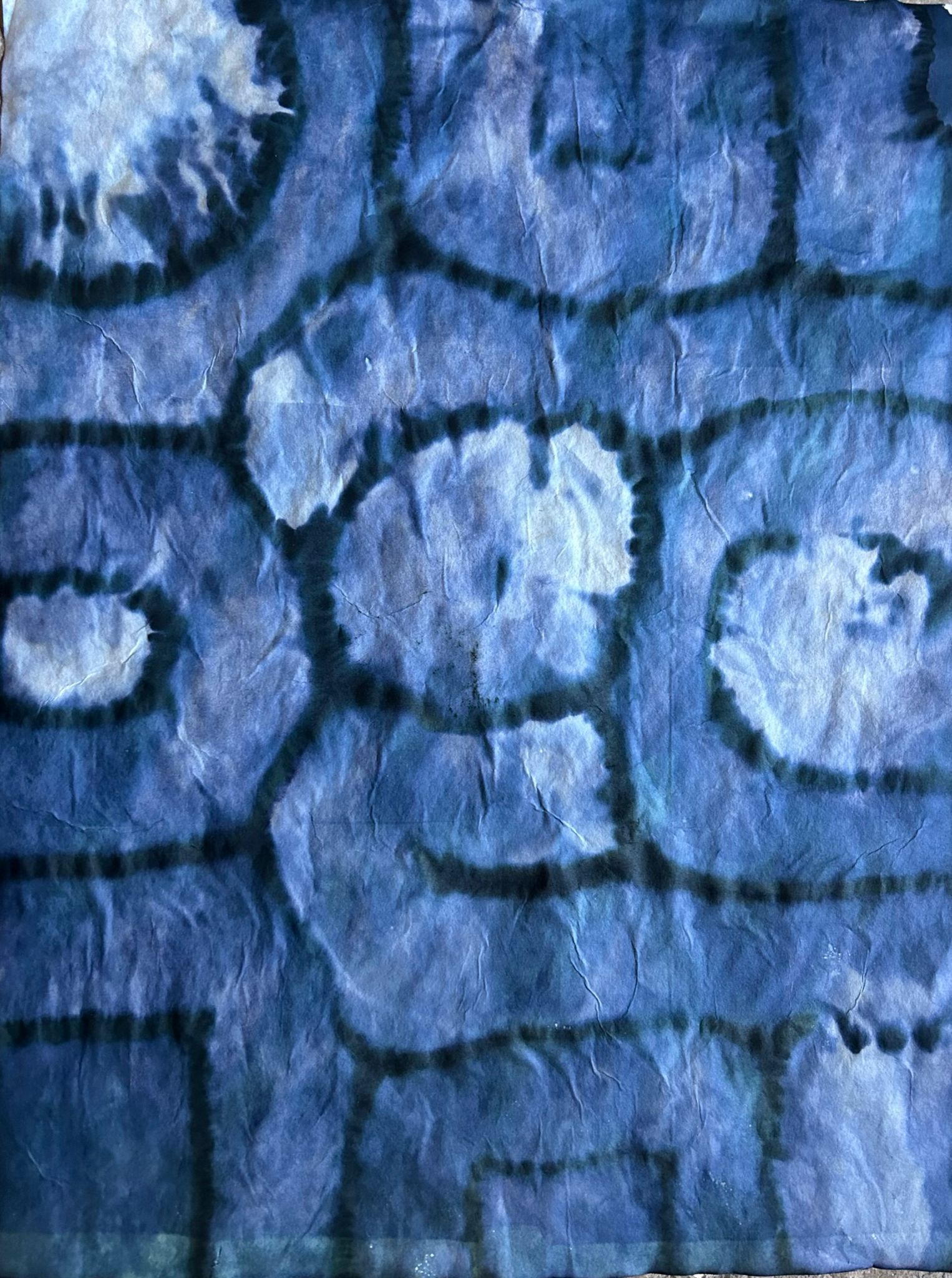
Using simple materials, my practice rests between chance and intentionality. Often embracing error as an opportunity to take a new path. This studio practice, often engaged in the elements, reflects my contemplative observations in nature. The paradox of nature’s beauty and its power of destruction are themes through my work.
2022
Claire Dickson, USA
https://clairedicksonmusic.com/
Makenzie Heinemann, USA
Cristal Jow, USA
Anjalo Kholsa, USA
Yuan Lin, CHINA
Mollie O’Leary, USA
Mariangela Ratto, Brasil
https://mariangelaratto.wixsite.com/agoraarte
2021
Sarah Brahim, SA/USA
HRK Collective, UK/DE/NO
AnnaMaria Ignarro, IT/BE
hignarroannamarie.wixsite.com/ignarro
Anna Lehespalu, EE
Caleb Lightfoot, USA
www.instagram.com/akephalos_architectures
2019
Nicole Duffy, UK
Ian Hagarty, USA
Chloe Margherita & Jade Novarino, US
Anne Wald, USA
2018
Sara Brahim, USA
Samantha Corbett, USA
Harry Davies, USA
Gisella Faggi, USA
Pacôme Genty, France
Jonathan Herrera, USA/Mexico
Emily Jay, USA
Azin Mohammadi, Canada/Iran
www.azinmohamadame.wixsite.com/azin
Victoria Pacheco, France/Mexico
villa-arson.xyz/diplomes2017/anavictoria-pacheco/
Agnieszka Rowińska, Poland & Aaron Palabyab, Philipines
agnieszkarowinska.com I www.aaronpalabyab.comagnieszkarowinska.com
Nicholas Stringer, New Zealand
Costantino Toth, USA
2017
Jodan Coriza, USA
Fei Li, USA/China
Blessy Man, Hong Kong
Lucie Mandeville, Canada
2016
Juana Adcock, UK/Mexico
Annie Charland-Thibodeau, Canada
www.anniecharlandthibodeau.com
Tina Engels, USA
Josee Pedneaut, Canada
Tianyu Qiu, USA/China
Lara Zankoul, Lebanon
2015
Rachel Crummey, Canada
Annette Elliot, USA
Kristen Heuschen, Germany
Emily Jay, USA
Yoonjung Kim, South Korea
Colette Krogol & Mathew Reeves, USA
Daun Lim, South Korea
Caitlyn Main, USA
cargocollective.com/caitlynmain
Friederike Meinecke, Germany
Sara Pathirane & Kristina Sedlerova, Finland
cargocollective.com/sarapathirane
Katrine Sloth, Denmark
Lisa-Marie Vilestra, Holland
Ilyn Wong, USA
2014
Hyojung Ahn, South Korea
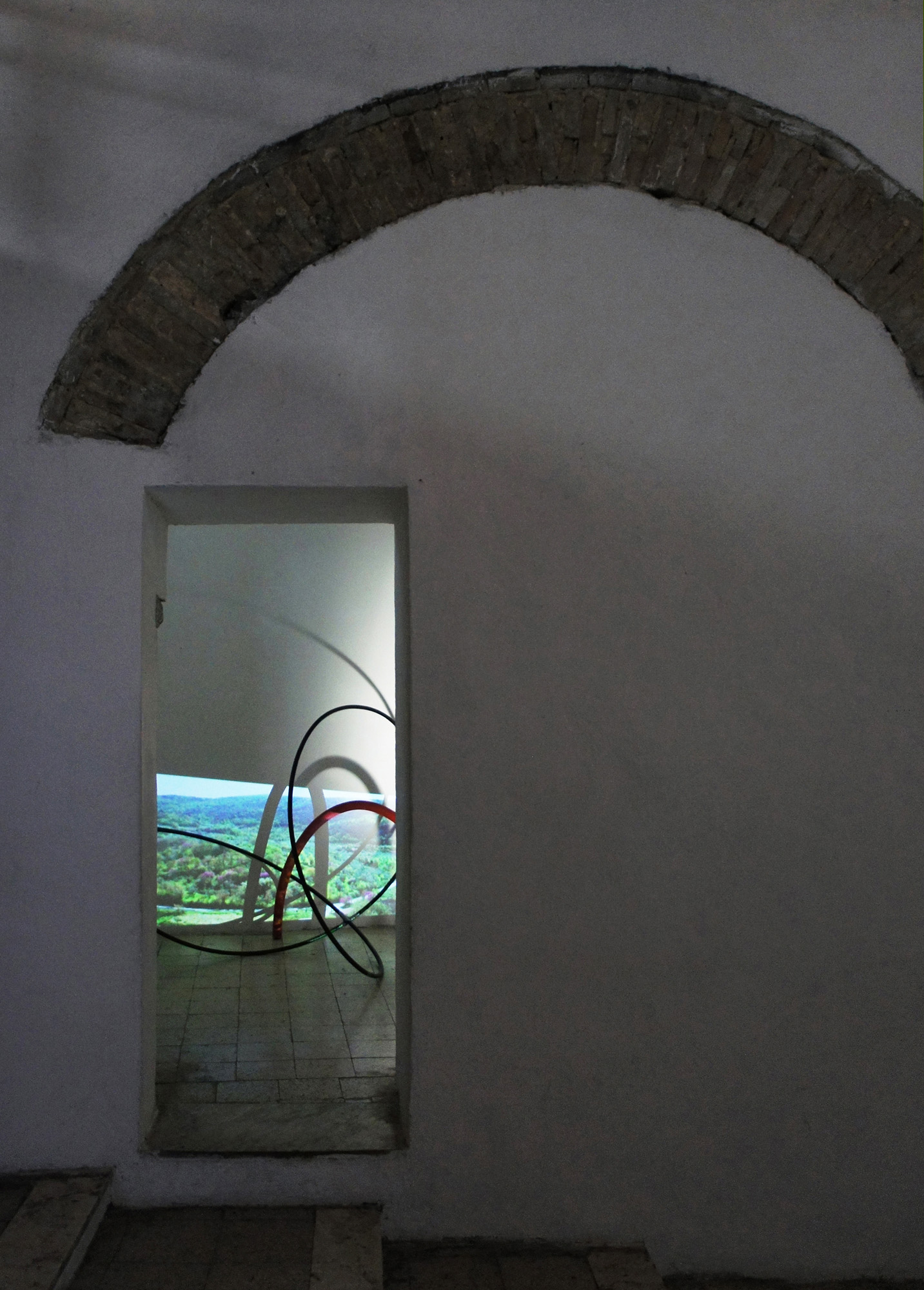
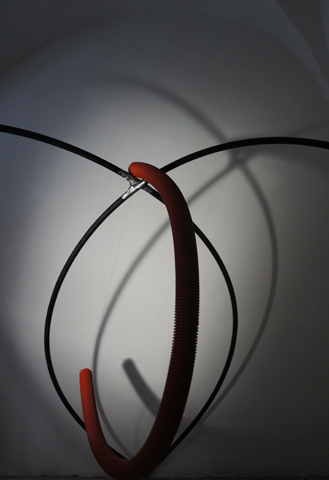
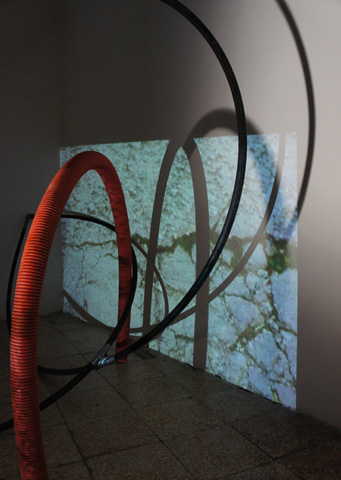
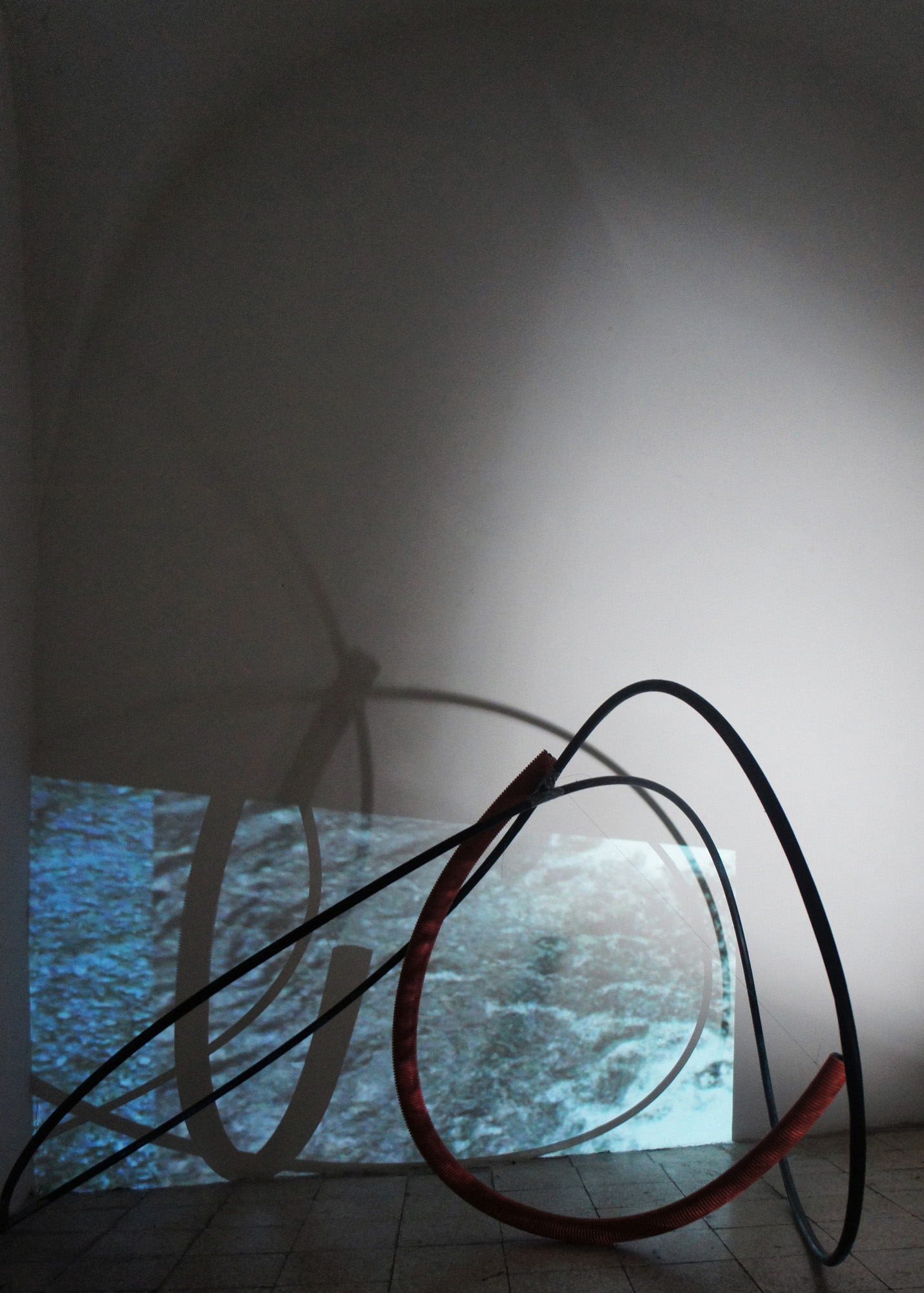
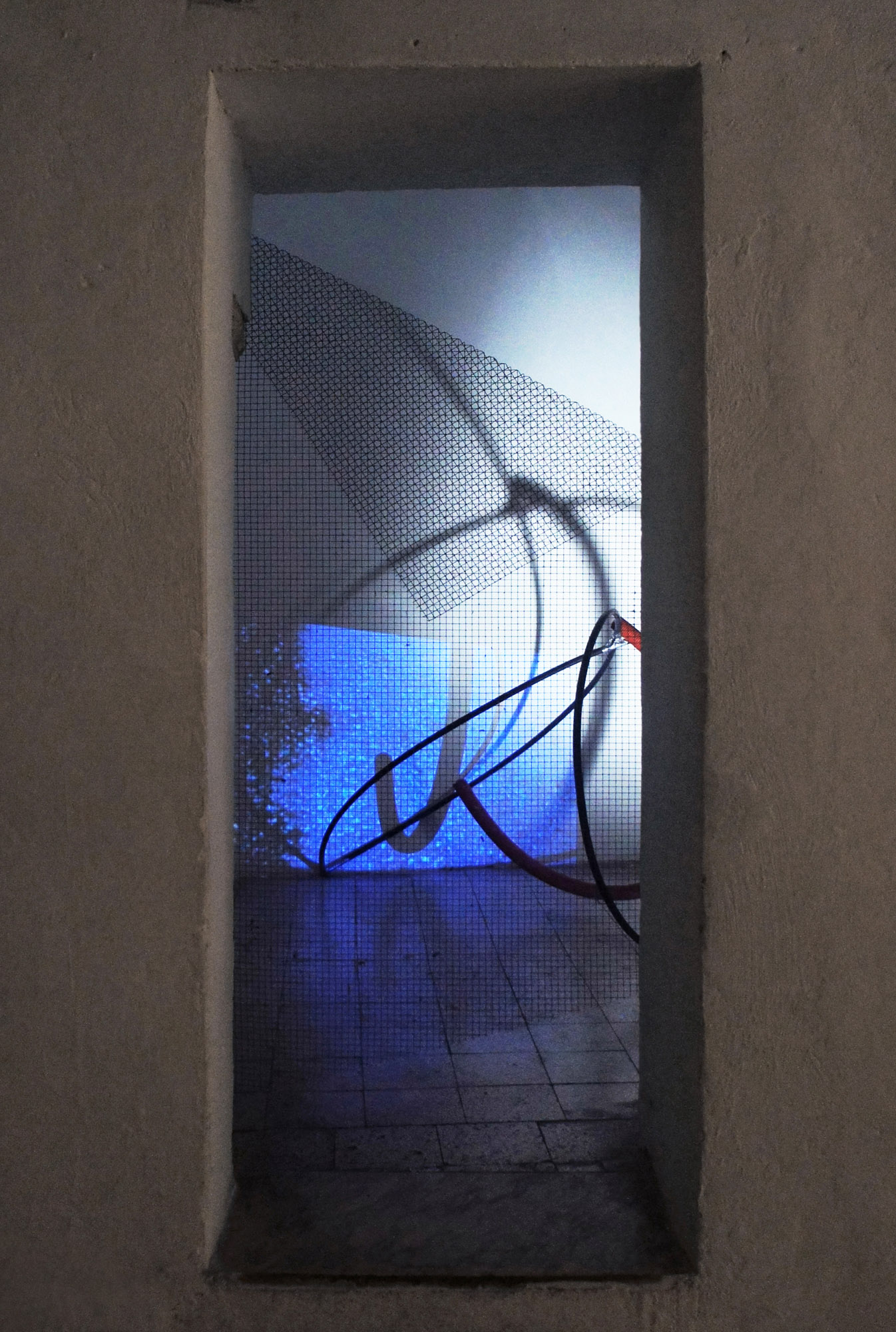
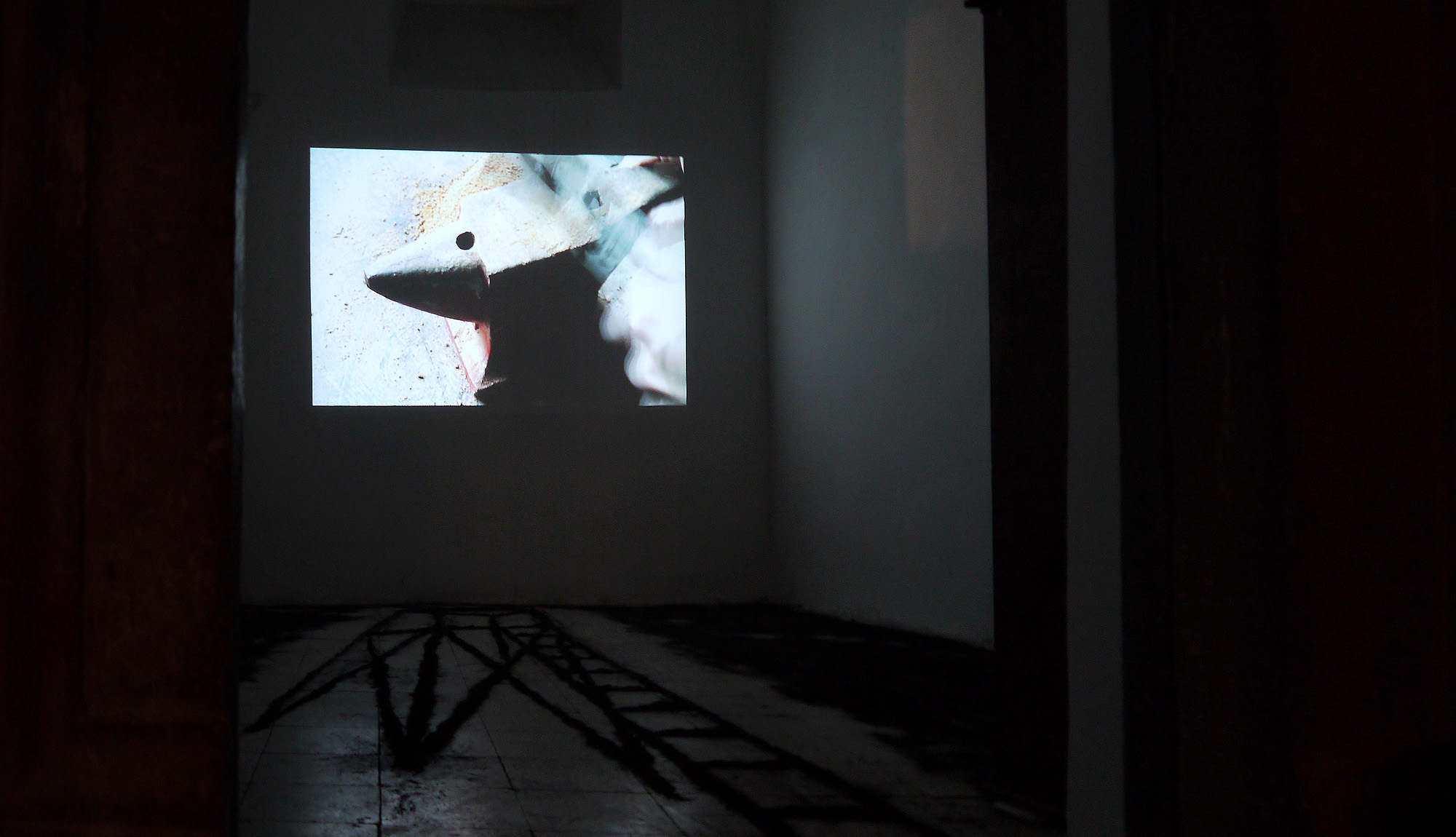
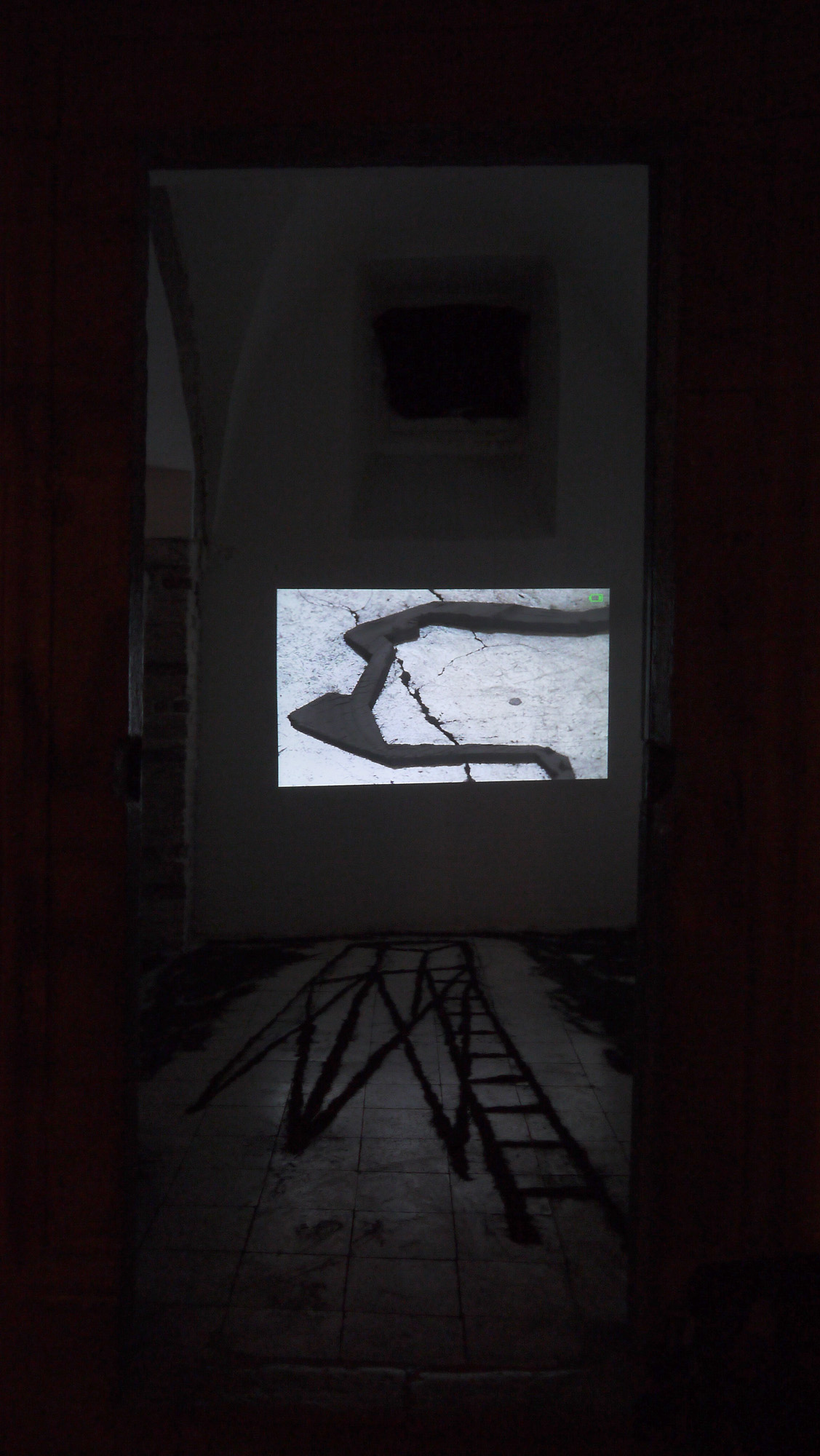
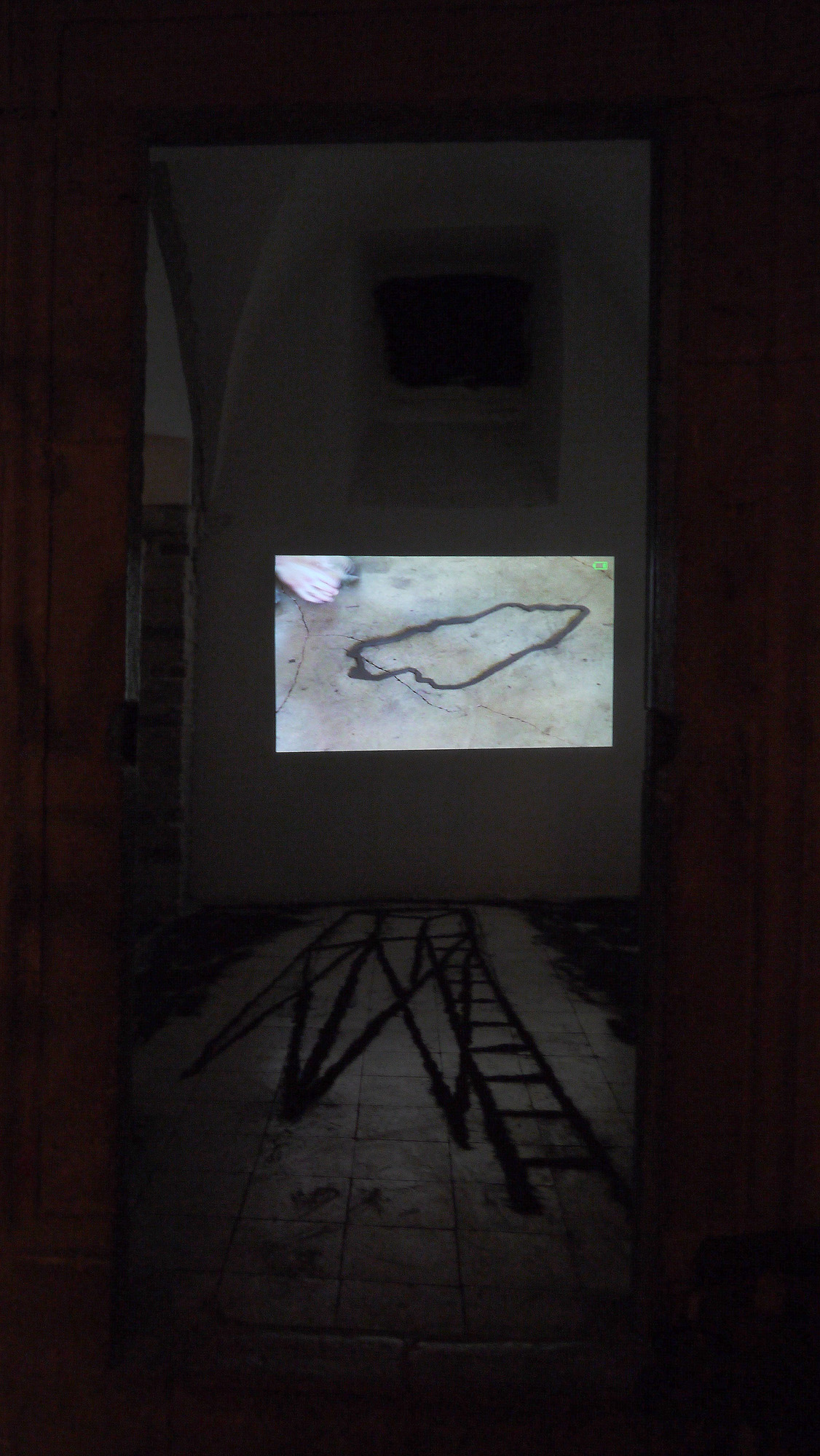
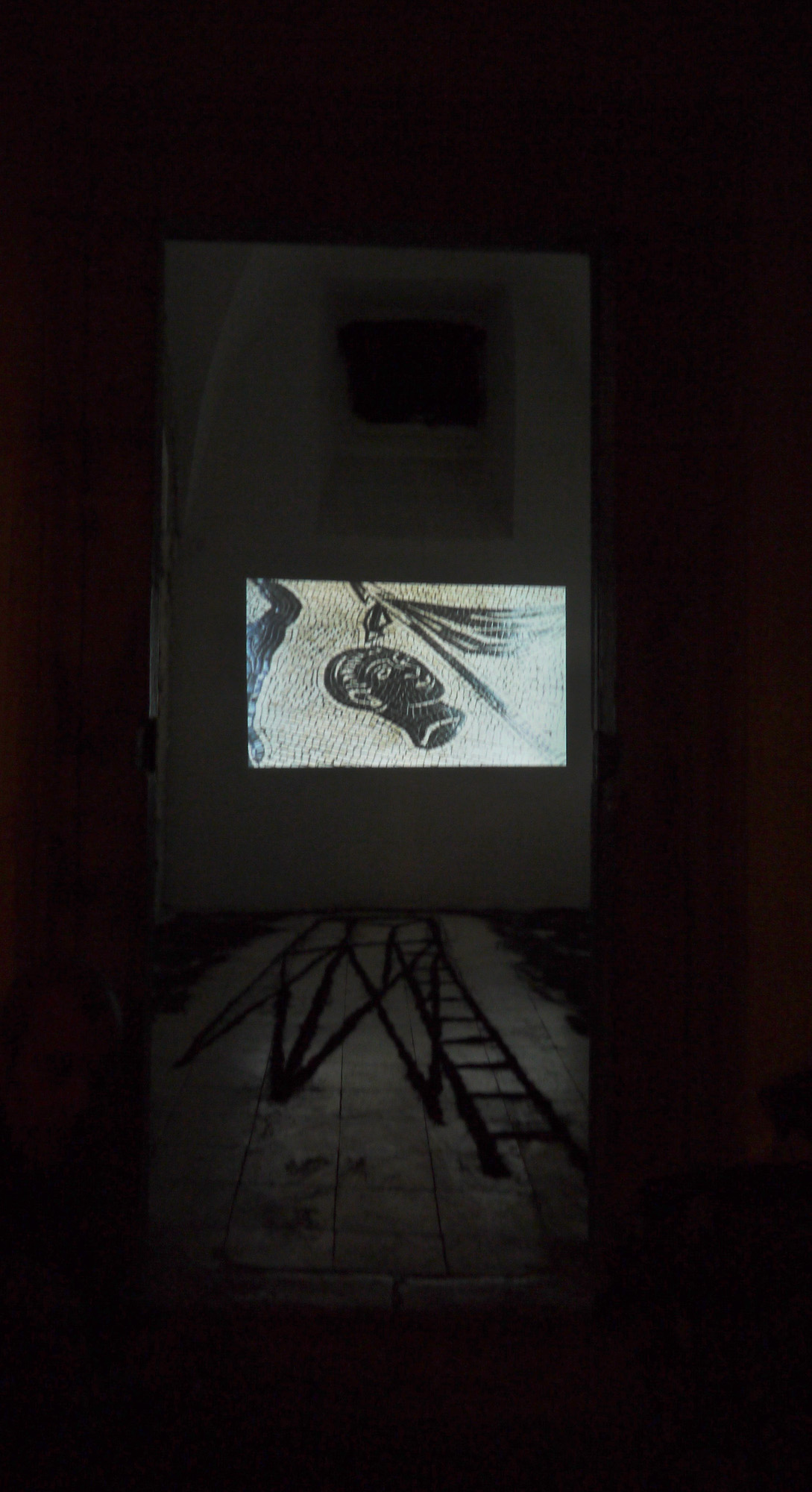
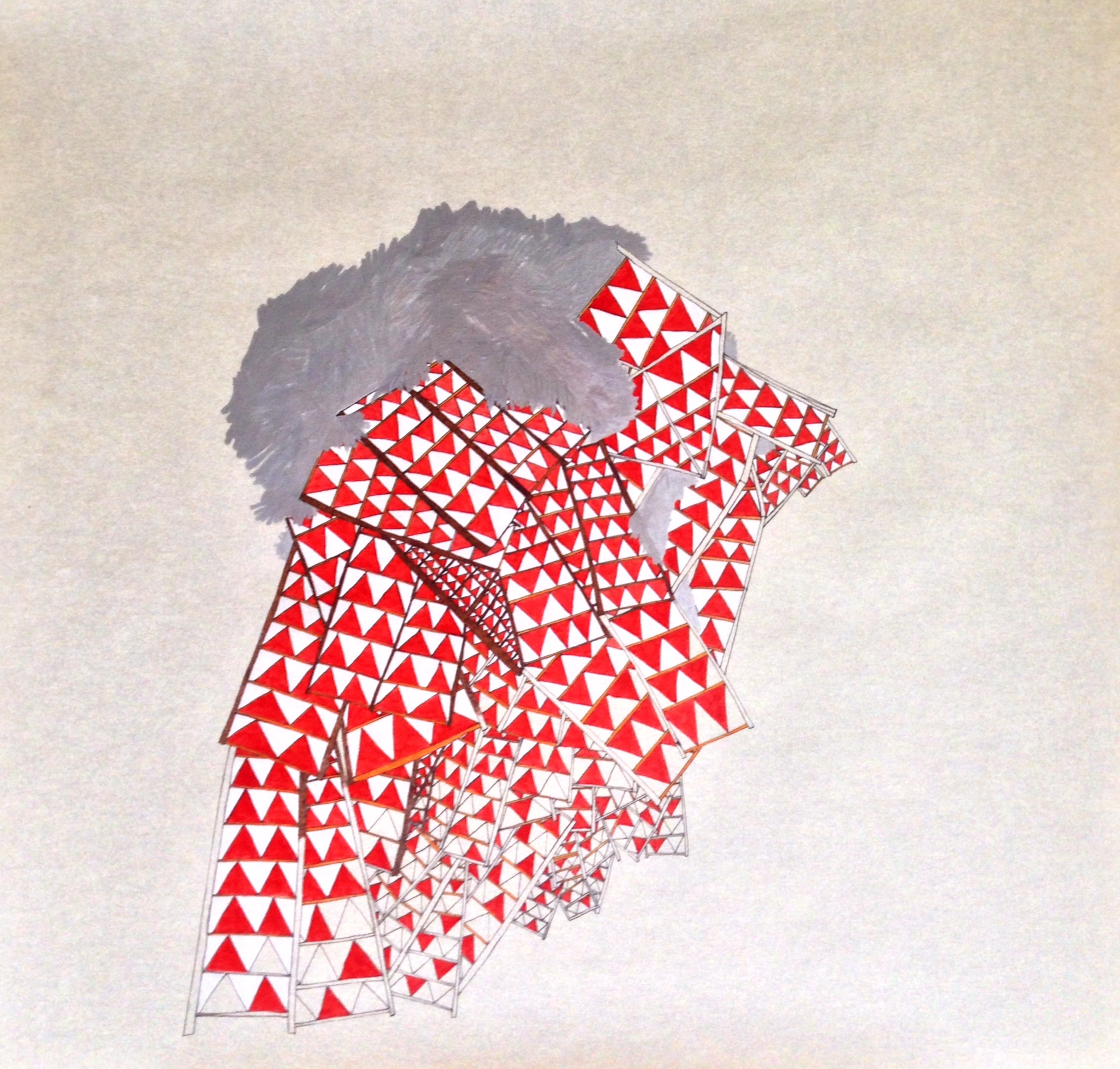
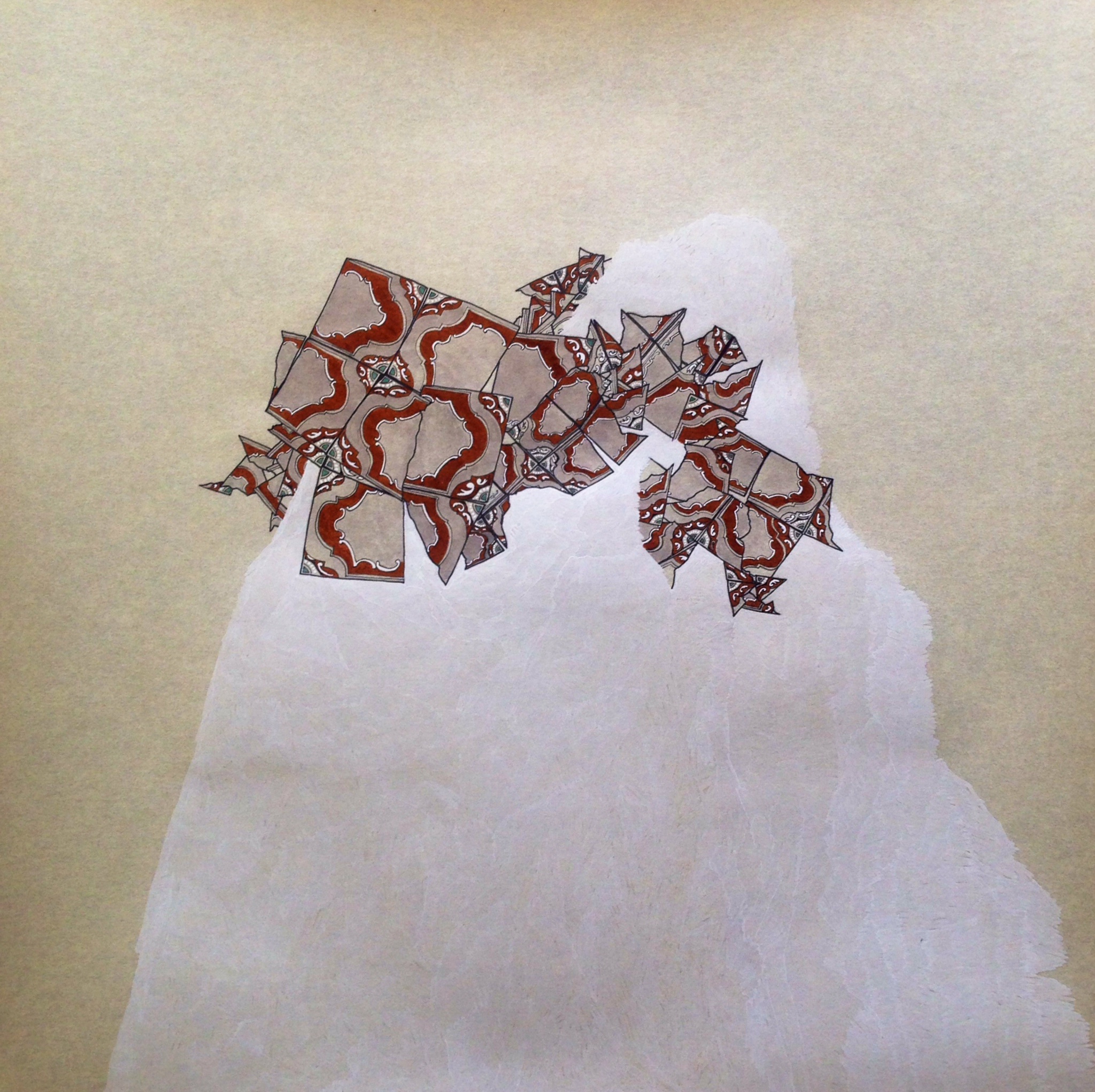
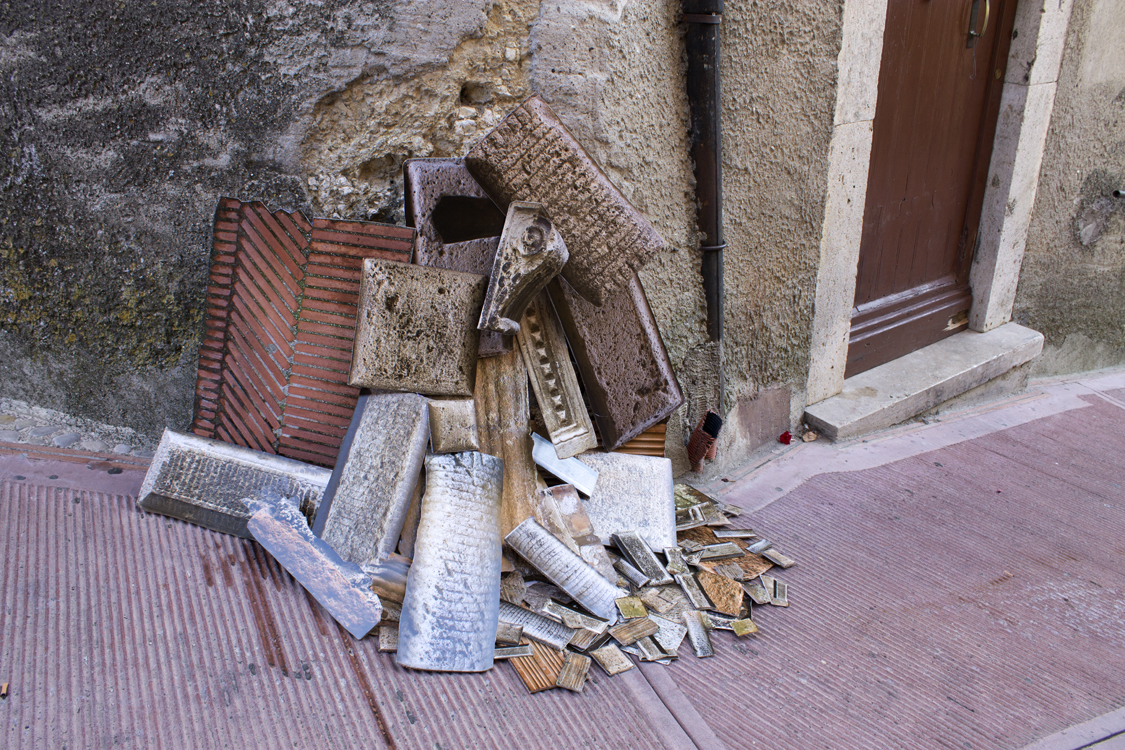
My first impression about Toffia was that it has a very picturesque and organic feature, which is distinctive from any other city I have ever visited and lived. Even though Toffia was felt like being made of drapes of its history and nature, ironically I found the metaphor from the urban construction sites that I found around the town. By using the graphic and material sources from the street of Toffia, I tried to make a connection between the real space and the artwork. The configuration of the work is of the found objects and the video, which finally works as changeable three dimensional drawings.
Saskia Bannasch, Germany
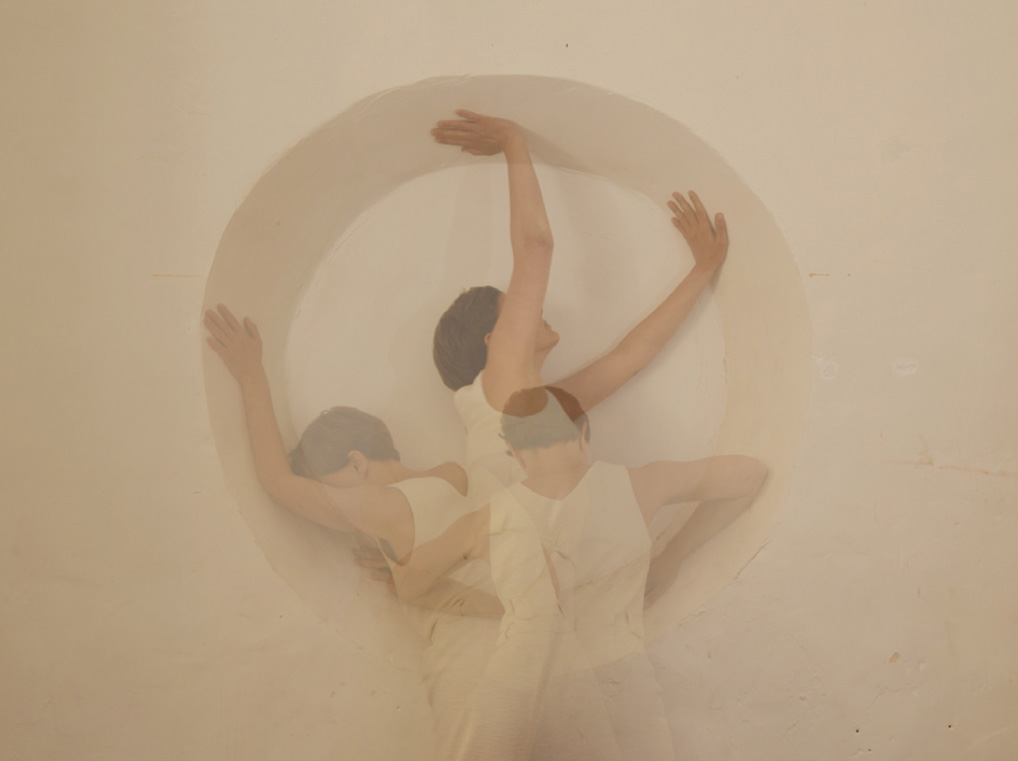
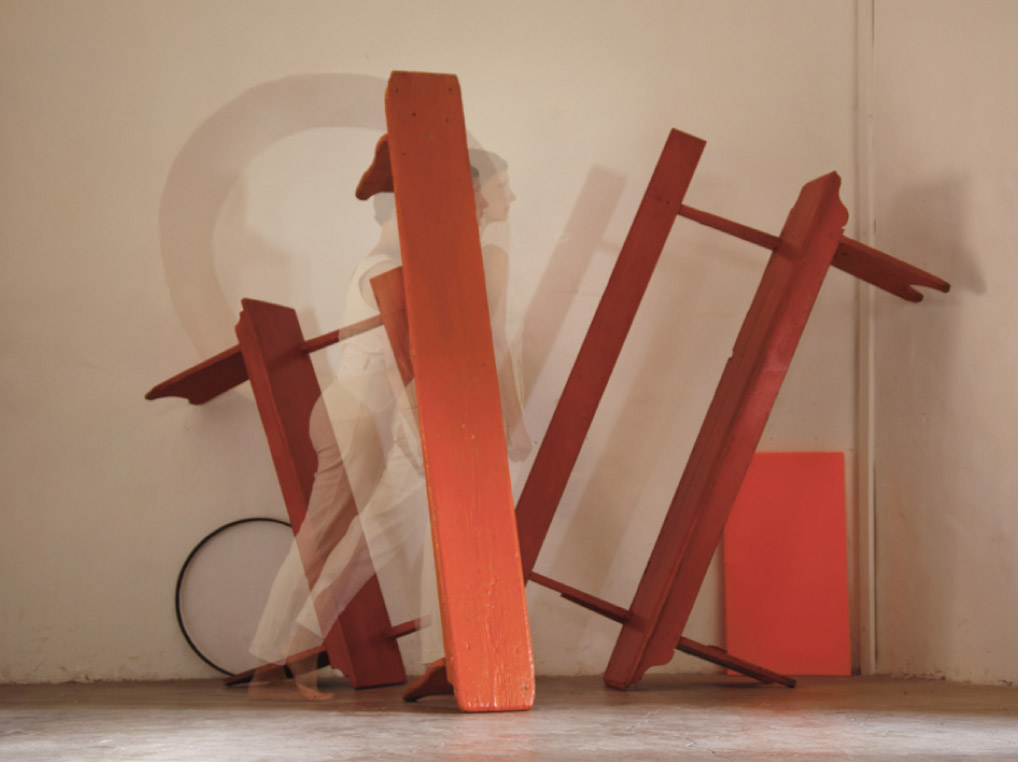
I am engaged in the topic of space, the known and the unknown. I am interested in the relation between space, time and body. From my point of view, the three components are related to each other and they create the volume of space. The decisive factor of my inquiry is not only the visible existence. In fact, I am fascinated by emptiness, which makes me aware of blurred tracks. I approach the whole extent of space just as I approach the little space inside a space. I use drawing to get a general idea of a room/ area/region in a two-dimensional way. Later fractions of my drawings become, again, part of my work as »transcripts«. Chance plays a role in this, as well. I bring out what I experience and tie it in with the observation, continuing to perceive these things. The outcome of this examination is a new perception of the space through a site-specific installation.
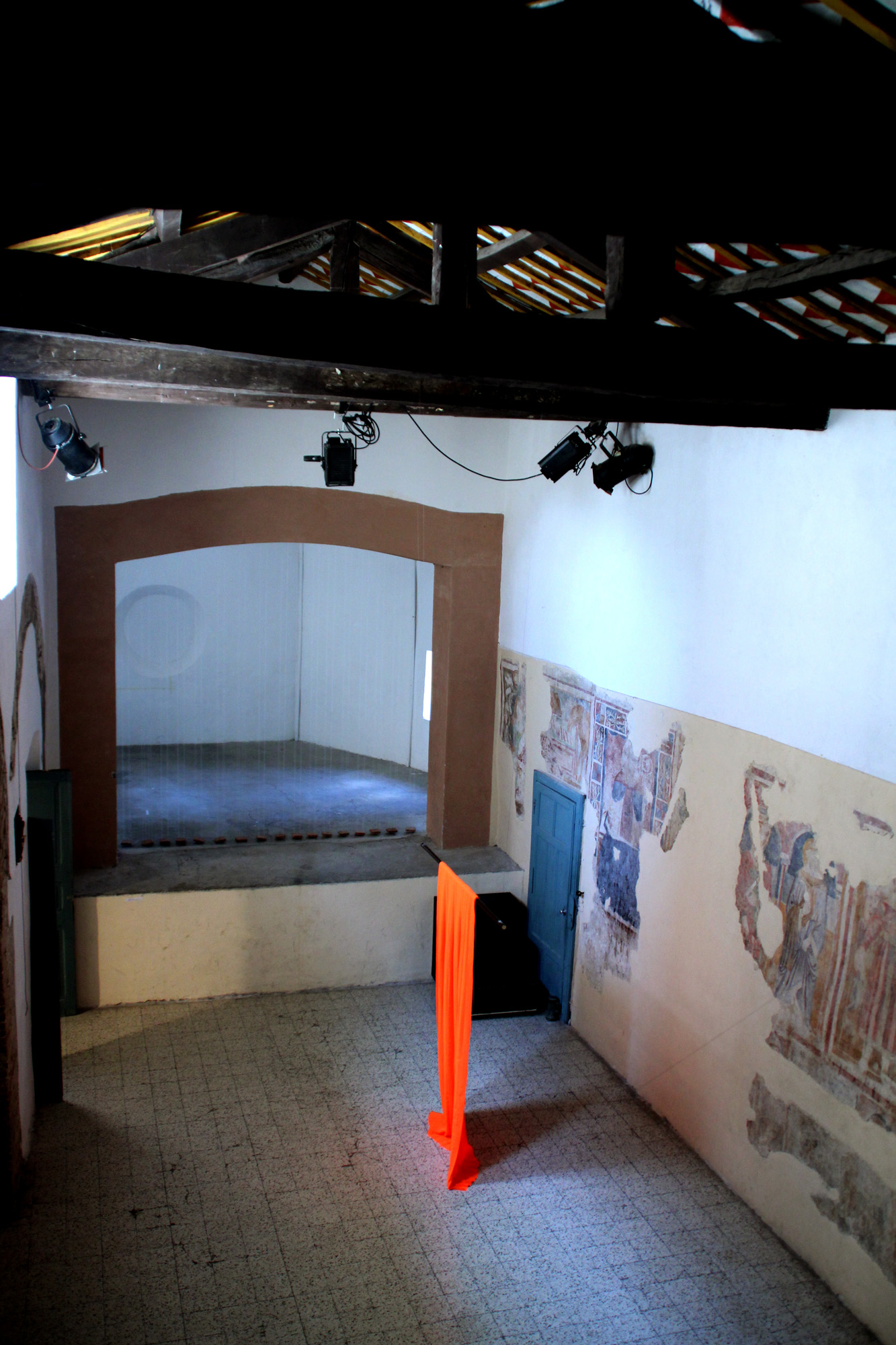
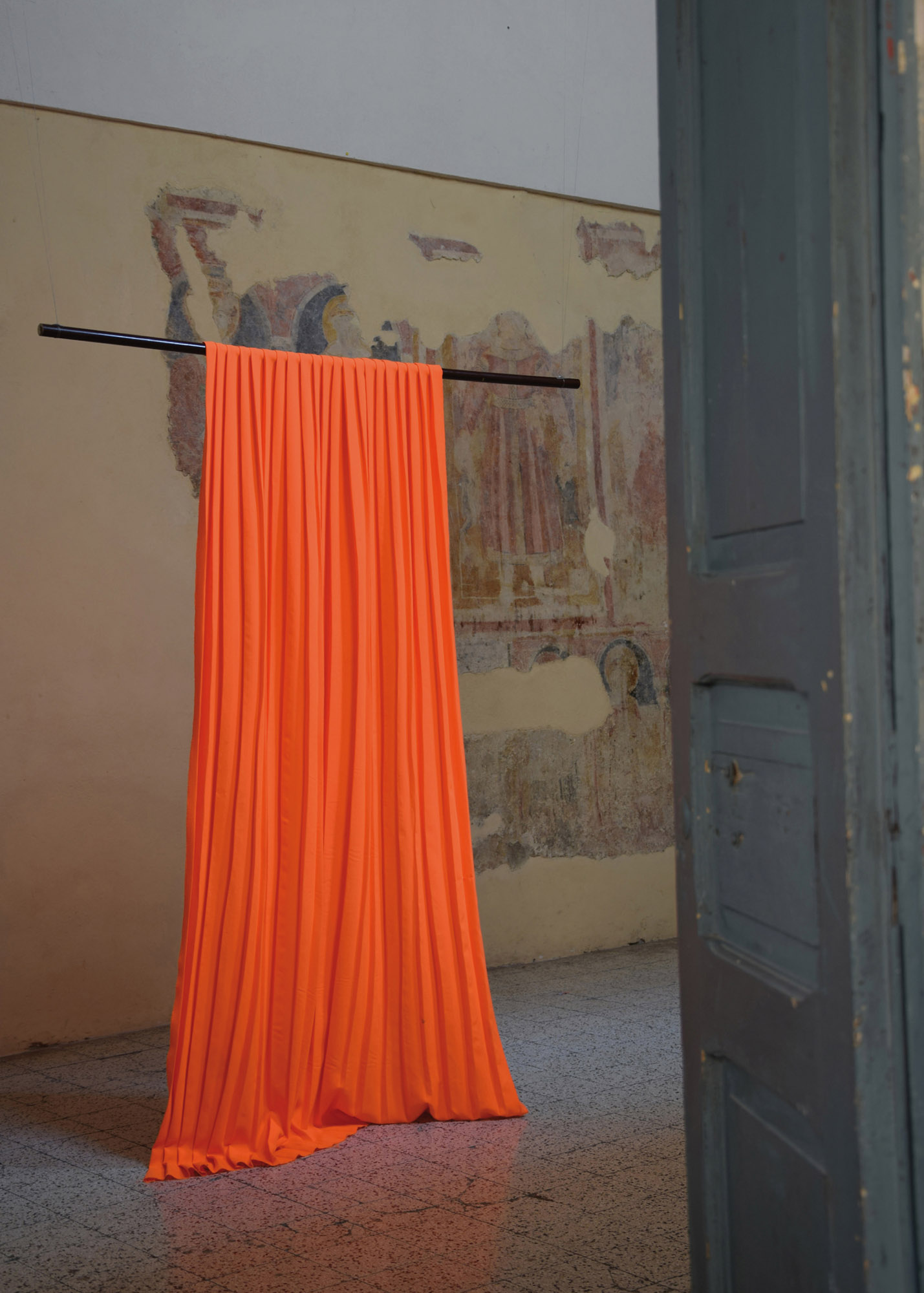
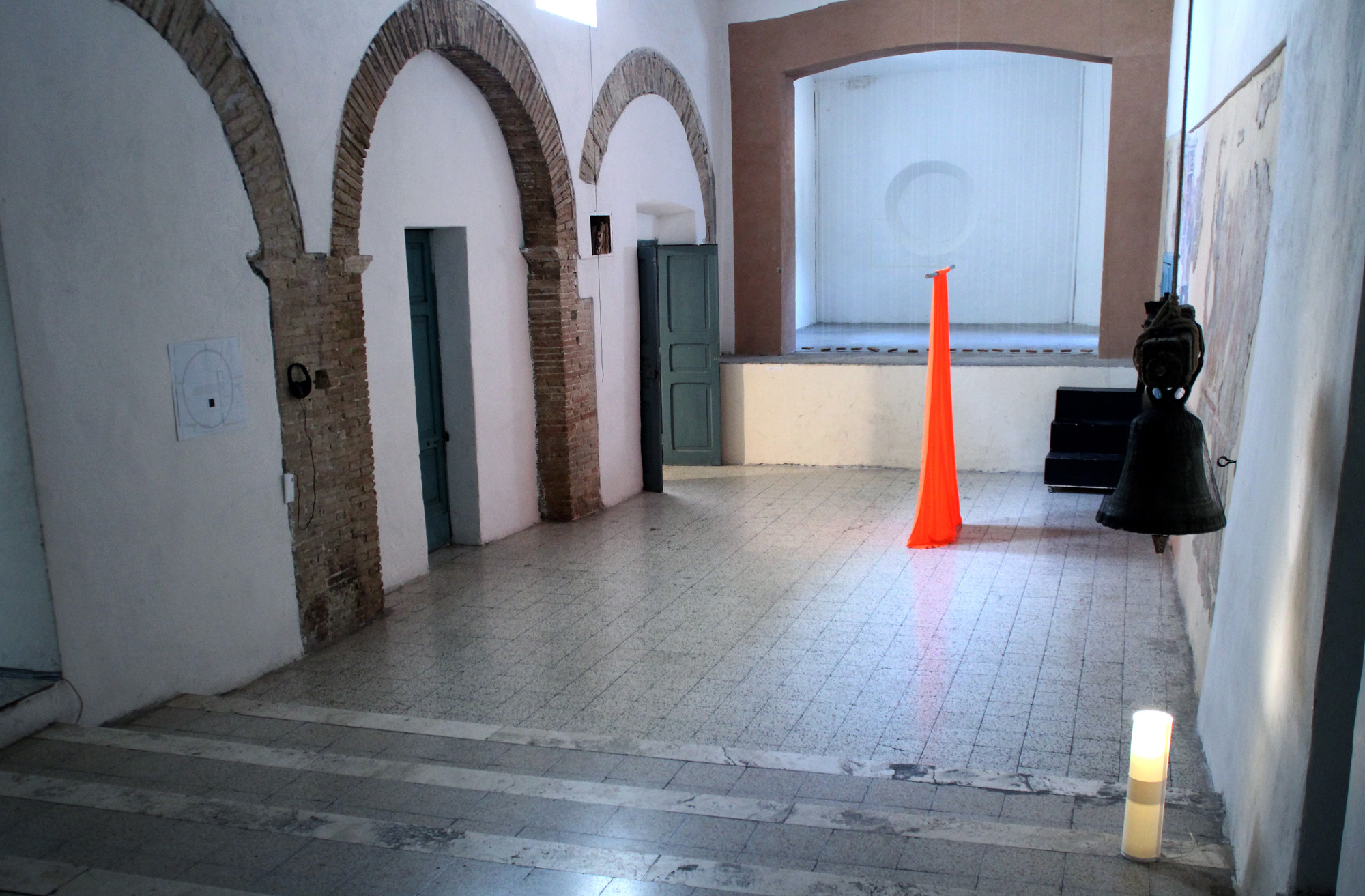
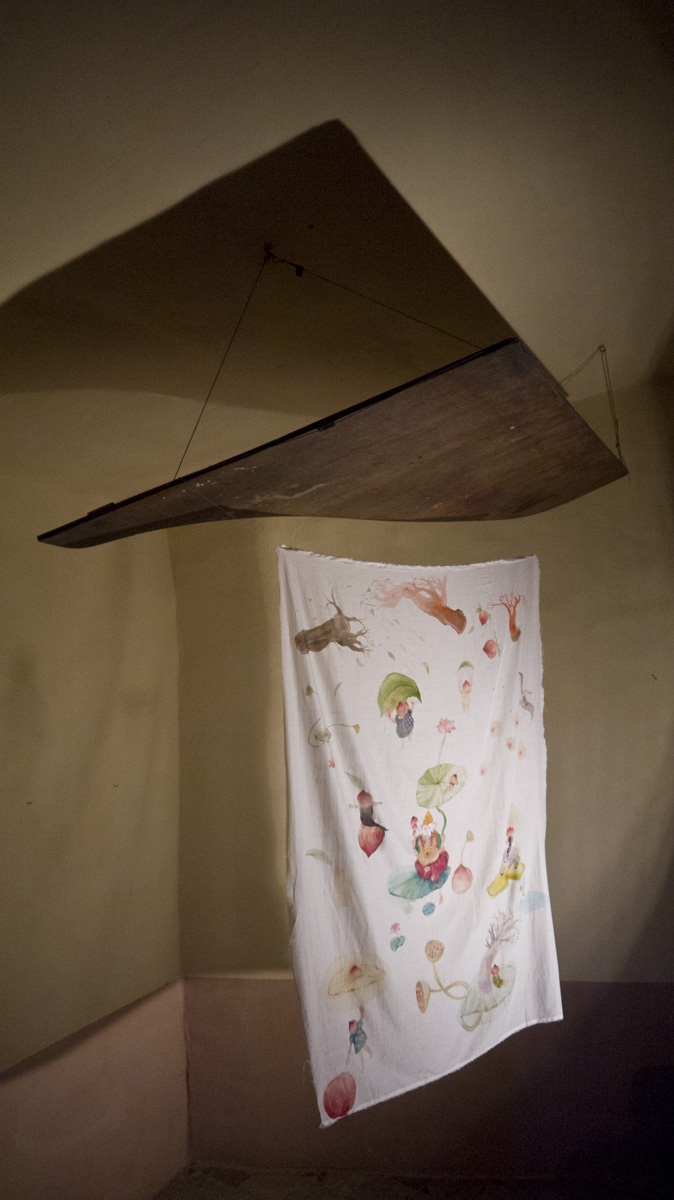
»How much space needs the present III«, 2014. fabric. dark-brownish bar. side-specific installation
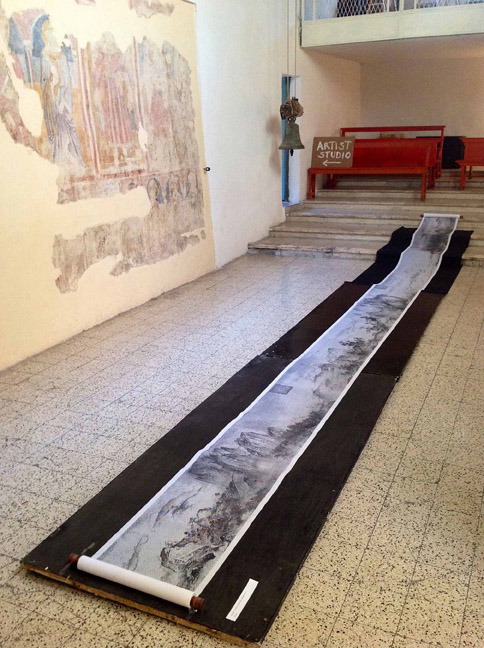
I deal with the hidden space, with the secret and still visible space. The folding. If I unfold something its size increases, the surface grows. The folding is full of hope and mystery. The »thing« stays a secret until the folds are straightened. In the exhibition space there is a mural painting from a 13th century church. The painting shows saints wearing folded robes. The installation interacts with the old murals.
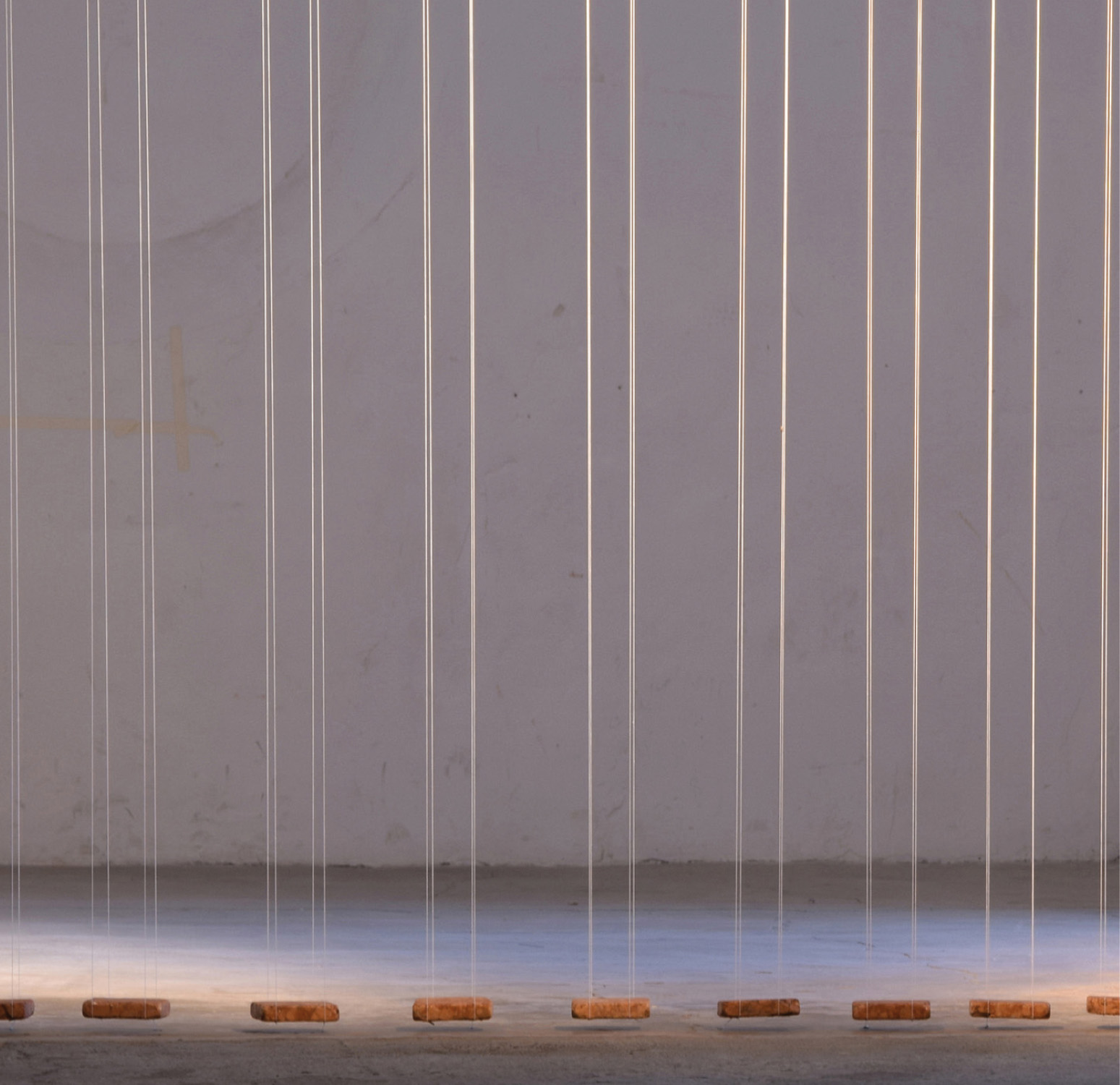
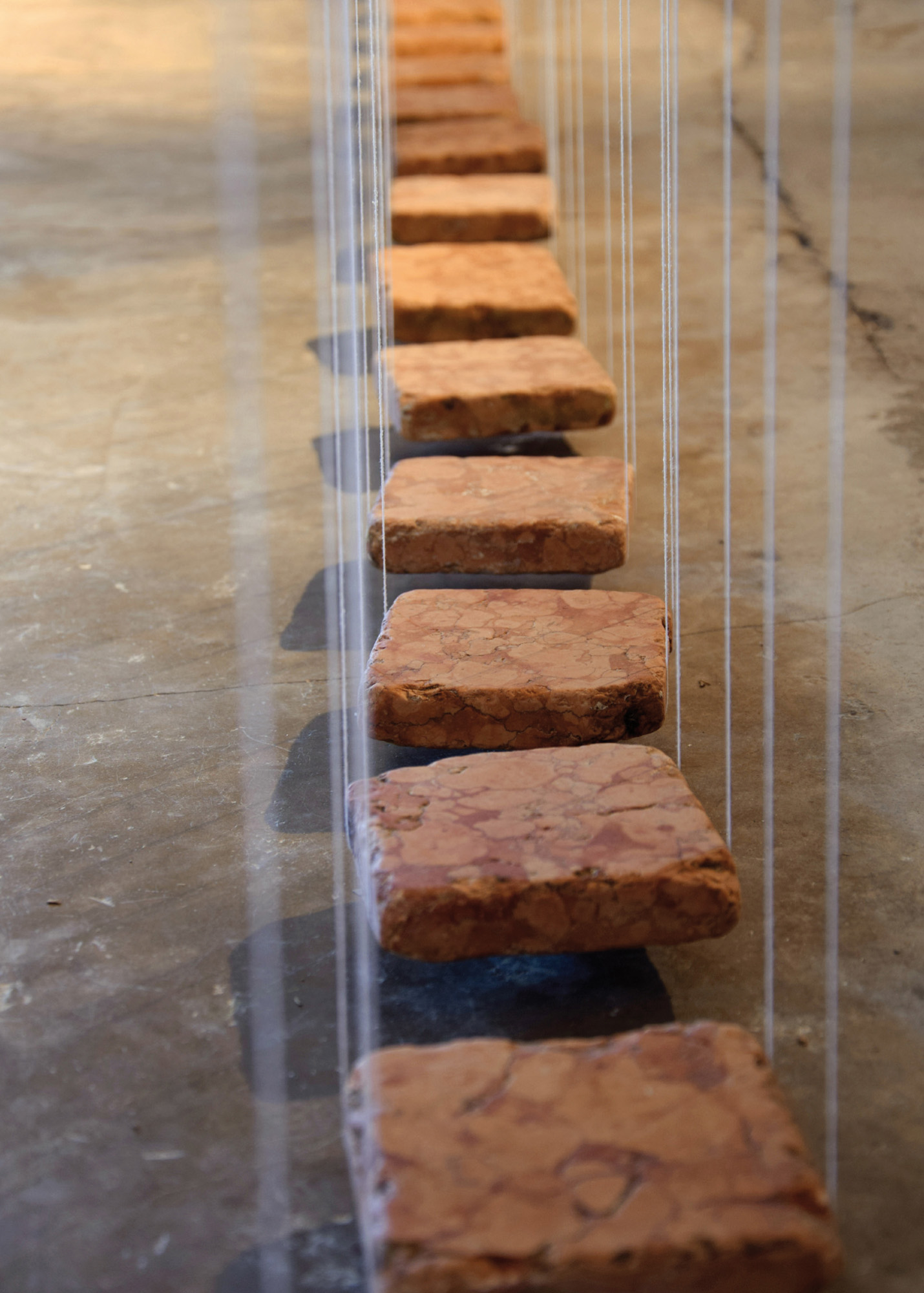
»How much space needs the present II«, 2014. seventeen old marble tiles. thread. side-specific installation
I found marble tiles at the stream. They are partially buried in the dry mud. They are on the ground to mark the path to the stream – like many other broken fragments of thrown tiles. The marble tiles are almost intact. I pick them up, I dig them out, I wash them, I remove the remaining seams, I carry them to the theater and oil them there… Just above the floor there are seventeen marble tiles on the stage of the theater. They are floating suspended on threads. Together they build a chain, a curtain, a fence. They surround the space in which I worked for the video (How much space needs the present I), the space I adopted through my interaction.
Julia Coursey, USA
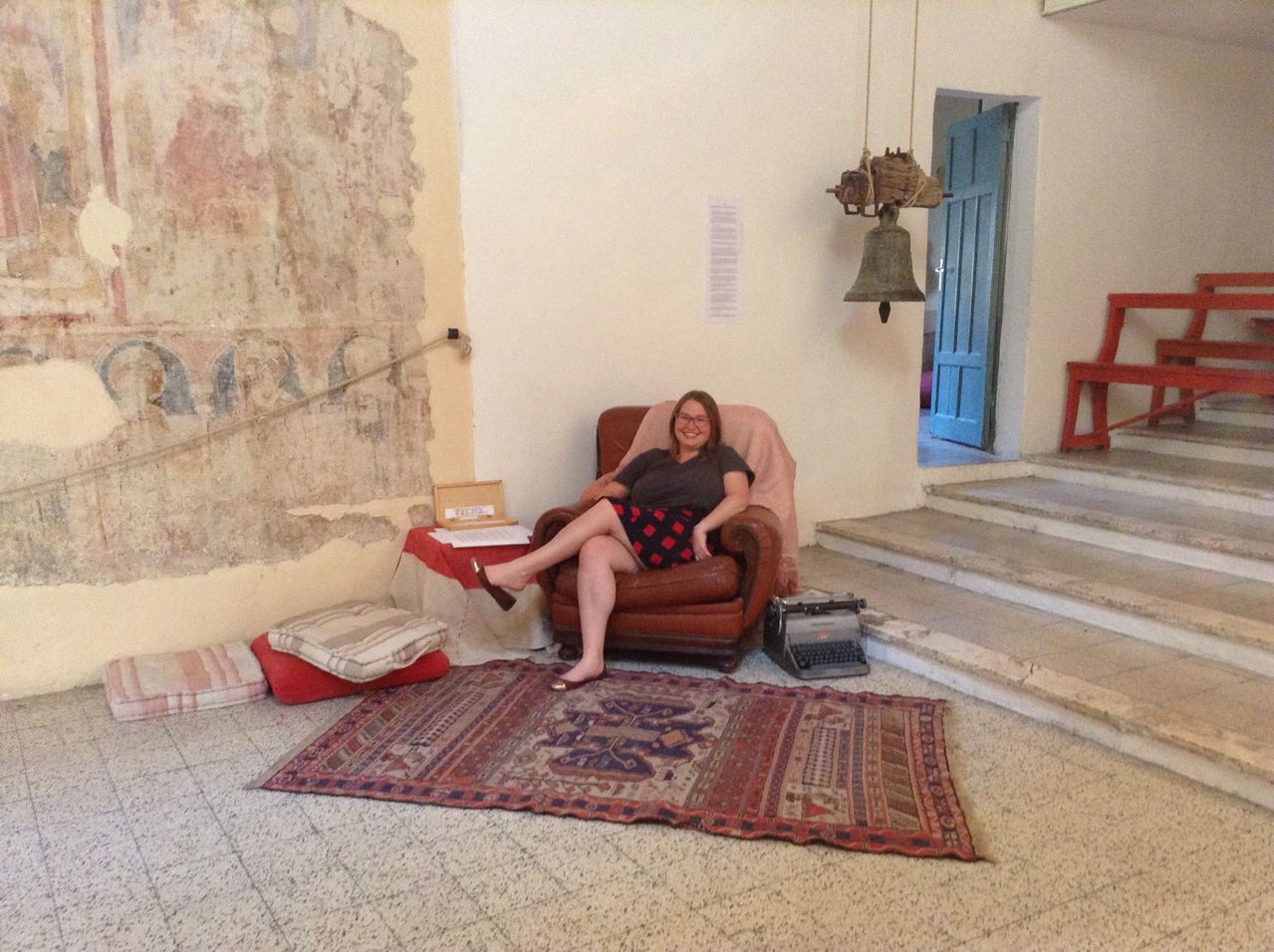
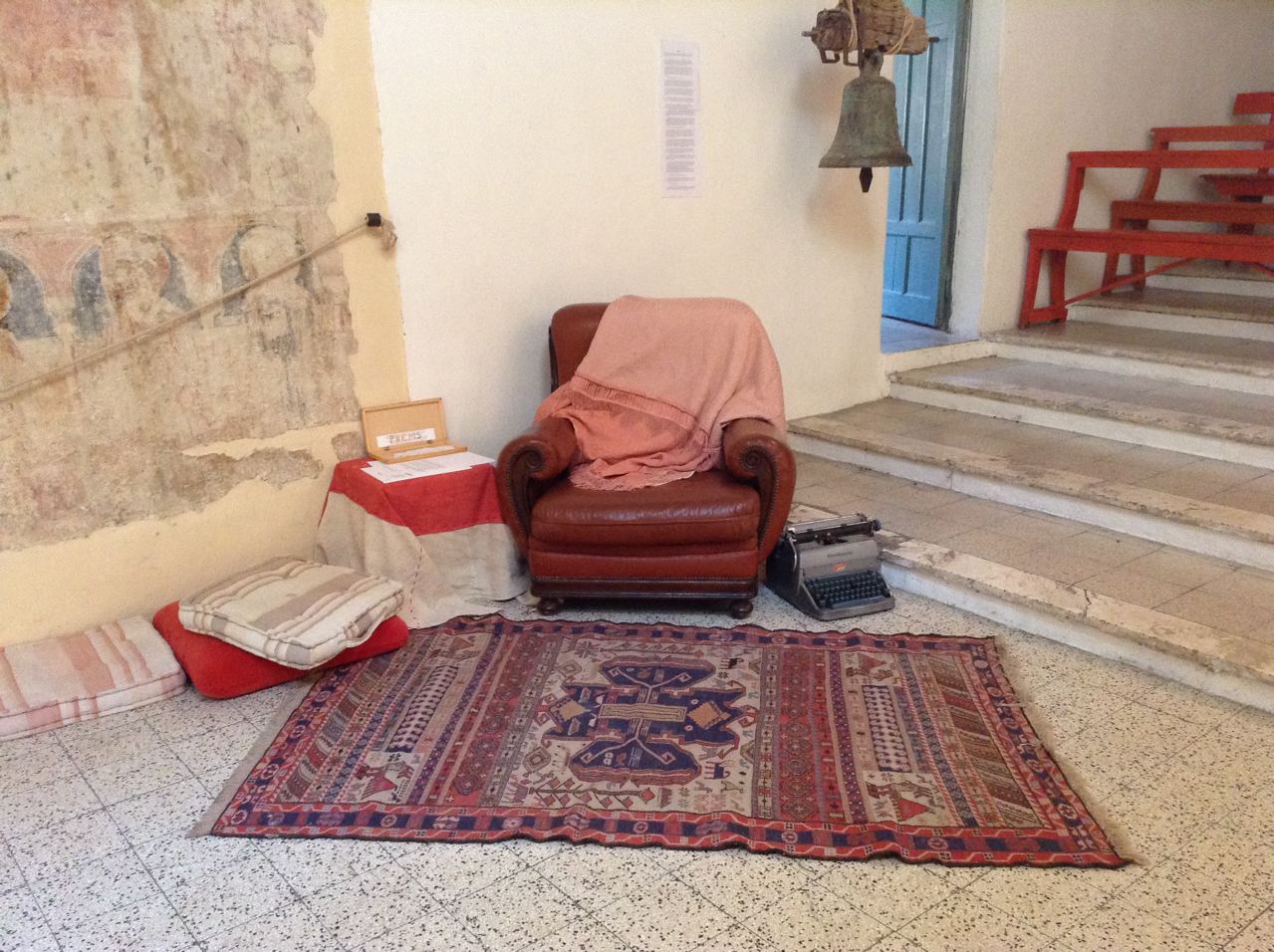
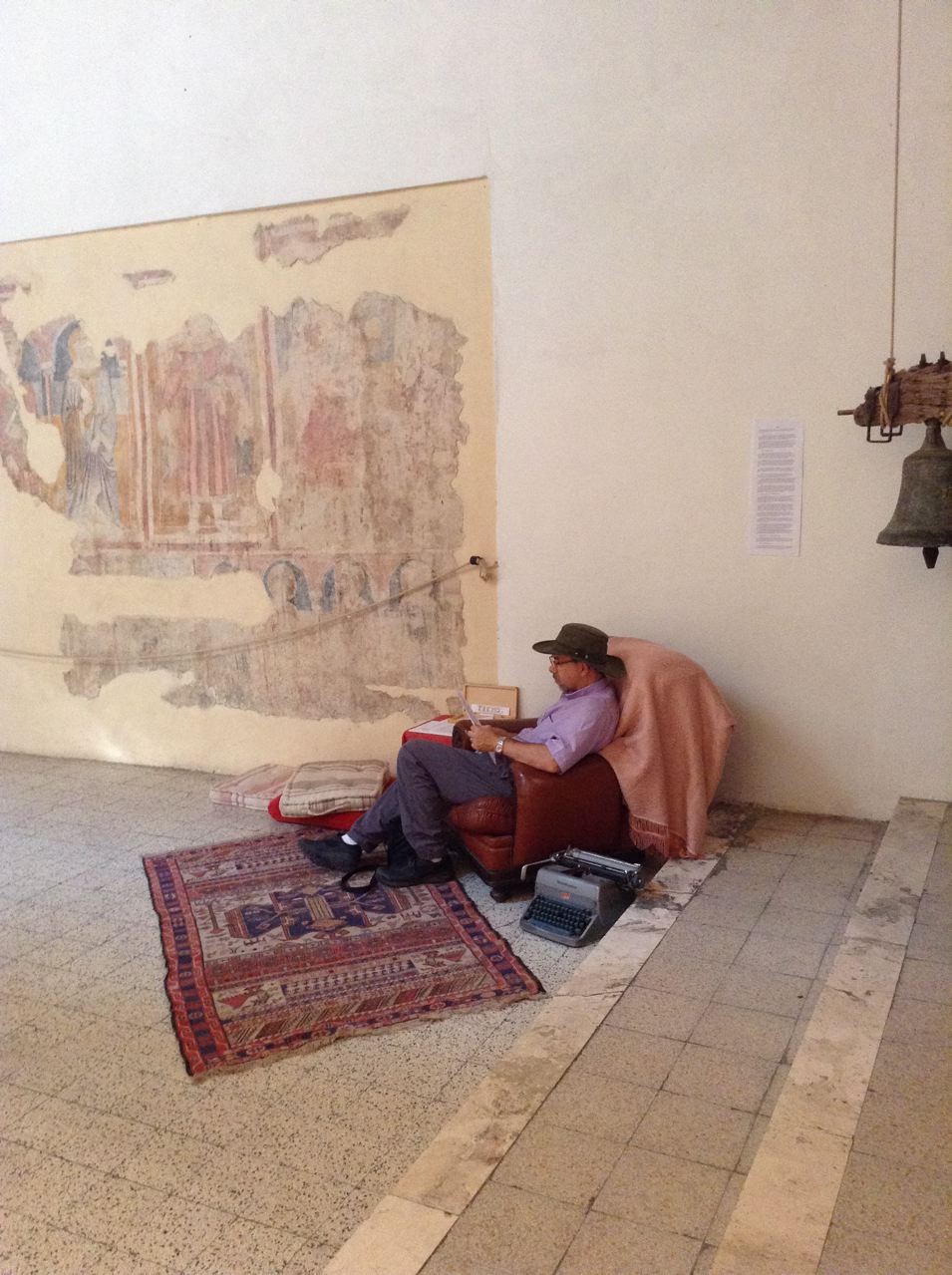

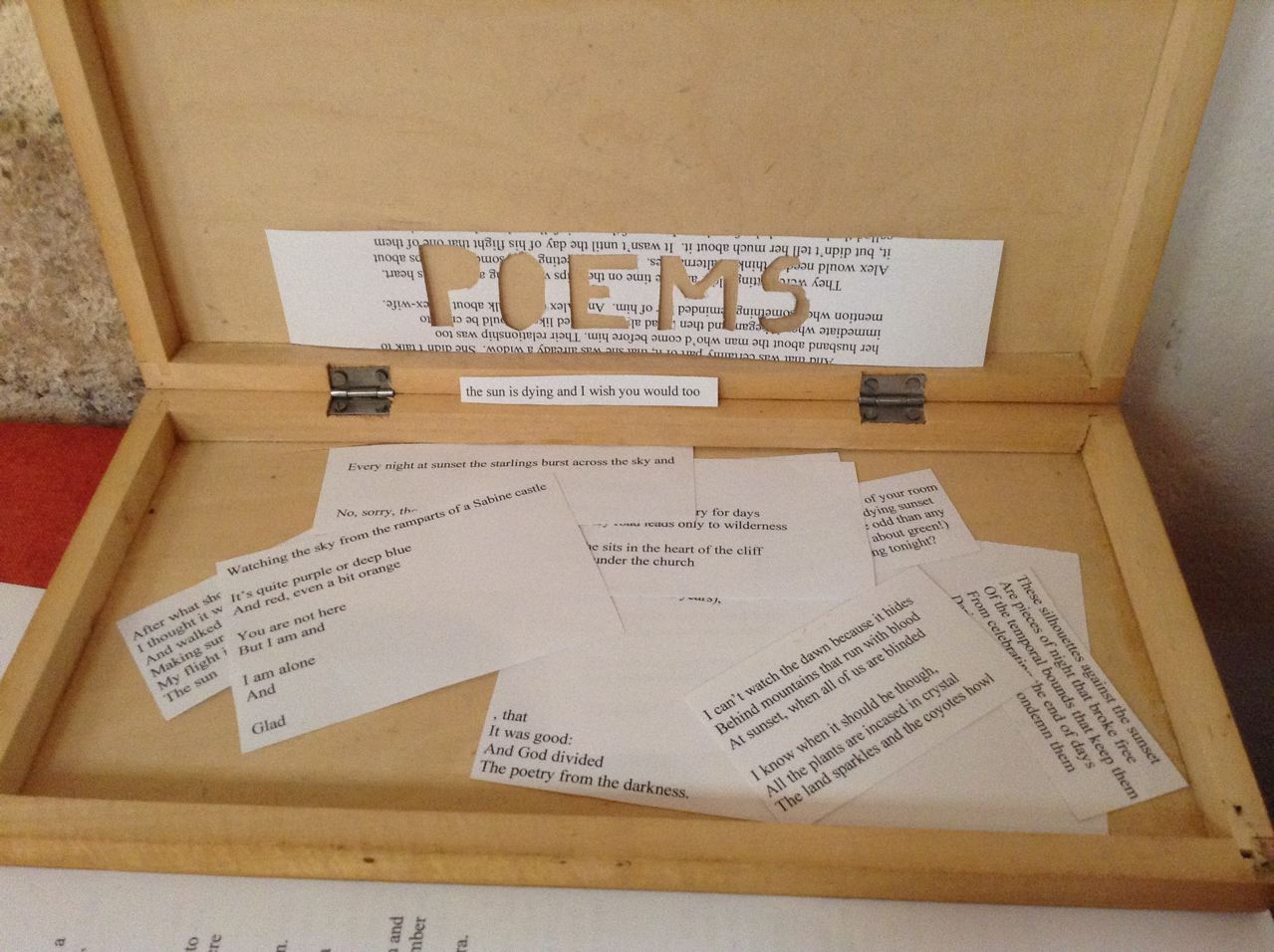
David Baumflek, Canada
“Beauty is the mirror of divinity” – Luigi Moretti
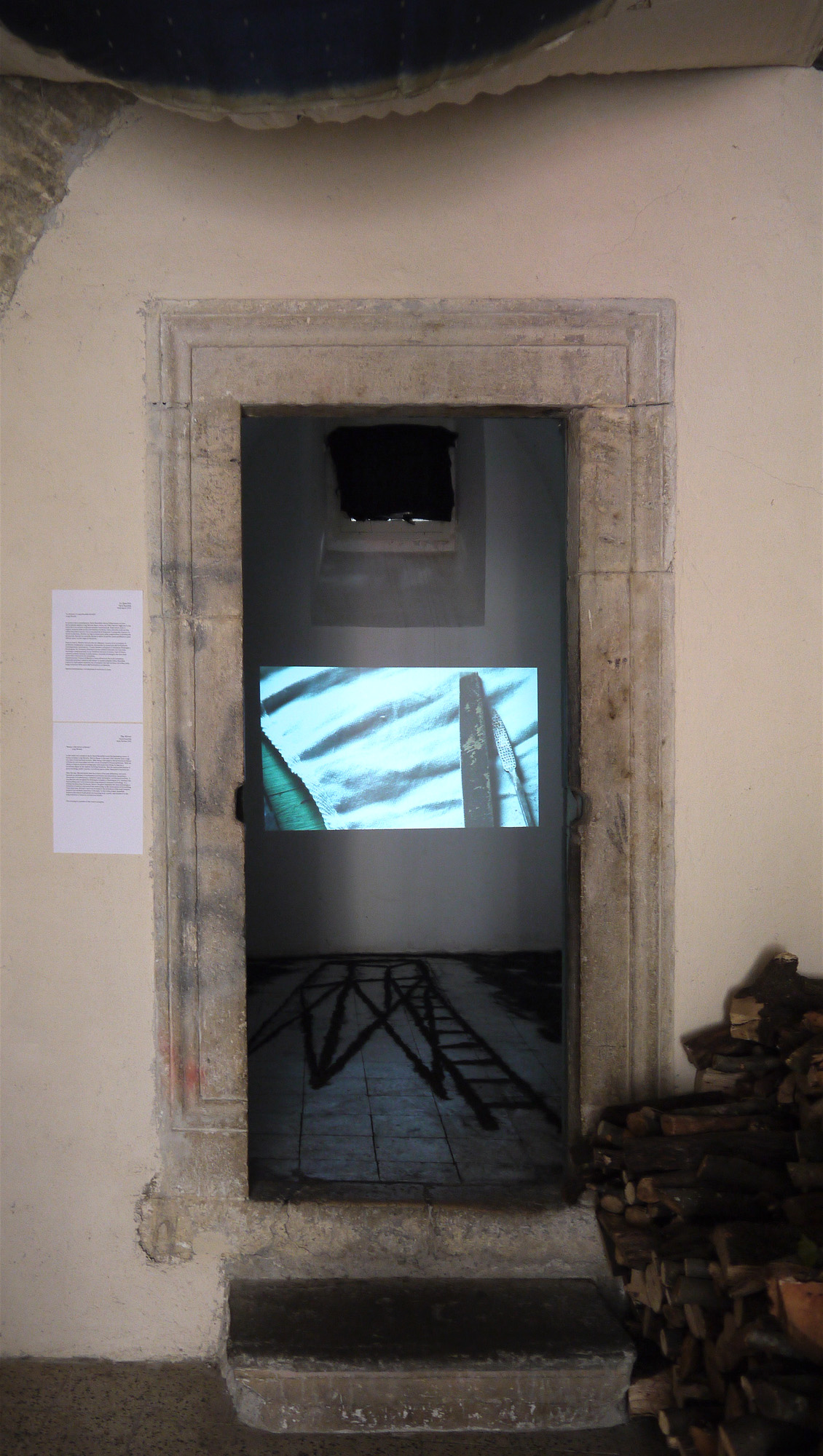
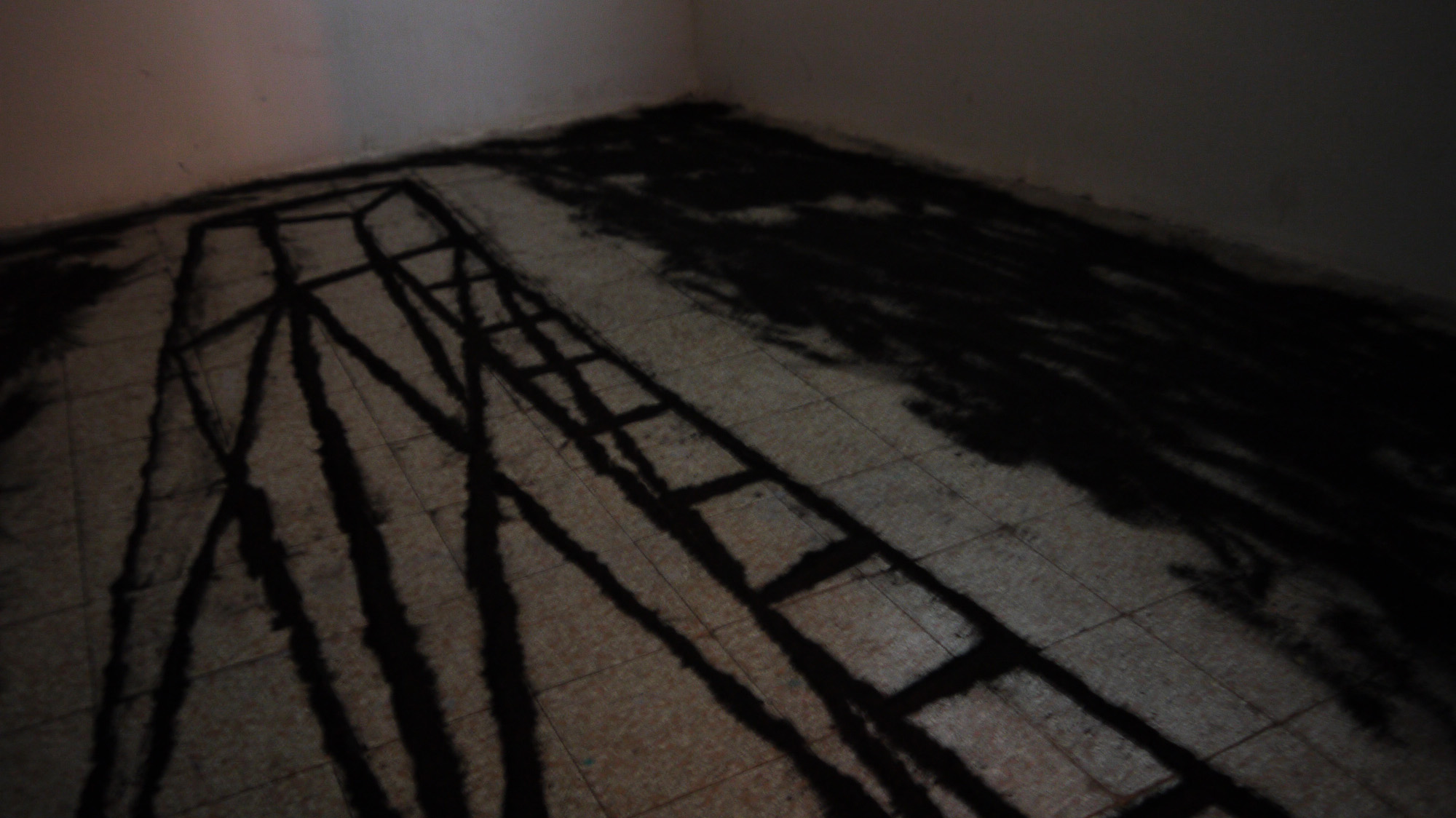
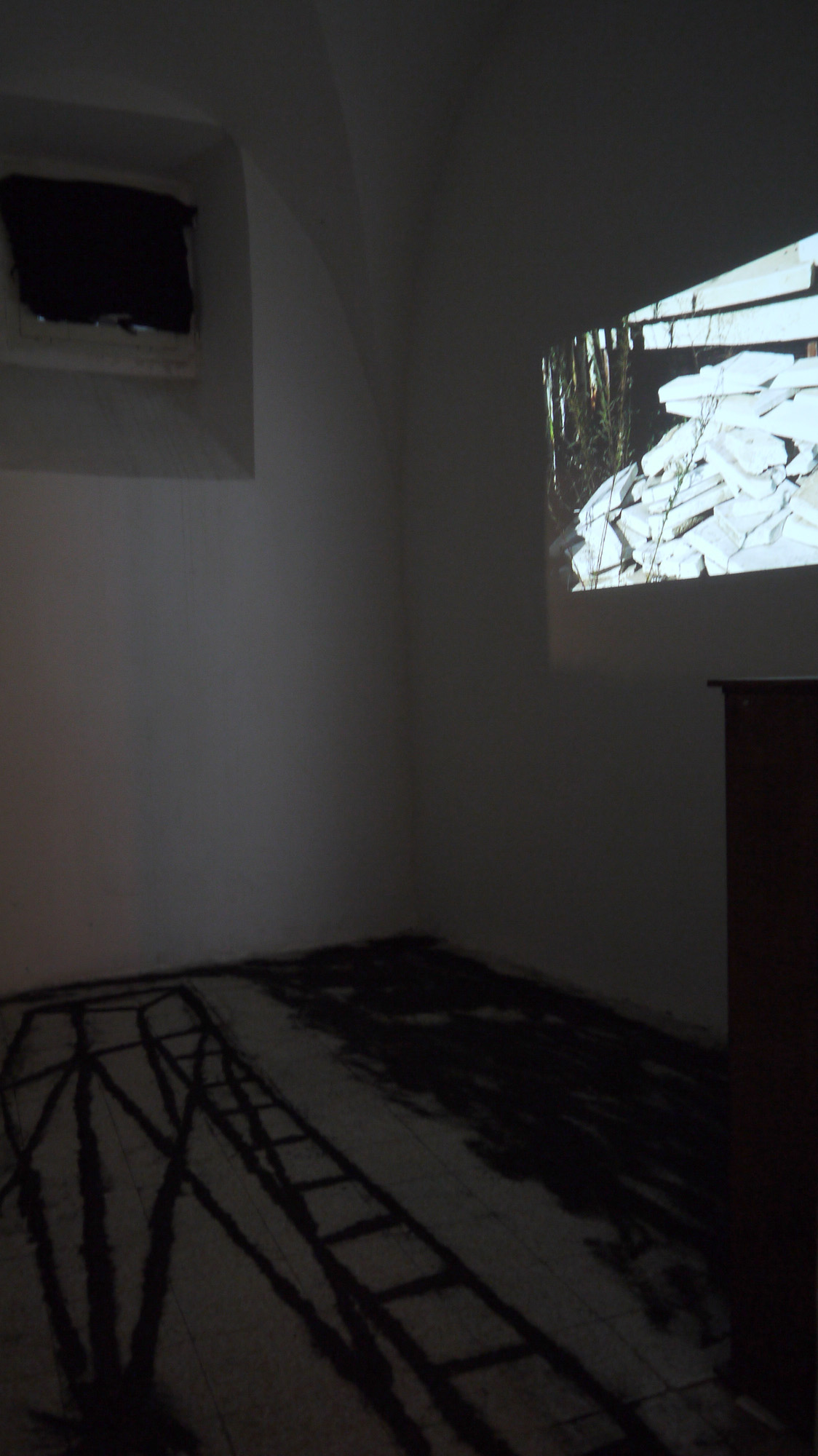
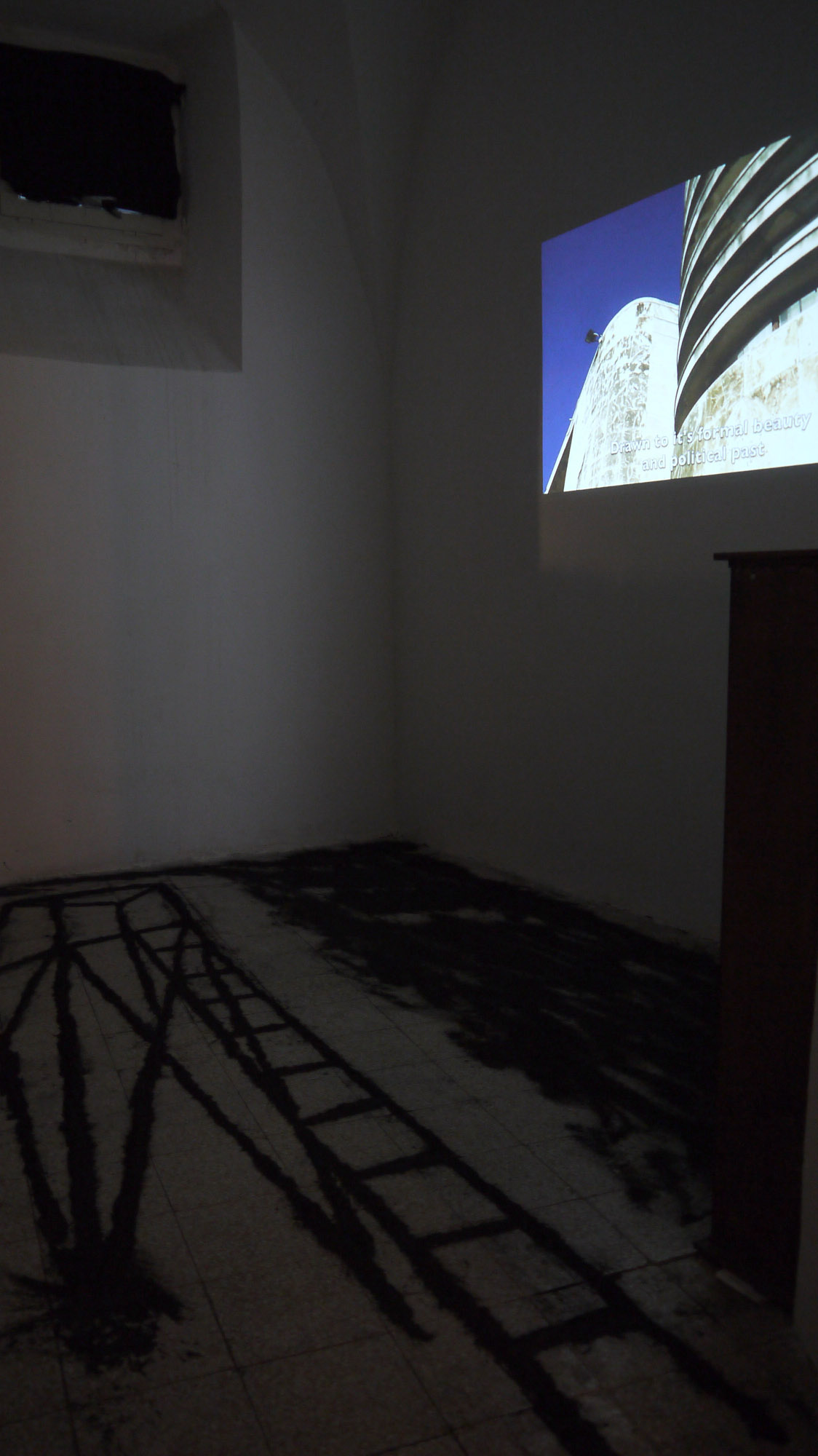
In this video and sculptural work, David Baumflek traces the fascinating career of Italian architect Luigi Moretti. Born in Rome in the year 1903, Moretti came of age at a time of international turmoil. After being a star pupil in the architectural school of Rome he was soon taken into elite circles of powerful Fascist politicians. With his ability to balance classical iconography with modernist forms, he became a prominent figure in the regimes building initiatives. Moretti constructed dozens of party buildings, public squares, and official spaces under Mussolini’s watchful eye.
After the war, Moretti would shed the history of his past affiliations, and work towards an aesthetics of mathematical perfection and abstraction, becoming a forerunner of contemporary, computer-aided ‘parametric’ architectural practice. It was Moretti who designed the Watergate Complex in Washington D.C., making it the first building ever to be constructed using advanced computer technology. In a telling interweaving of histories, Nixon’s burglars employed the same technological fantasies of mastery and control that were at play in the construction of the building. Time after time, Moretti’s work can be found at the interstices of the most complex political and aesthetic questions of the time. In this video project, Baumflek explores the ethical implications surrounding such a career, and situates it in the long traditions of western architectural history.
This viewing is a preview of the work in progress.
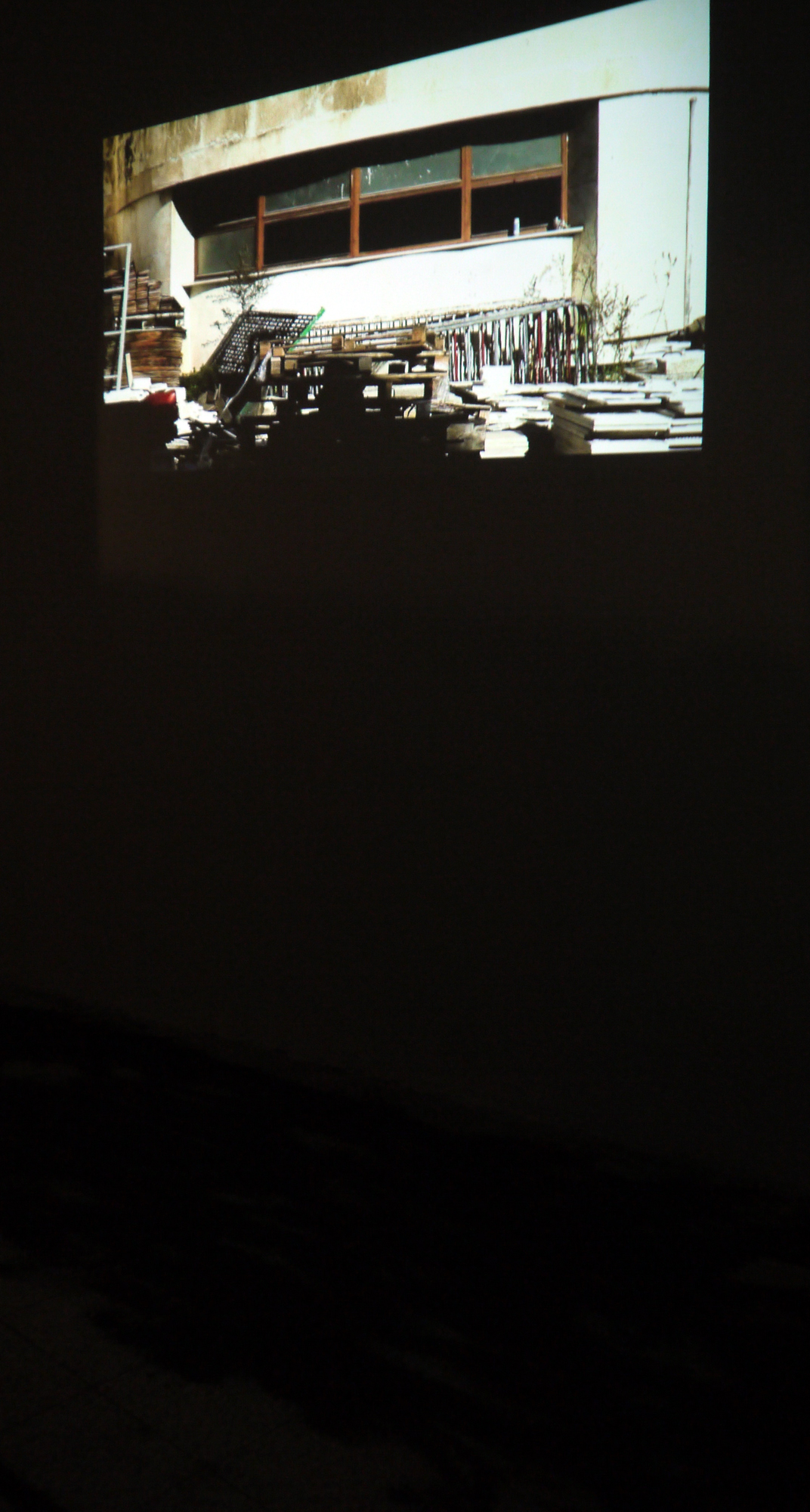

Deborah Chaney, Canada
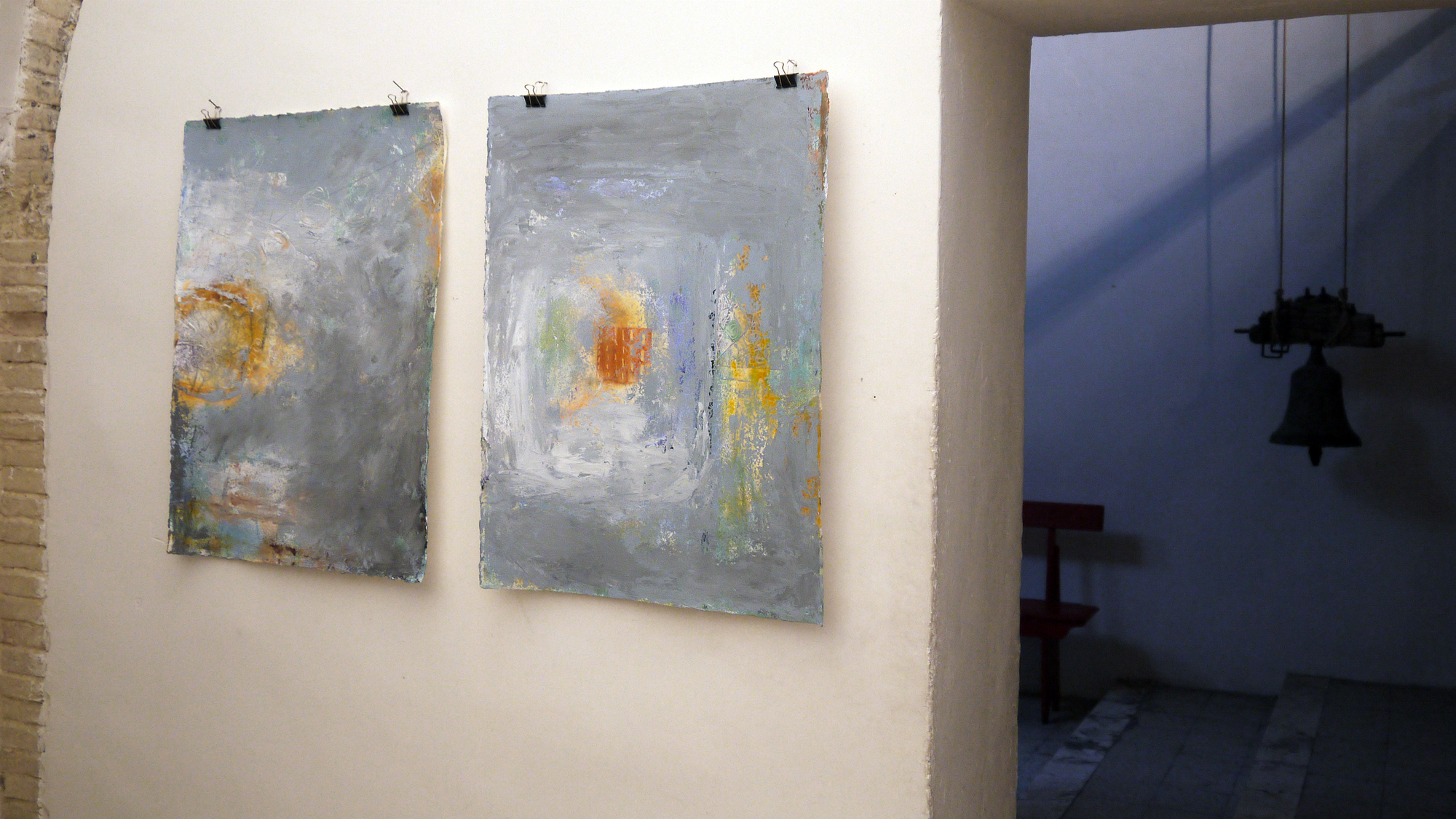
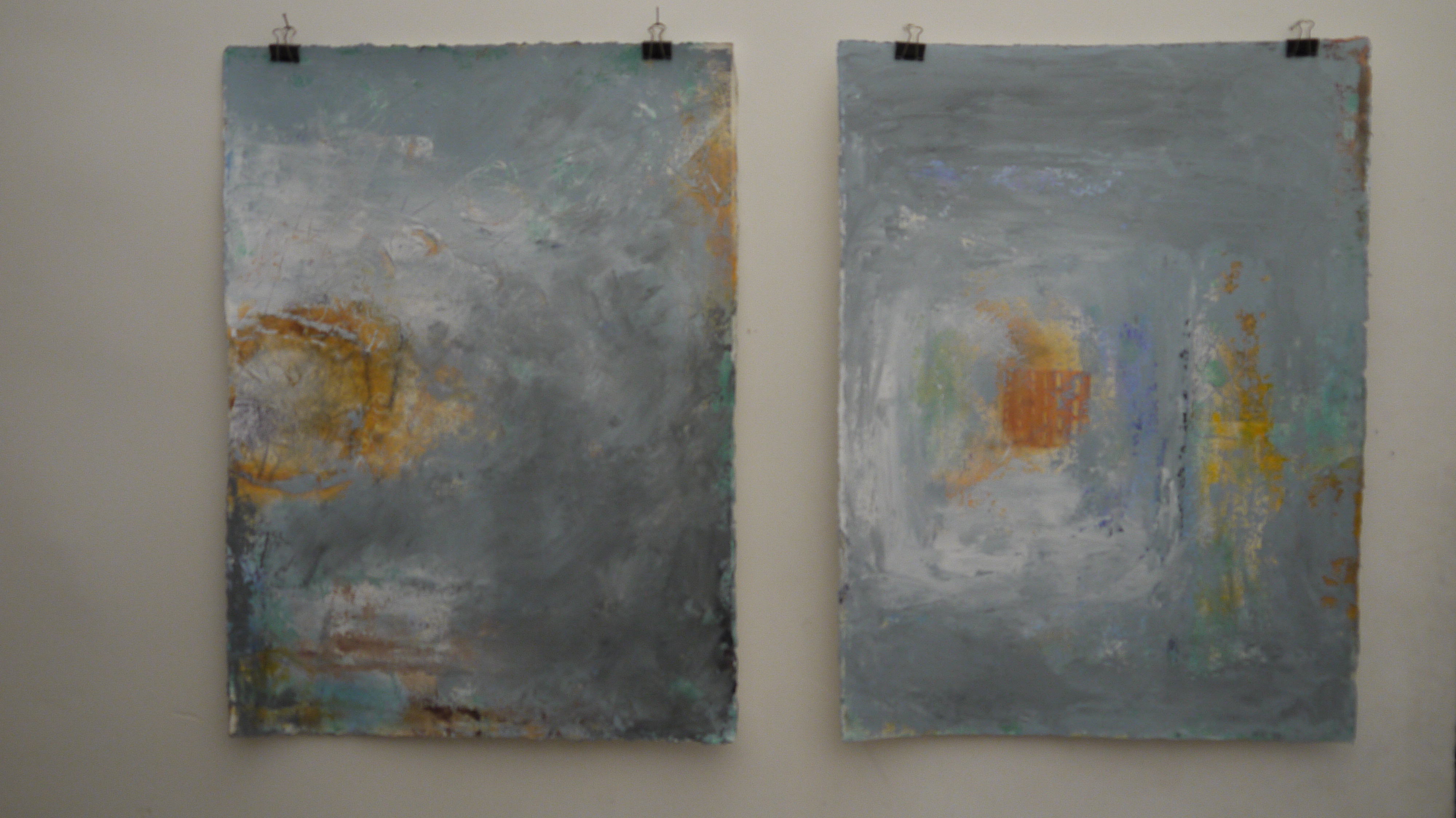
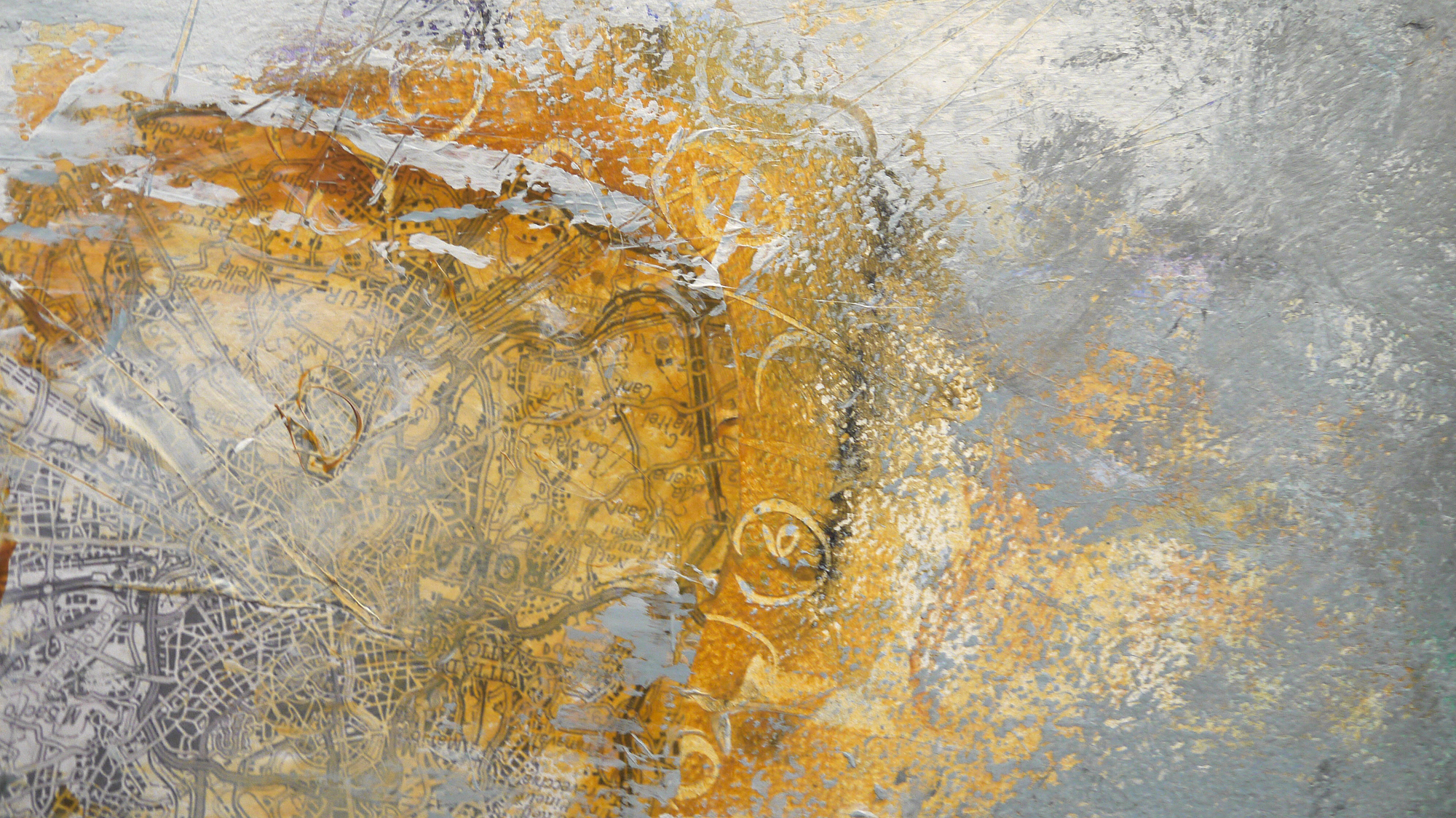
Catriona Gallagher, UK
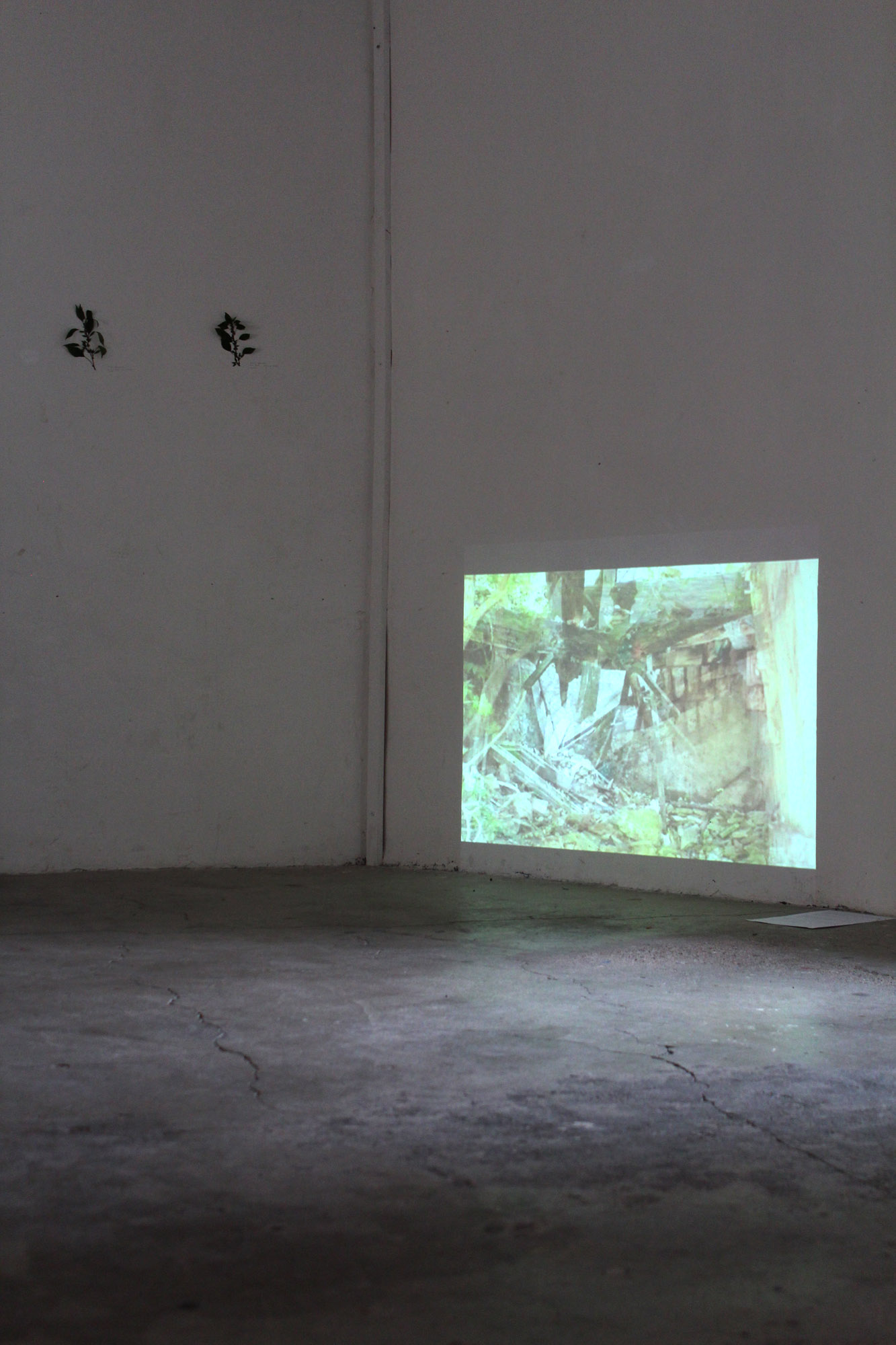
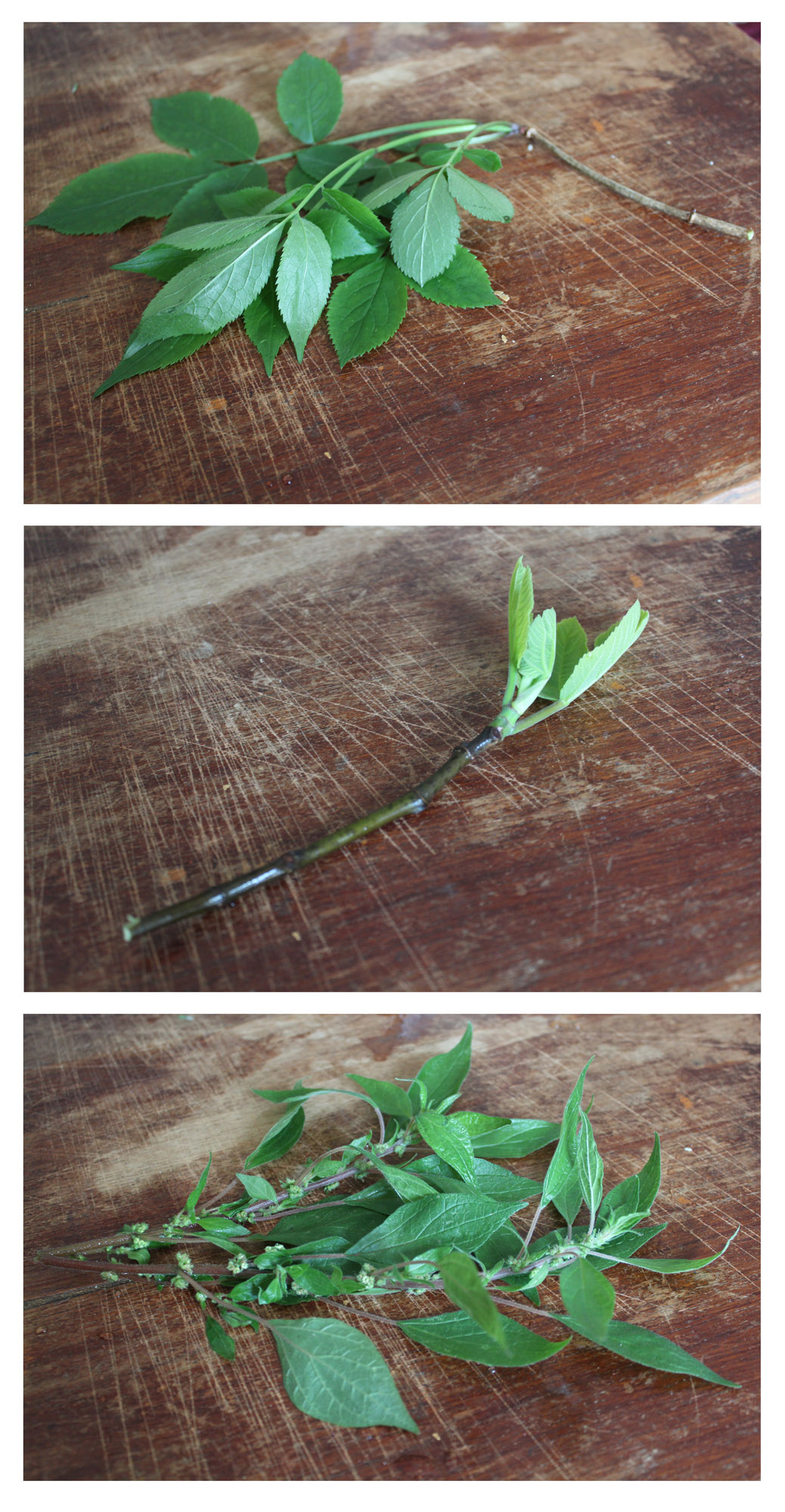
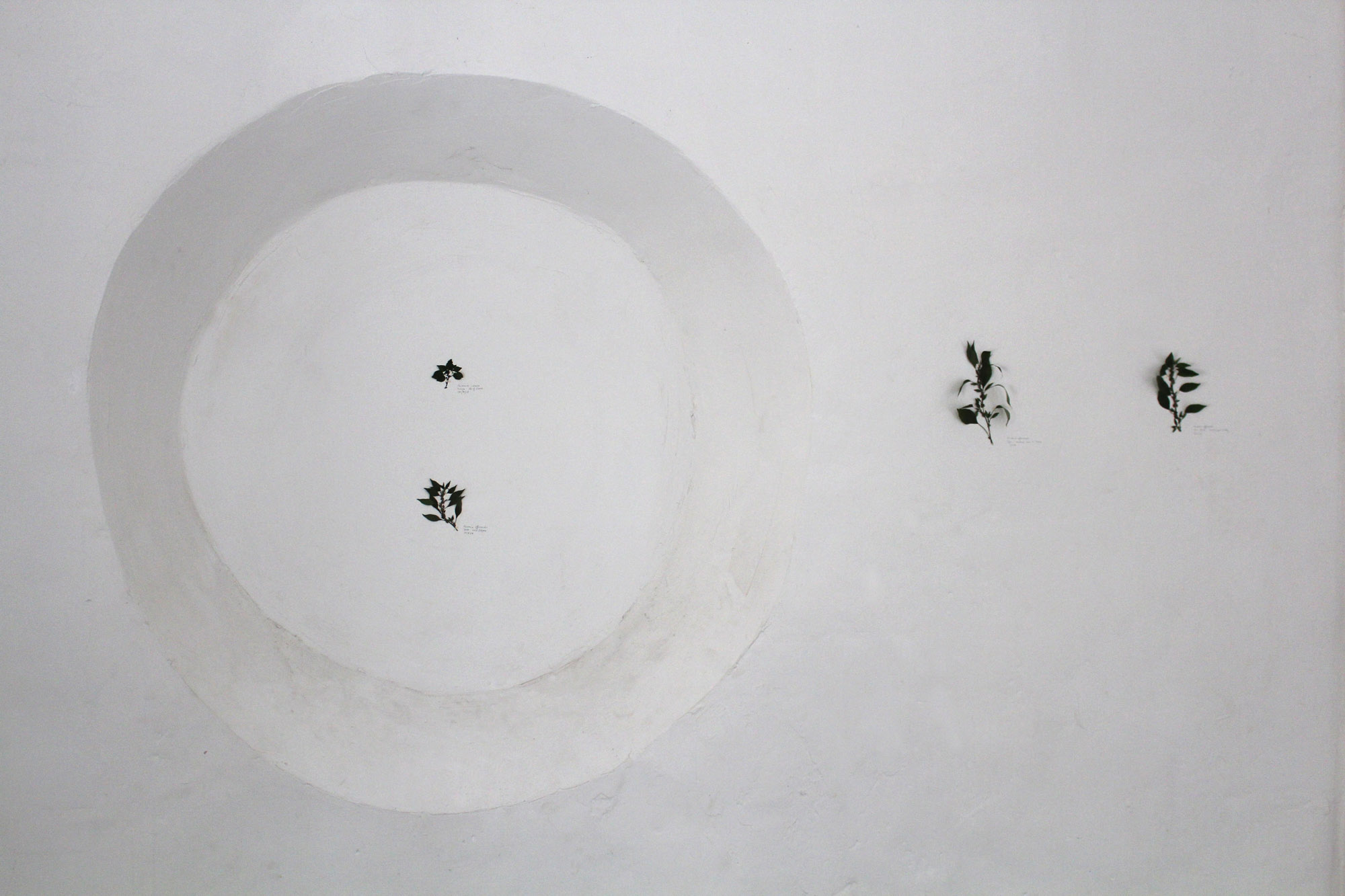
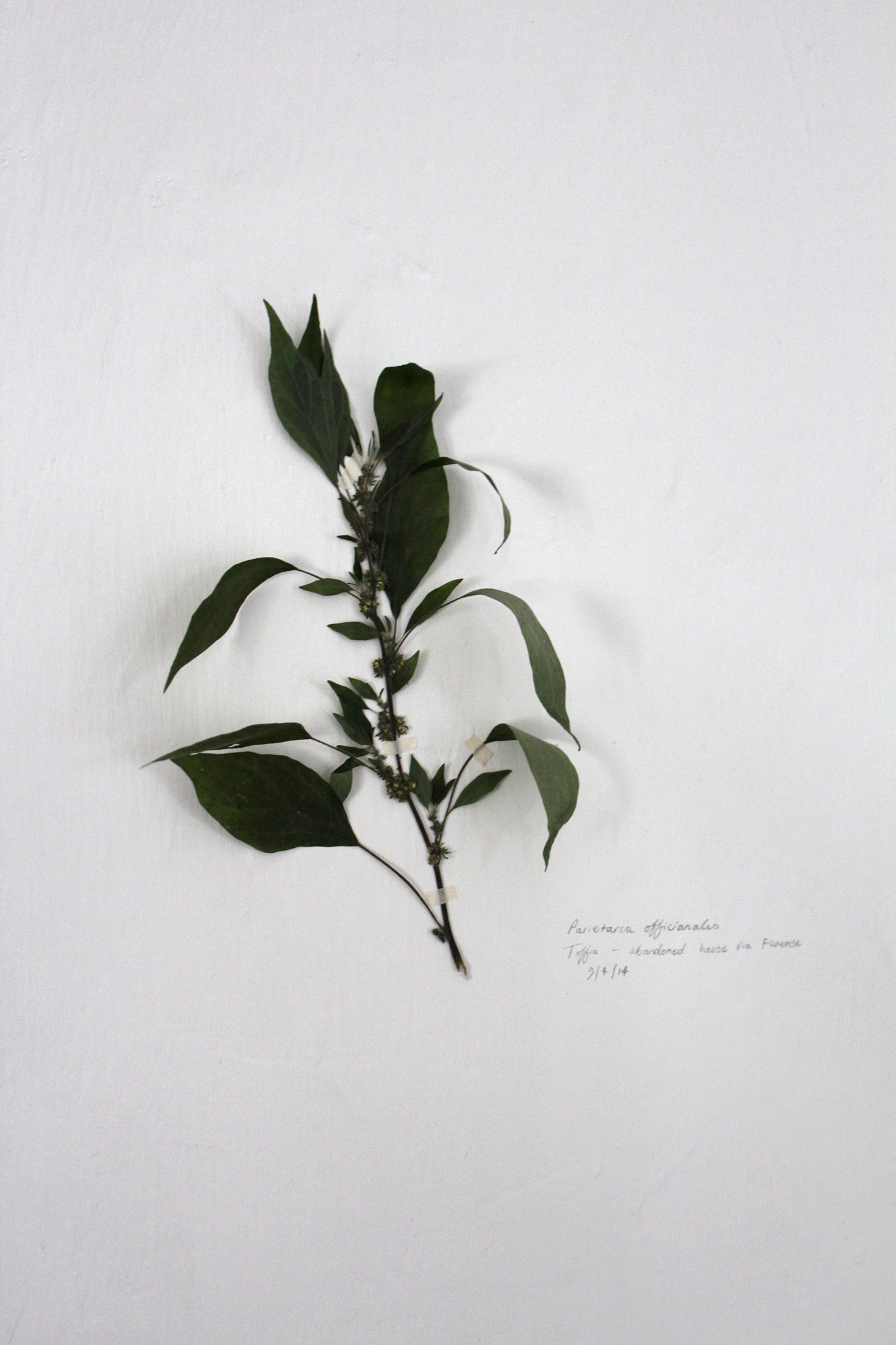
“Peering from the edge of a former doorway I could see right into the rubbly green heart: elder trees suspended in mid air by half-fallen beams from the first floor, underneath them carpets of parietaria over the hillocks of tumbledown stone, and lodged in the wall, seemingly having done the first damage, a huge majestic fig, spaccamure, wall-breaker.”
Subverted Shelter – when a building can no longer provide its base function, a roof over your head, to protect from the elements, the outside, thereby creating an inside. The rain and wind can enter, as well as the light of the sun, and with the wind seeds are carried too. Plants find a home wherever their needs for light, water and food are provided for. A roofless shell shelters no more, it is merely a green-filled remnant. Inside becomes outside when outside comes in.
Tincuta Heinzel, Germany/Romania
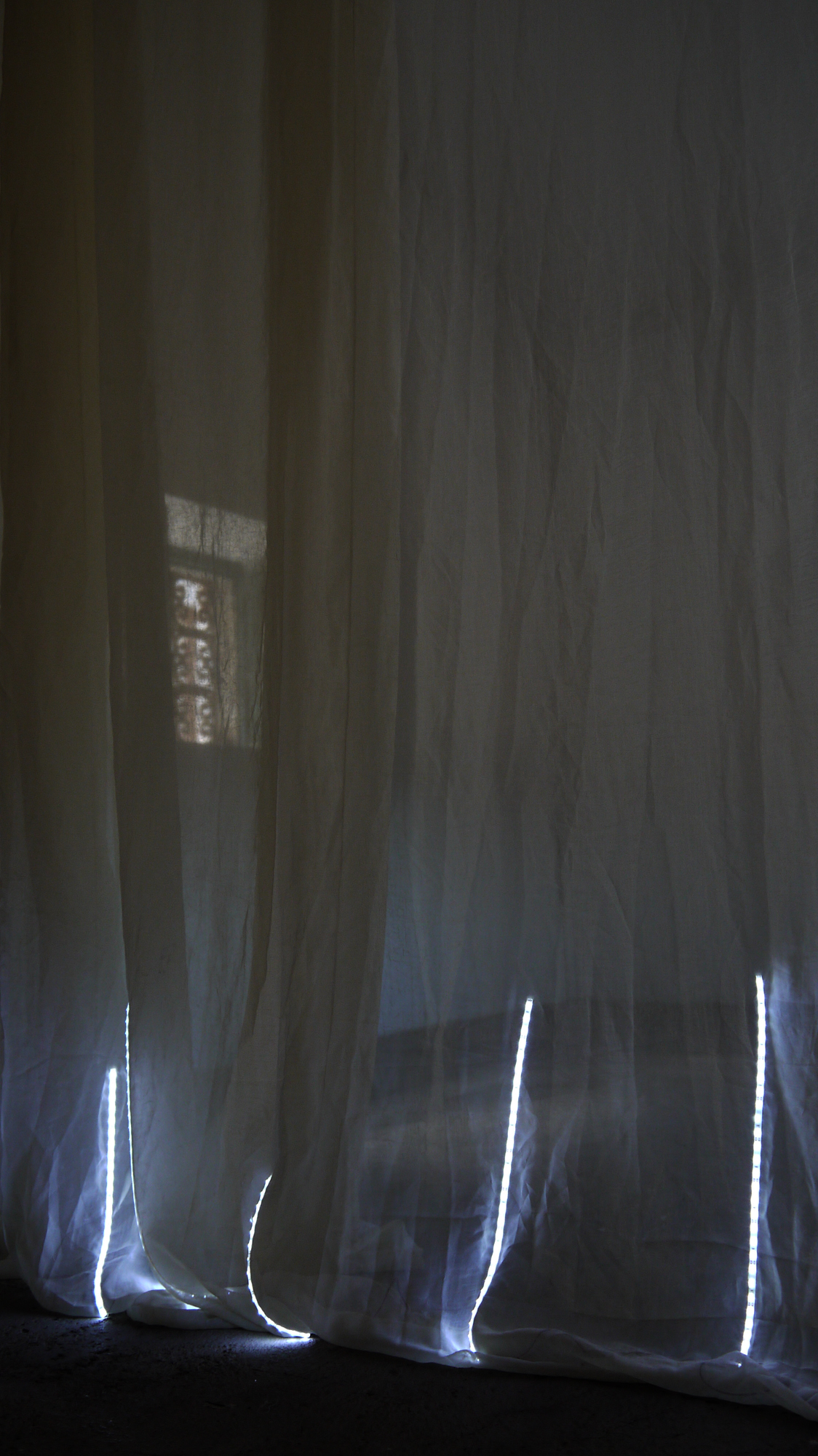
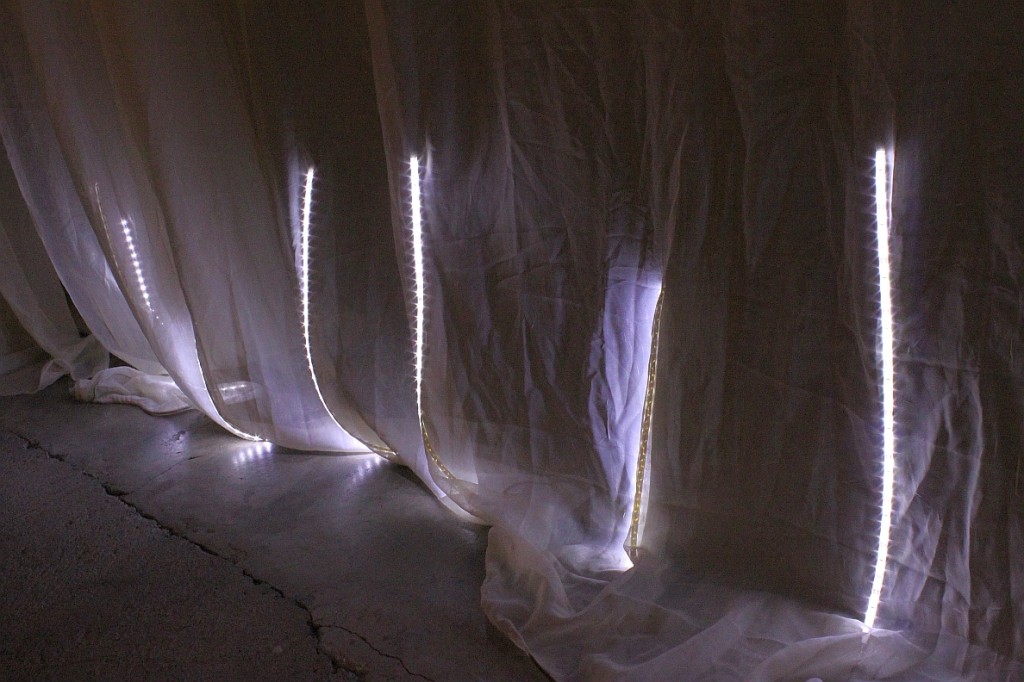
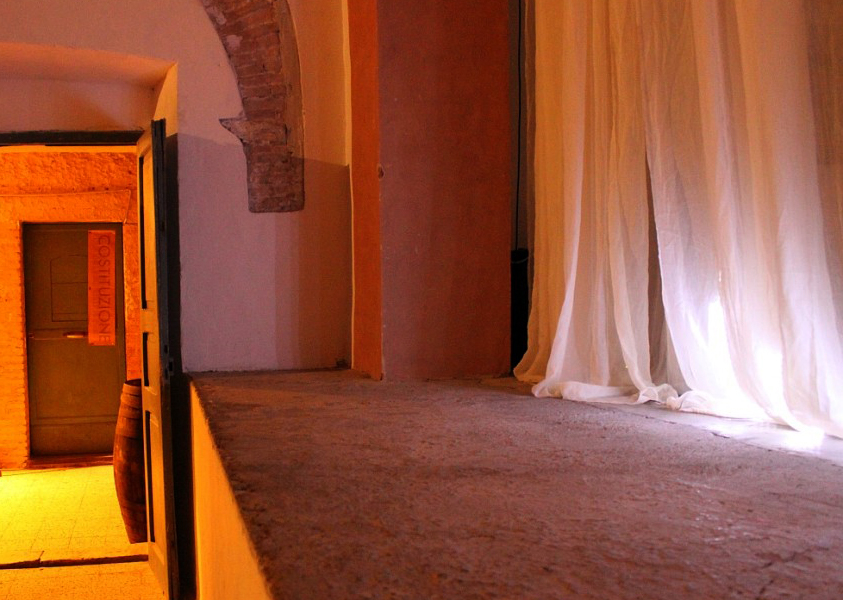
Light Curtain is my most recent work, realized during a residency at 33 Officina Creativa, Toffia (Italy) in October 2014. The piece was specifically conceived for their theater space. The lights are controlled by a potentiometer and the curtain will be used during performances.

Sonja Hinrichsen, USA/Germany

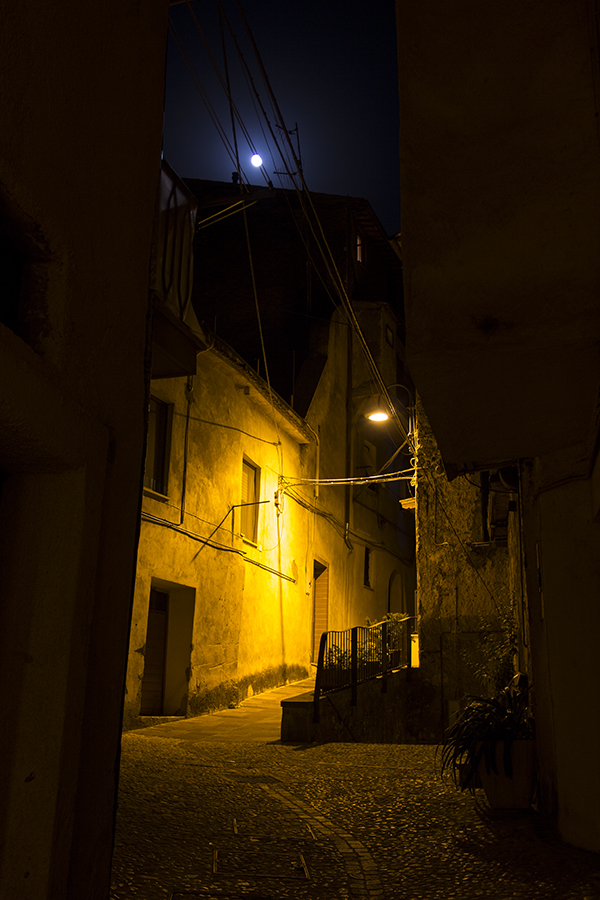
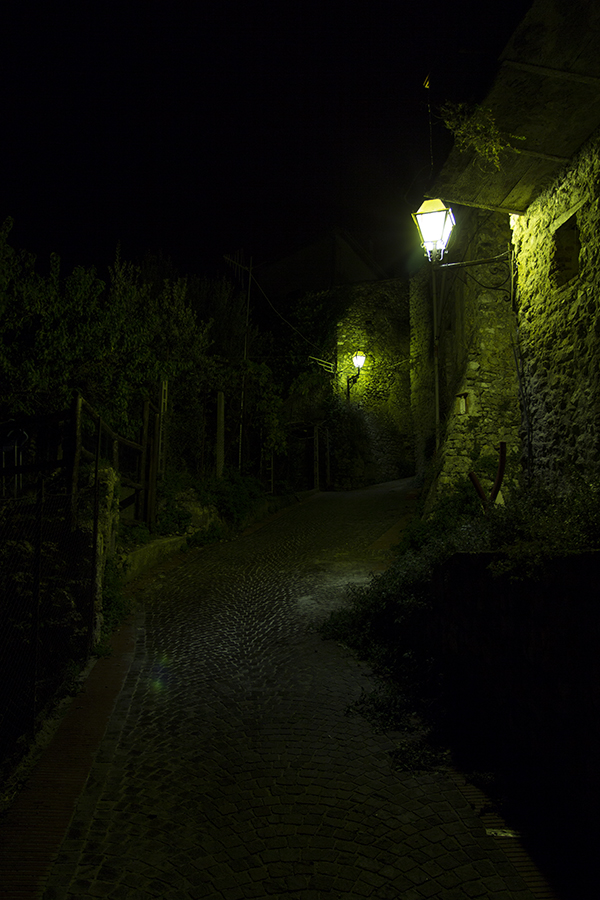
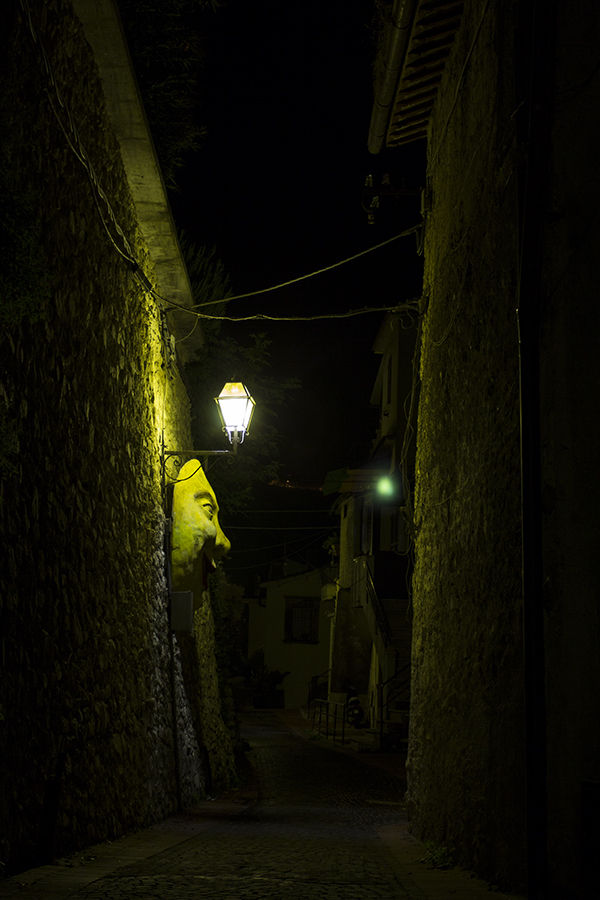
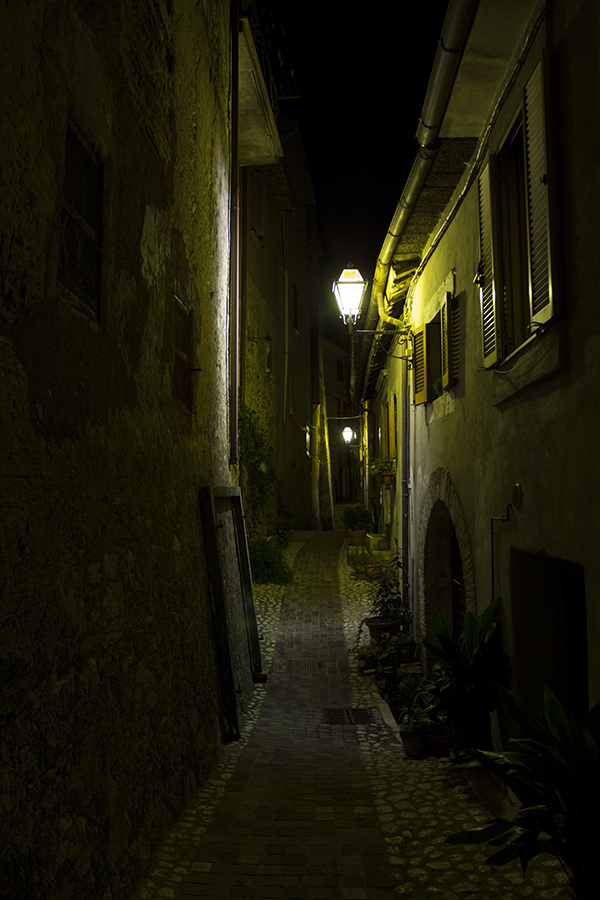
Ginny Huo, USA
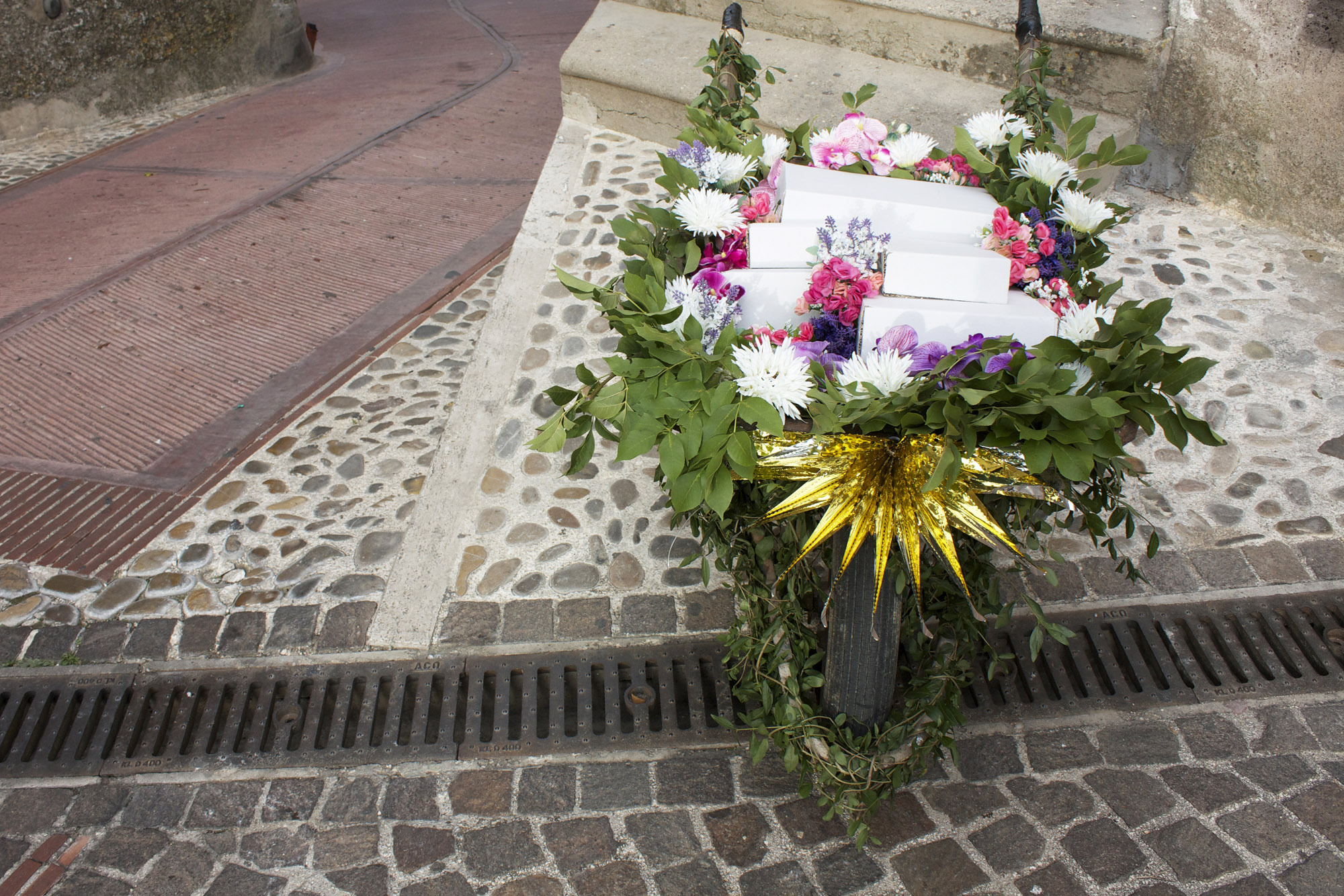
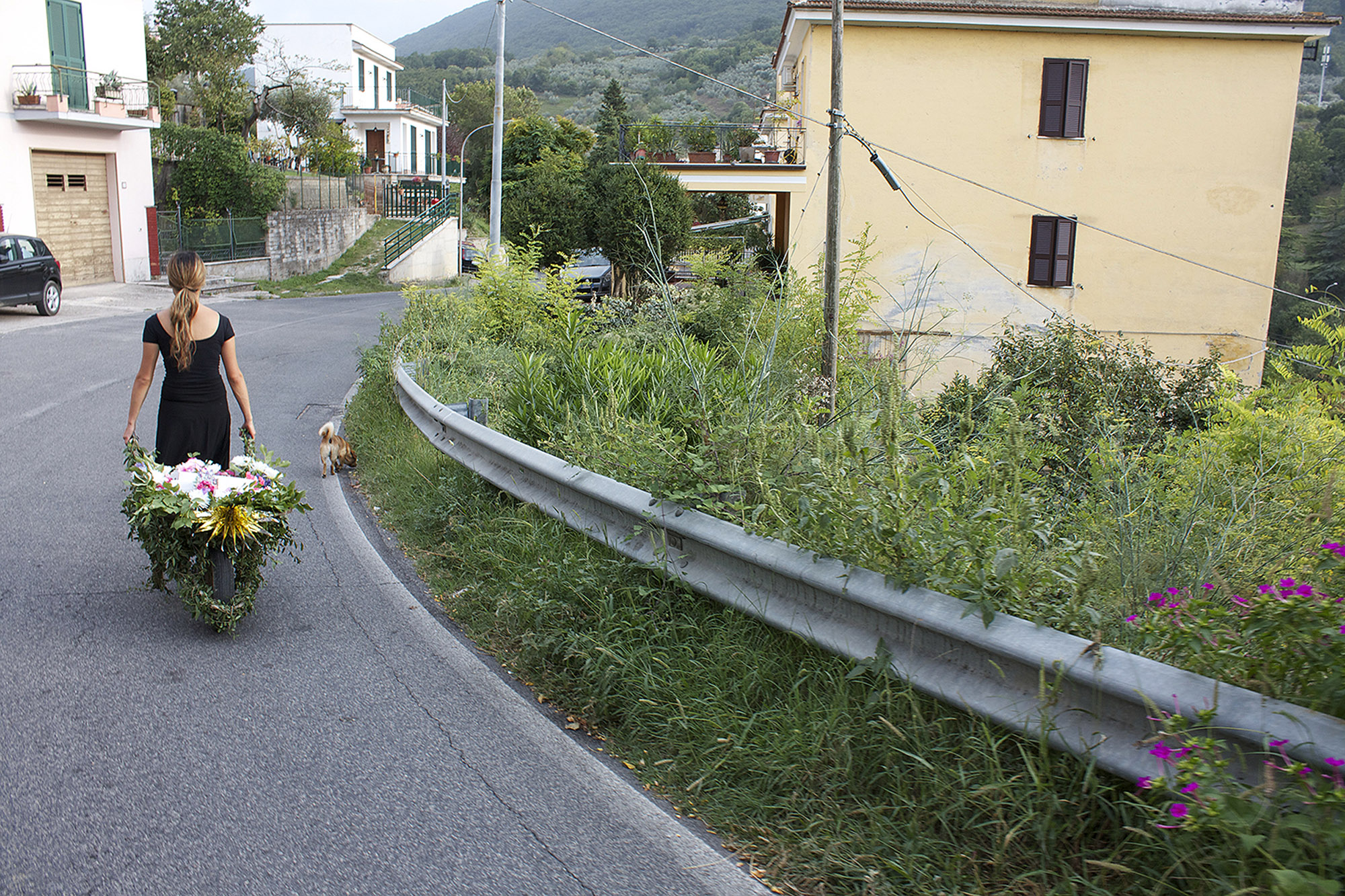
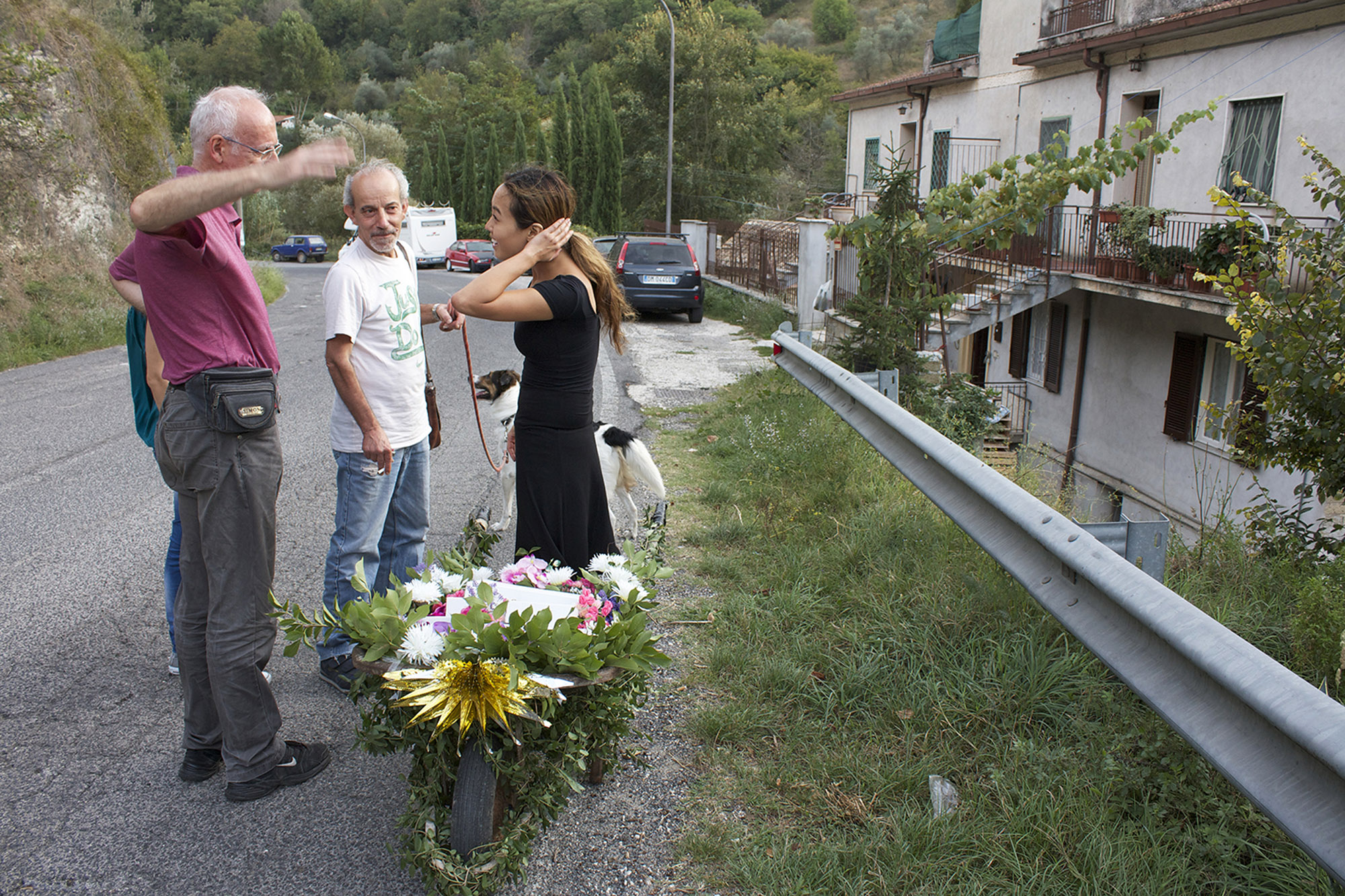
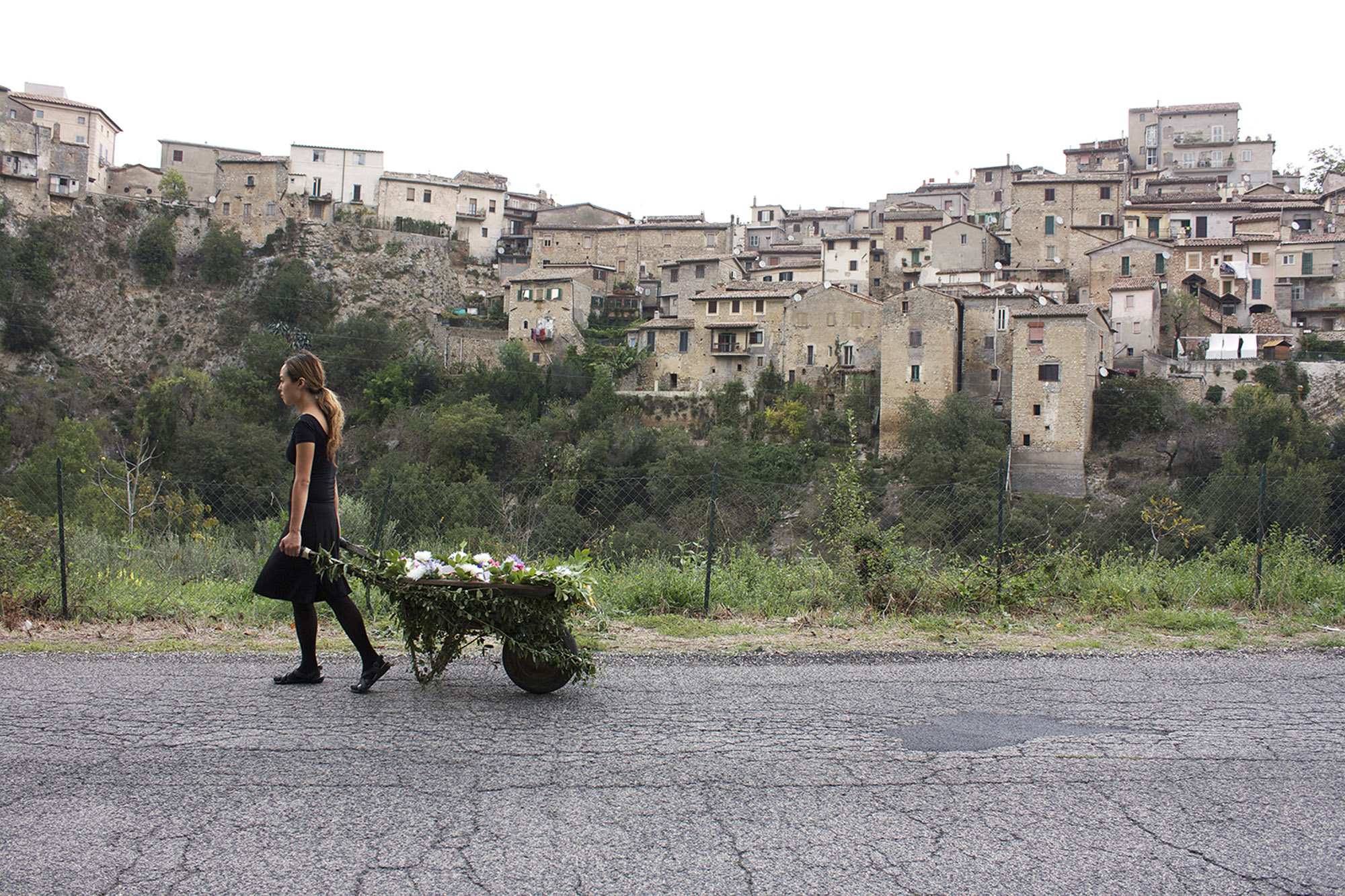
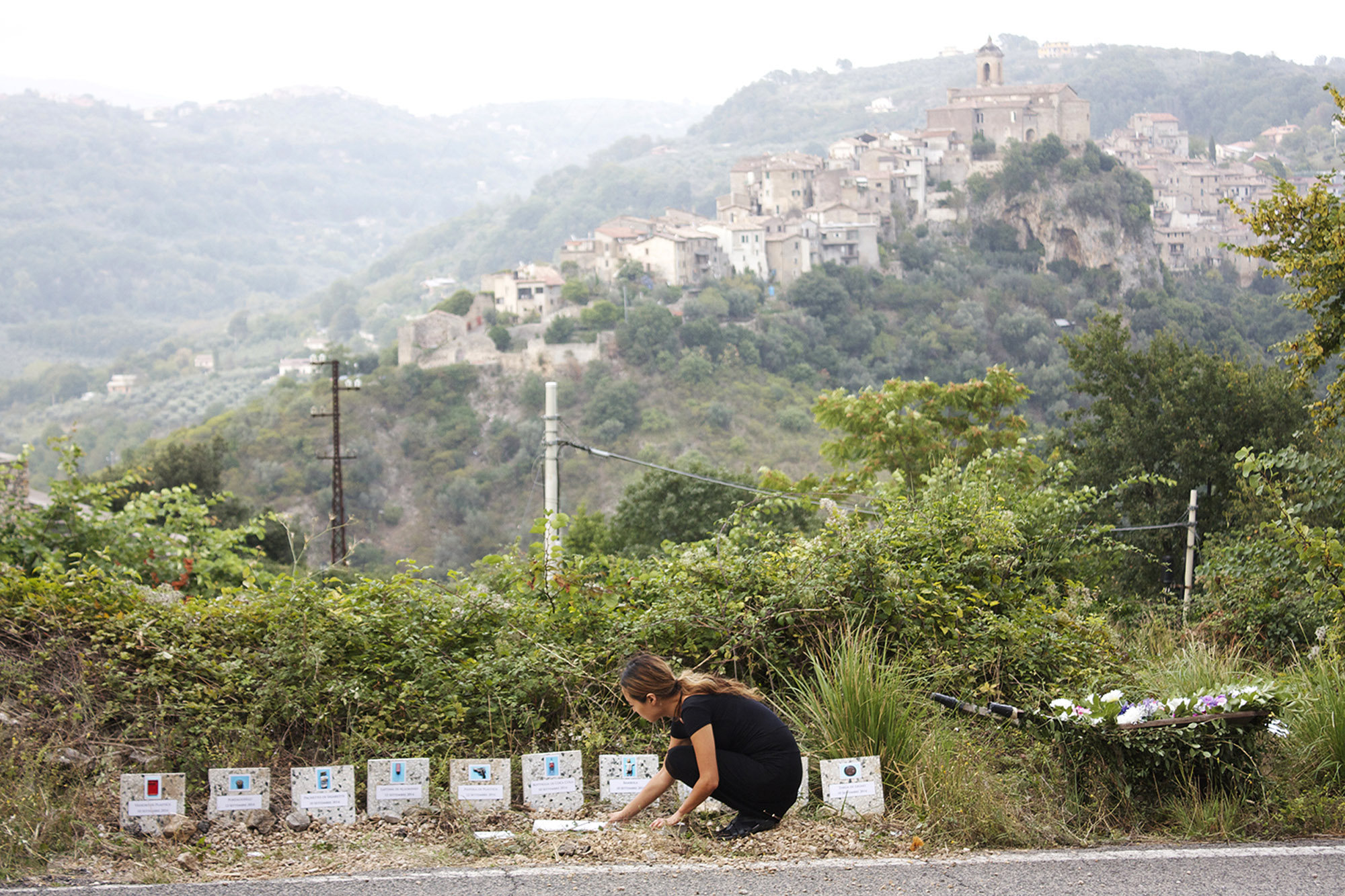
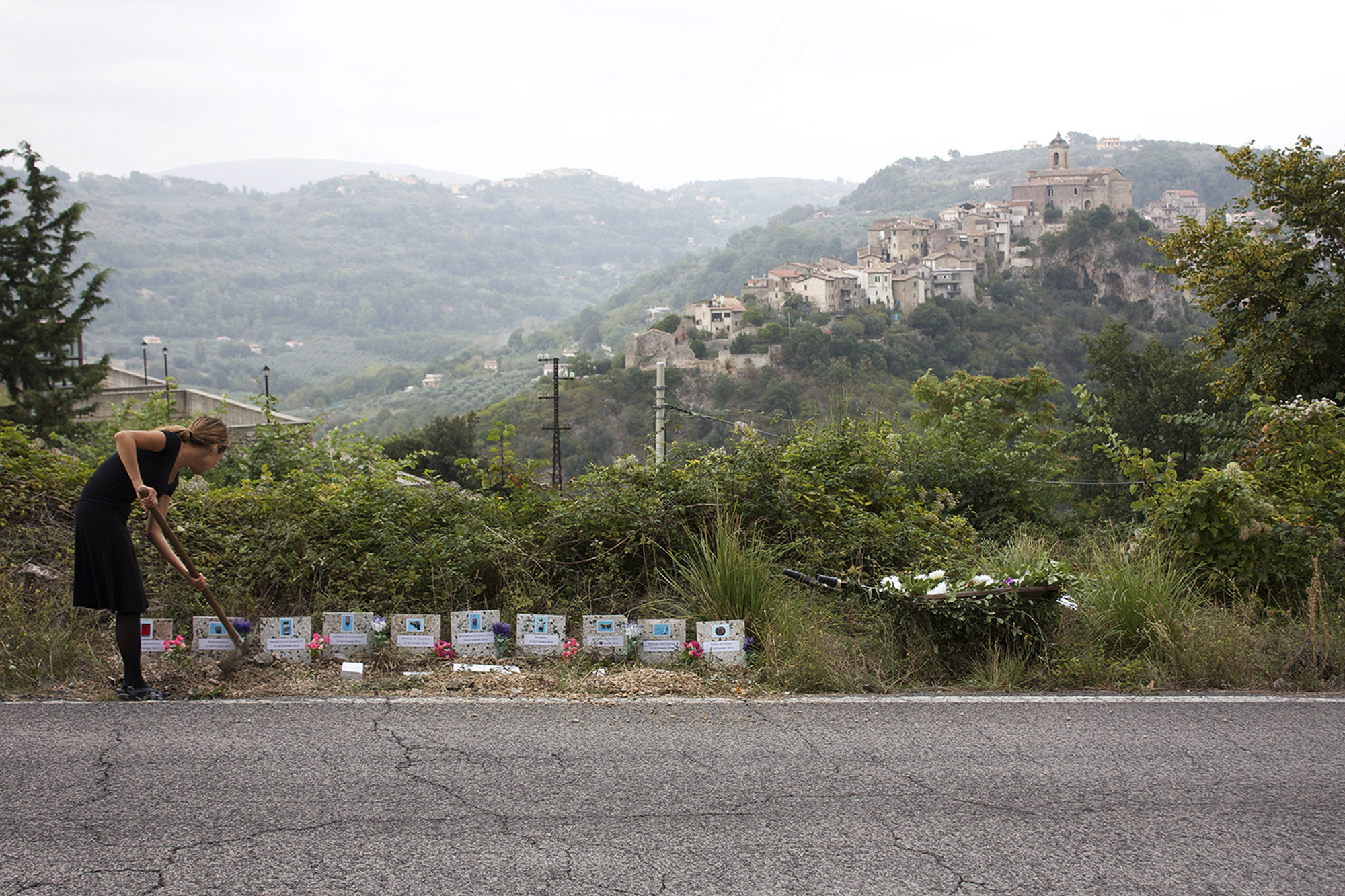
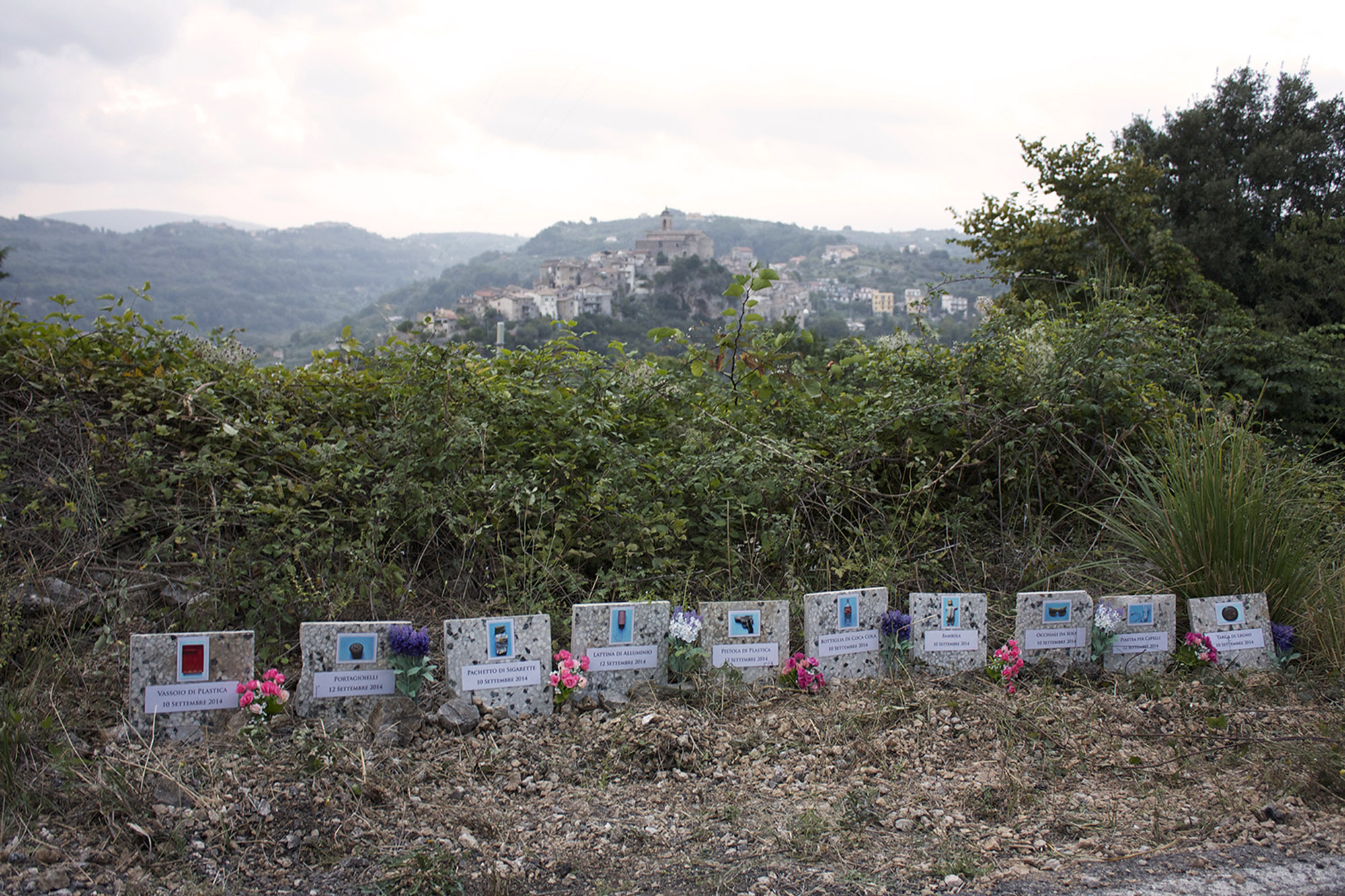
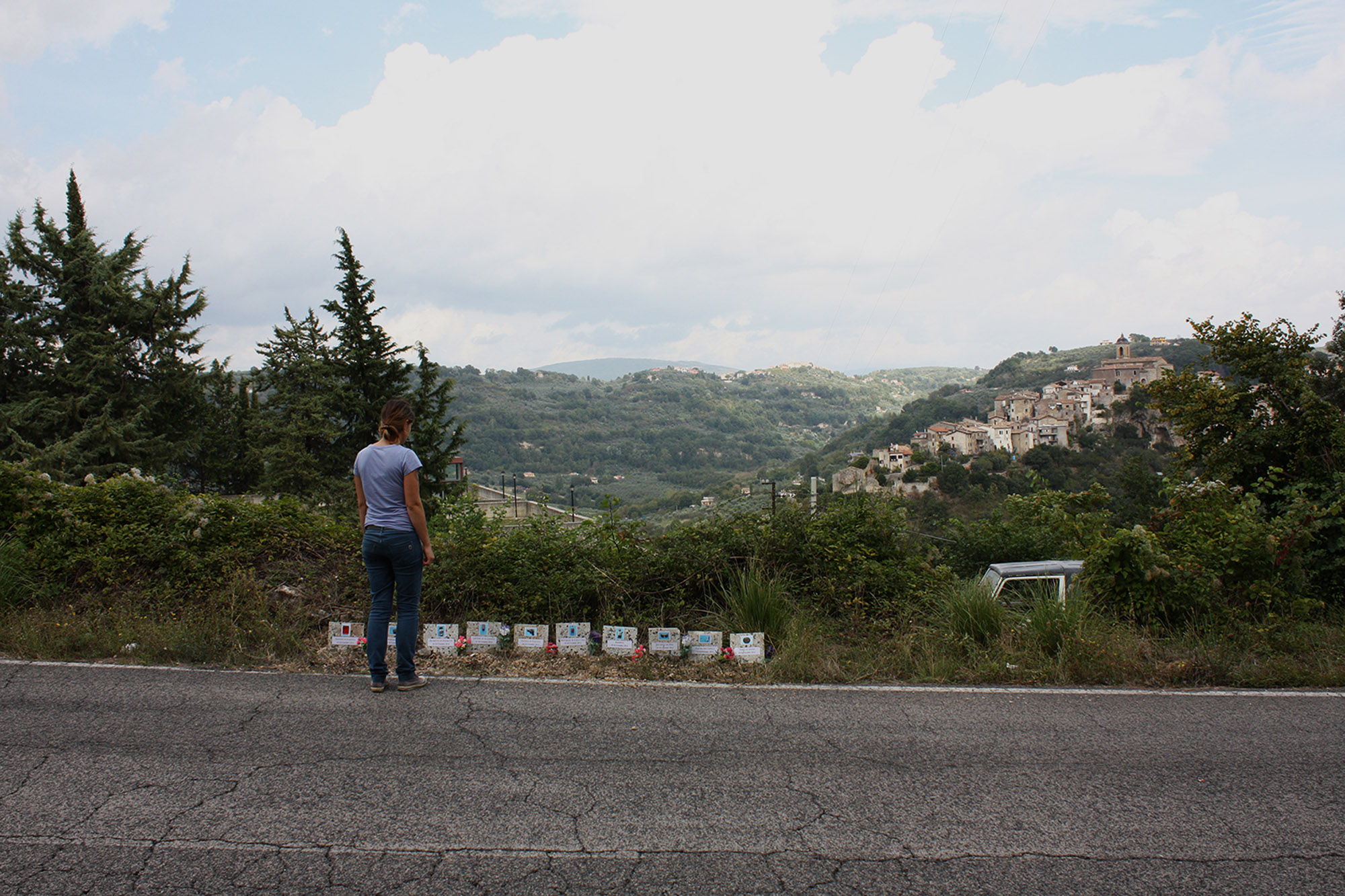
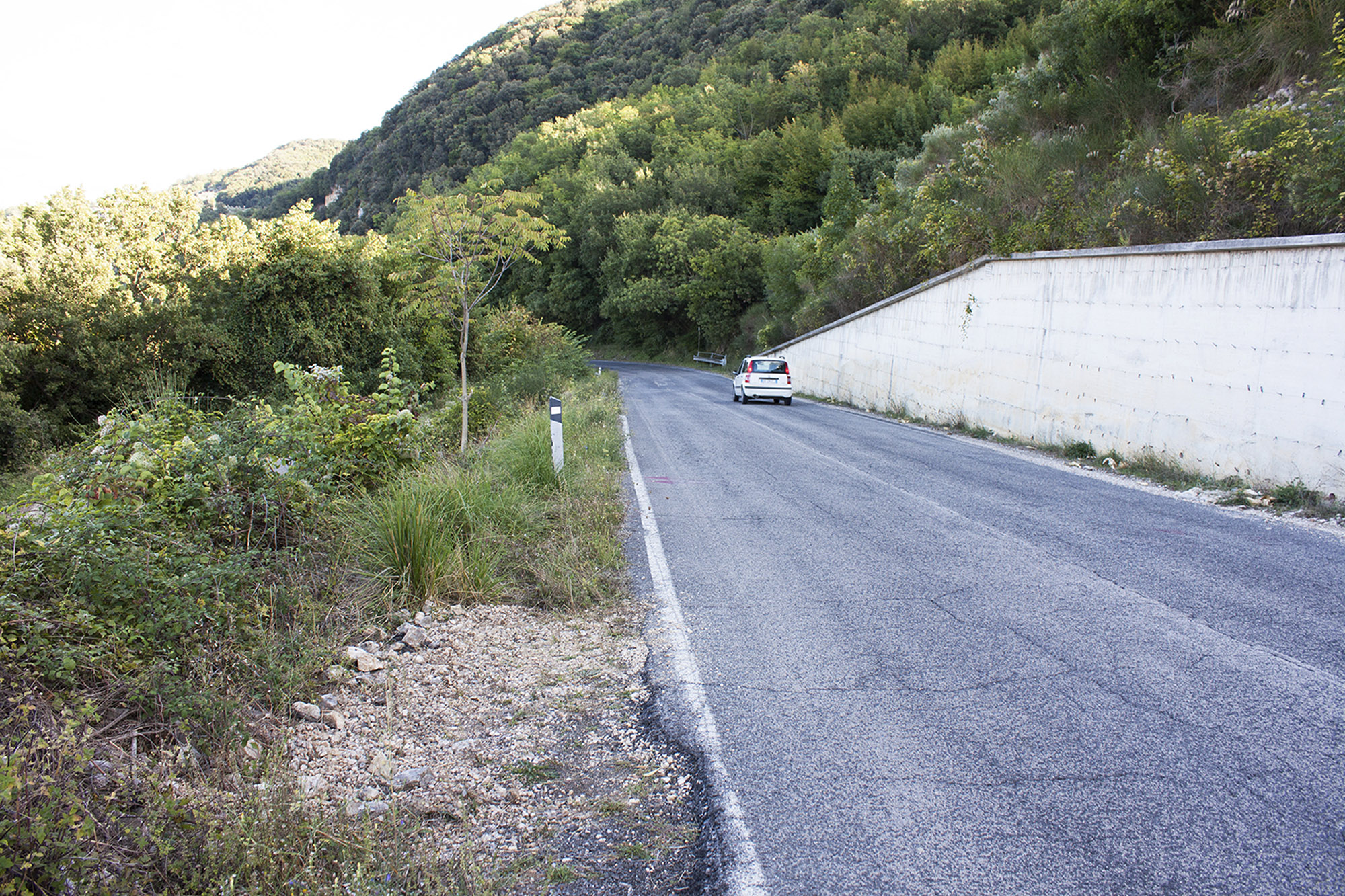
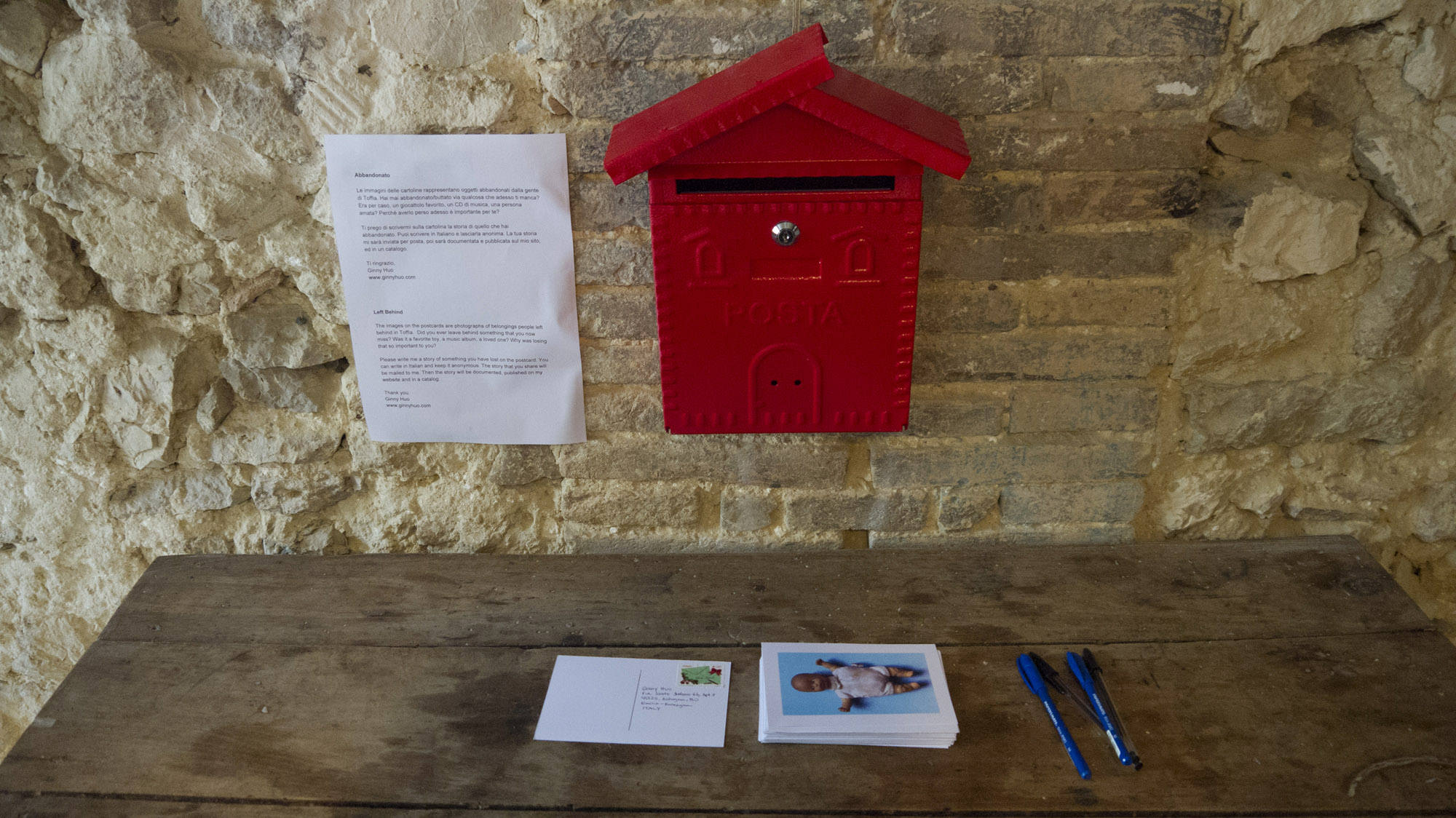
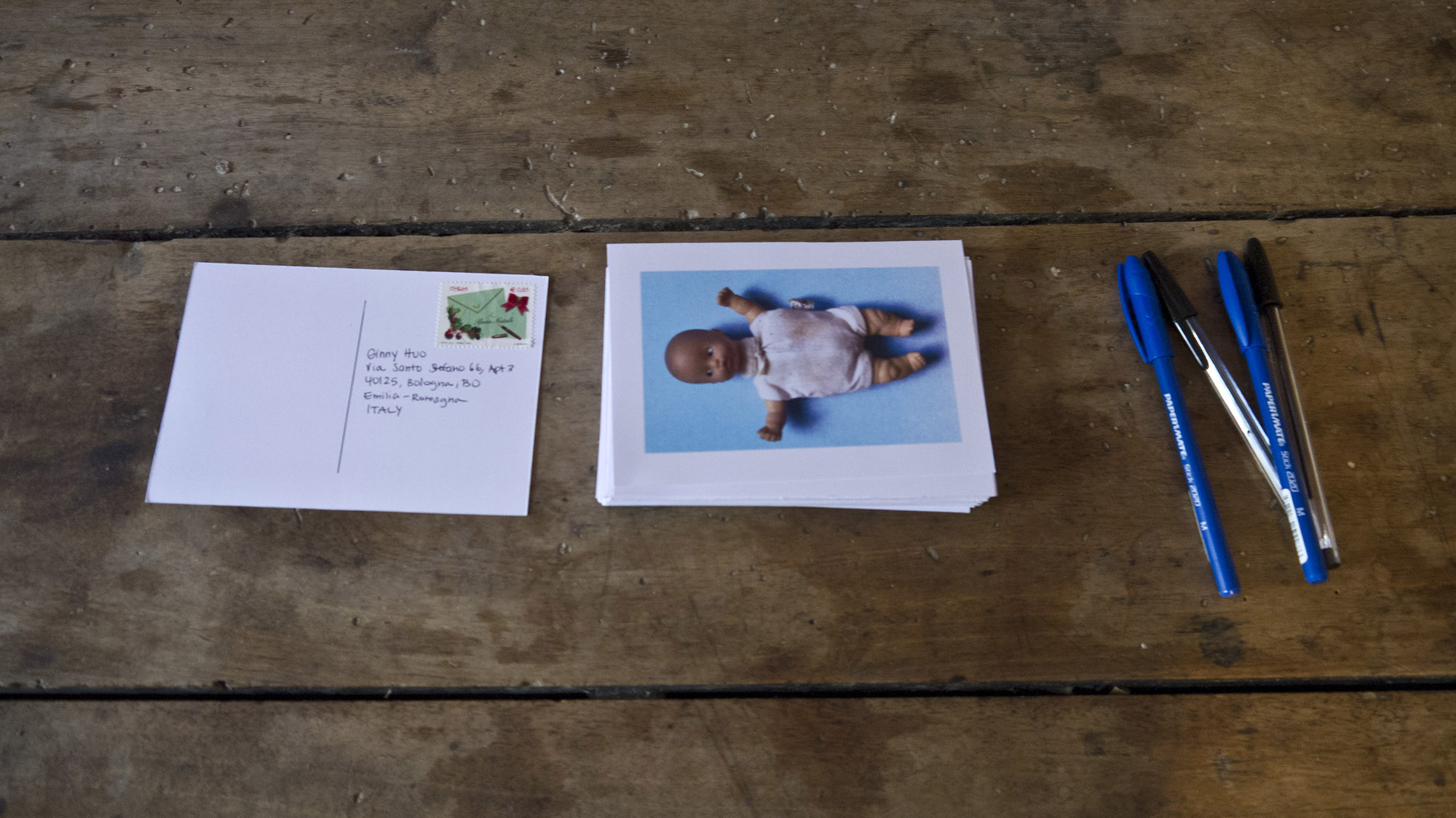
While searching for the 50 Euros I had lost on the St. Mary procession, I discovered abandoned dolls, toys, couches, bookshelves, among many other items that were thrown off the main road, Via Farense. I began collecting the items left behind all over Toffia. I photographed the objects and created custom boxes for each of them. On the day of the Equinox, with the objects in their boxes I carried them on Via Farense to a site to provide these objects a proper burial. There are 10 objects buried with their photograph and the date of when they were discovered on the tombstone. The site is found on the location of the map below.


Chinatsu Ikeda, Japan
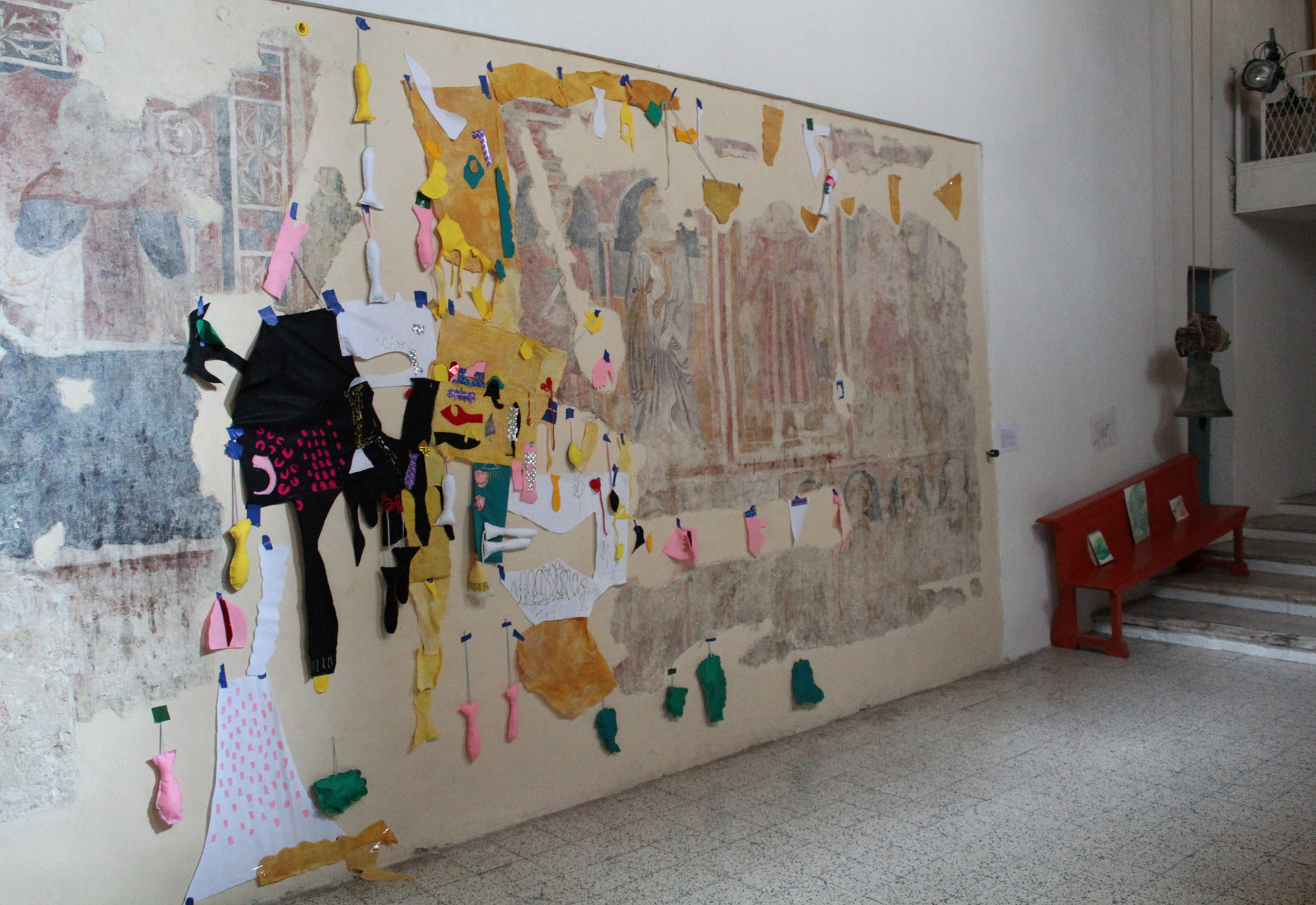

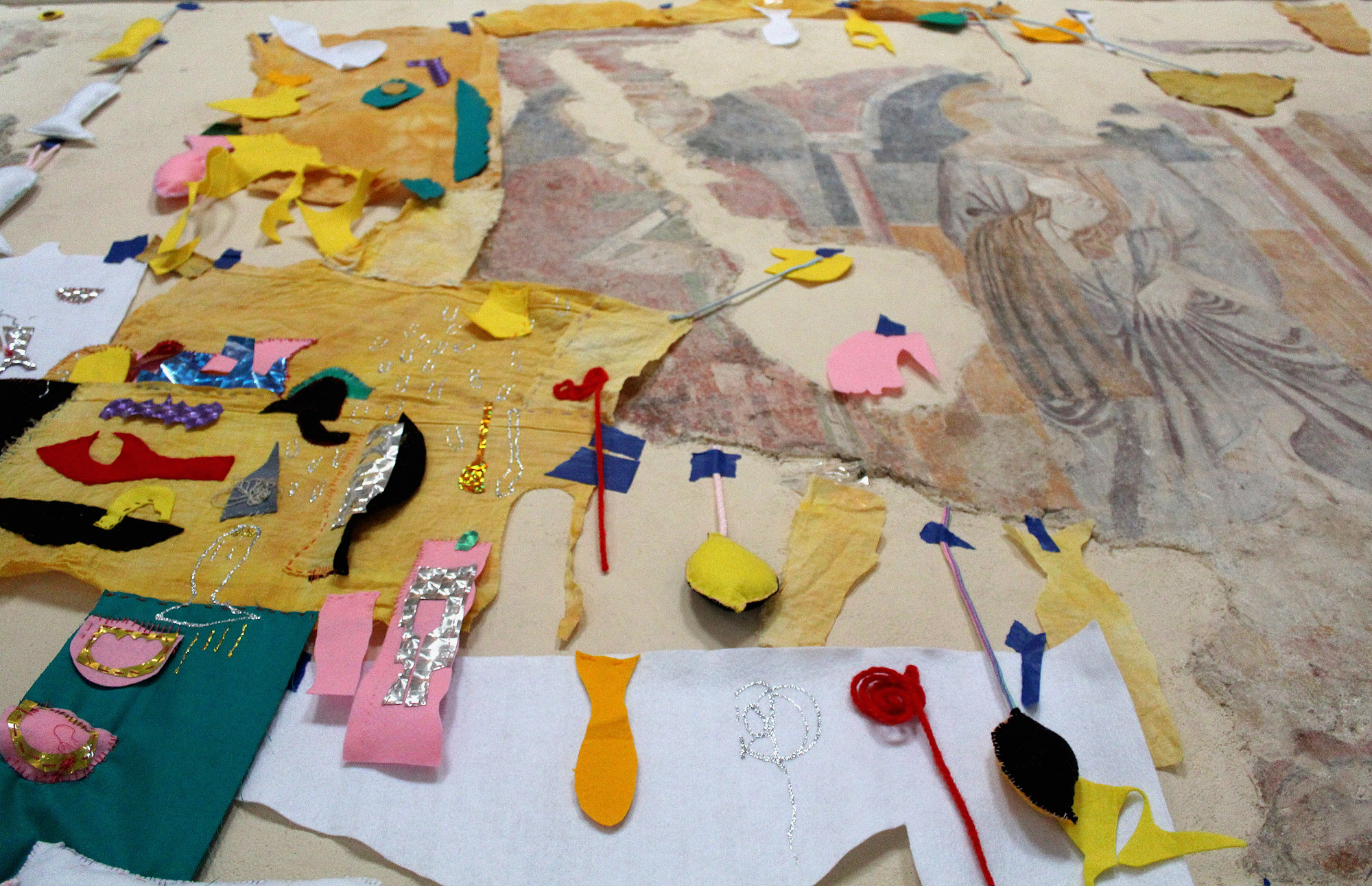
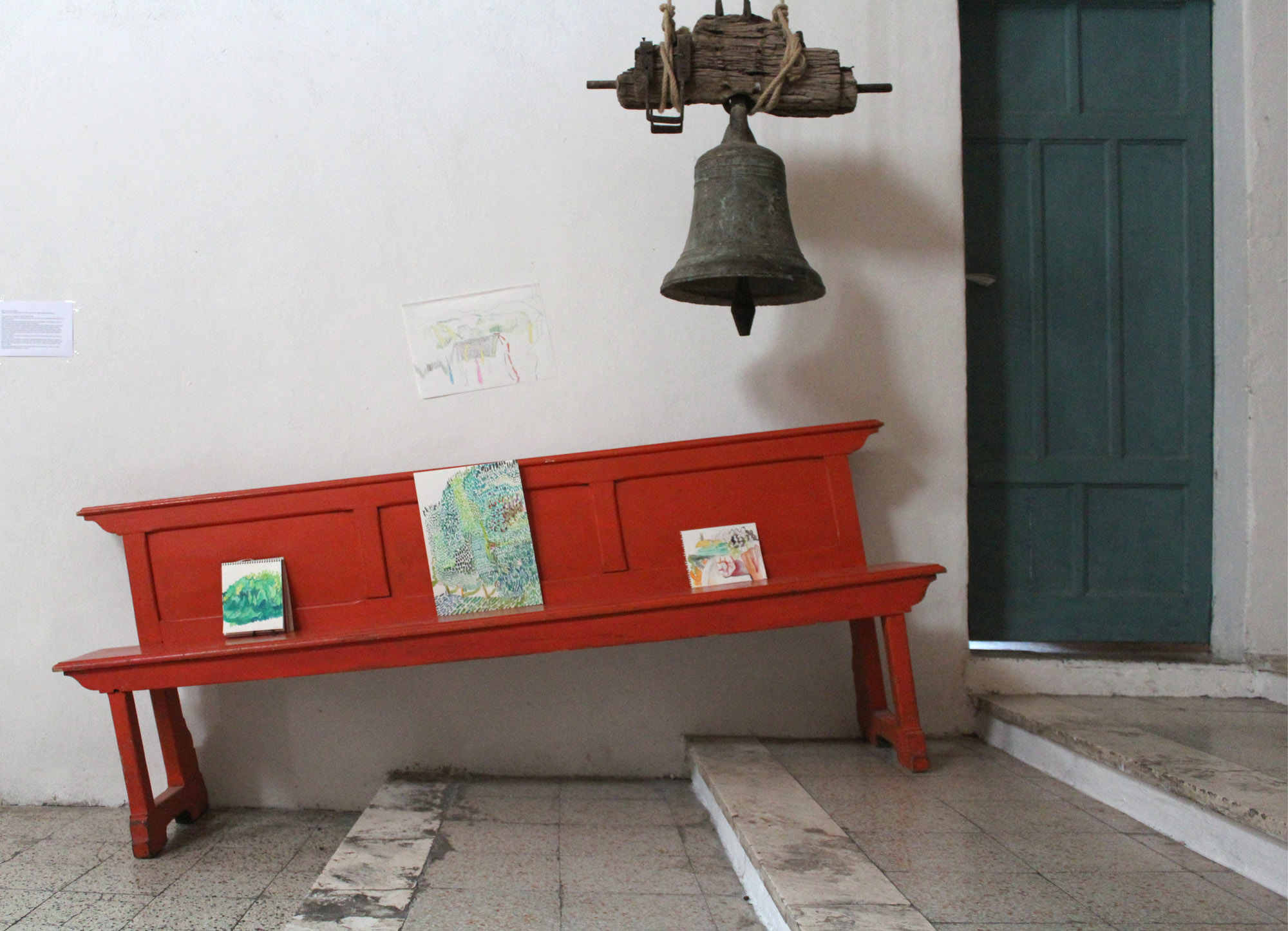
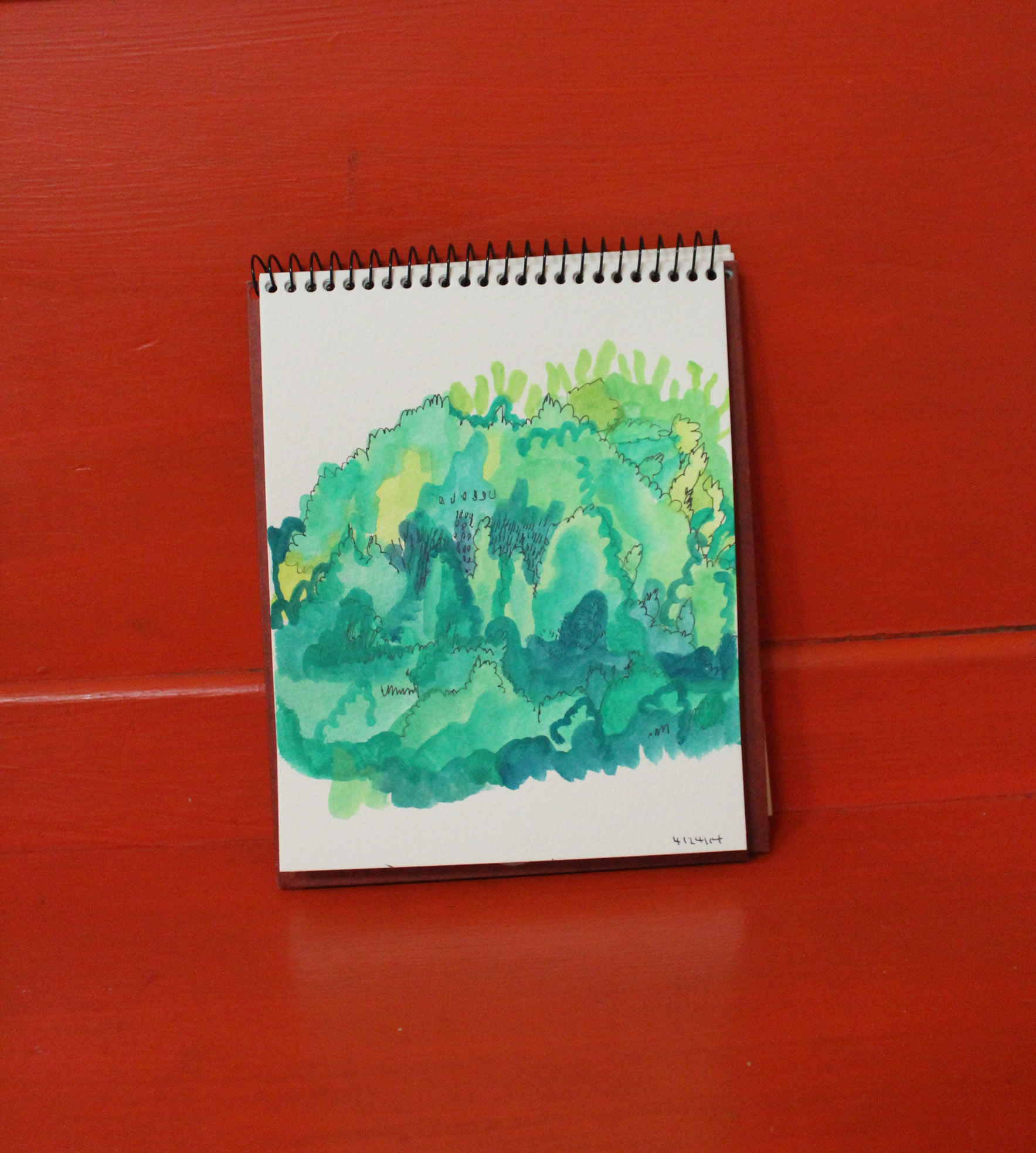
Juyoung Lee, South Korea
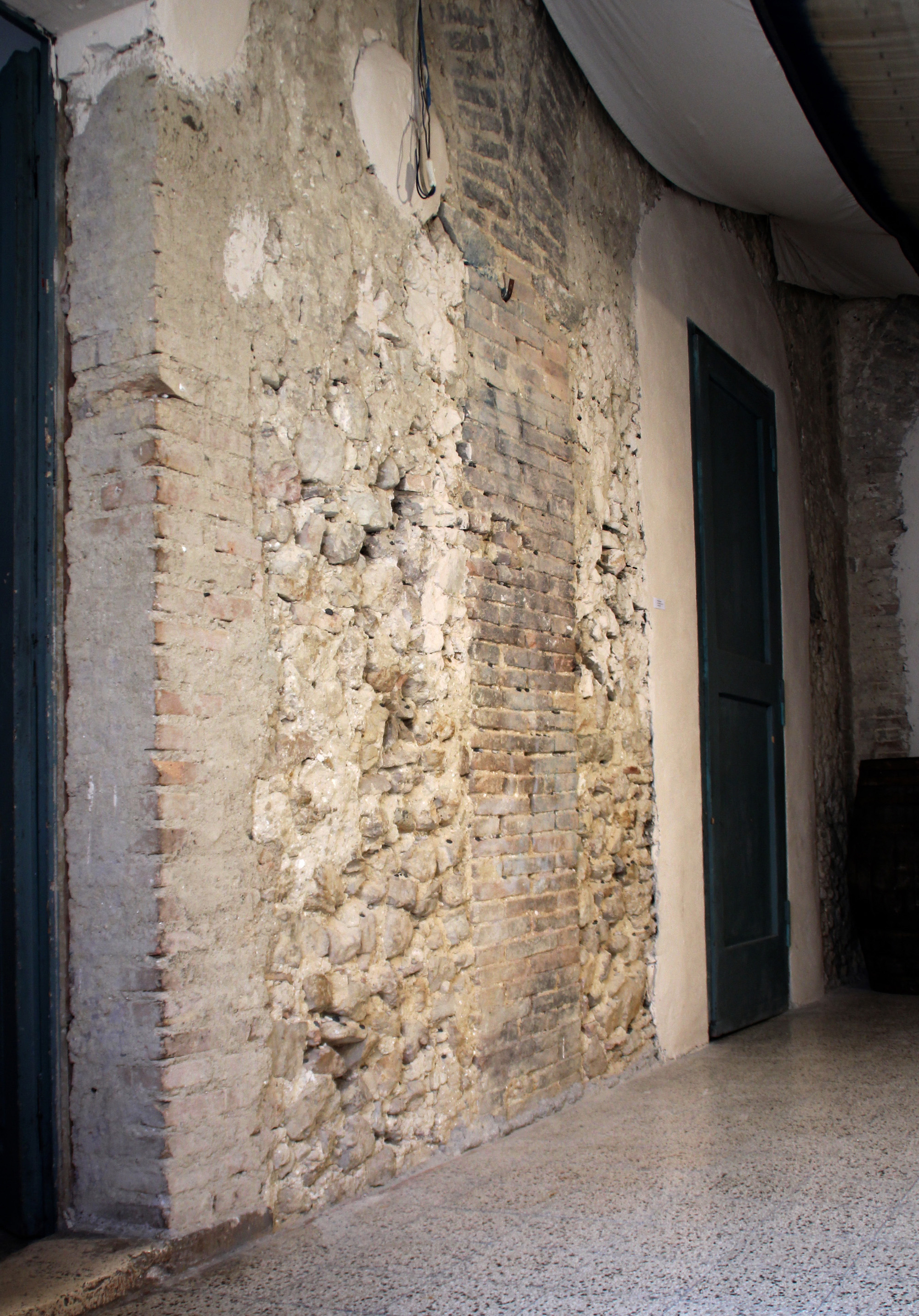
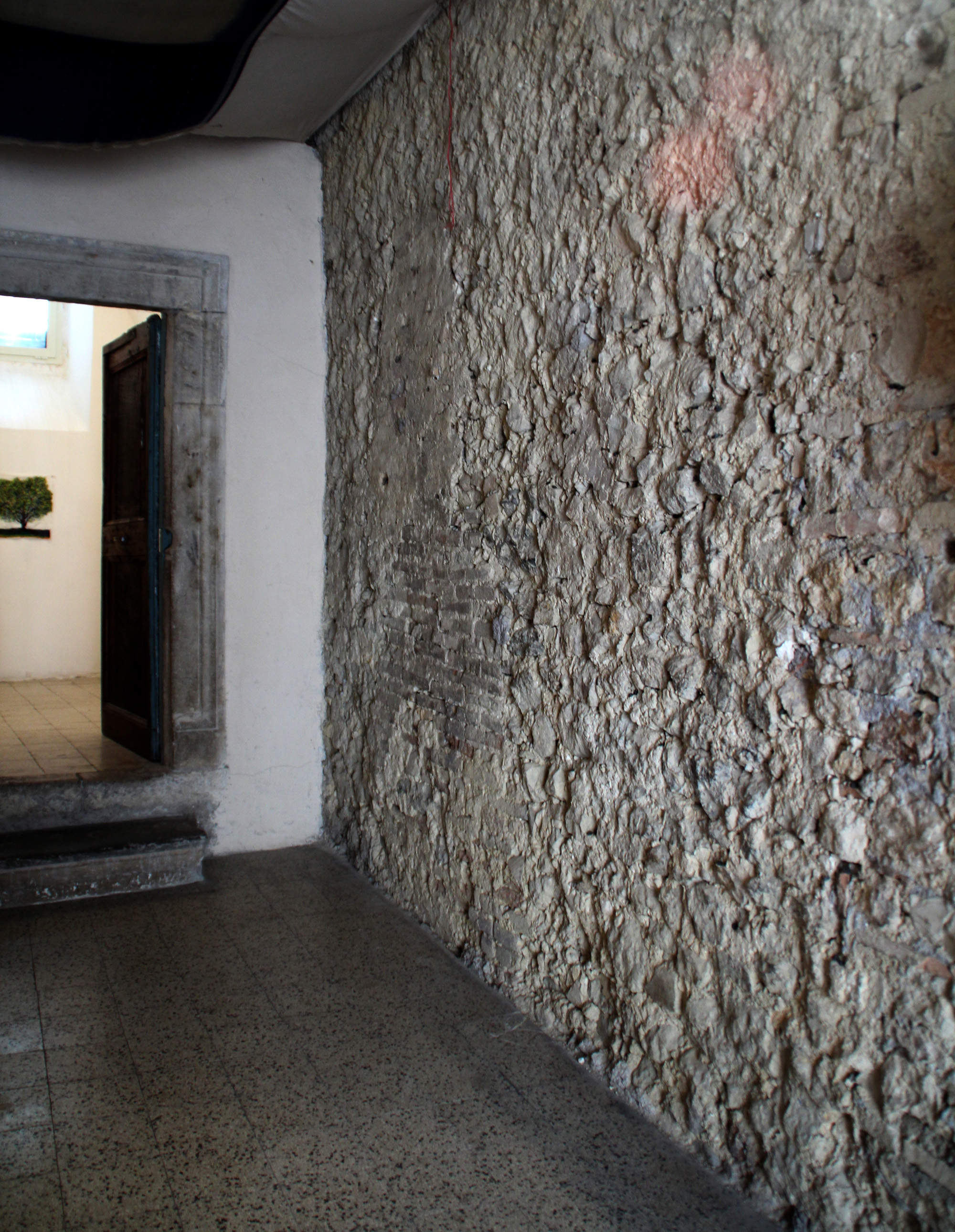
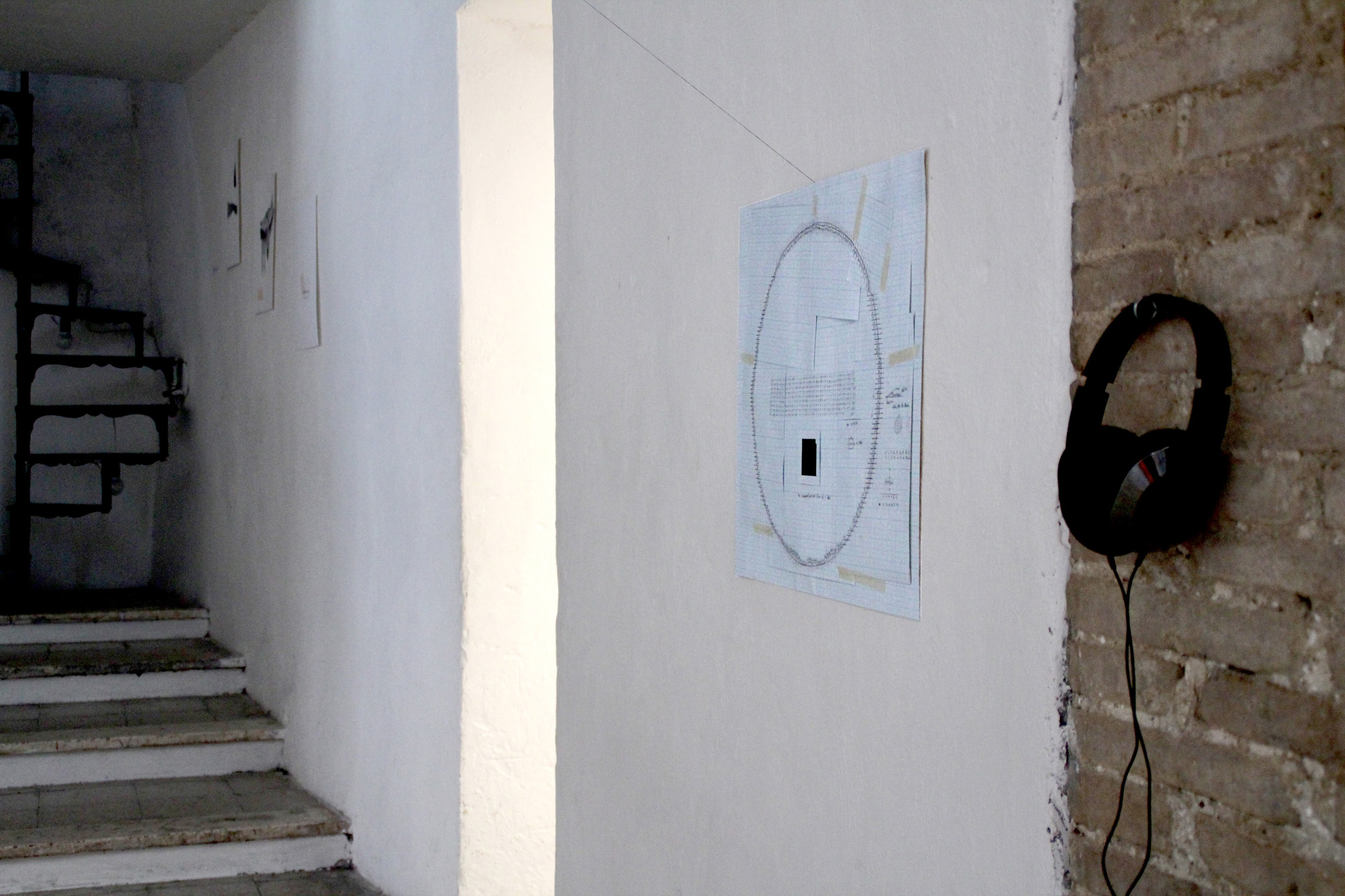
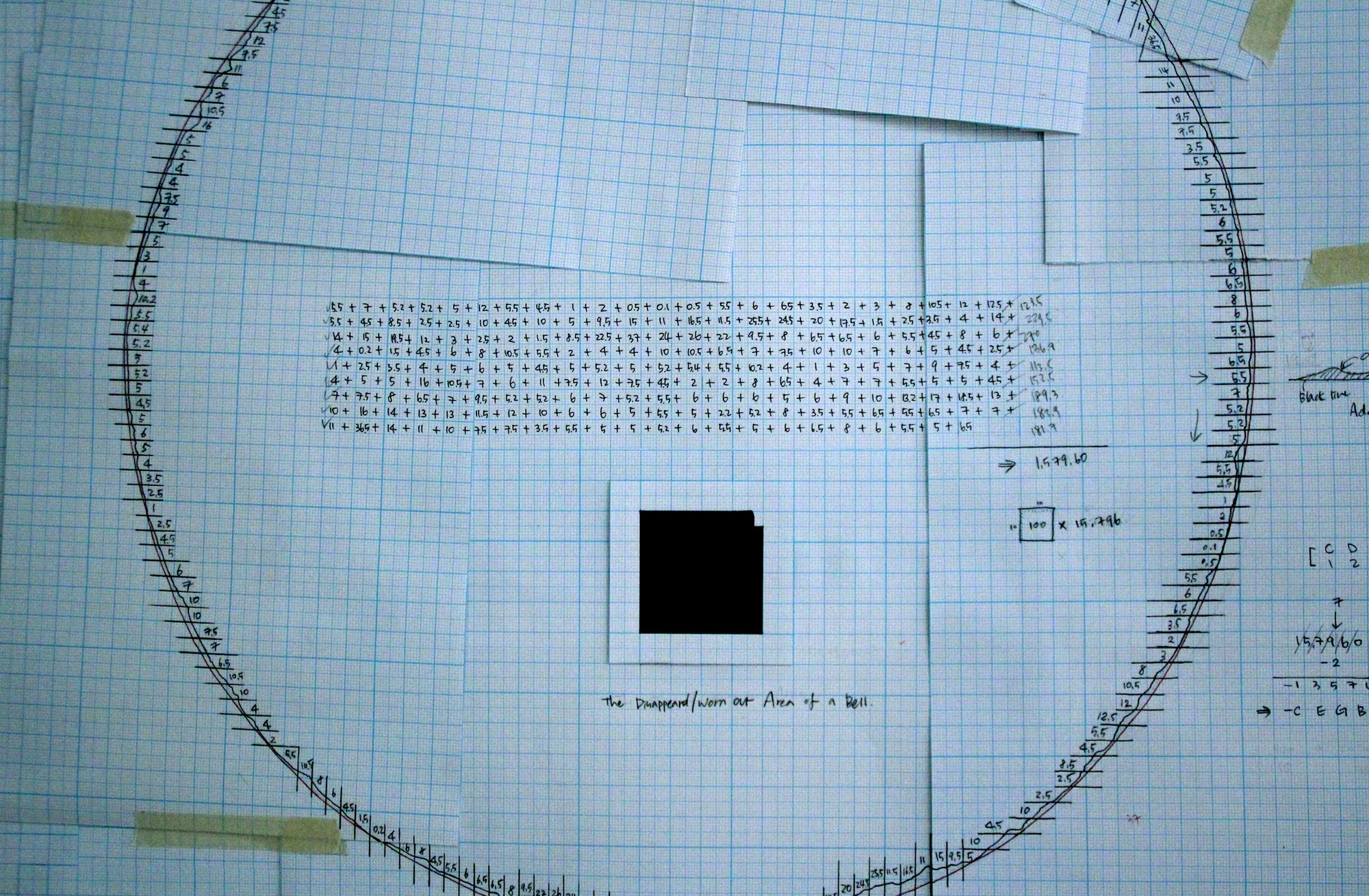
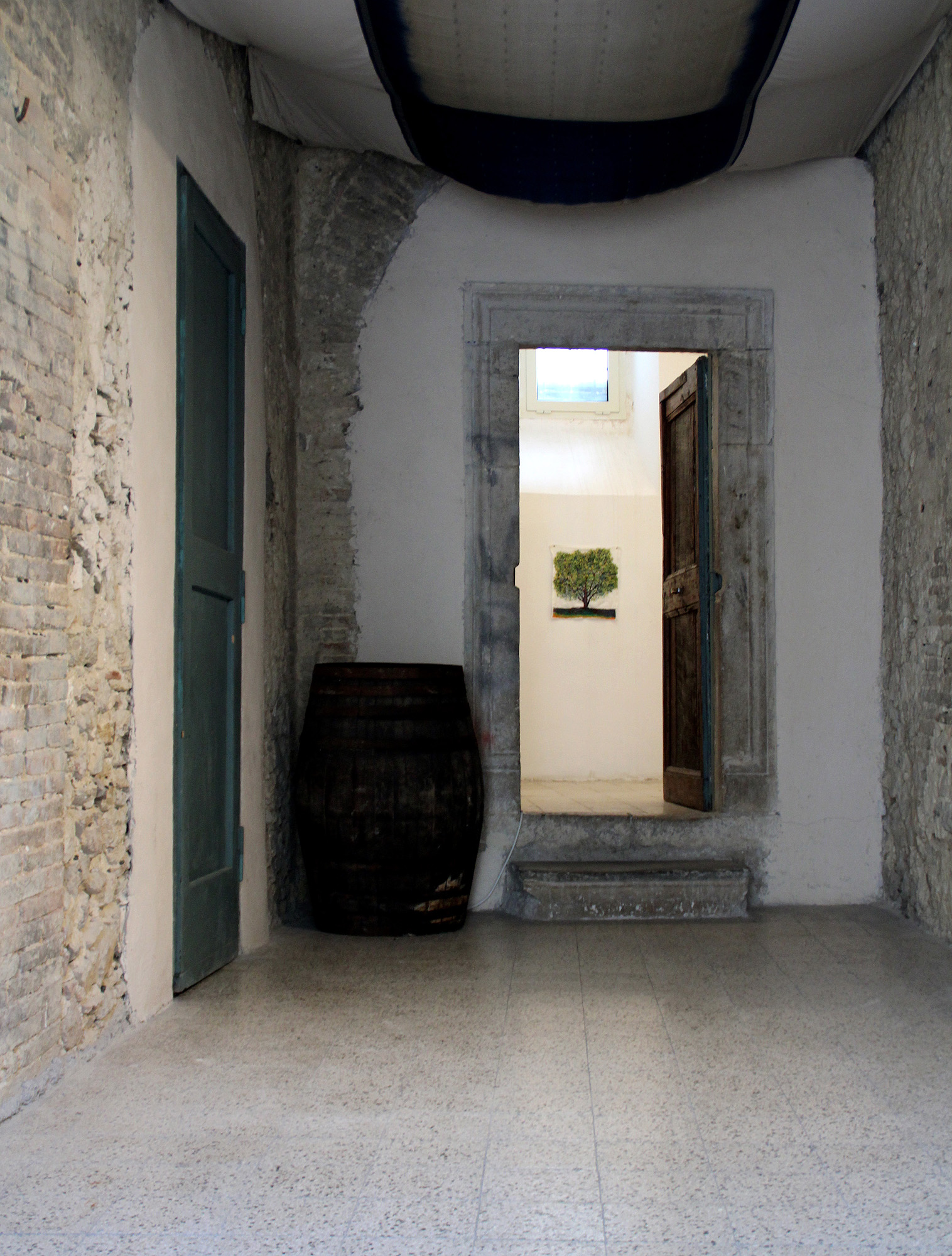
I am fascinated by small objects that are generally considered trivial. My interest is inspired by the Chinese philosopher Zhuangzi whose basic argument is that each object has its own value, therefore all objects cannot be judged under one absolute standard. To visually represent this, I have chosen the method of creating and applying a nonexistent mathematic formula. My work is about visualizing something we cannot see, transforming the original form into other forms. Through my work, I would like to show that there is not such thing as a ›universal‹ value. Everything is valuable, because appearances can change at all times.
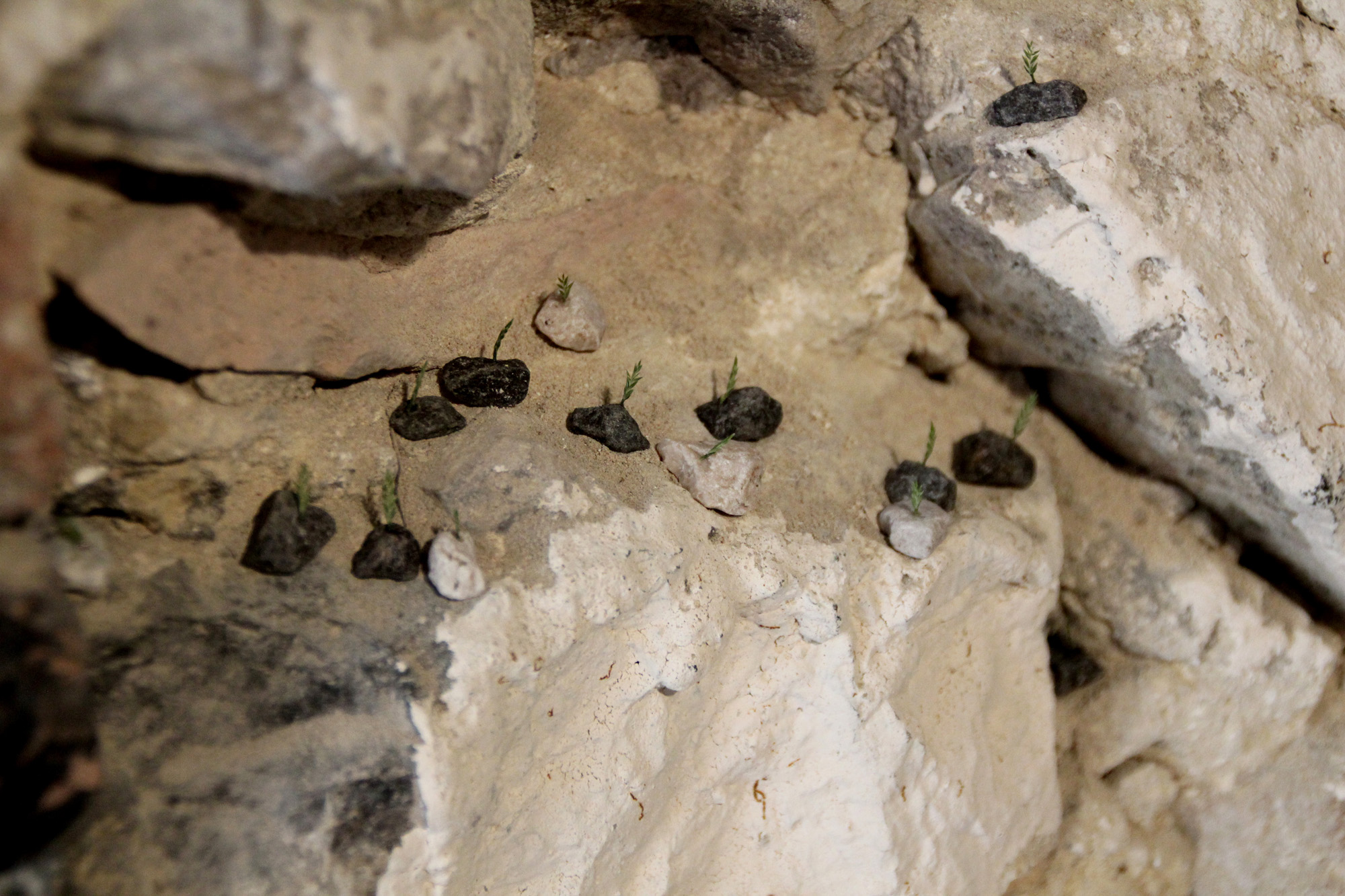
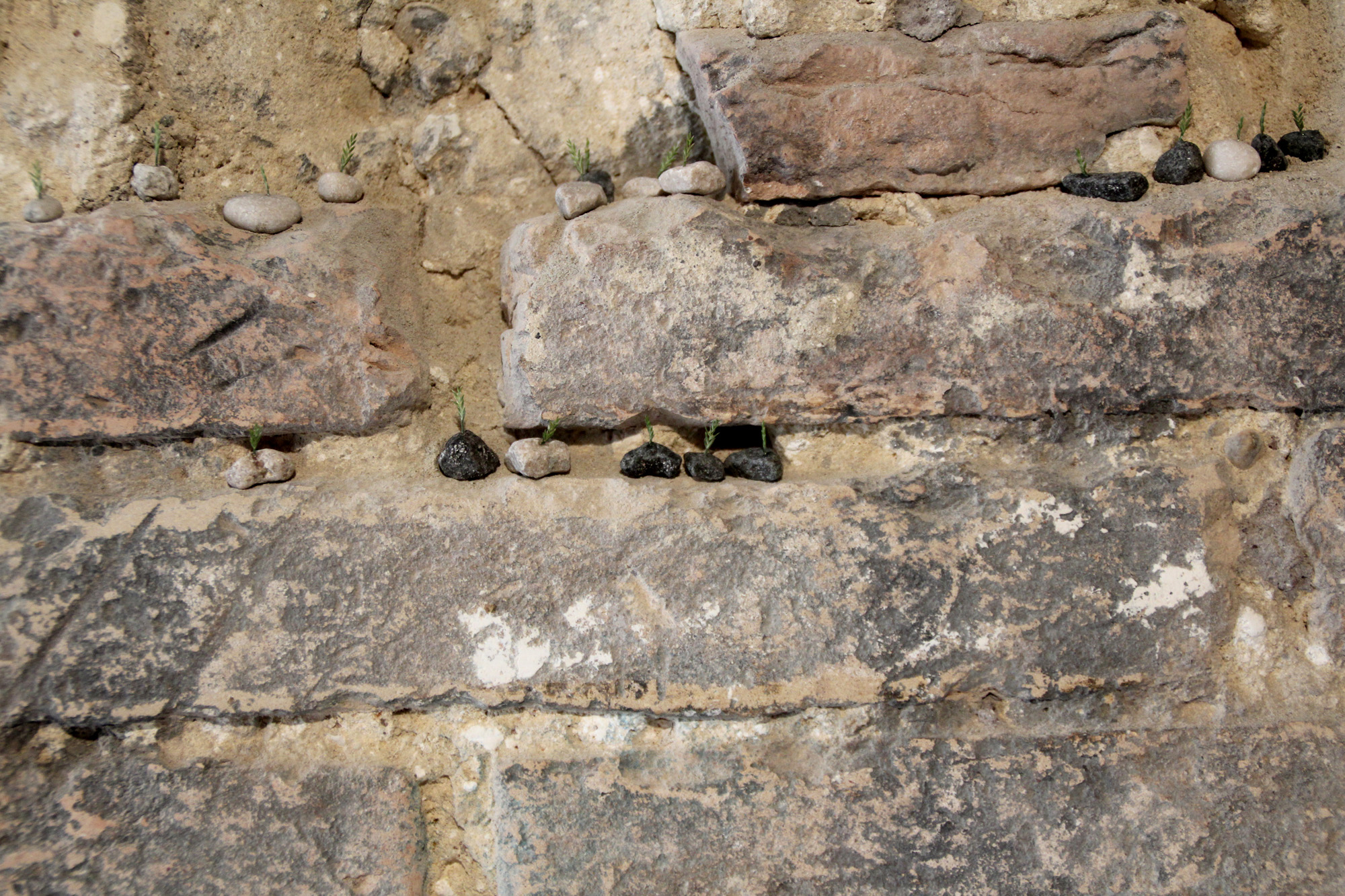
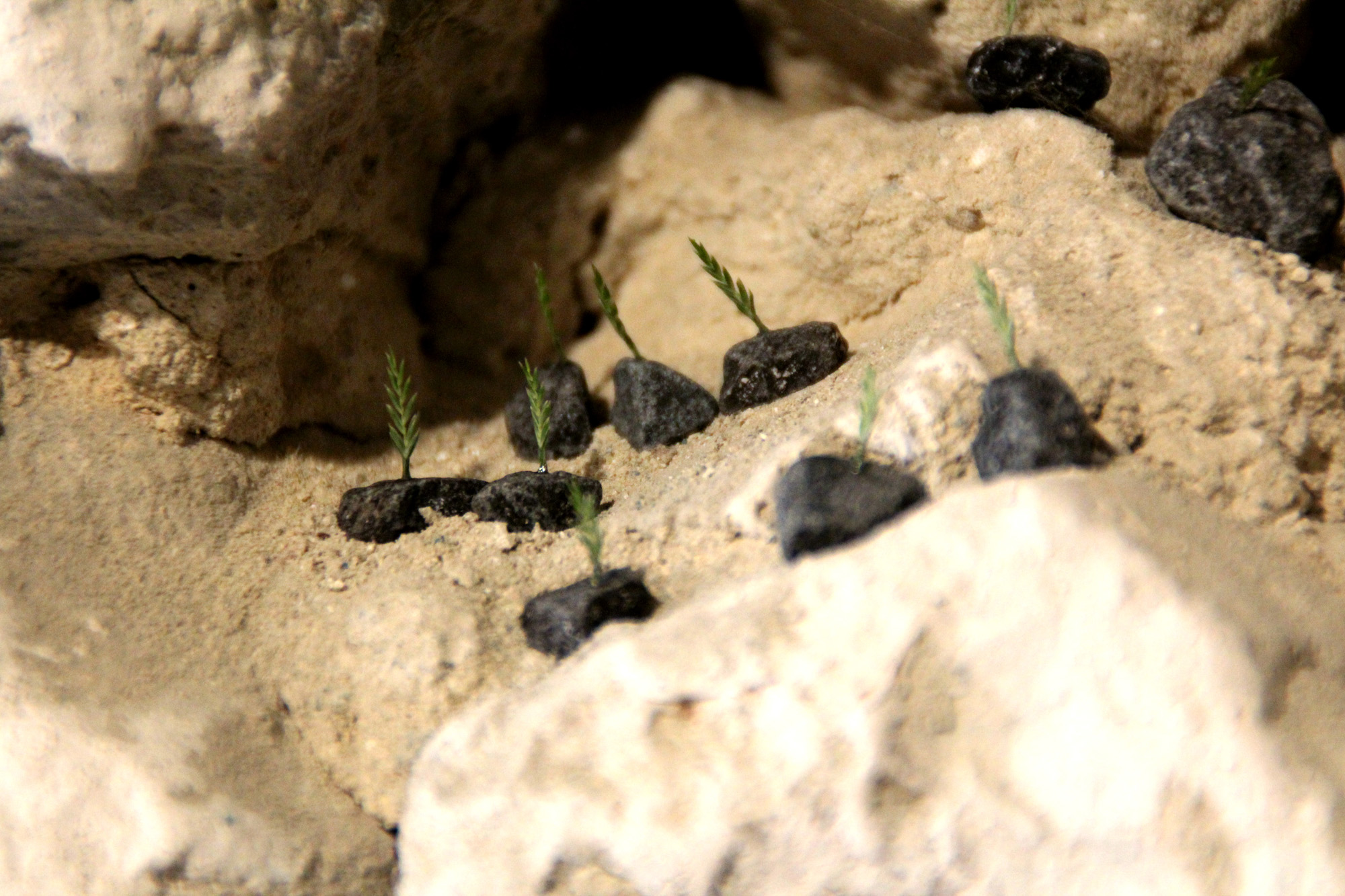
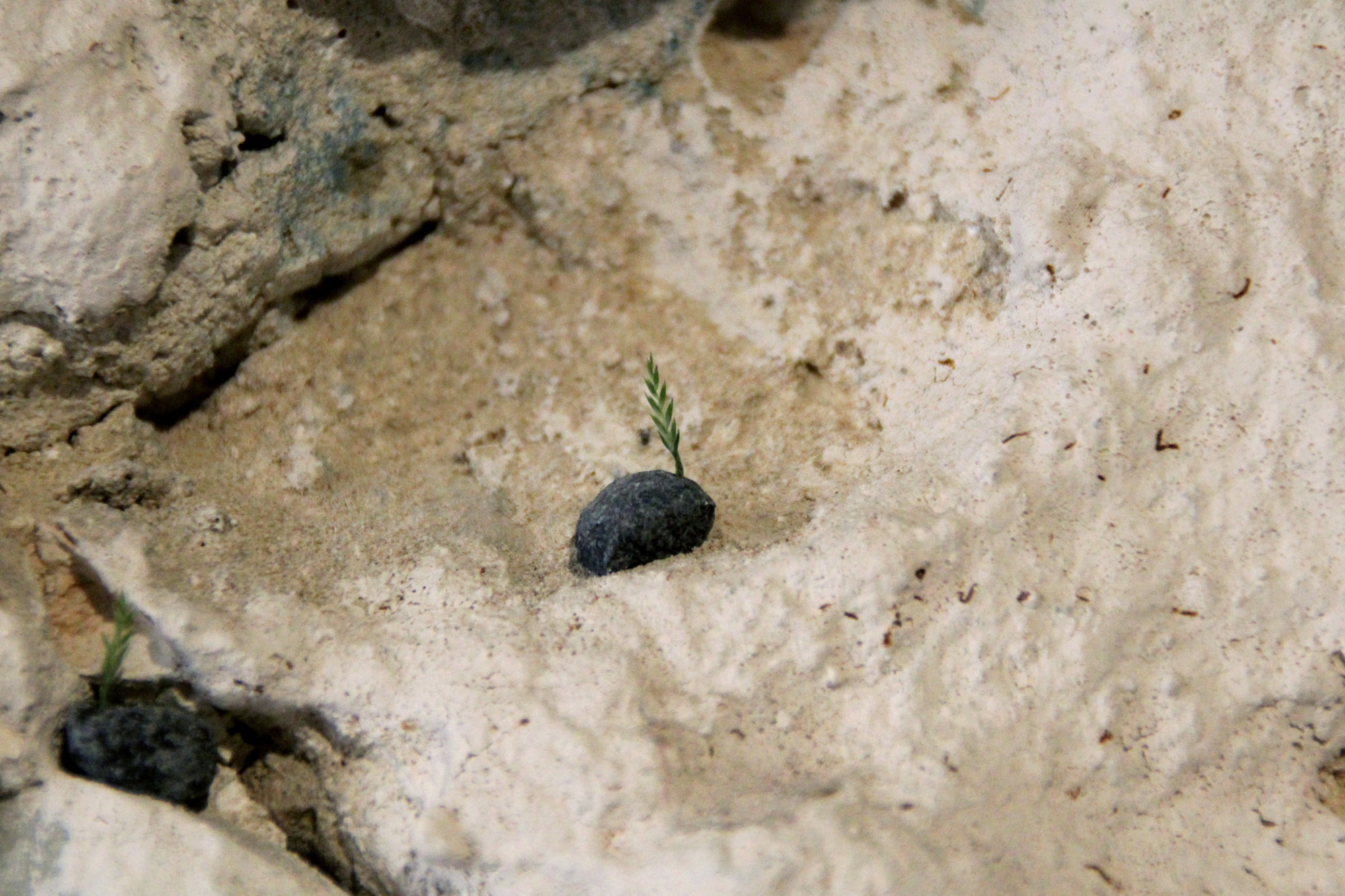
»Flew to Far Away«, 2014. plants on 680 stones. sound 02›12“. variable installation
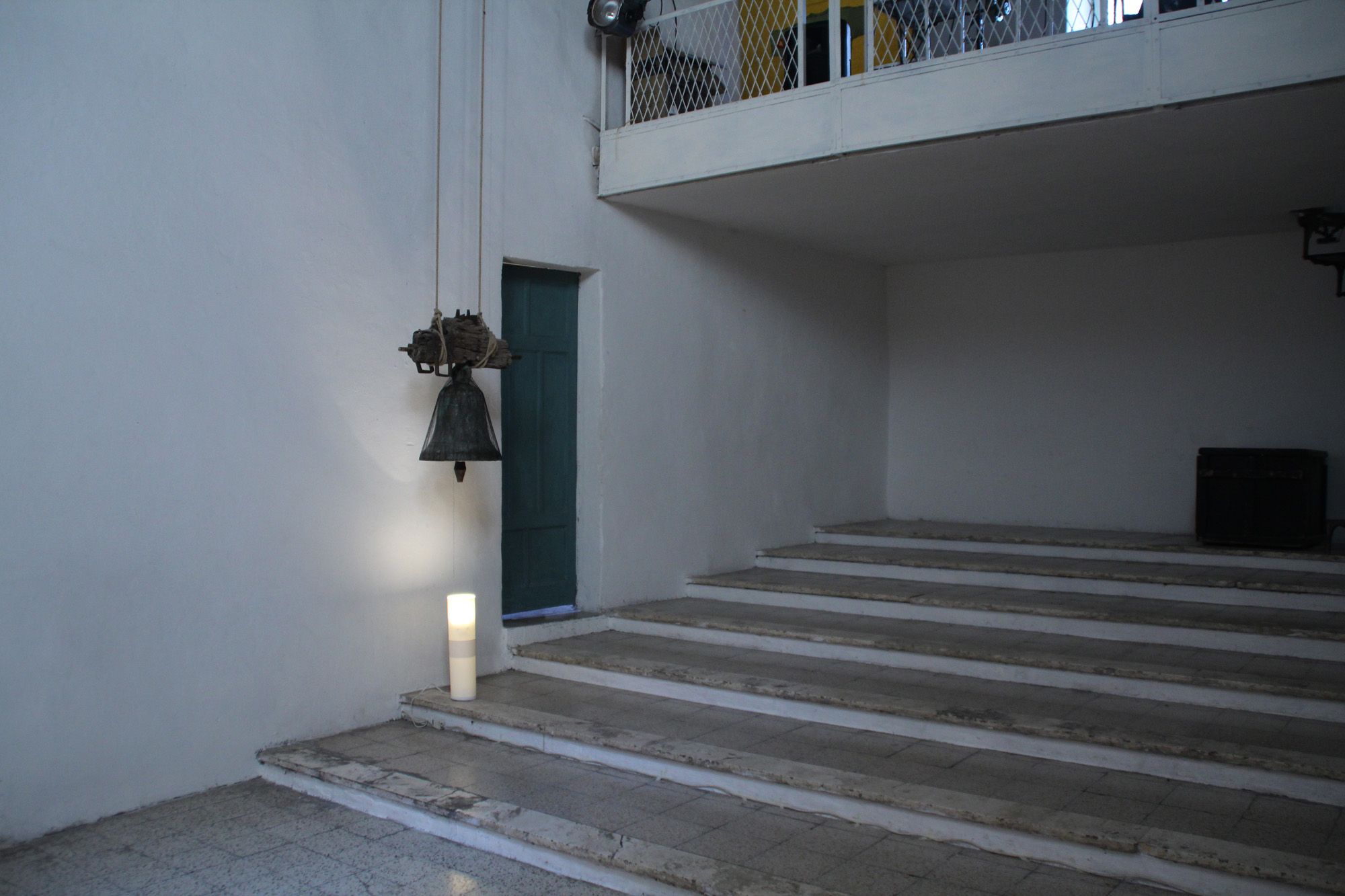
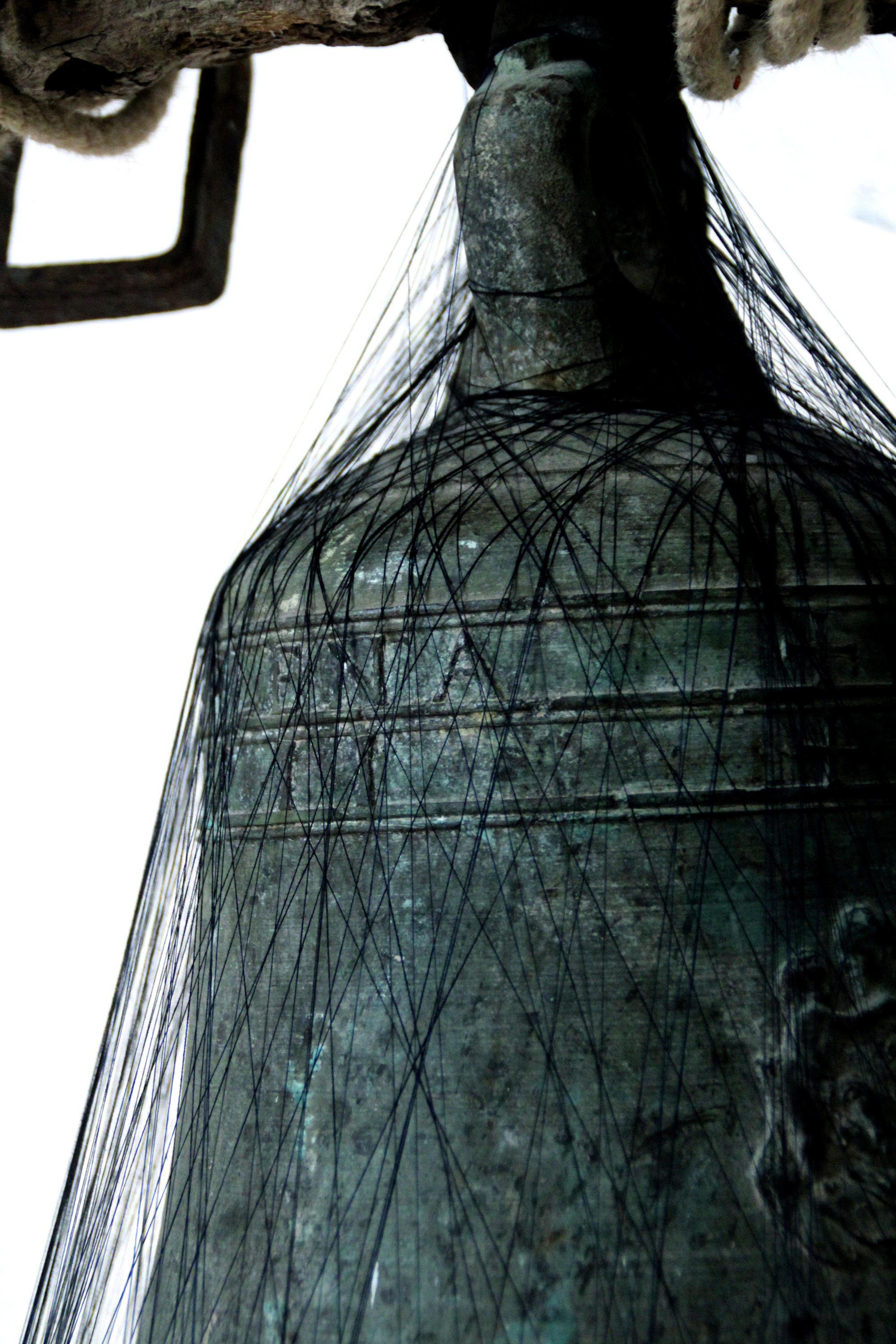
I wrote a poem about my first impression of the residence place in Toffia and transformed it into sound through what I call the »Alphabet System«. The poem became number 680, and so I made 680 plants on small stones. The stones were placed between cracks in the walls of the corridor and the sound came out from a barrel.
Renee Lotenero, USA
Cristiane Mollahem, Brasil
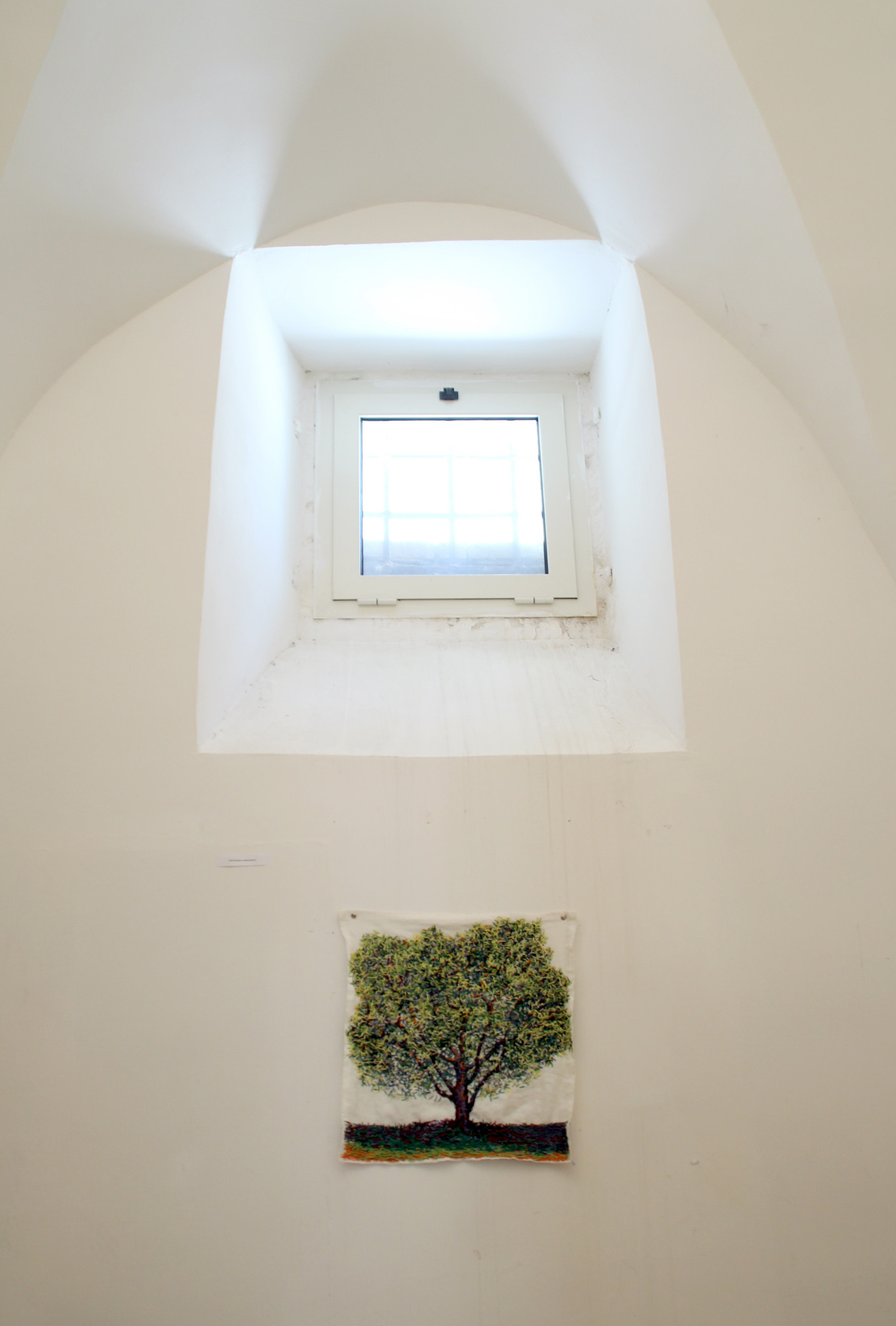
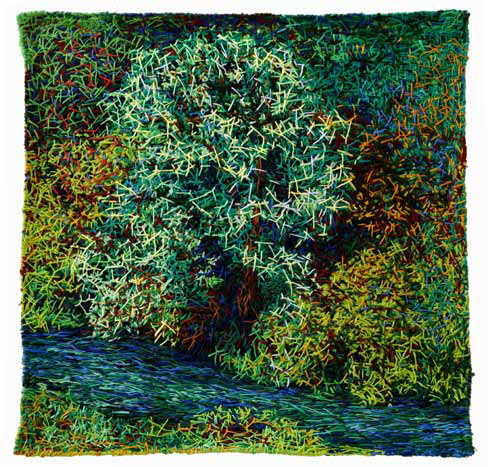
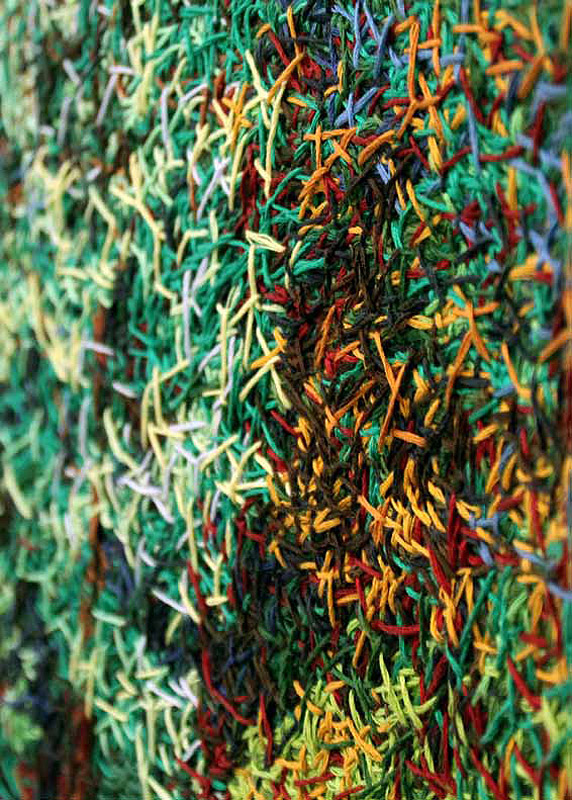
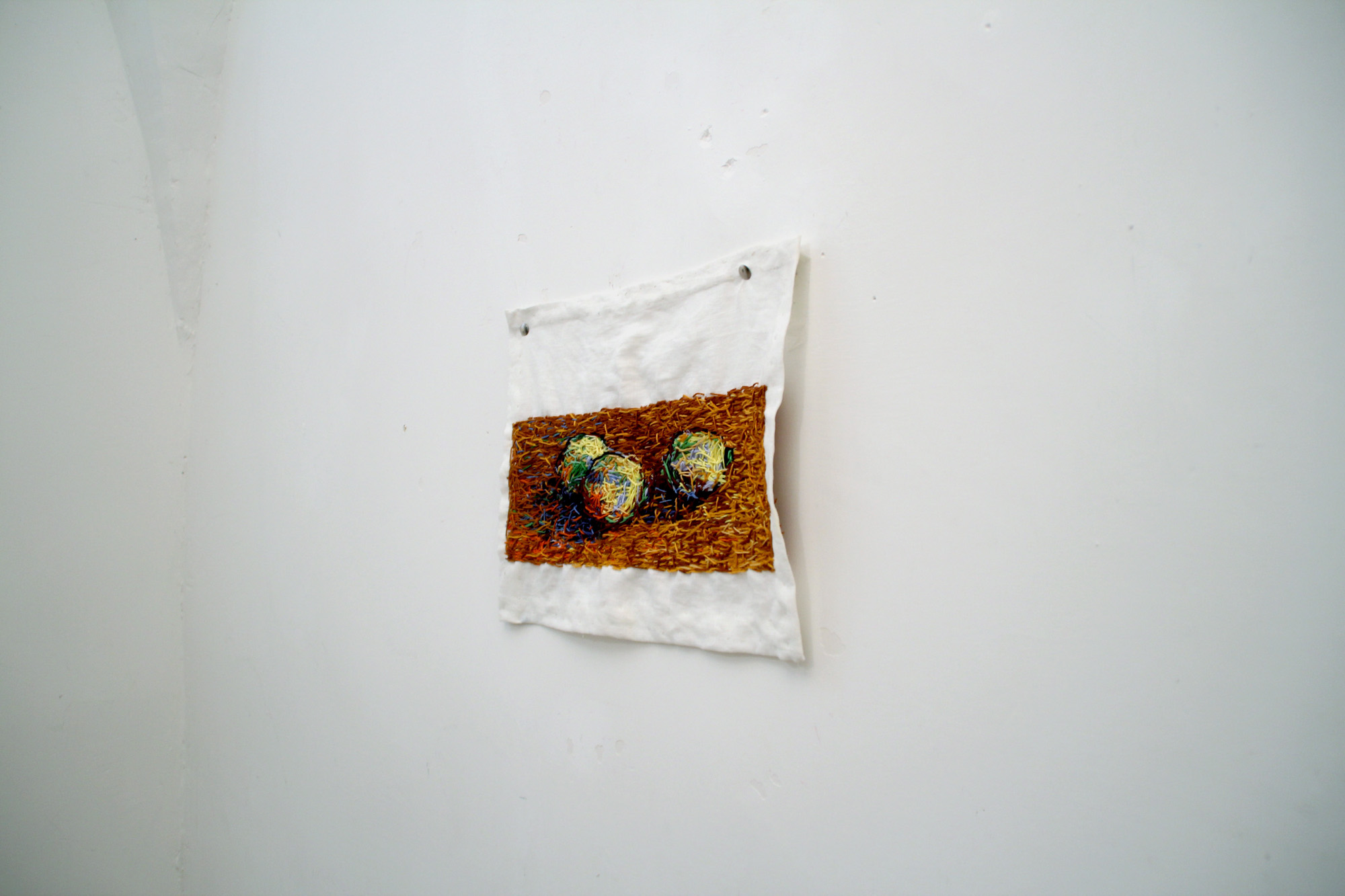
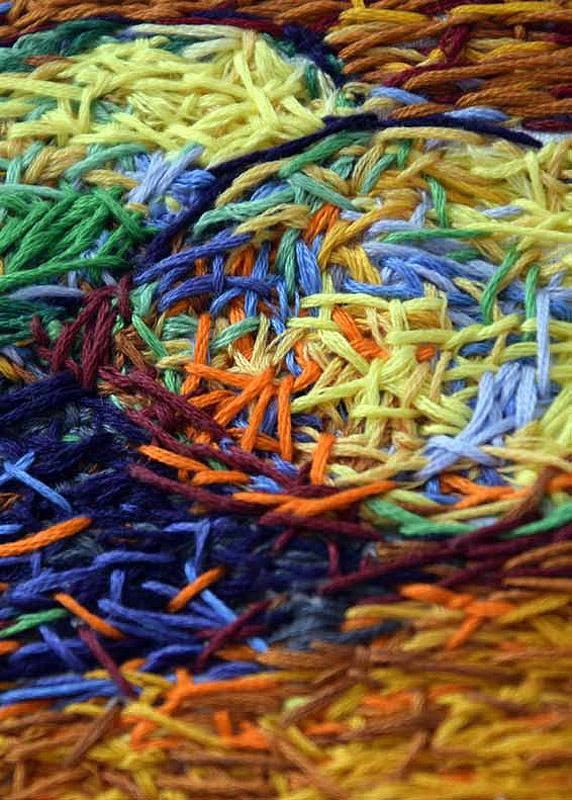
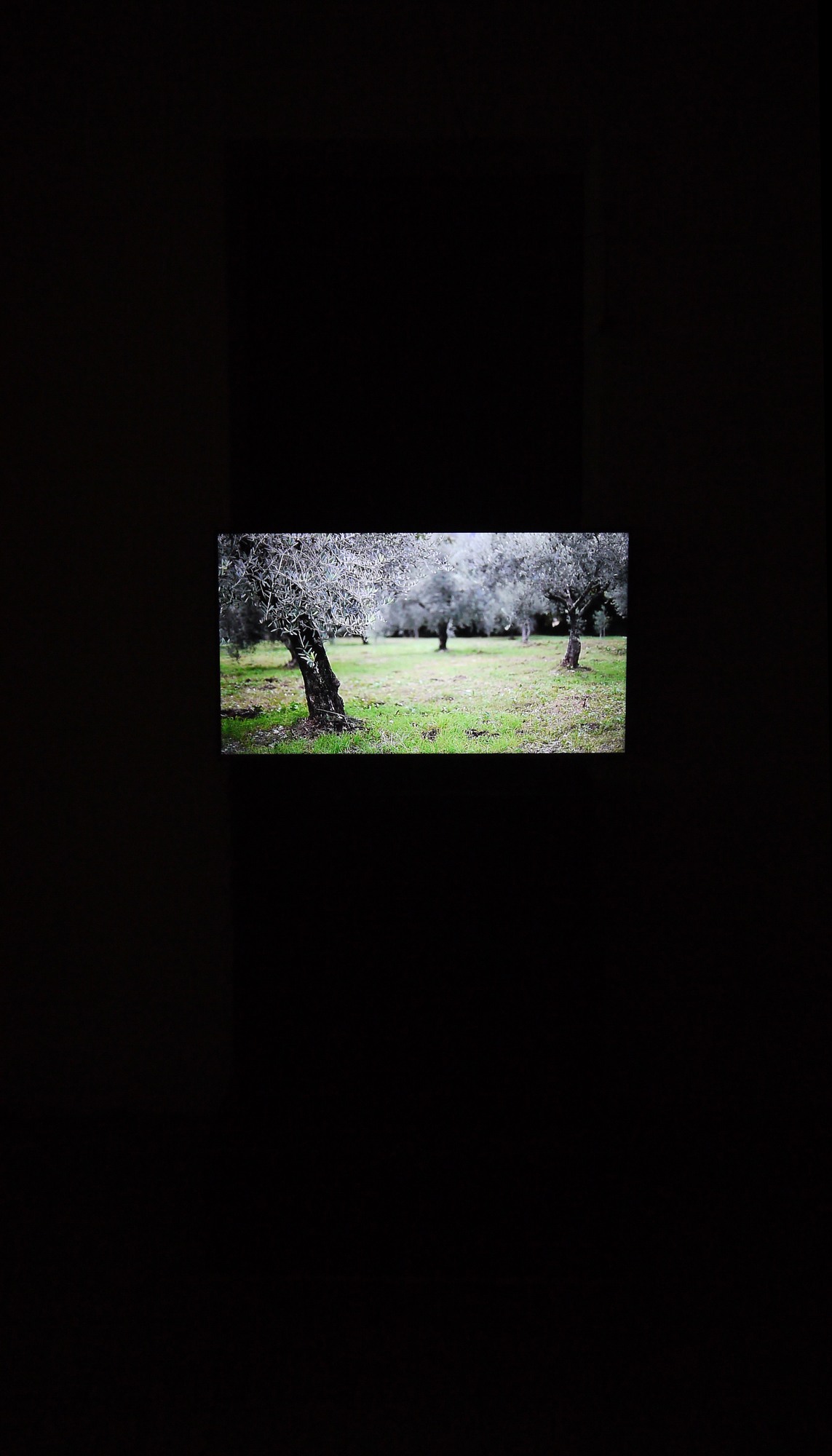
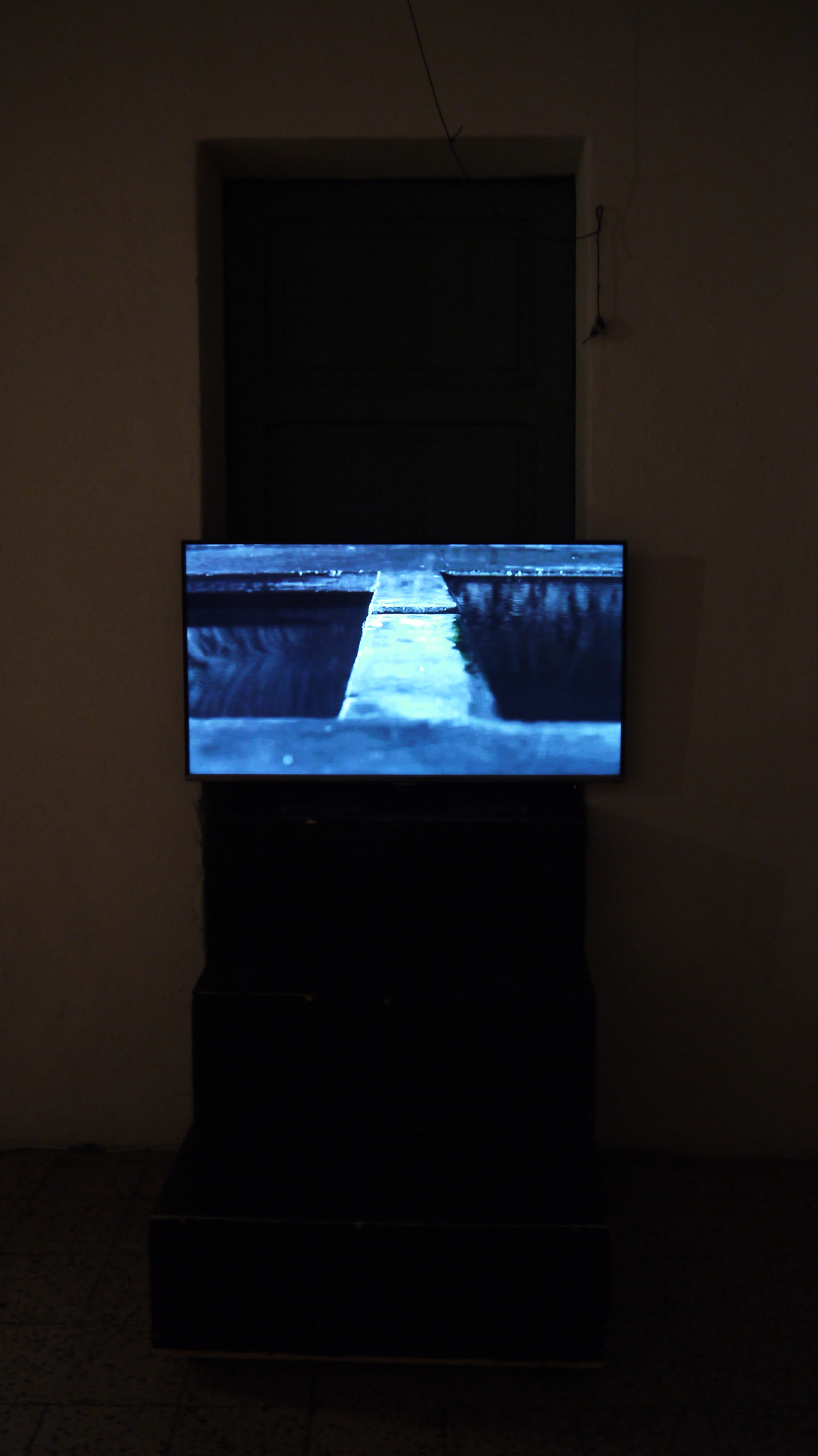
I have always been drawn to the presence of trees and tree elements. In 2010, I started to embroider a tree in order to capture its meaning. Since then, I have been drawing, with a thread, images of trees. My view is that the comprehension of the world around us is not only a cognitive and conceptual understanding but also an aesthetic sensitivity. Therefore, the essence of a place or a thing can be grasped by the mode of its existence. While embroidering a tree, I feel I’m approaching it, experiencing the tree and its environment. My aim is embroidery in which colors and gestures echo the rhythms of feelings and the sense of the image.

Dafne Salis & Martha Gut, Italy/UK
Chaveli Sifre, USA/Germany



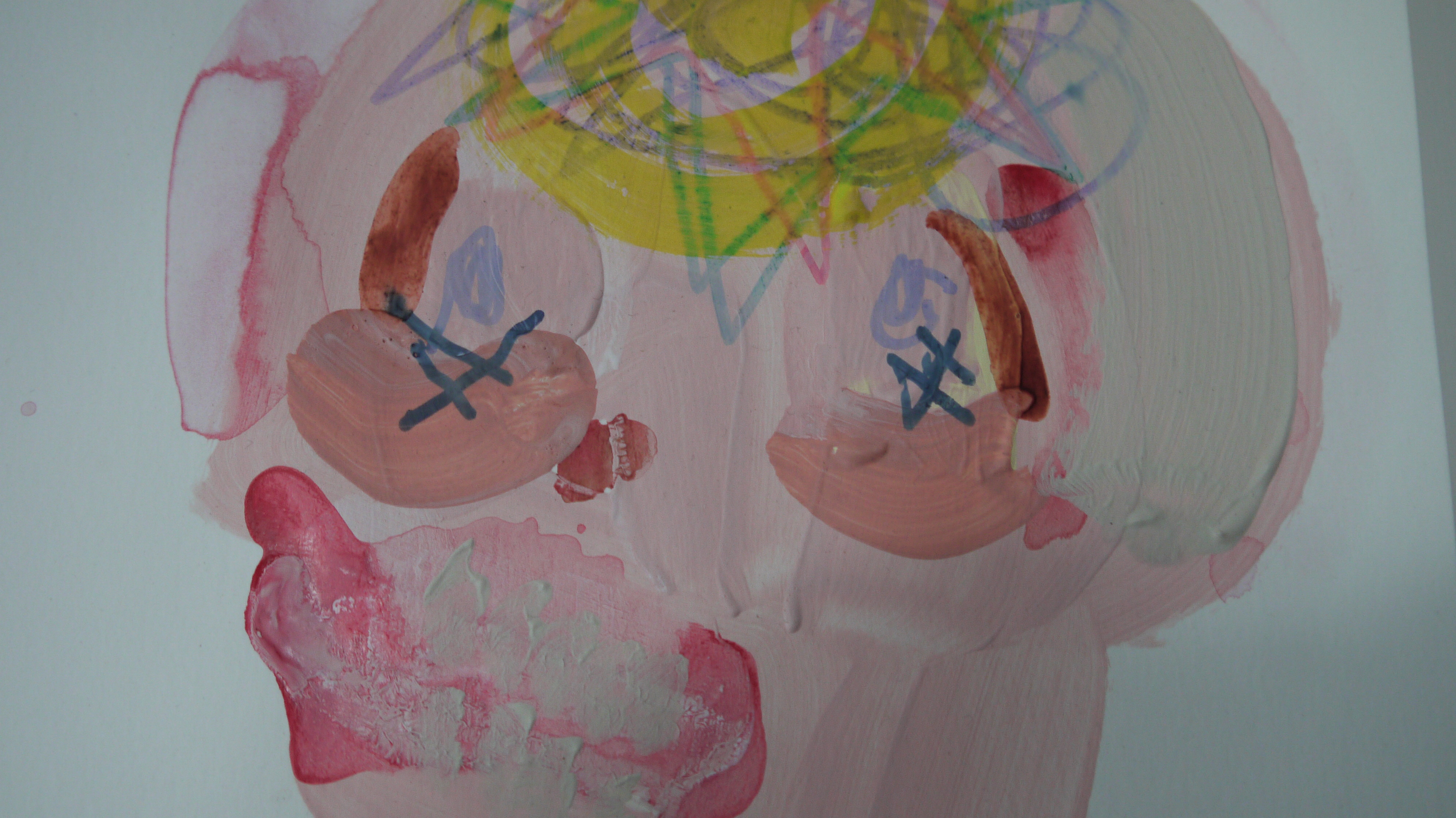
Linda Stonestreet, USA
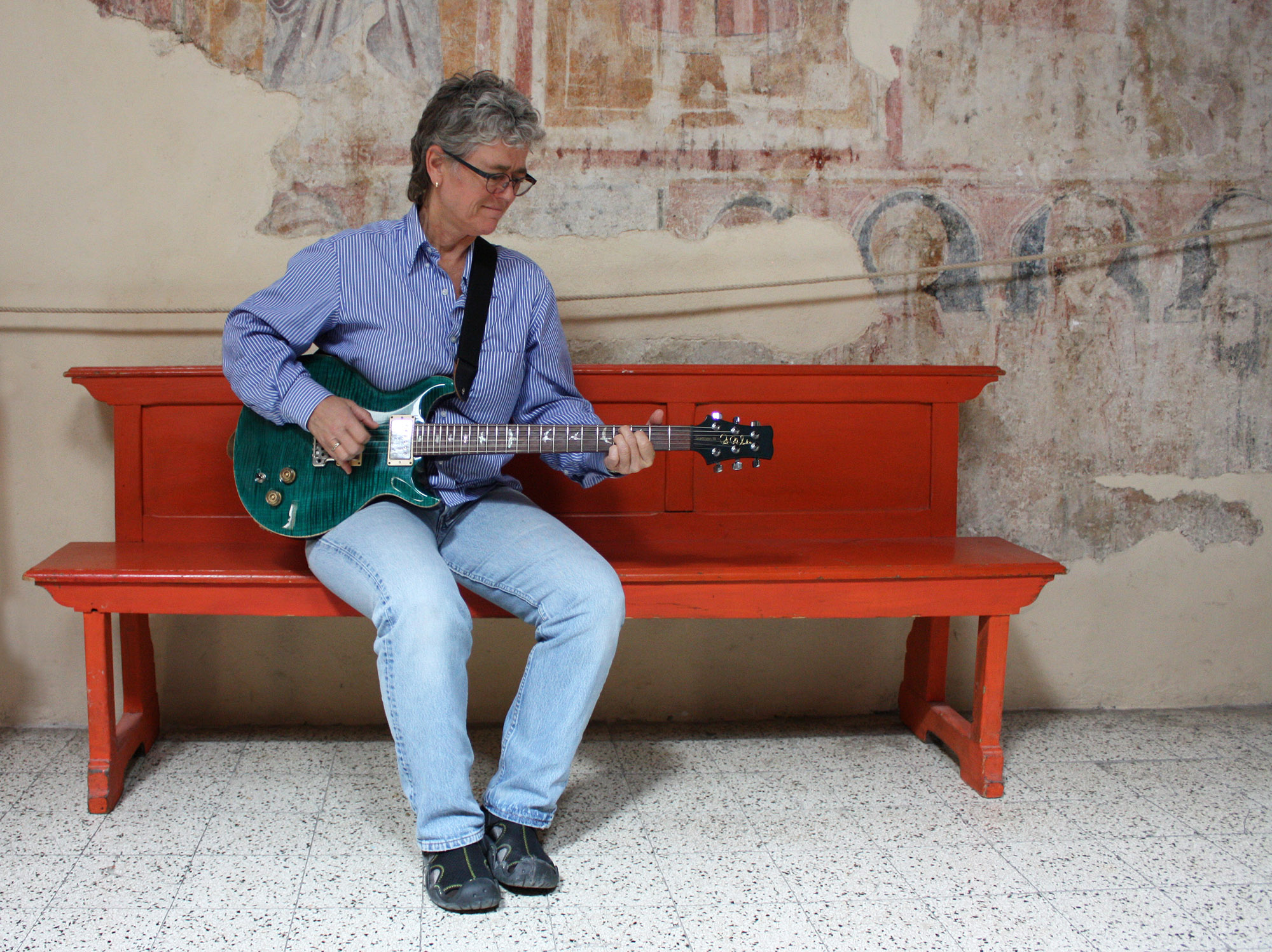
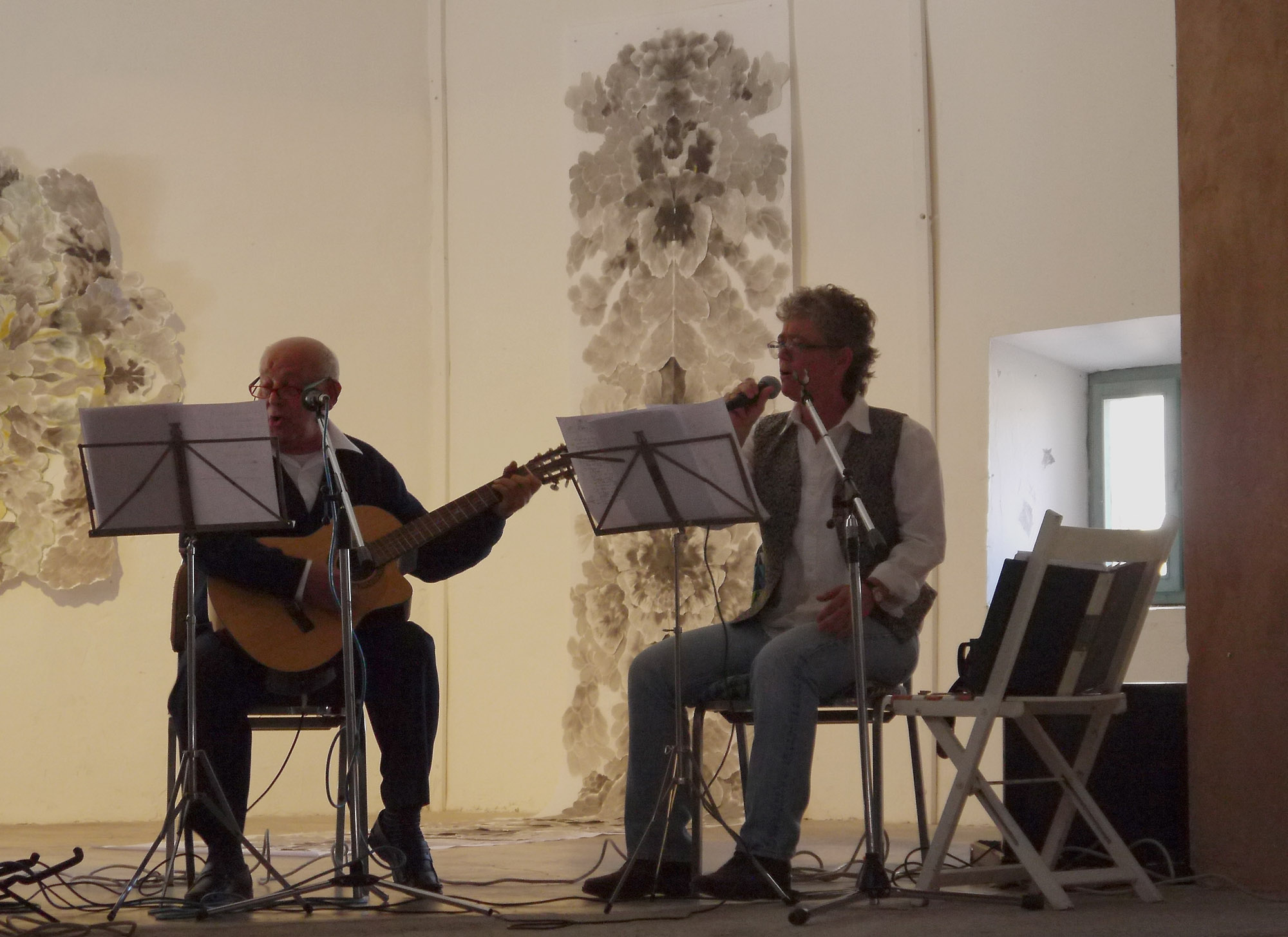
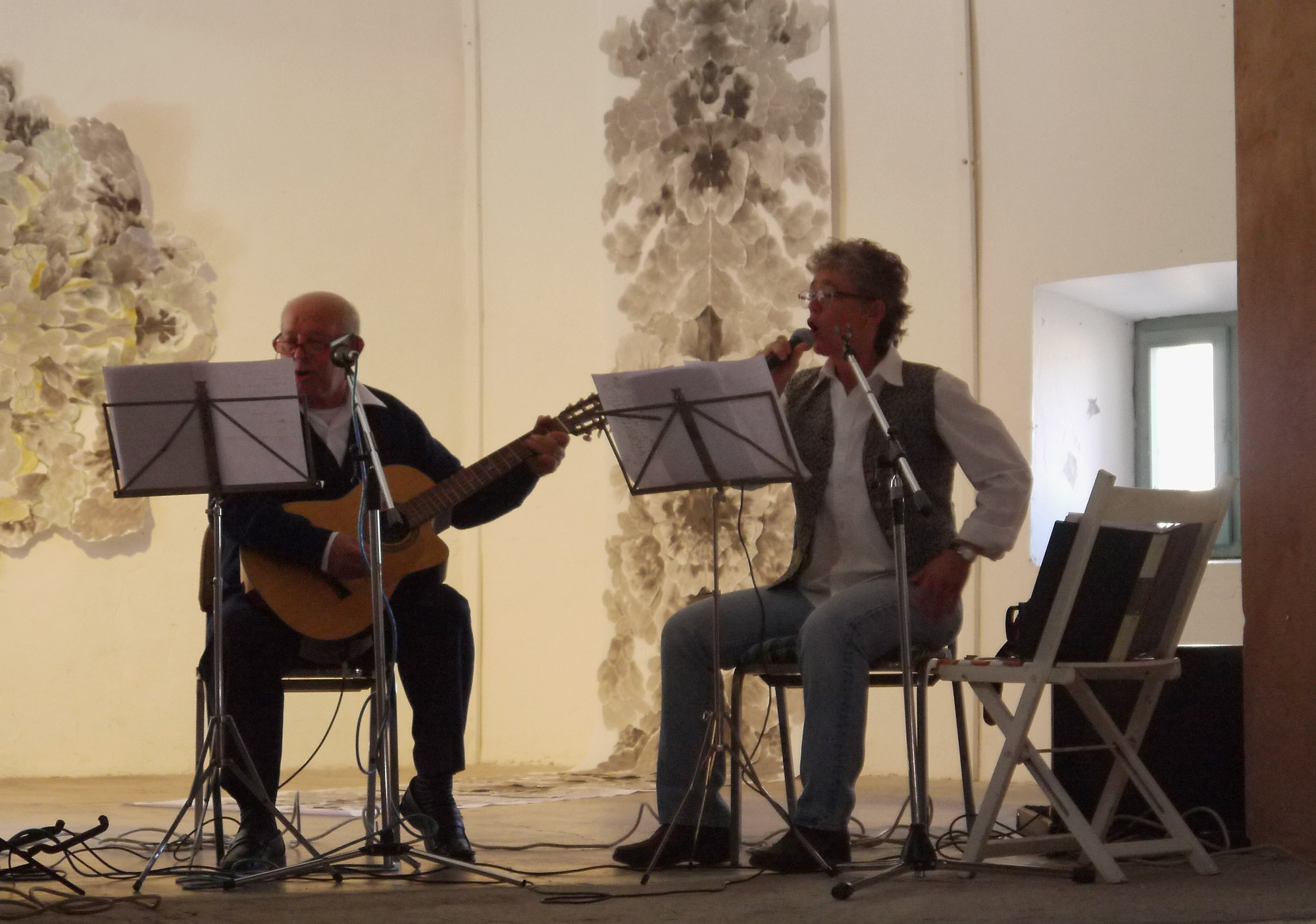

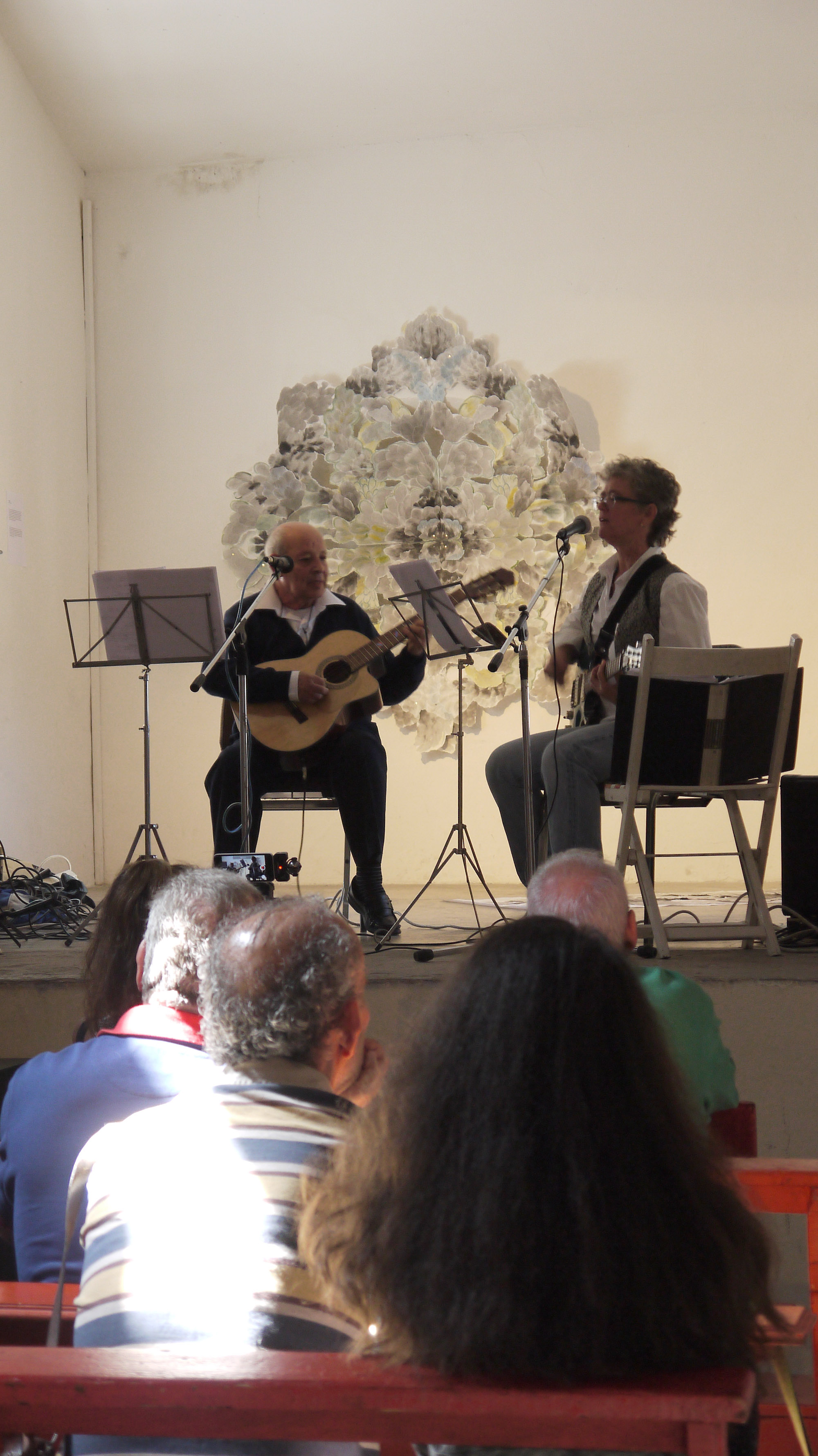
Allison Svoboda, USA
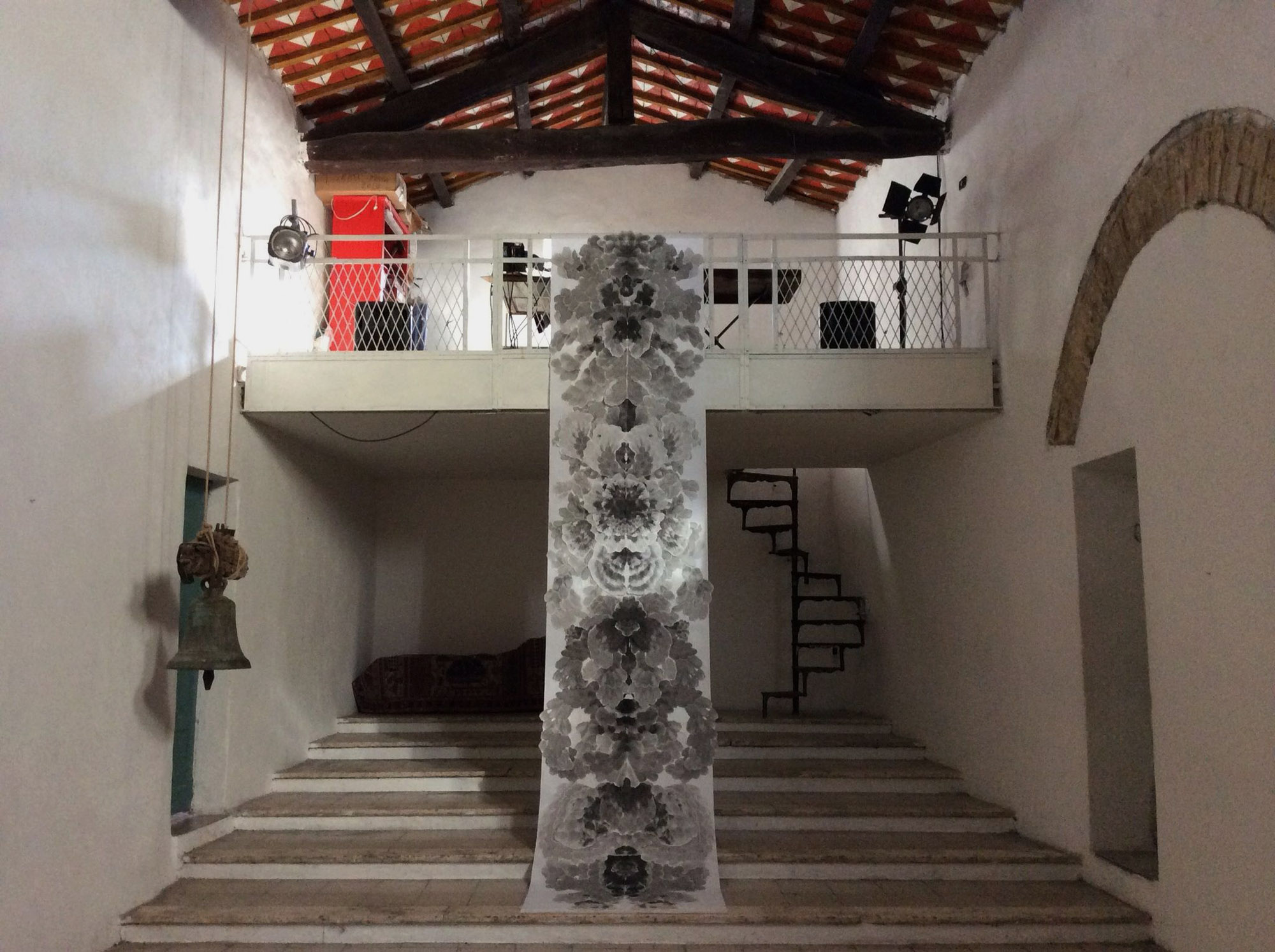
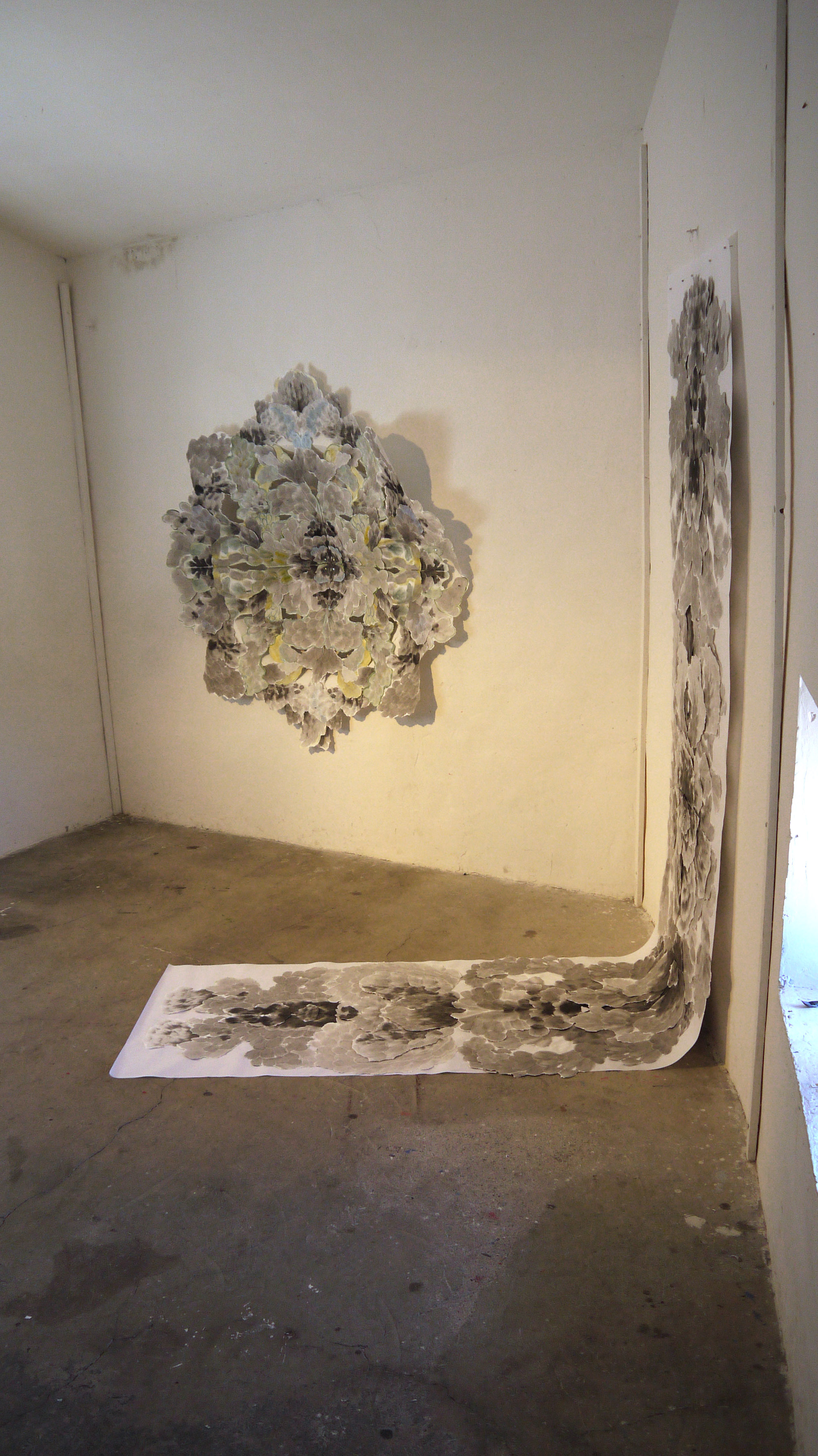
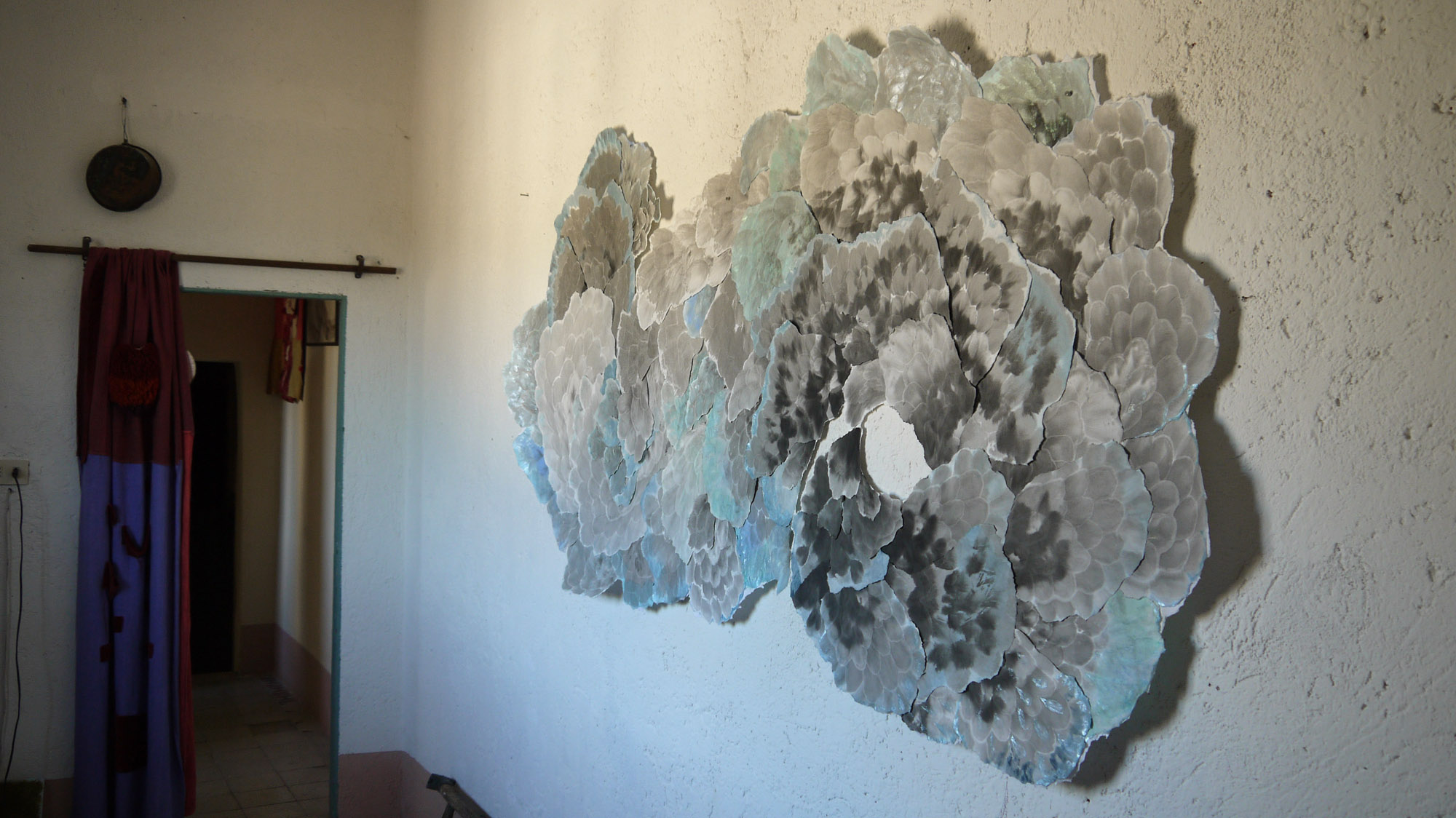
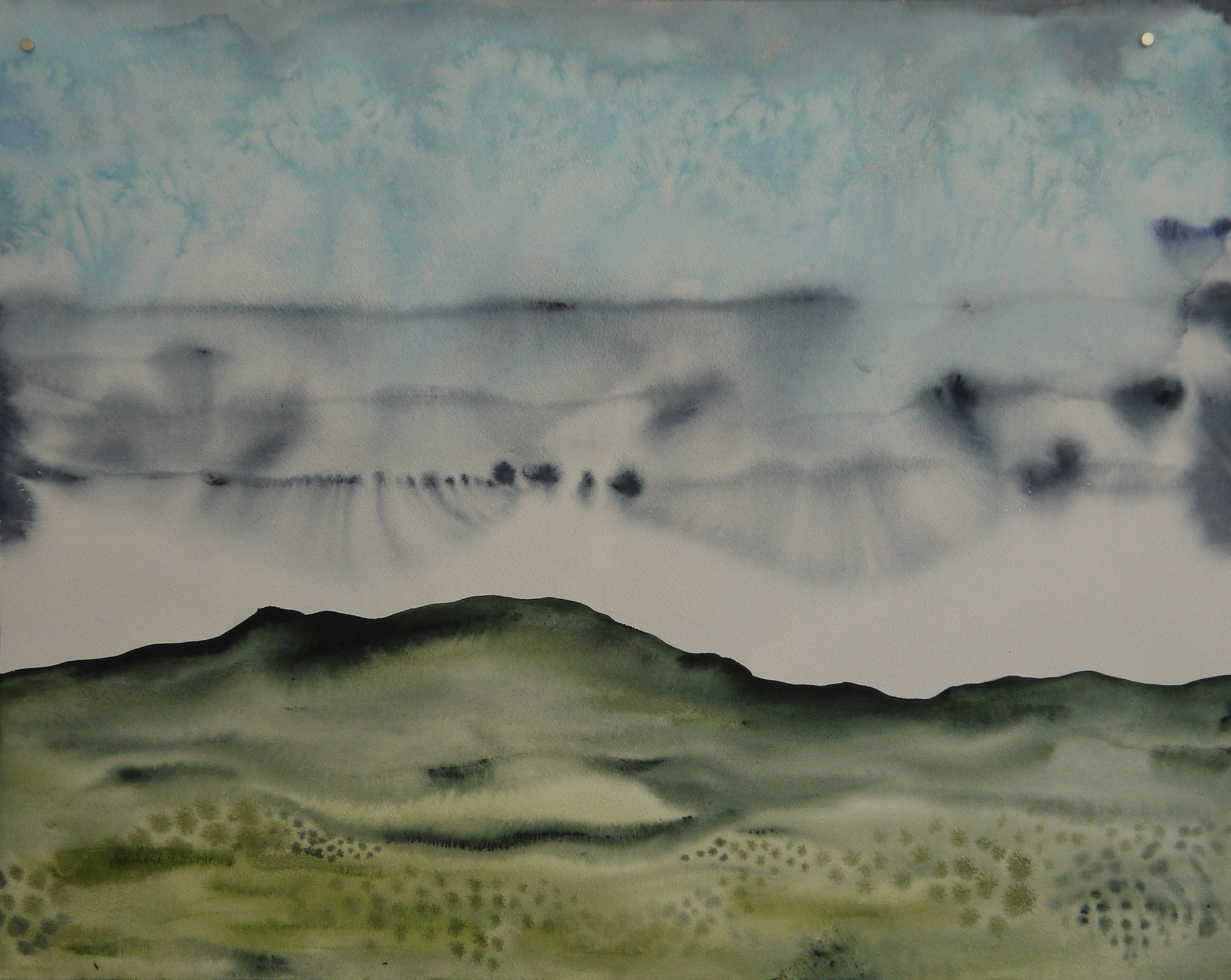
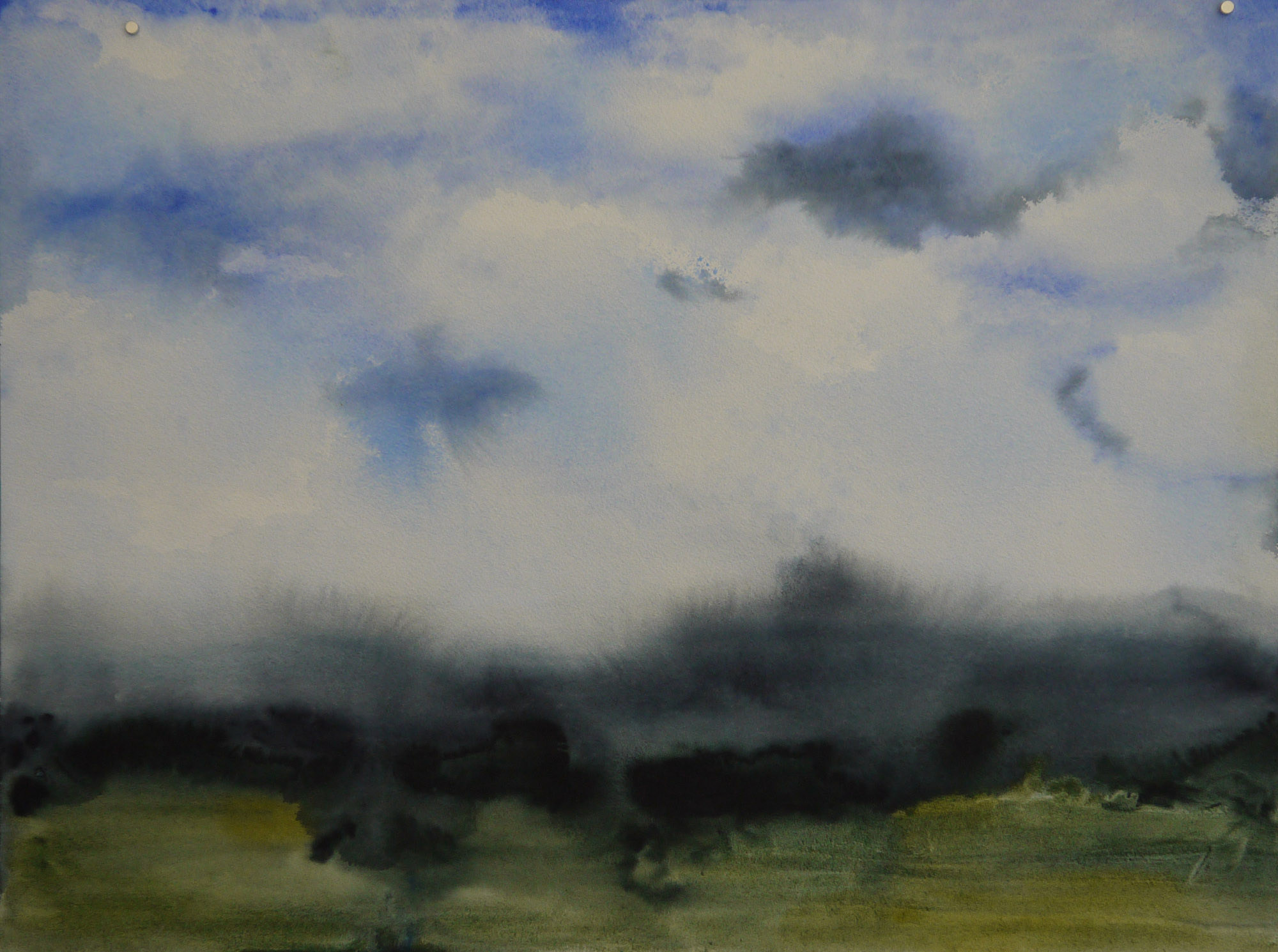
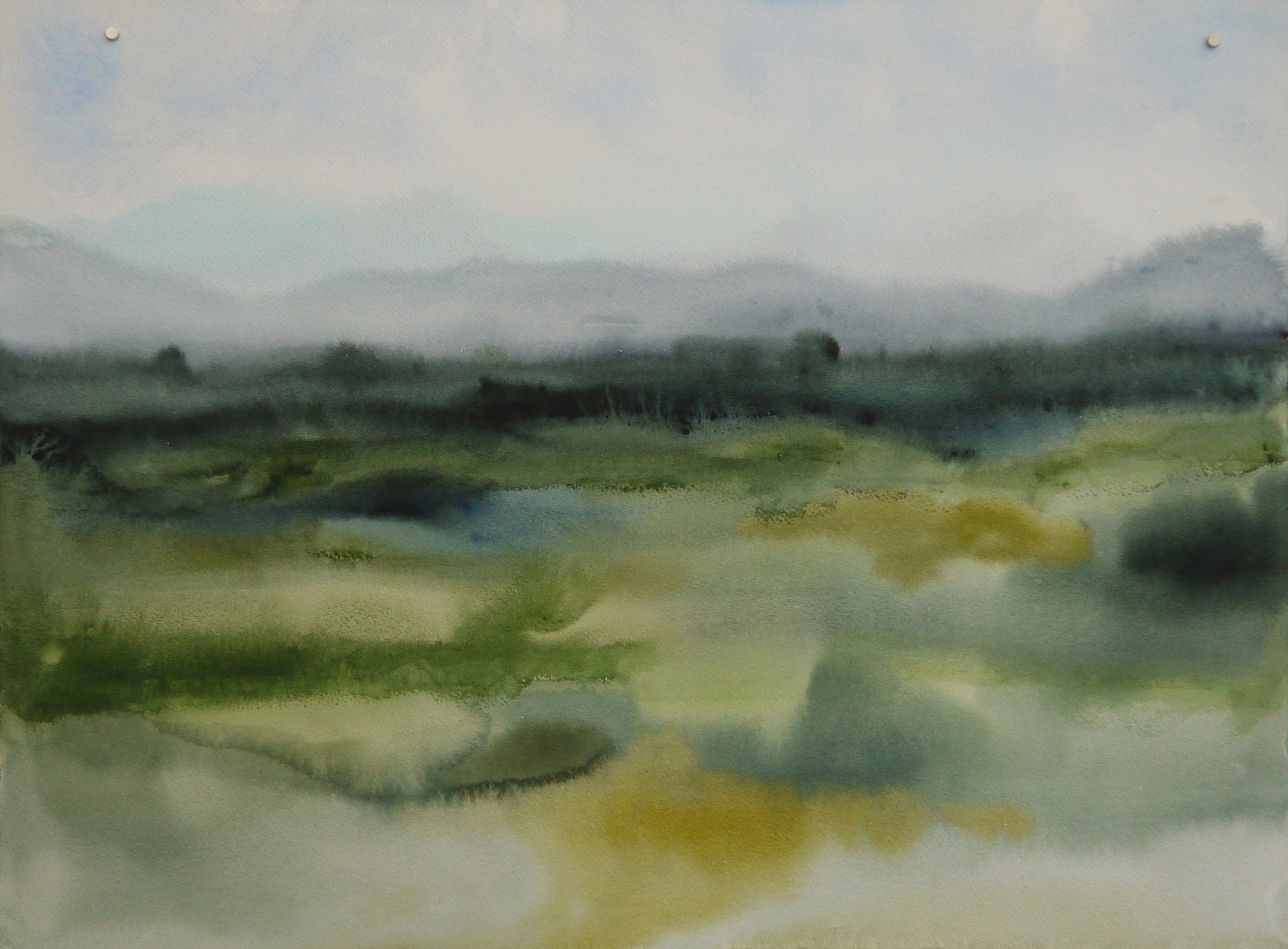
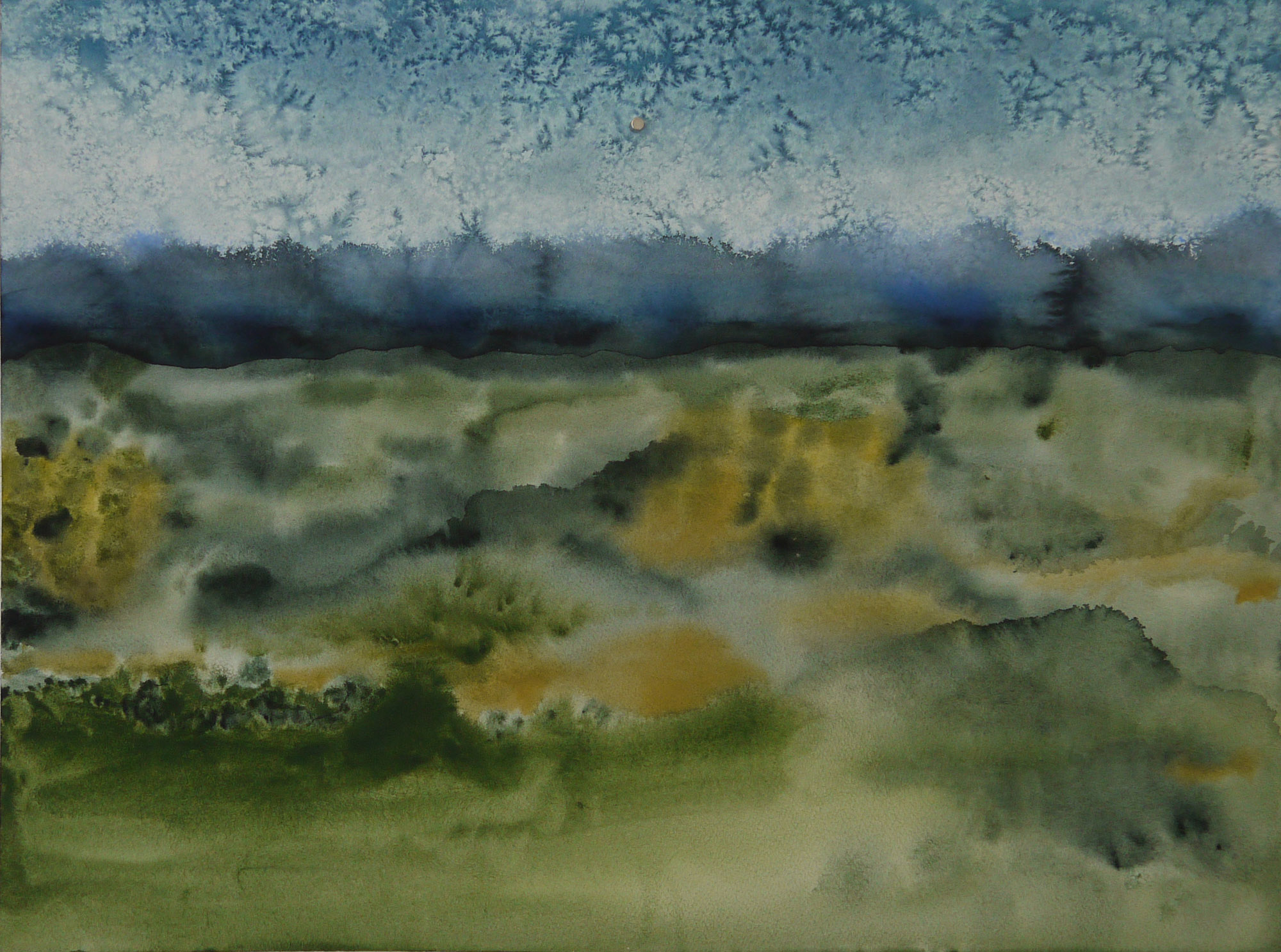
Meichen Waxer, Canada

2013
Teresa Albor, USA
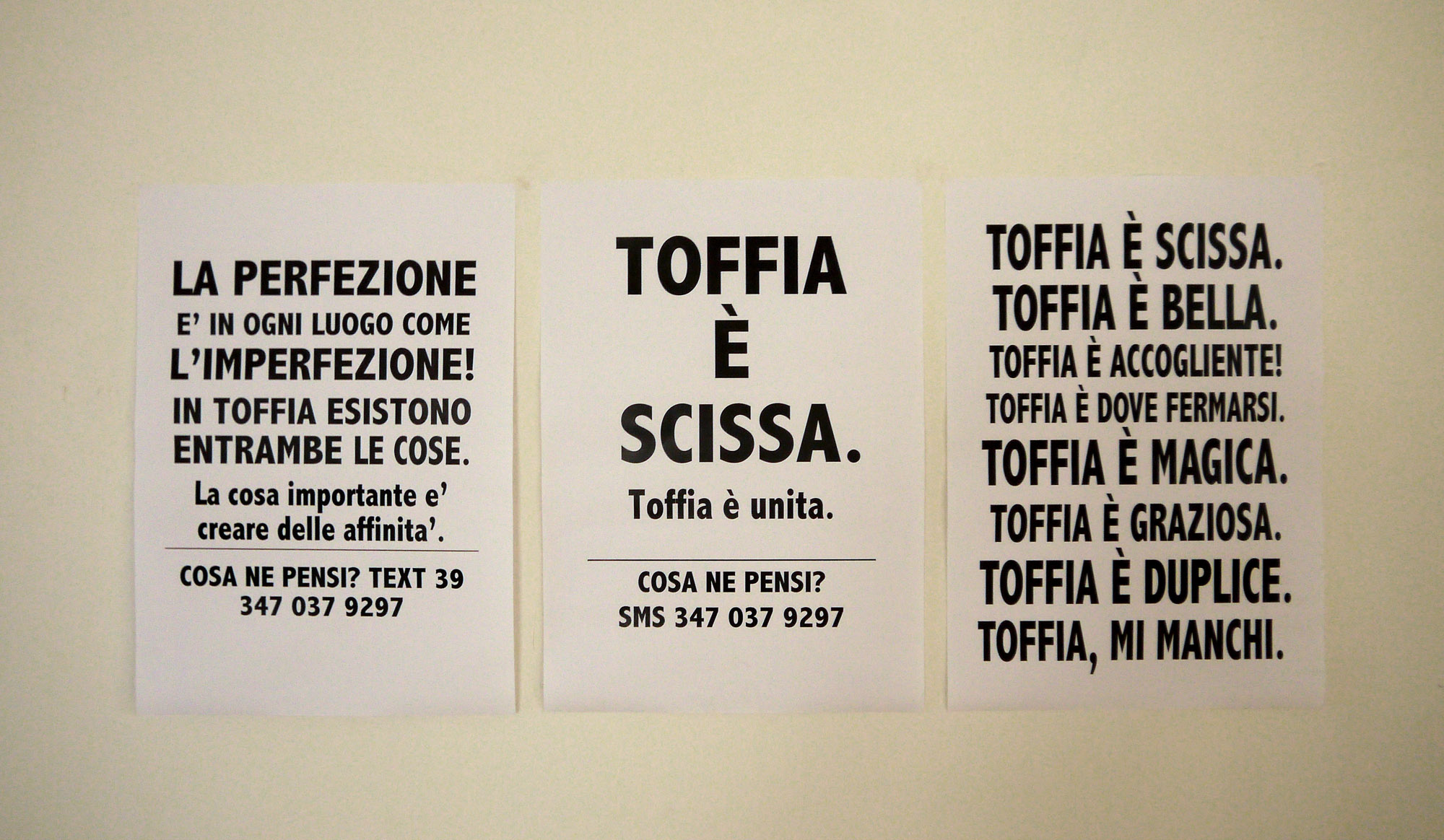
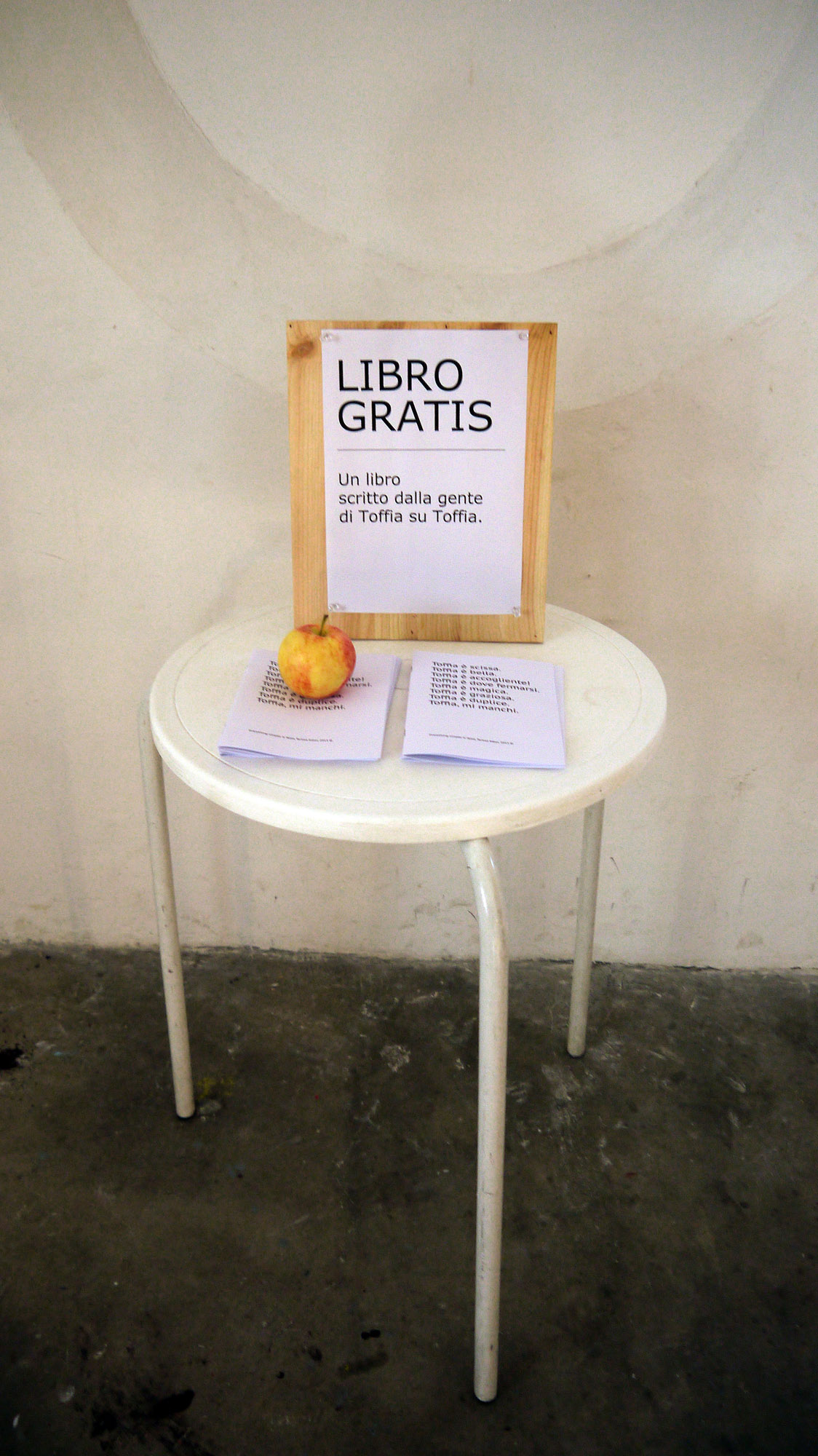
John Bonafede, USA
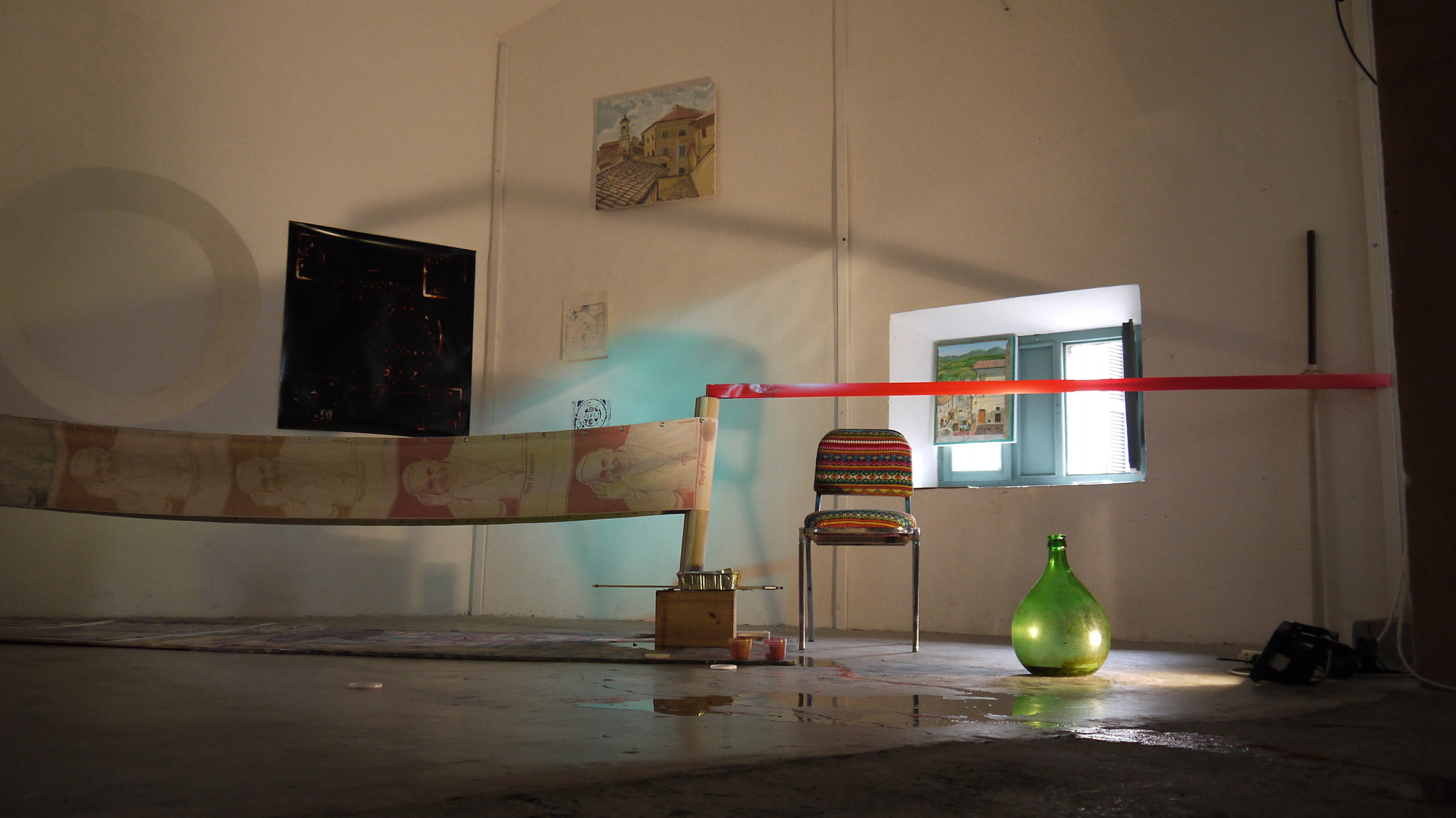
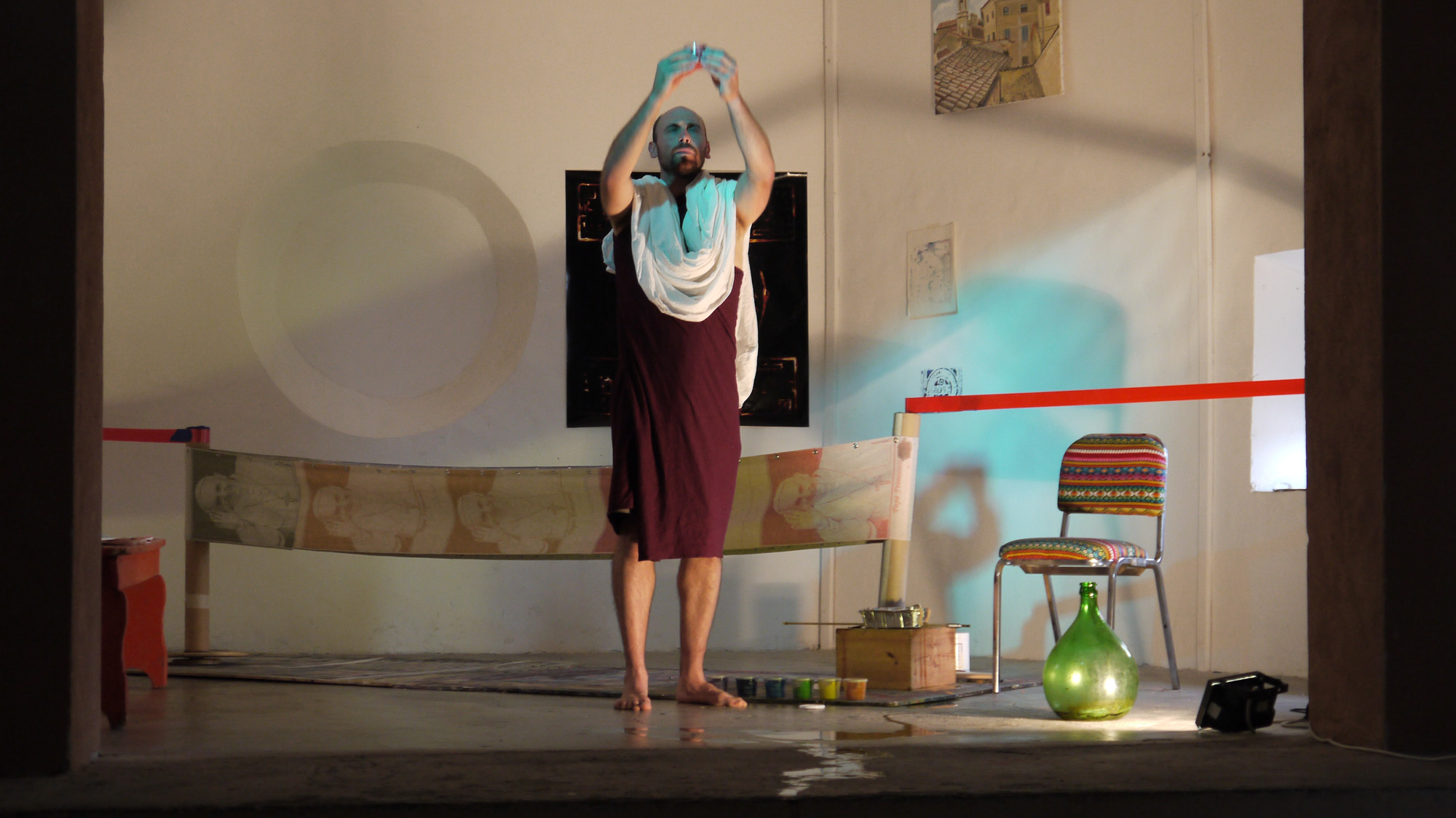
Zoe Childerley, UK
Tomas Creus, Brazil/Canada
www.youtube.com/user/tomascreus
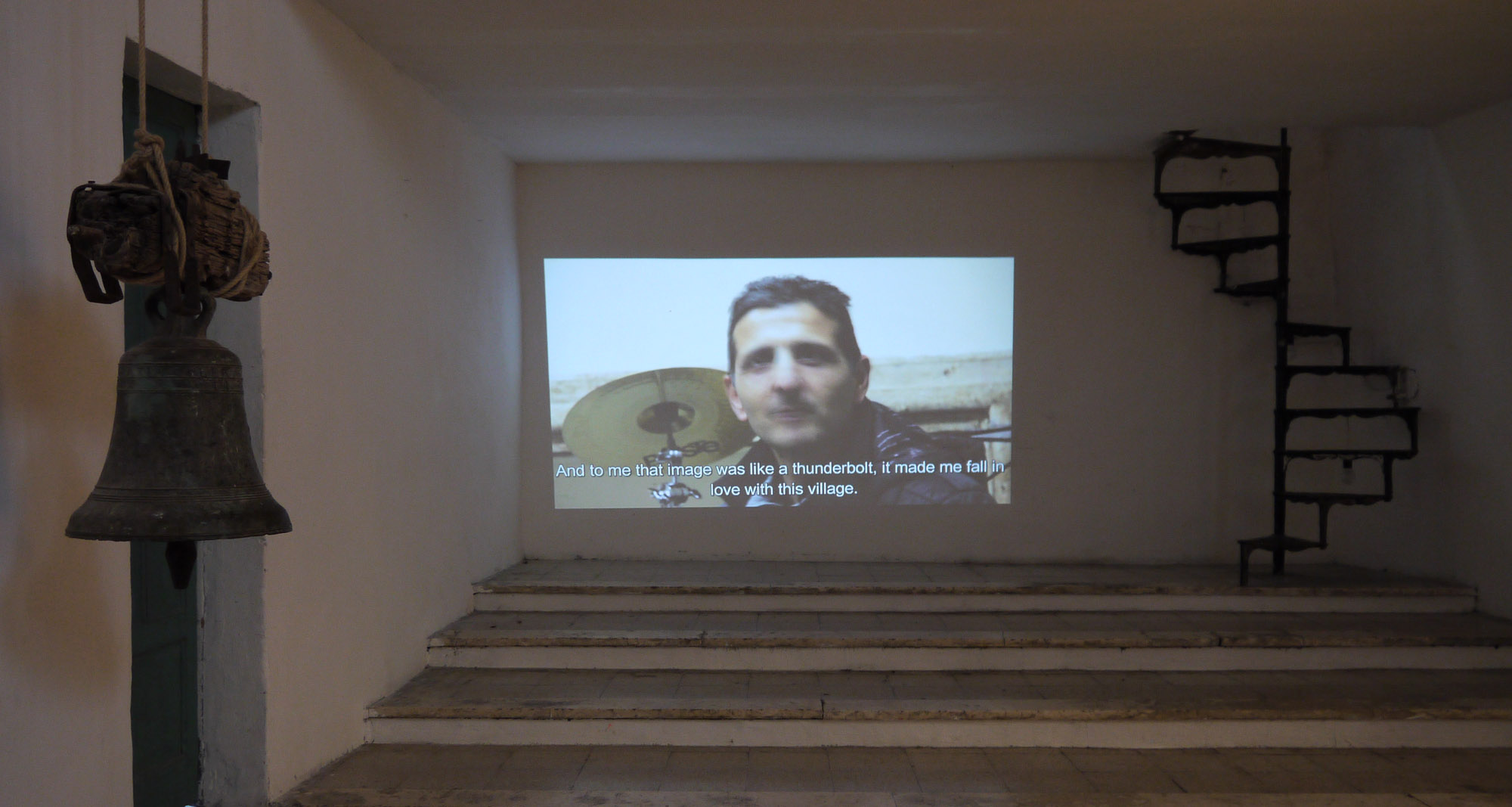
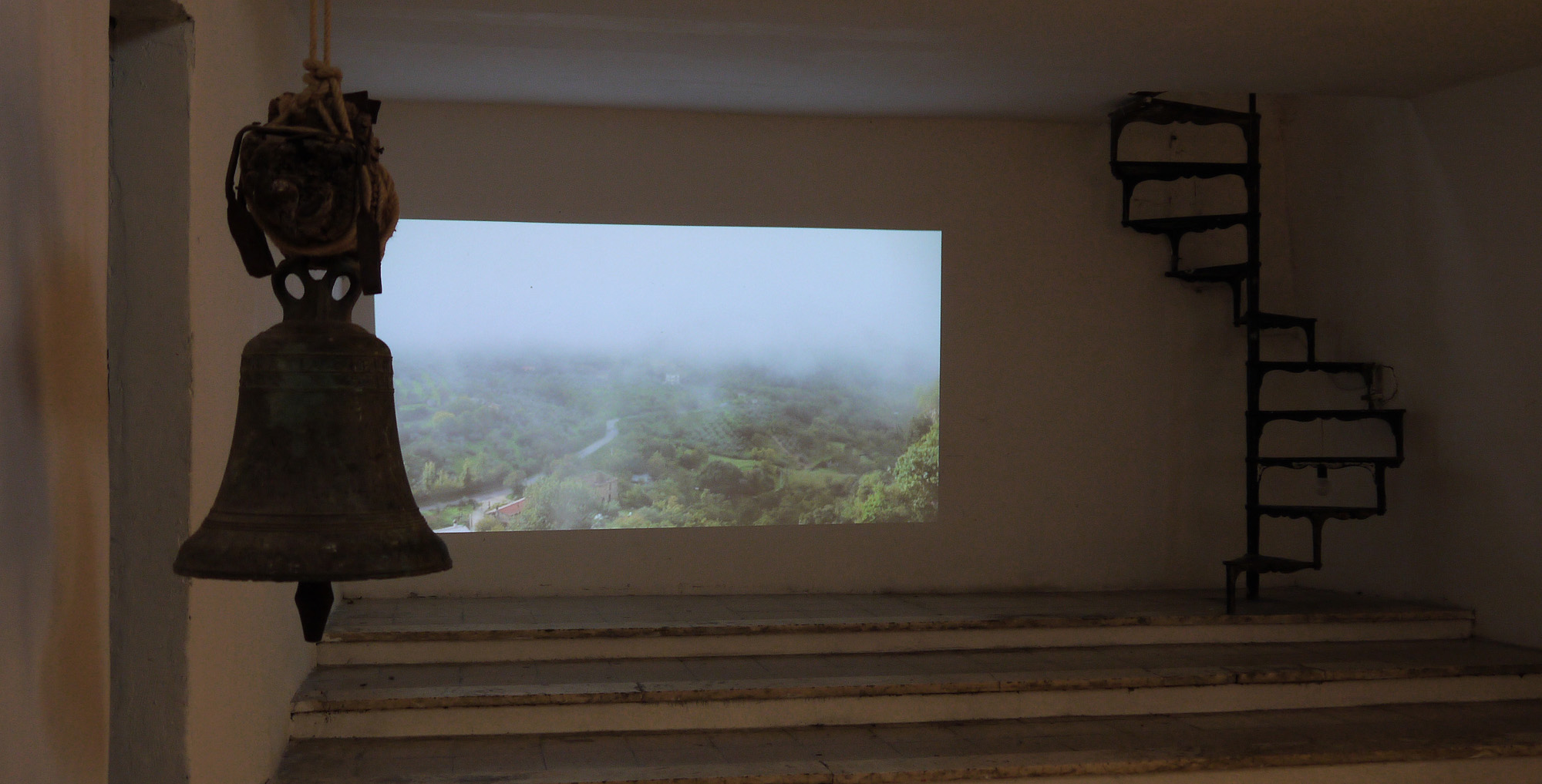
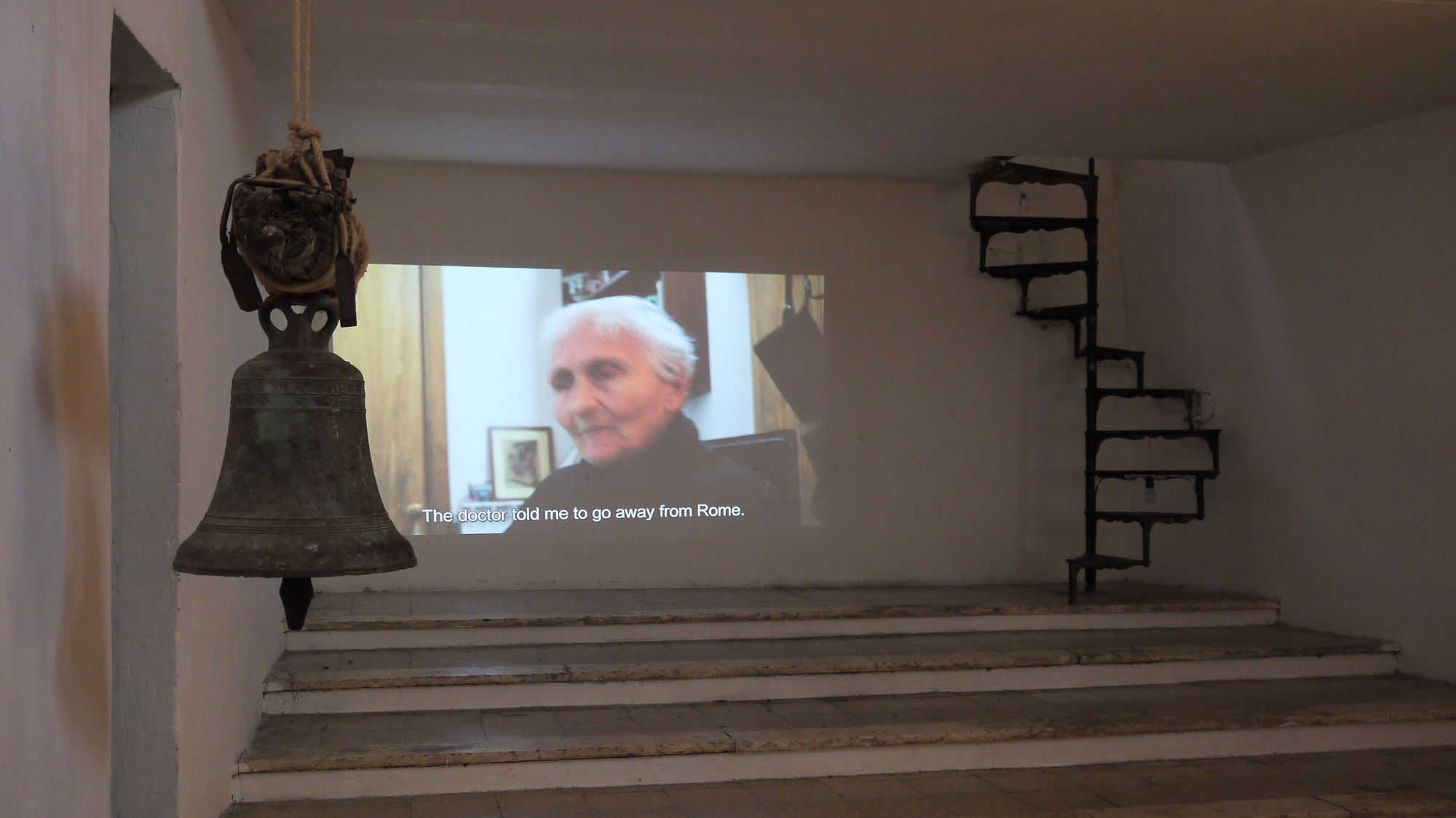
Chiara Dazi, Italy/Germany
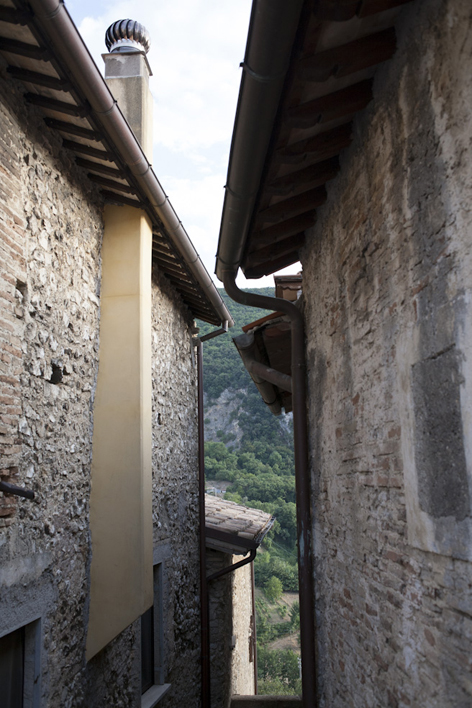


Marcello Dolce, USA
Katinka Ingelberg, Sweden
katinkaigelberg.squarespace.com
Hyojin Jeong, South Korea/Germany
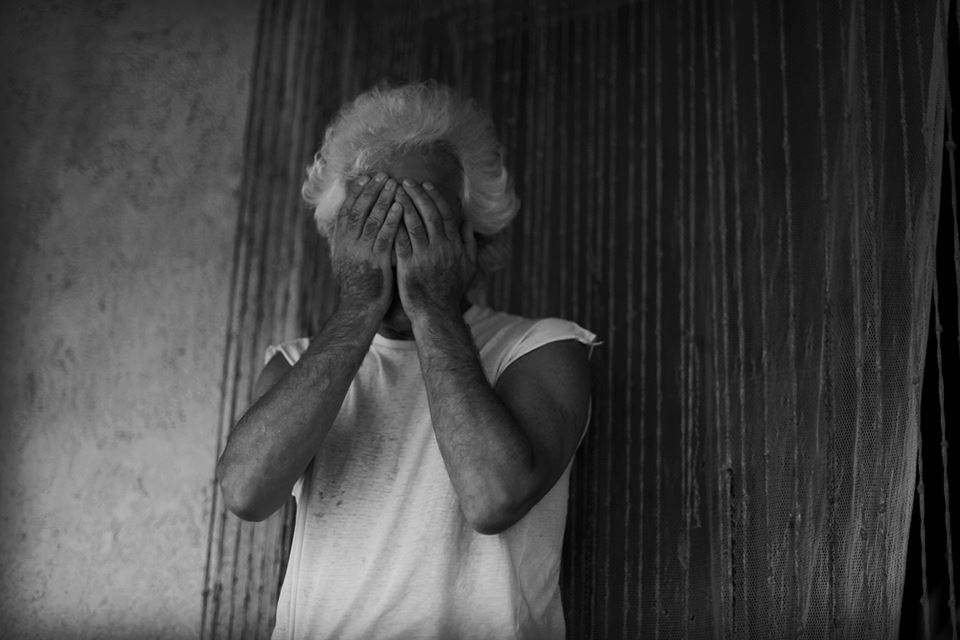
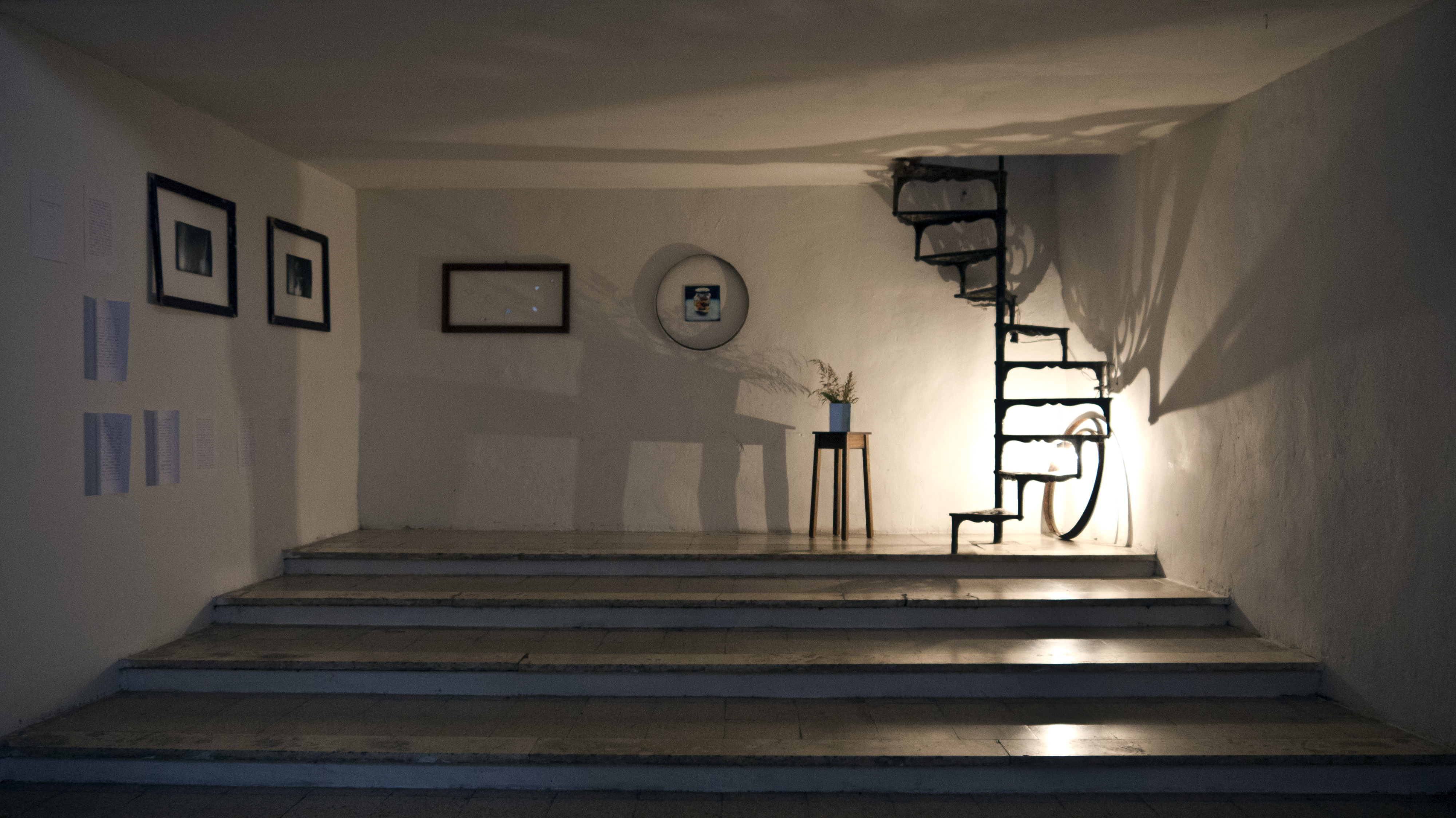
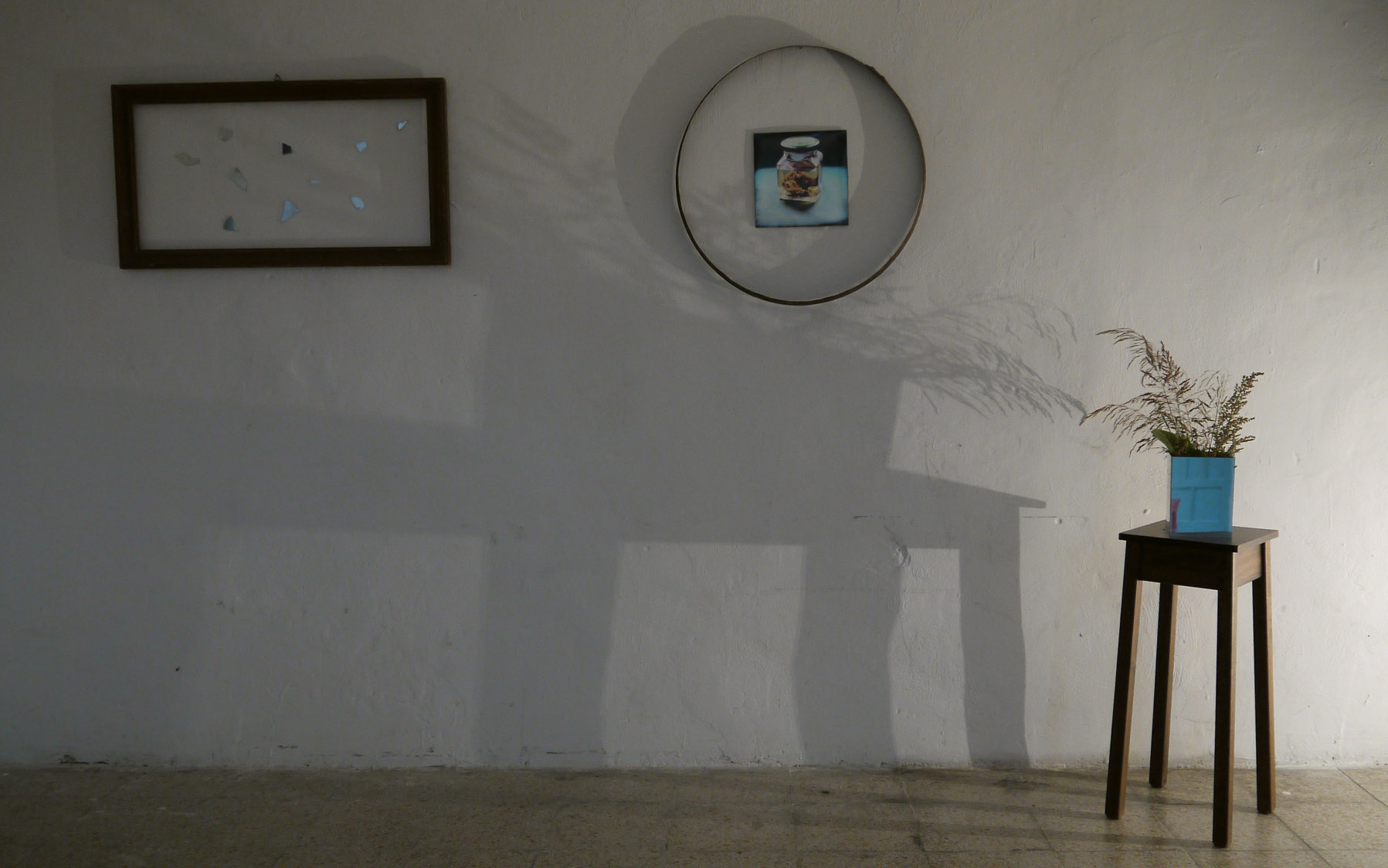
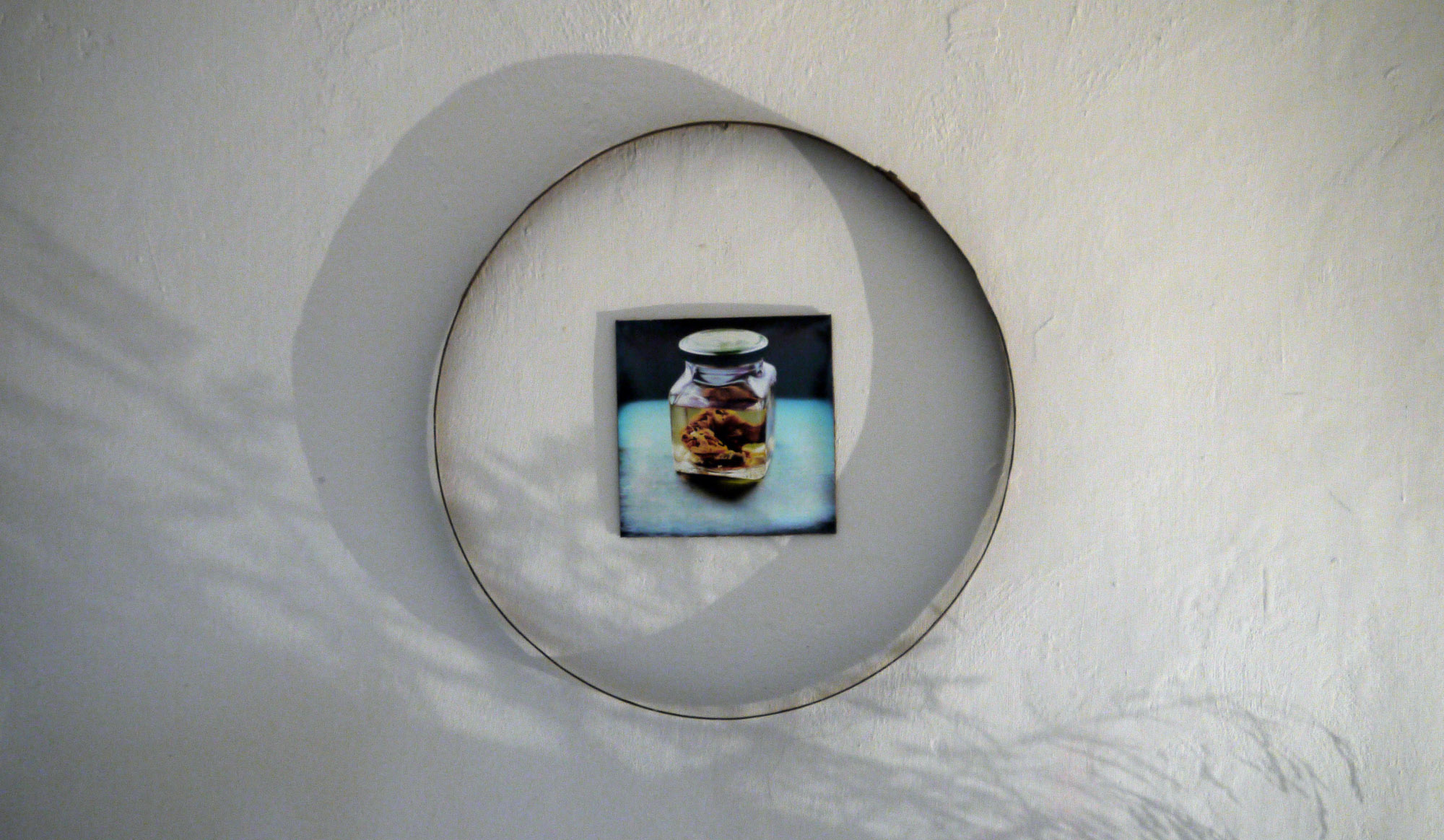
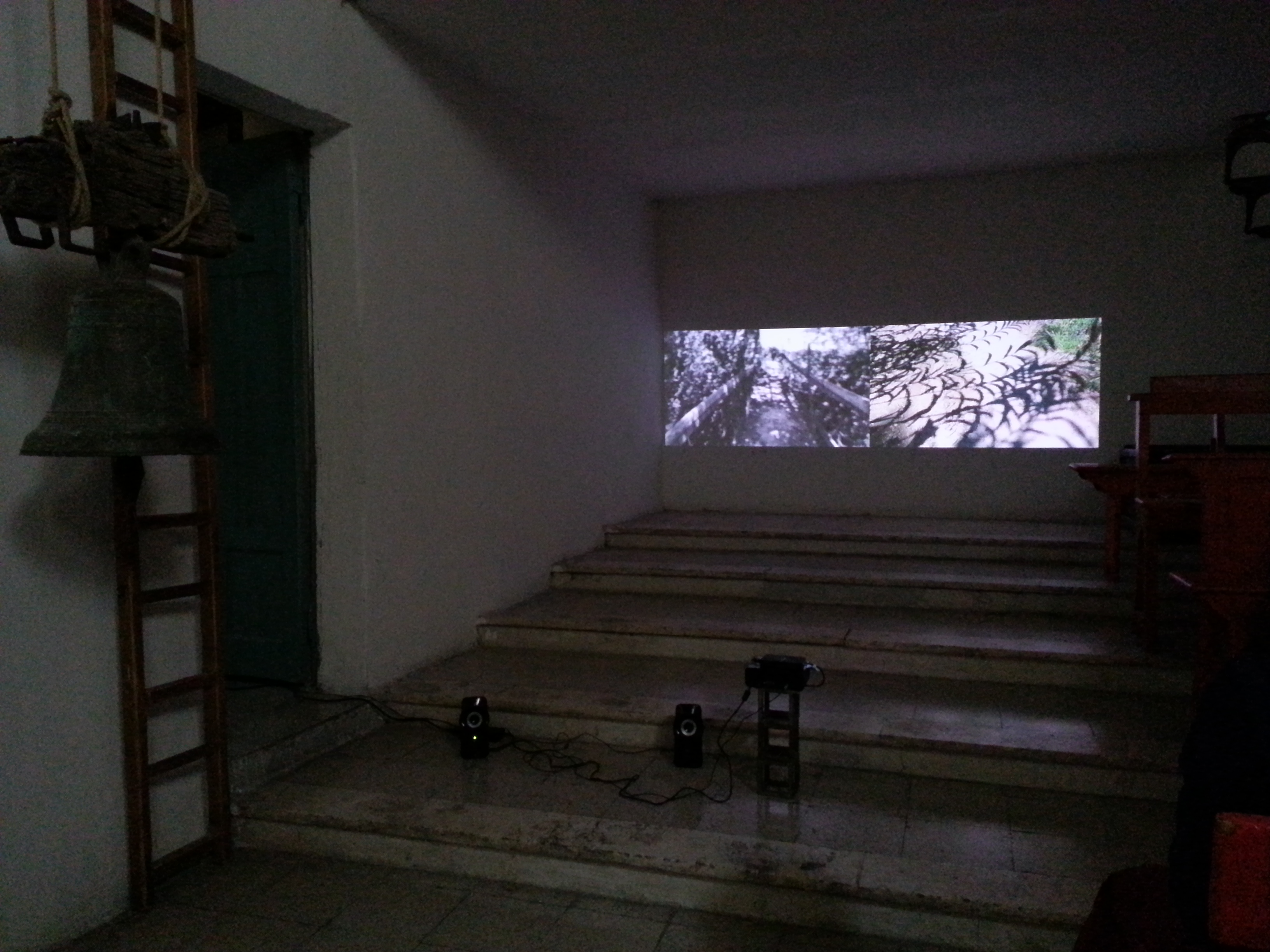
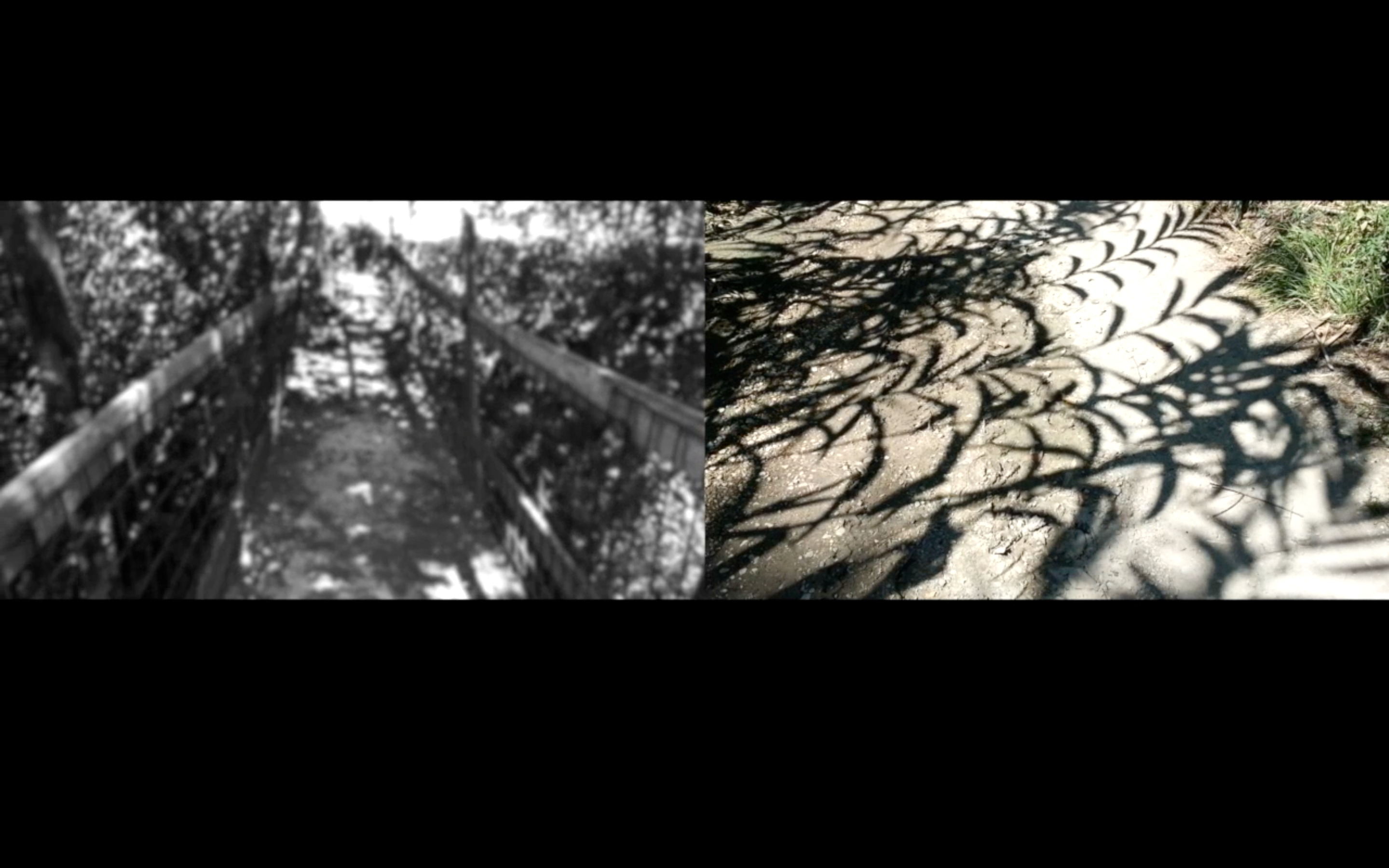
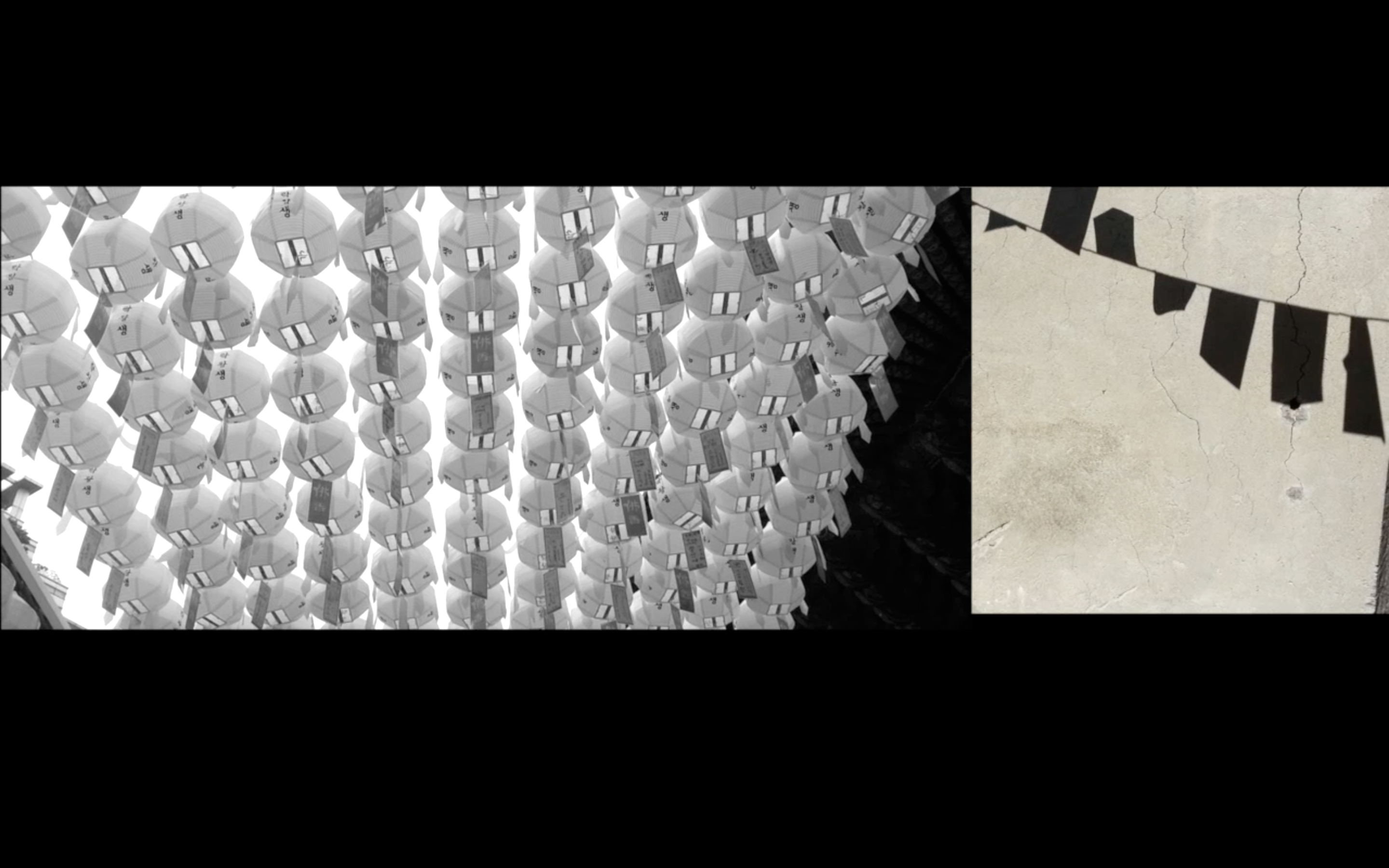
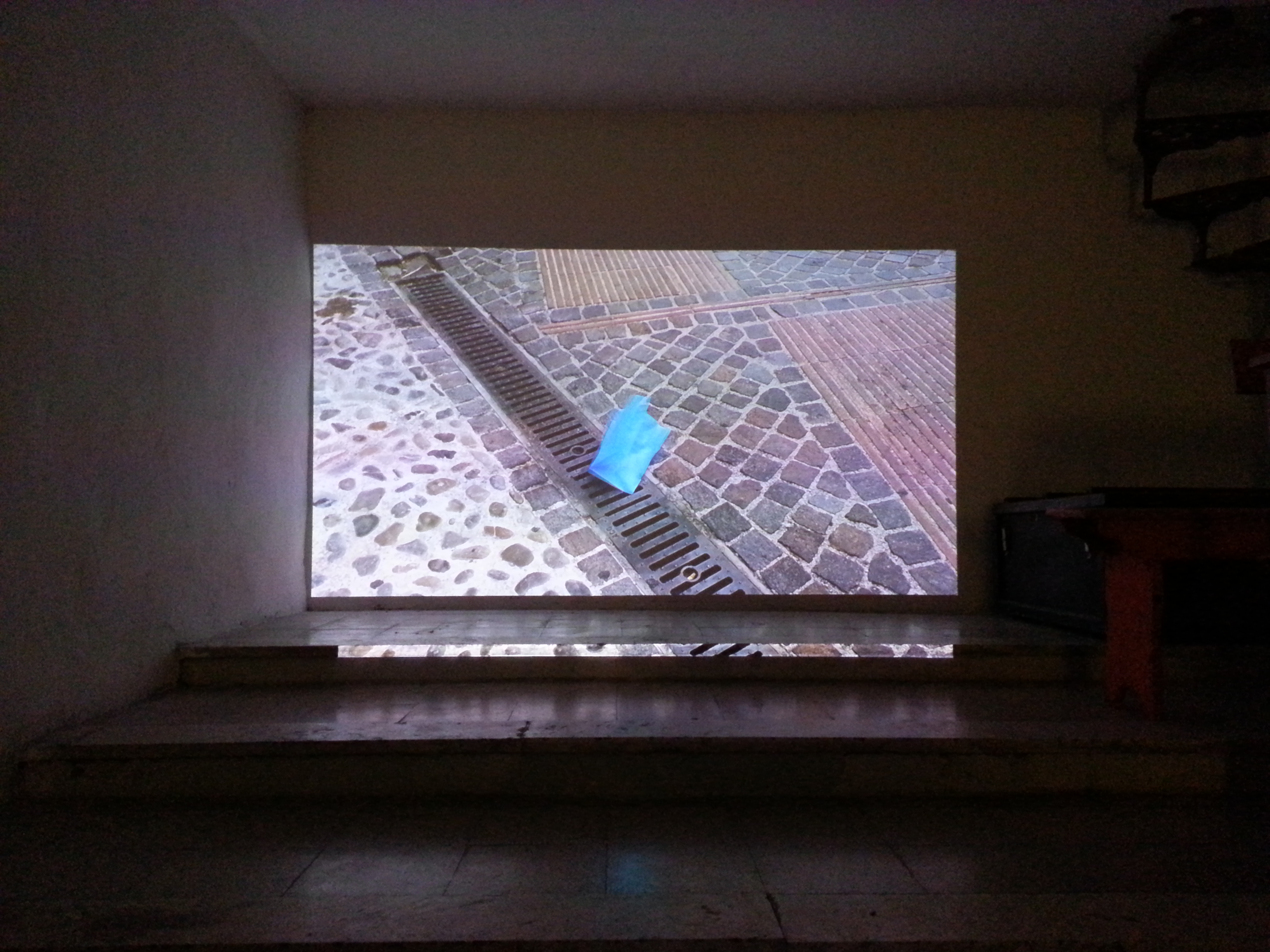
At the time I was in Toffia, there was St. Mary’s Day celebration, and at the same time I’ve heard that one my friends died suddenly. So I began wondering, what is LIFE and DEATH. In the area of Toffia I have collected a number of images and sounds, and then I tried to put the images and sounds together. In Korea, ‘crossing the river’ symbolizes death. I also wanted to express indirectly that everyone is on the road to death.
Nehara Kalev, USA
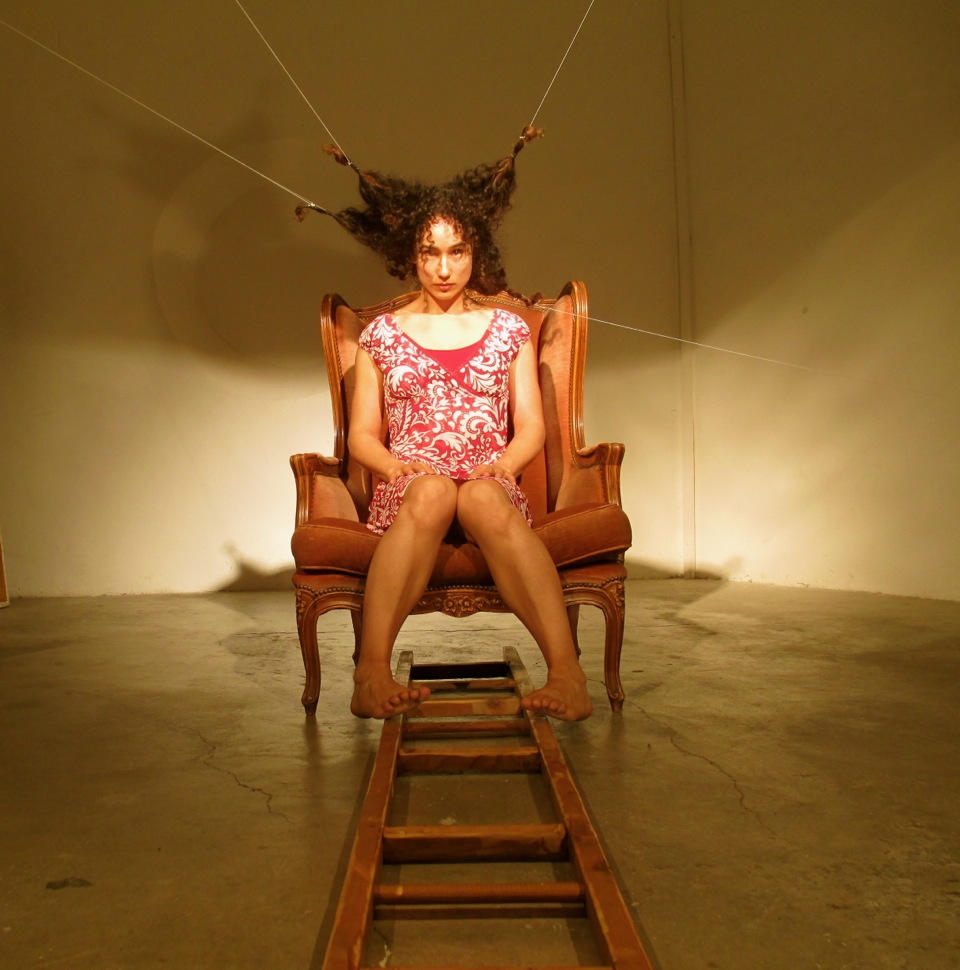
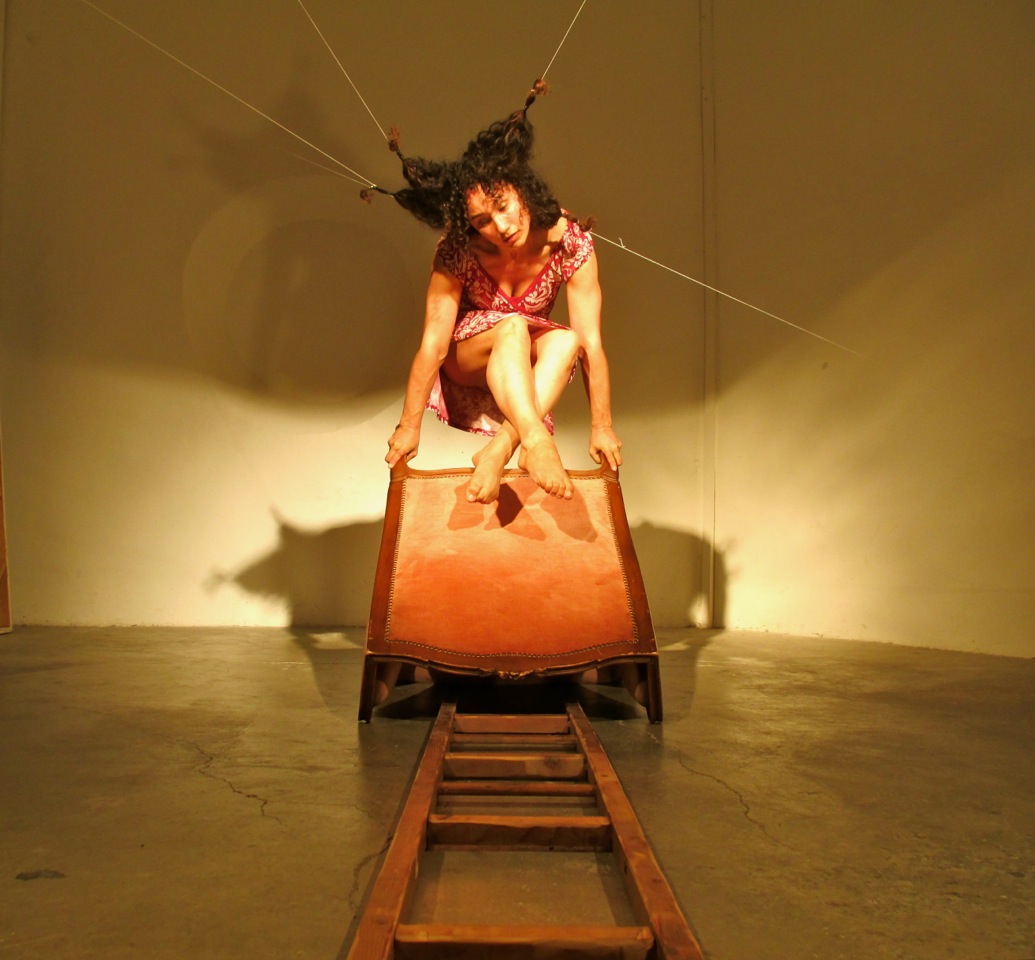
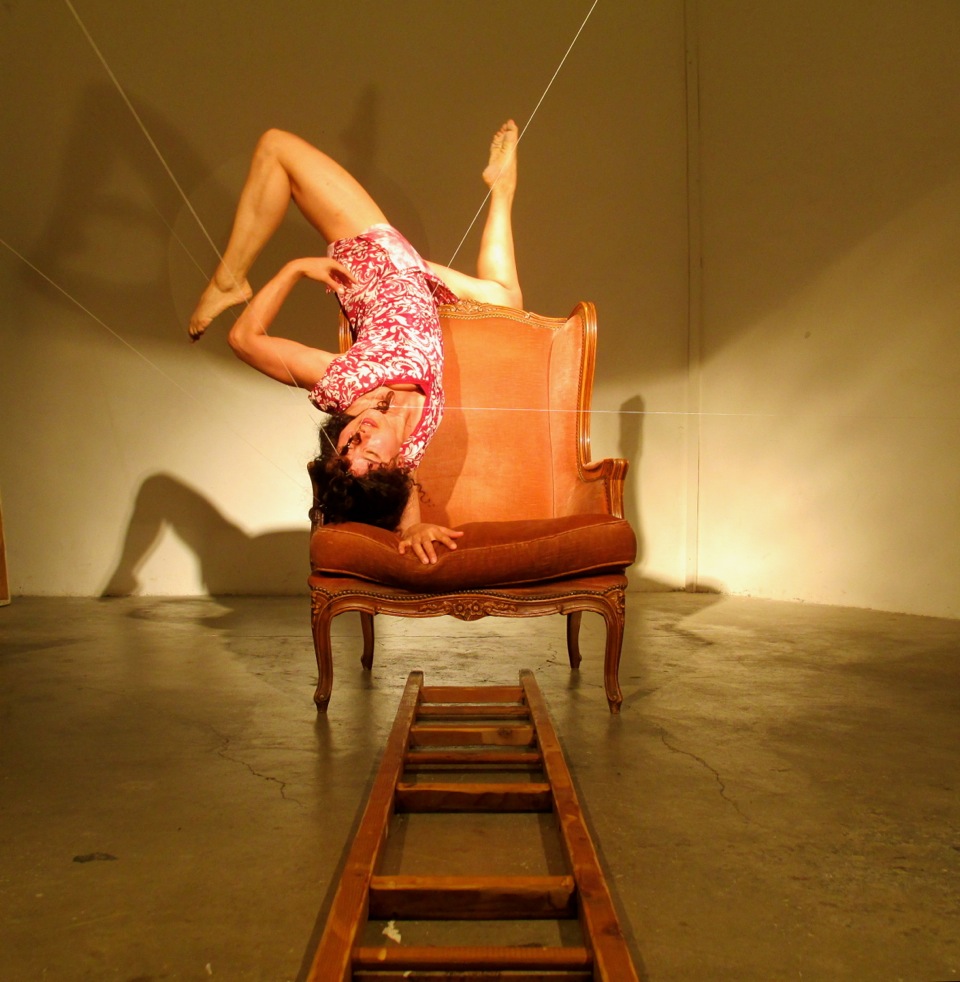
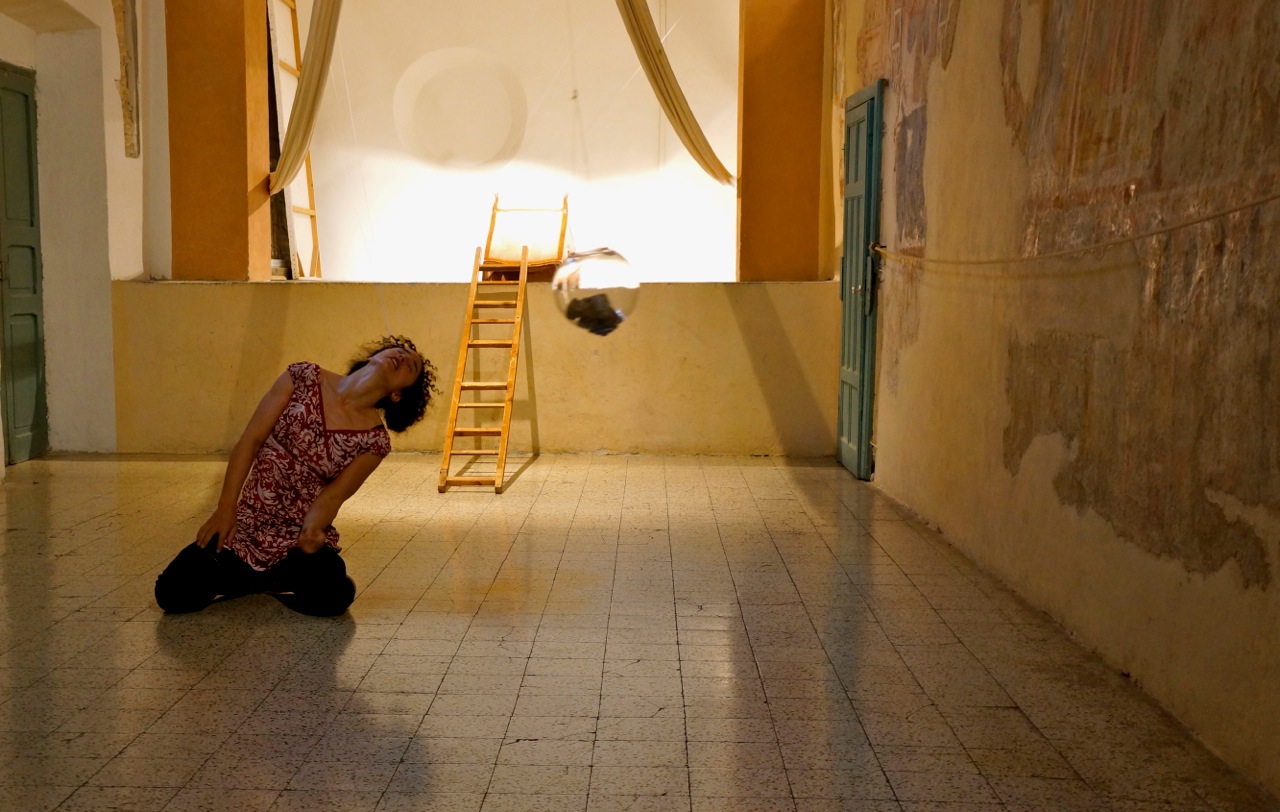
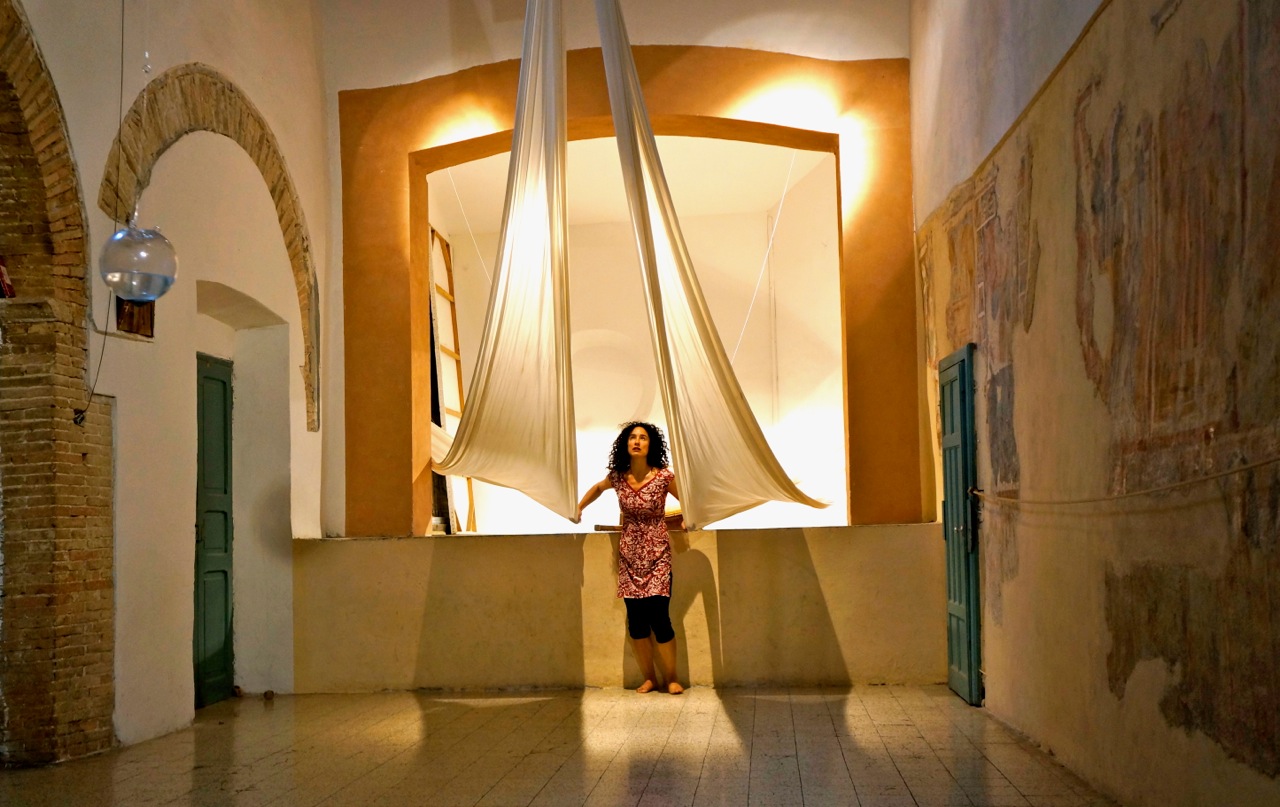
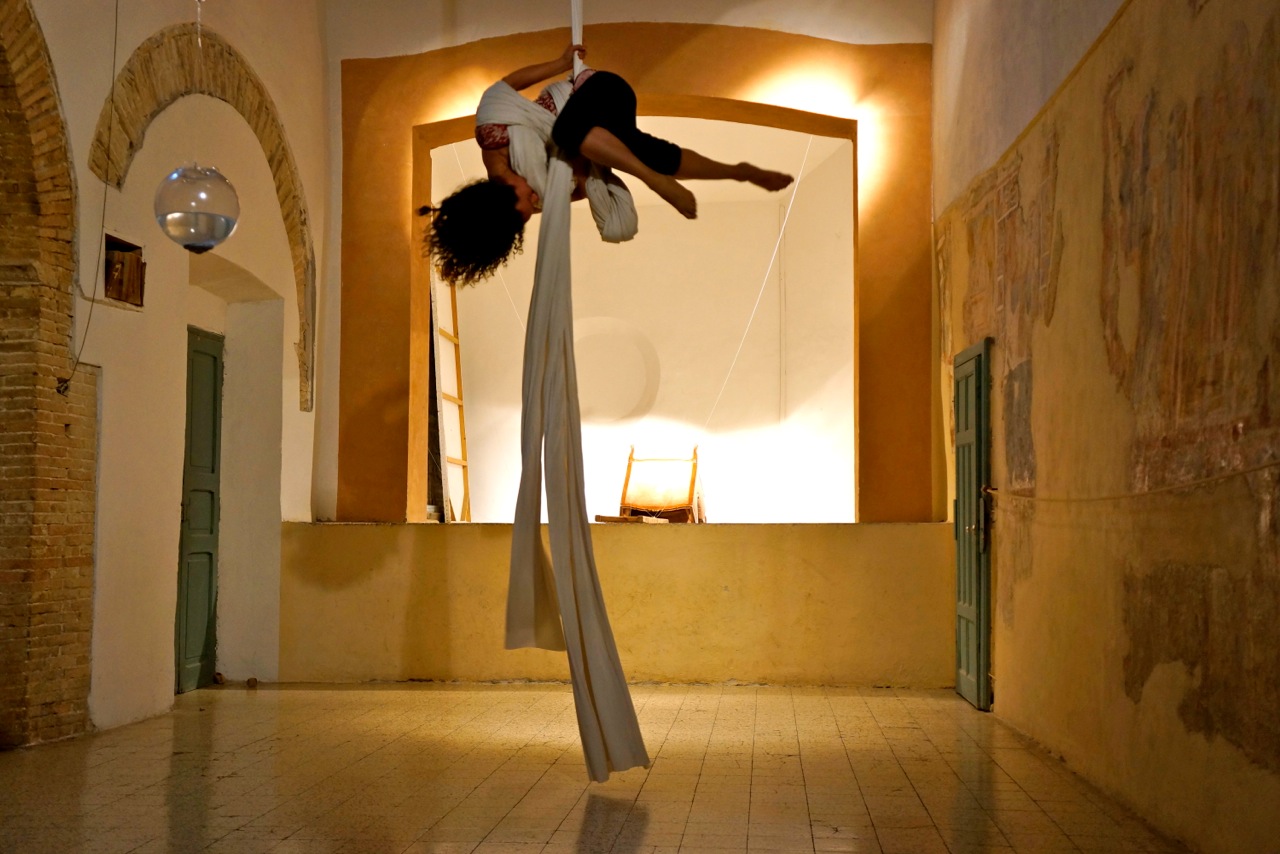
My residency at 33OC inspired the beginnings of the performance It Will All Make Sense Shortly, and its companion installation piece, 41 Imaginary Endings. Working with a series of pendulums, objects, stretchy threads, and aerial fabric, I observed relationships between momentum, time, objects, space, and the human body.
Fascinated by the place where chaos and order meet, I tuned in to shifting landscapes and shifting emotional states. Looking at the illusion of stability and control, I responded with this multi-layered performance/portrait.
The historic setting of the church interiors became central to the choreography of this piece. I experimented with new approaches to combining dance-theatre, improvisation, aerial dance, and photographic/video imagery for this performance, premiering in 2014 as a solo, and in 2015 as an ensemble work.
Katya Kanke-Drobotova & Mikhail Zaikanov, Russia
www.flickr.com/photos/katya_kanke/
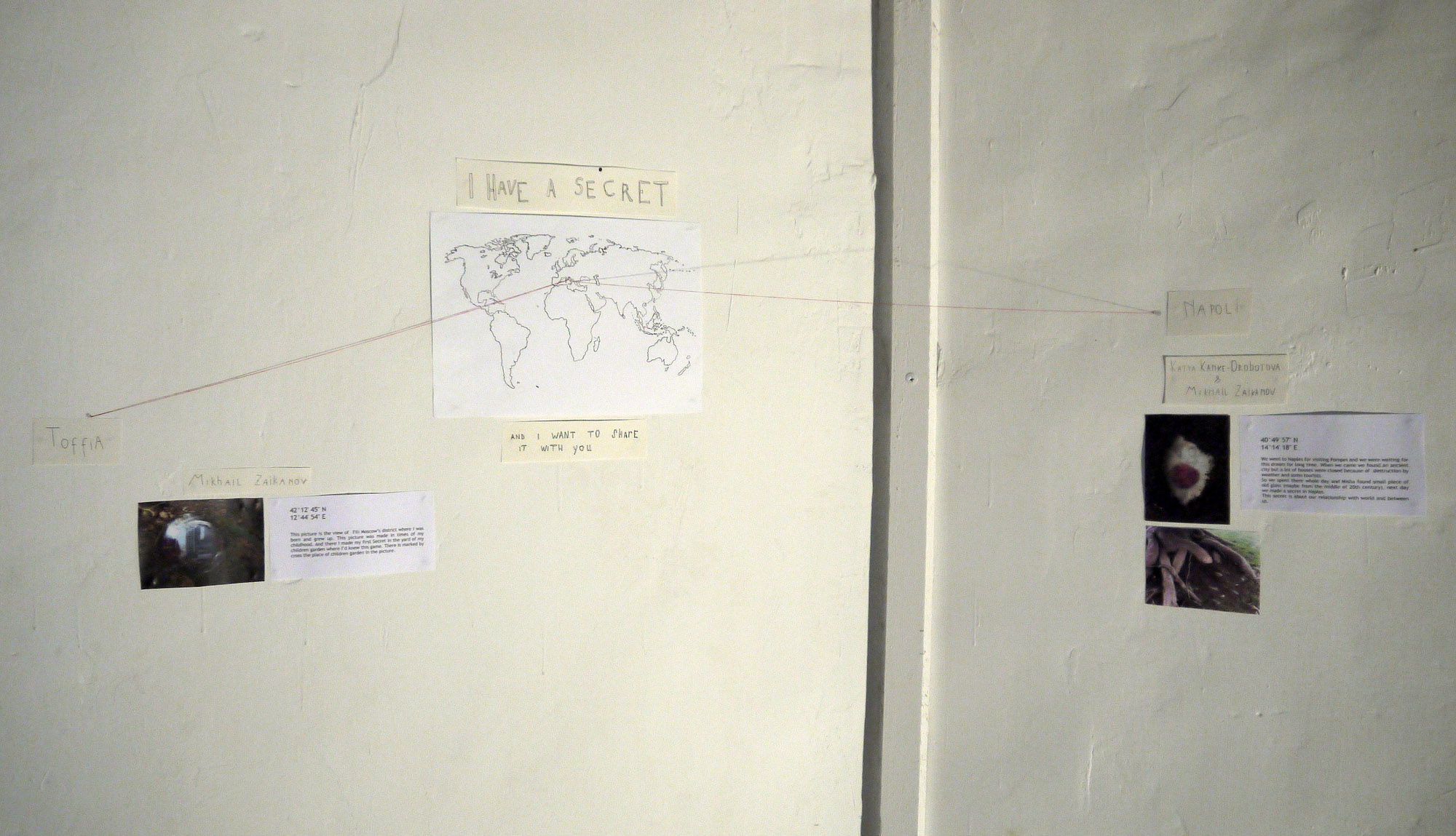
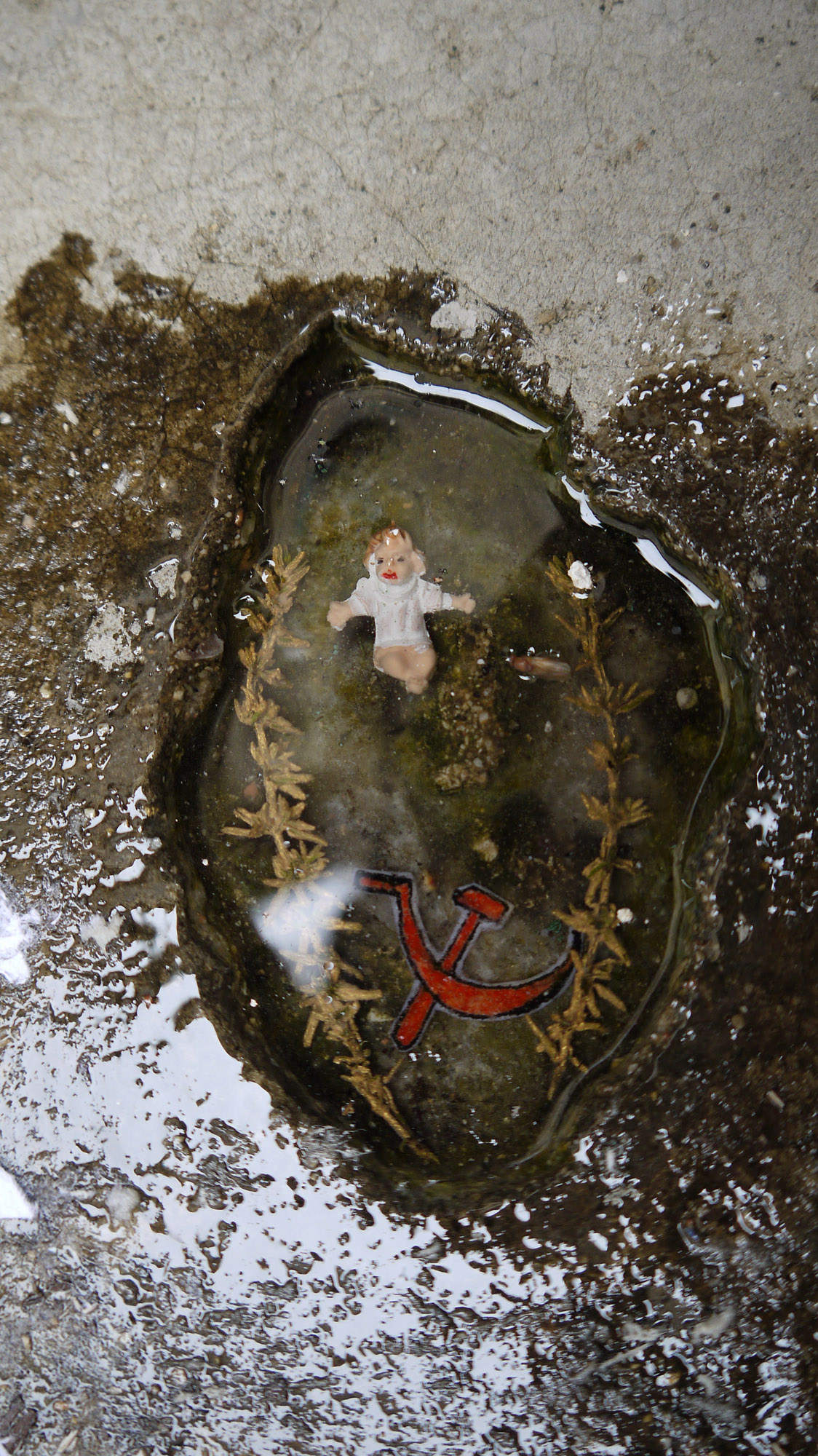
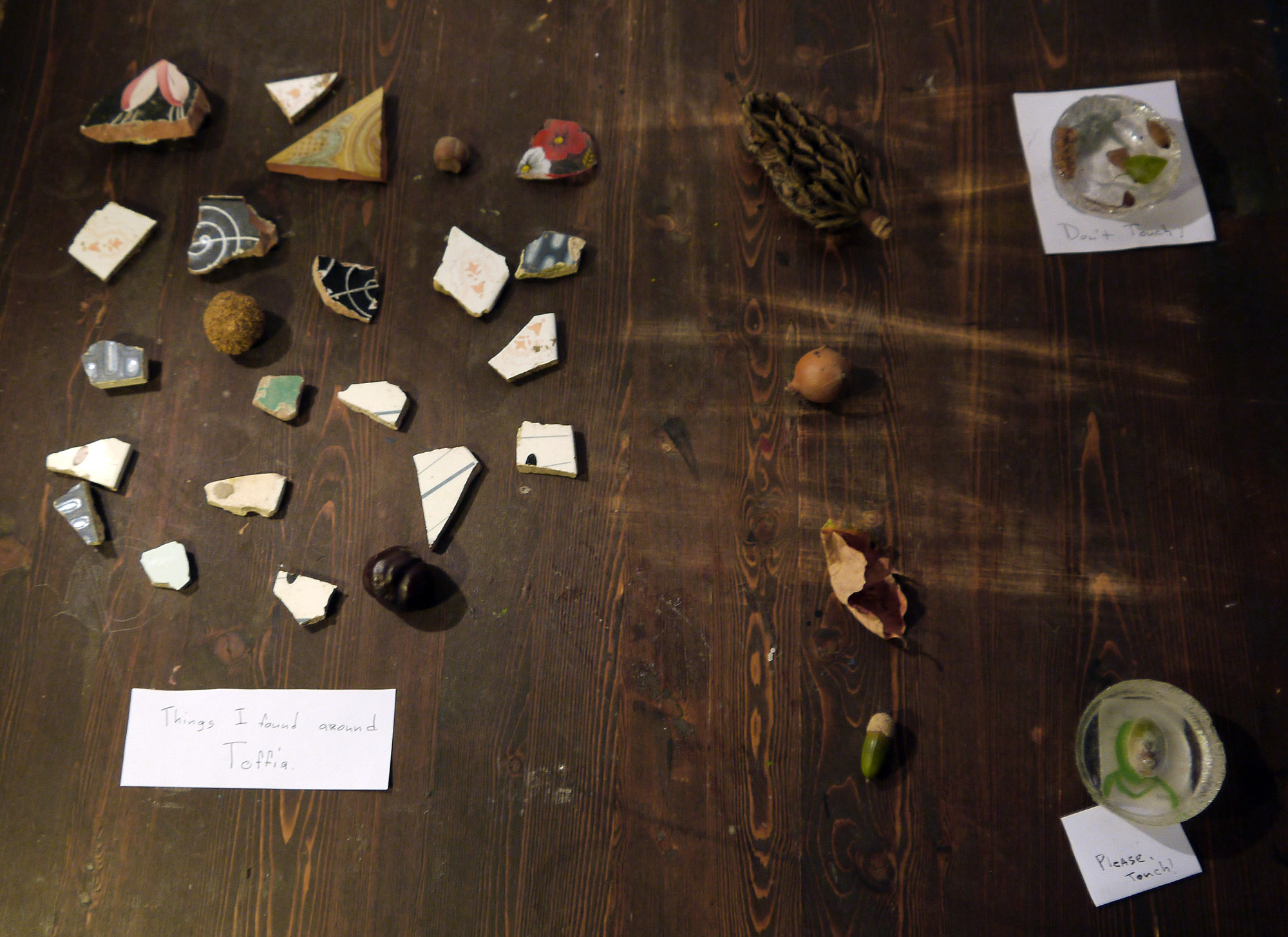
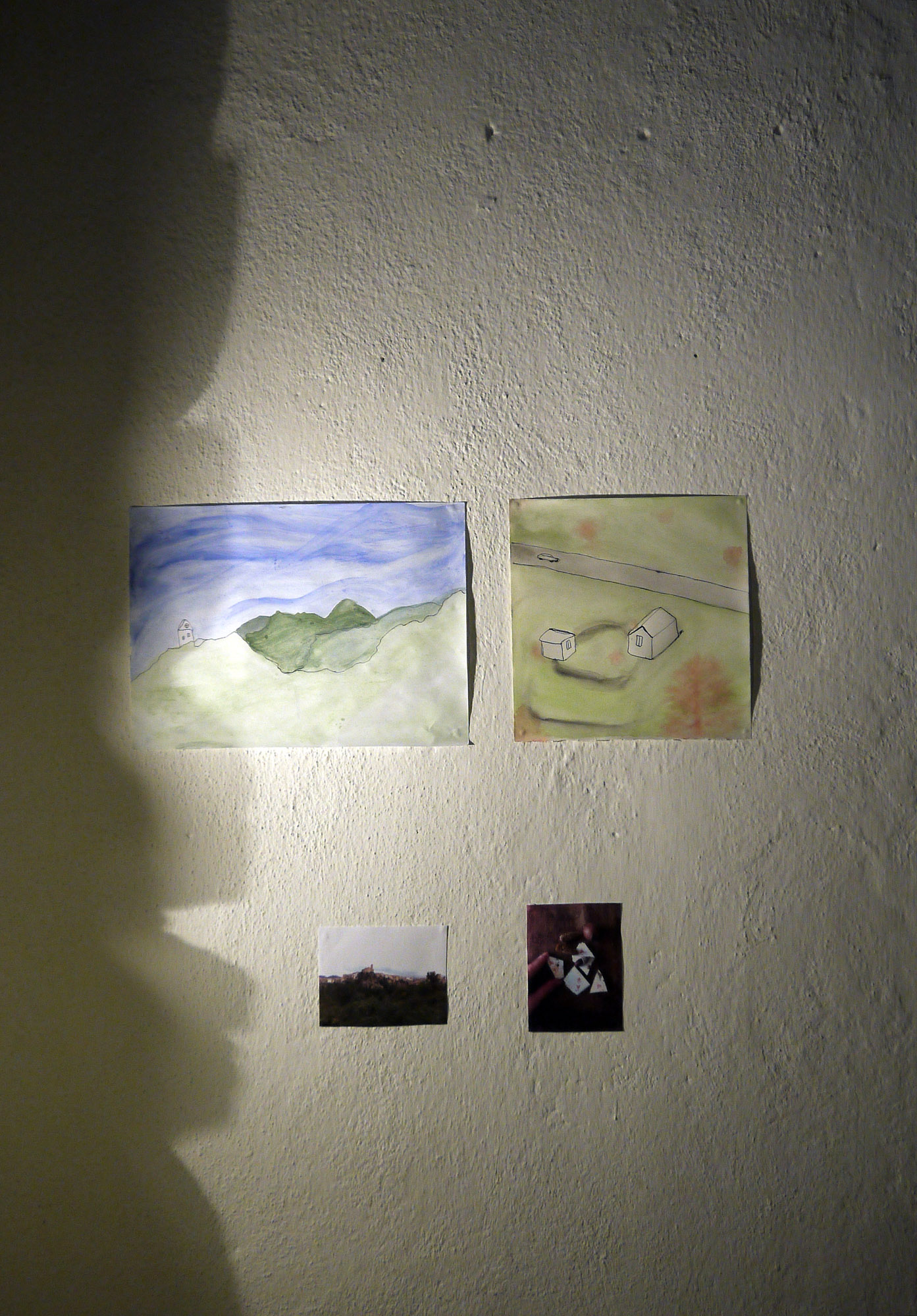
Anne Lewinson, USA
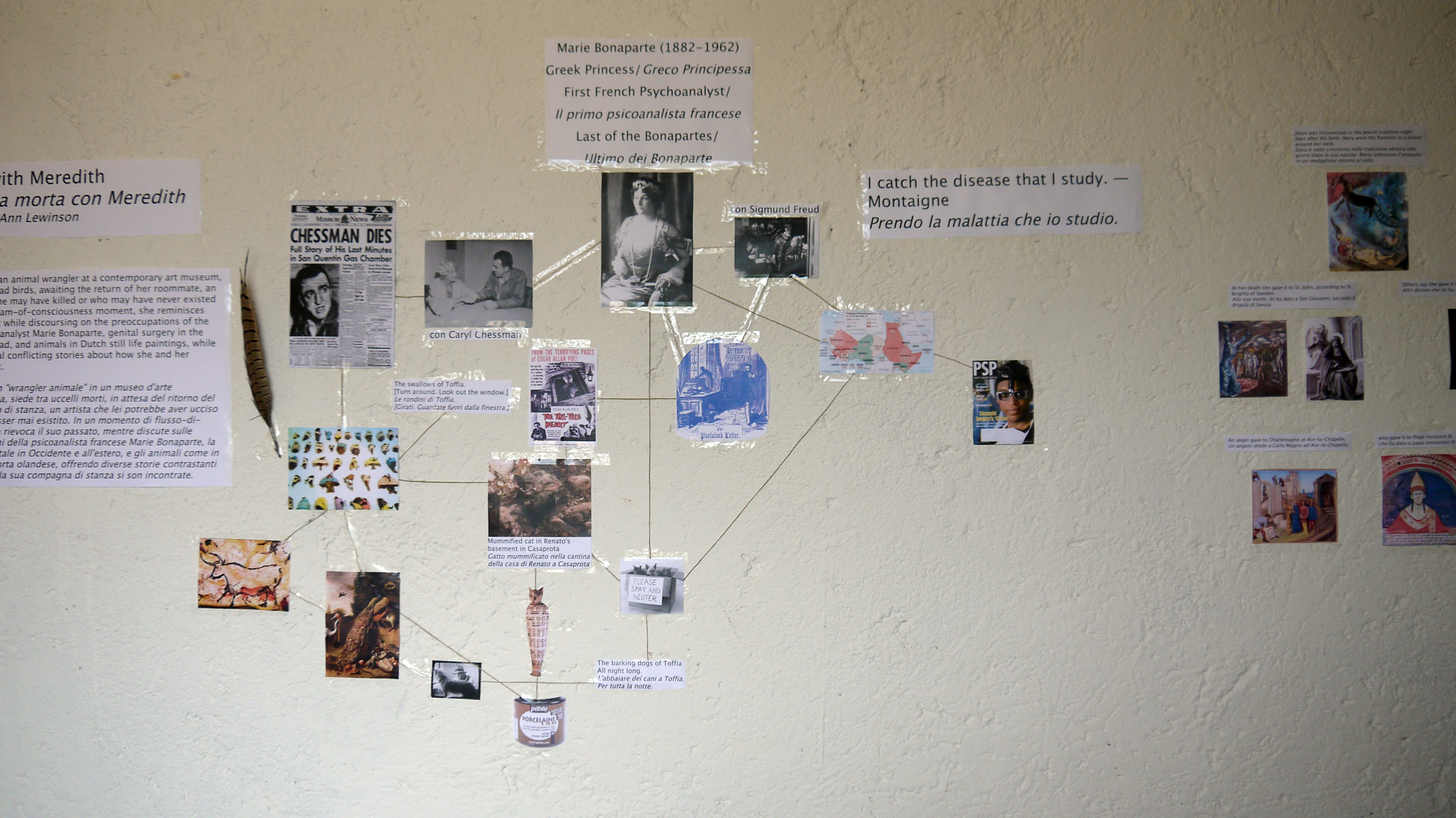
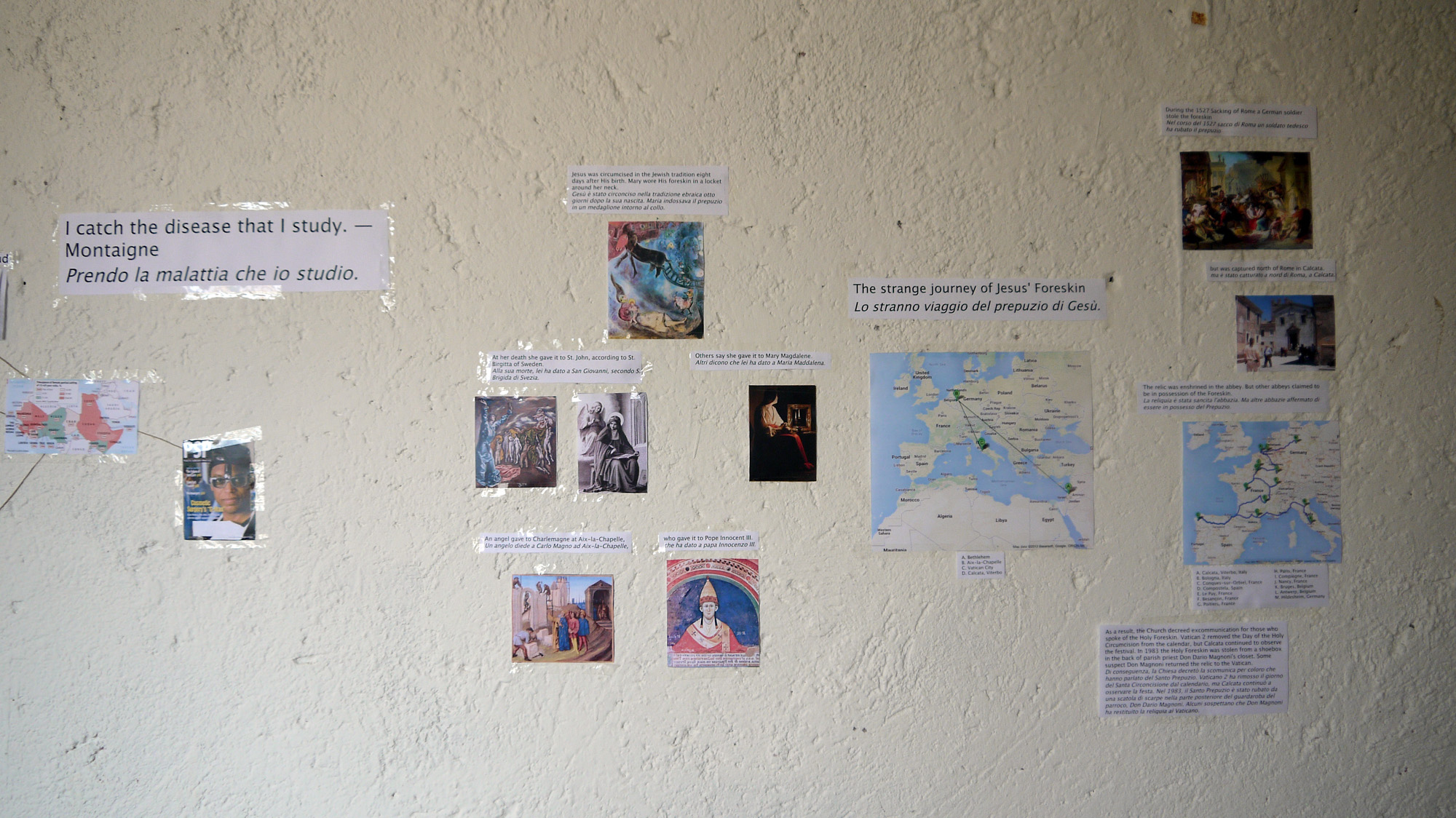
Millie Schwier, UK
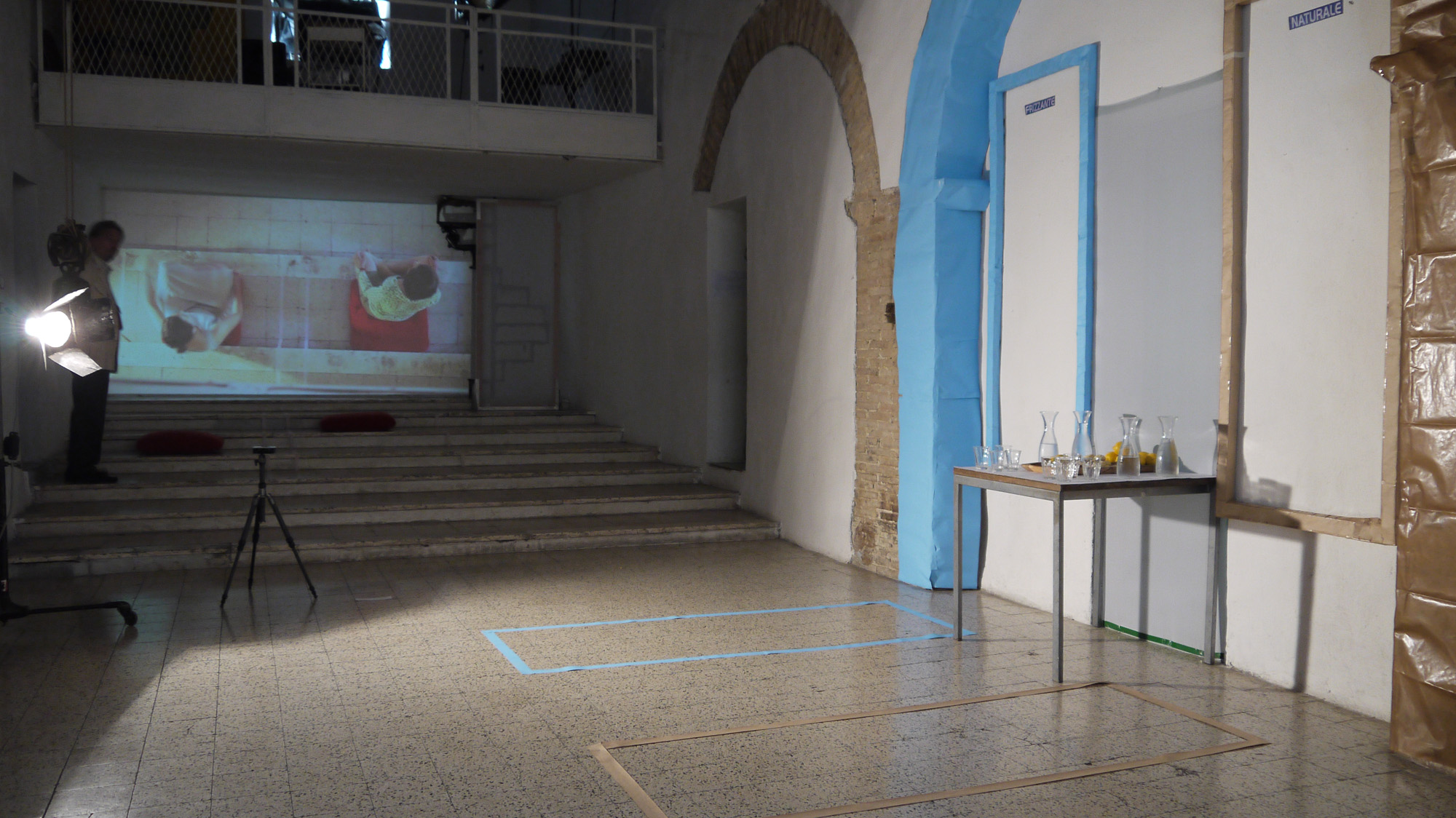
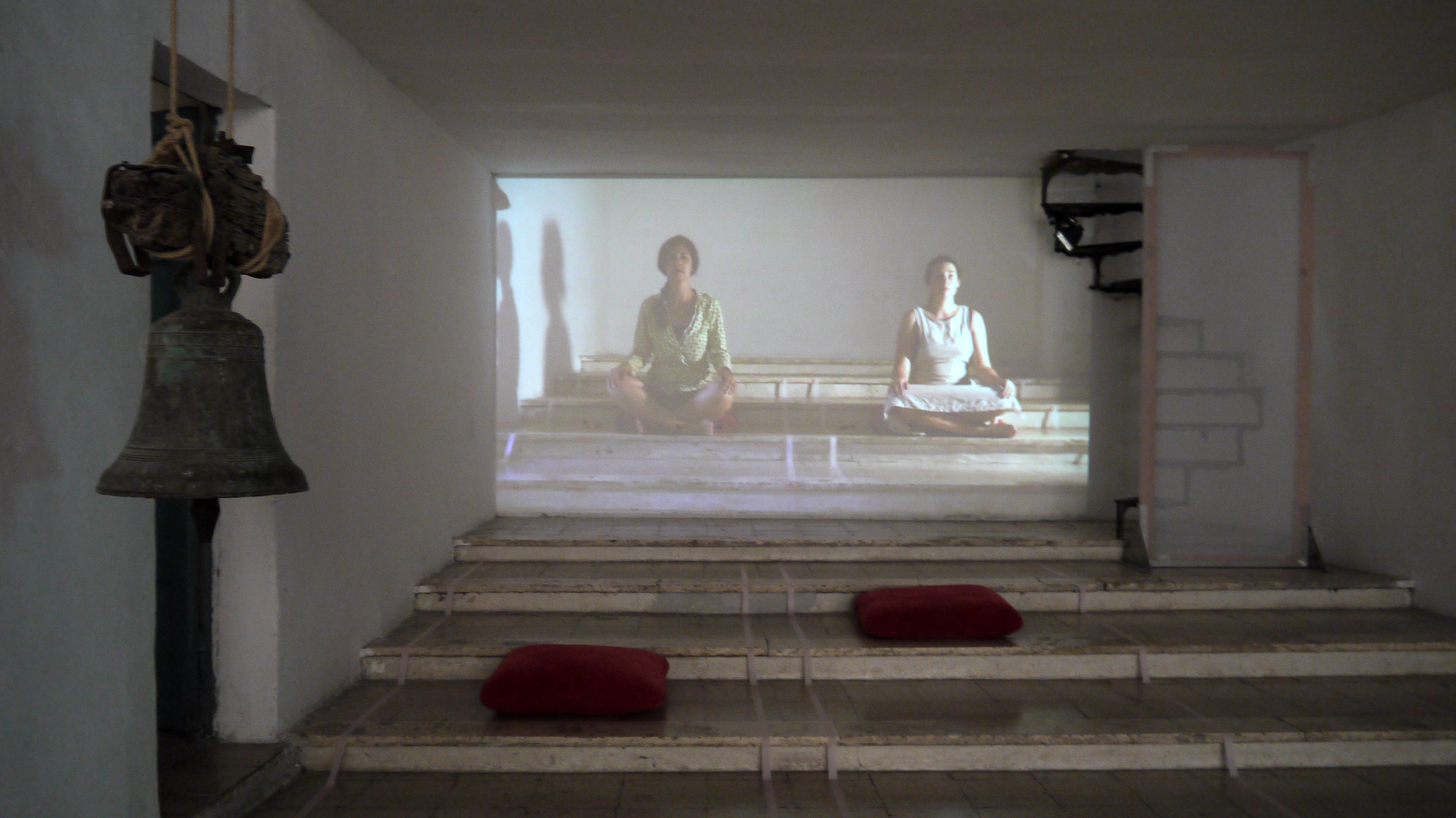
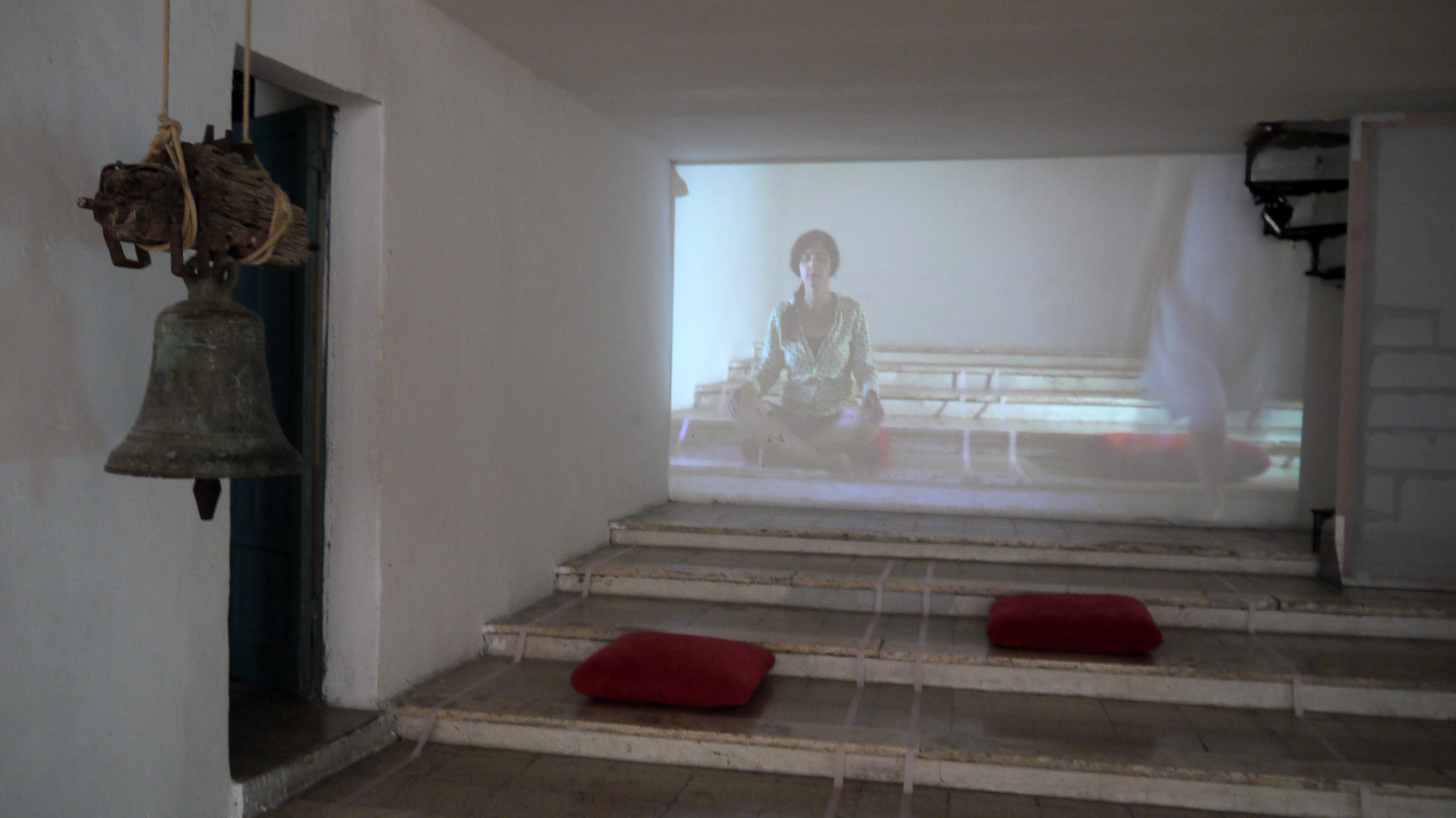
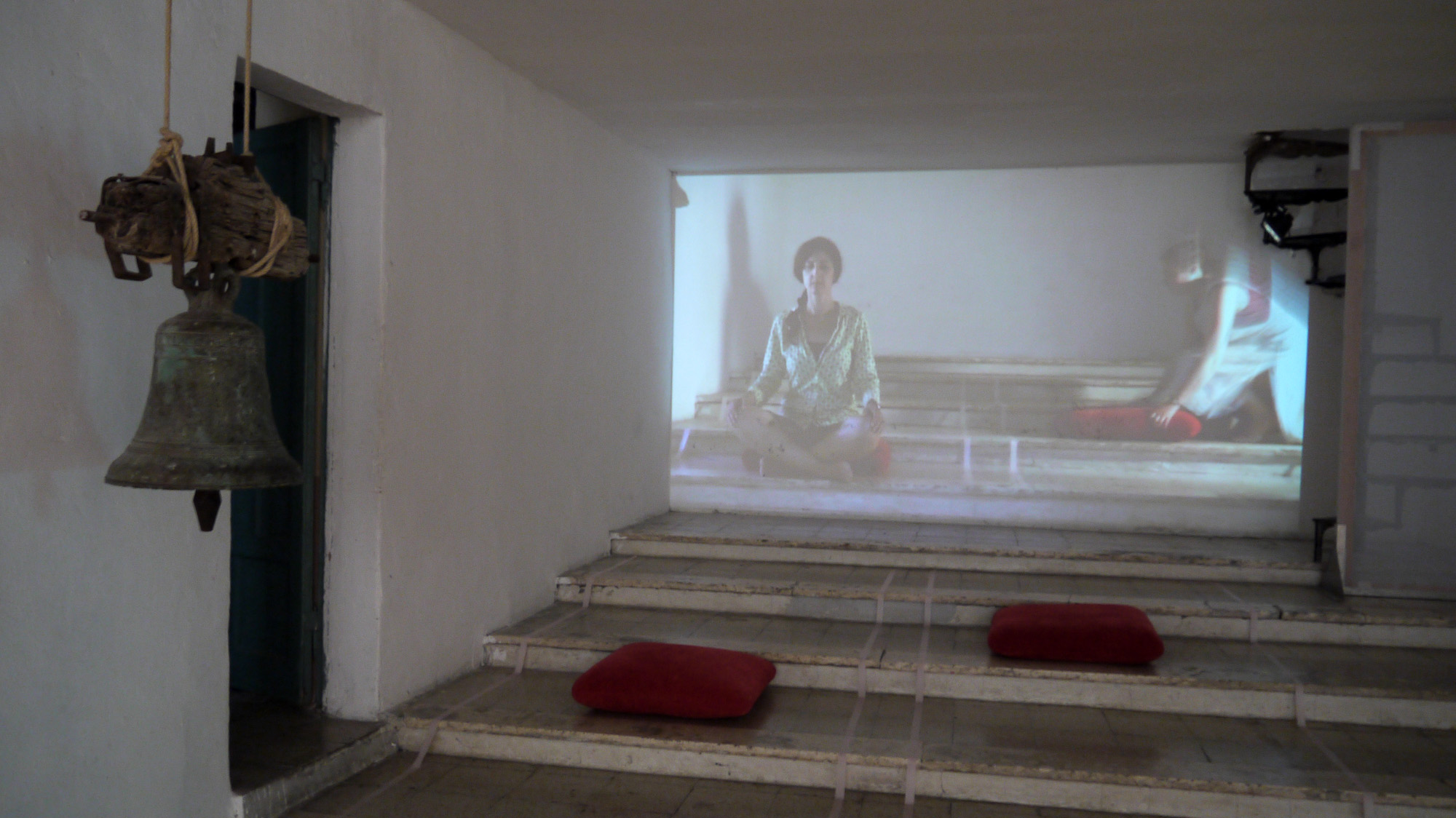
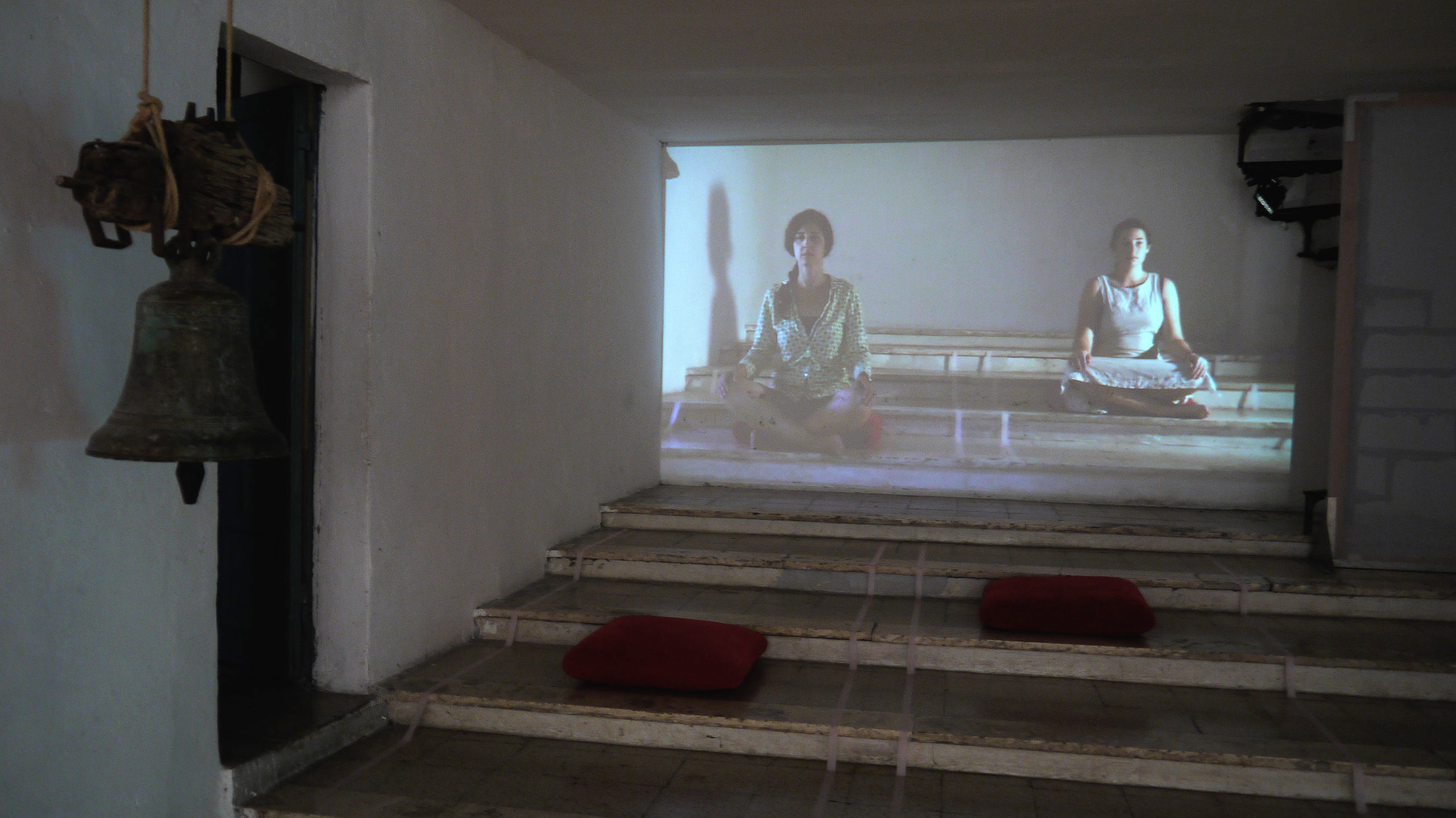
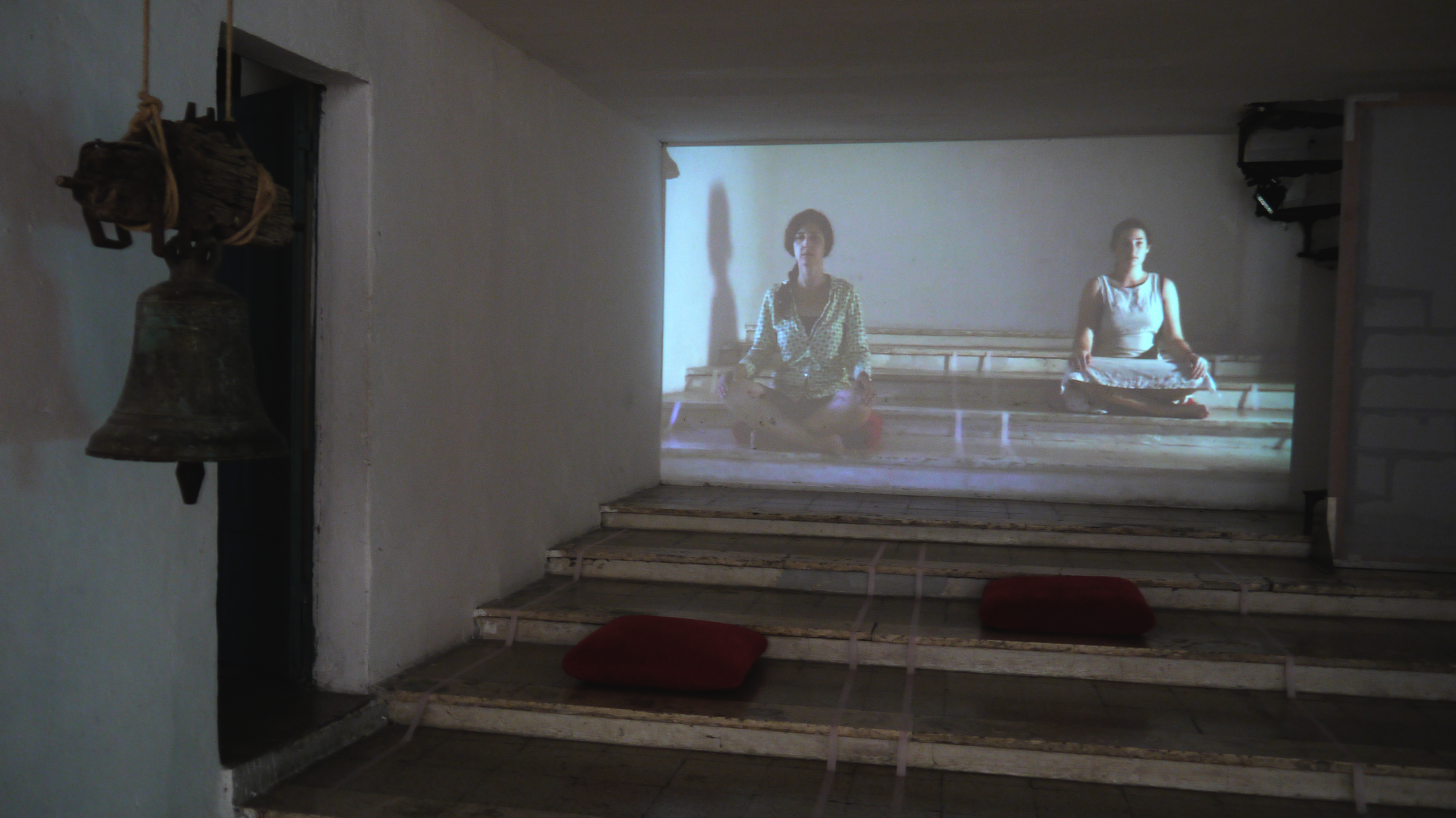
Joshua Short, USA
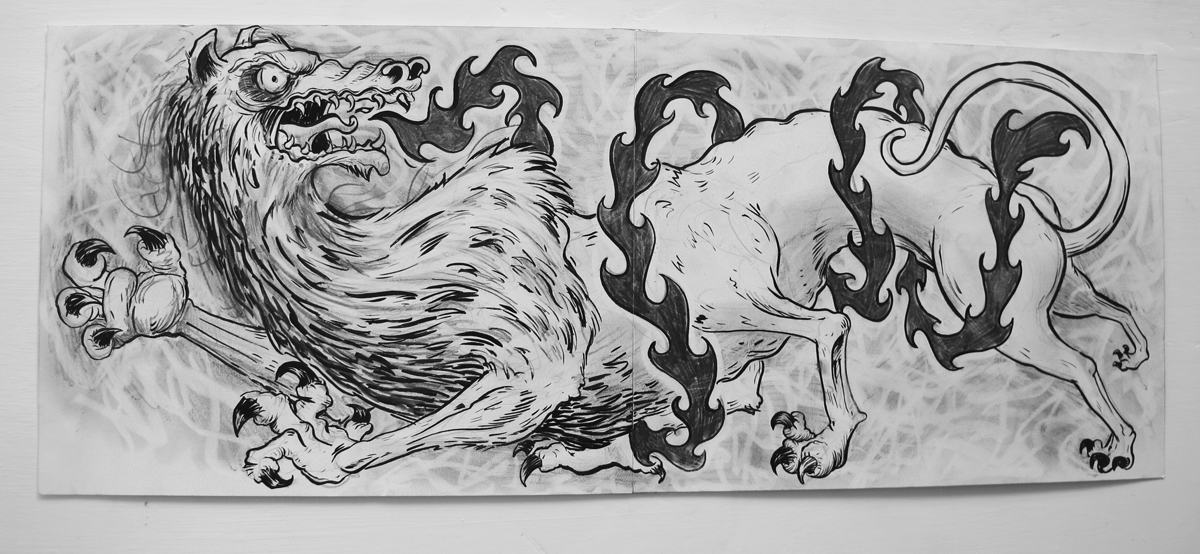
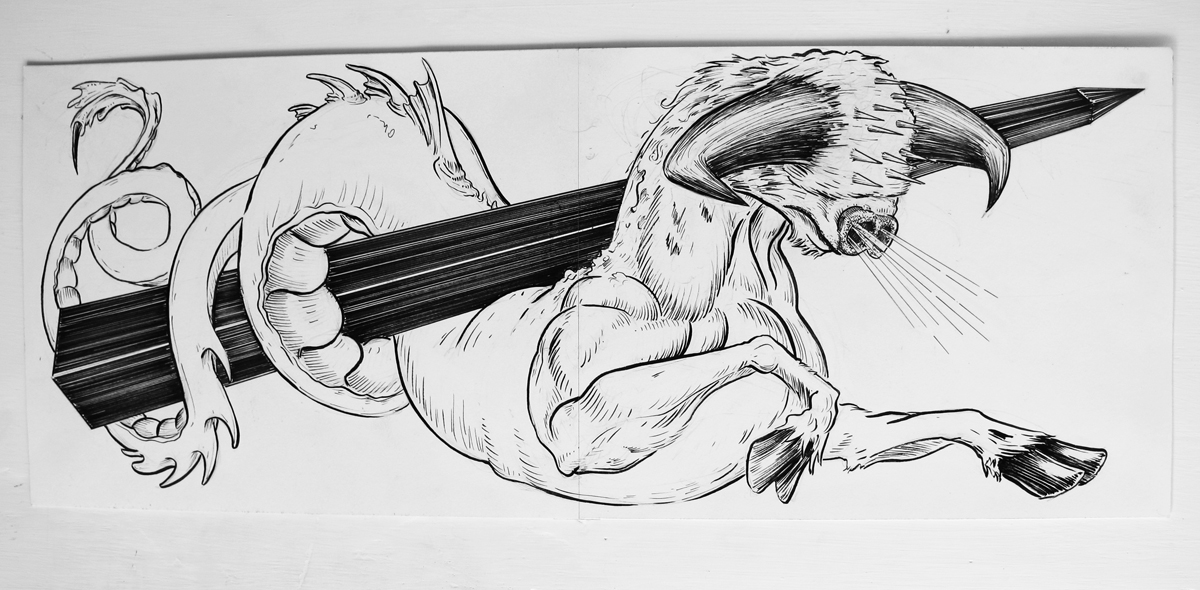
Melanie Taylor, Australia
Michelle Thomas, Australia
During my time at 33 Officina Creativa Artist Residency in Toffia I have put the creative foundations on an idea that I would like to create an awareness through film of the possibilities of the losses we as humans may wear if we do not take a careful path in our use of technology. Through research, filming, writing and concept discussion I progressed to writing a treatment for a feature film.
‘THE SHALLOWS’ script and concept I developed is a cyber drama with a humorous slant about the impending doom encircling the ‘zombification’ of out global population by our unconscious melding with technology inherently bought about by our accelerating dependence on social networking and internet use. Media theorists and psychologists are not only prophesying, but also warning of the current state of decay of our brains due to our constant internet drying up any capabilities for contemplation and the death of auras.
The basis of this comes from the fact that in the current time we see the boom in use of Internet communications replacing press, the spoken word, face-to-face meeting, entertainment consumption and personal relationships. Not only that but people are entering virtual realms such as “Second Life” to replace their actual reality and person with a virtual presence. Third-world countries also with the satellite network global coverable totally miss the technological step of utilizing desktop computers and easily gain access to smart phones to be connected and our children are being introduced to utilizing iphones even before reading books. The level of connectedness has increased but in fact our level of personal isolation has surpassed what human beings have ever experienced before. We are in fact ‘alone together’.
Roswitha Weingrill, Austria
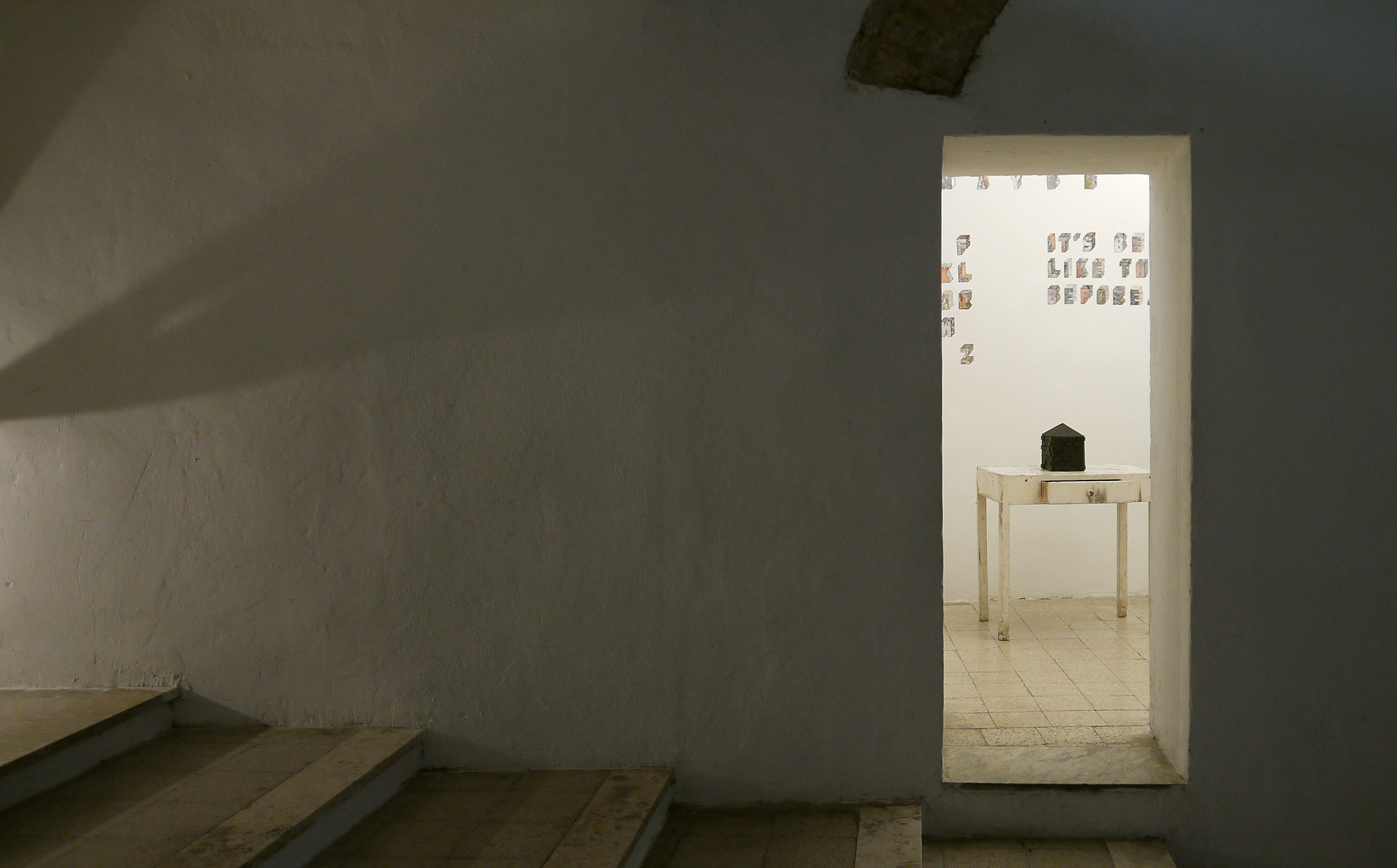
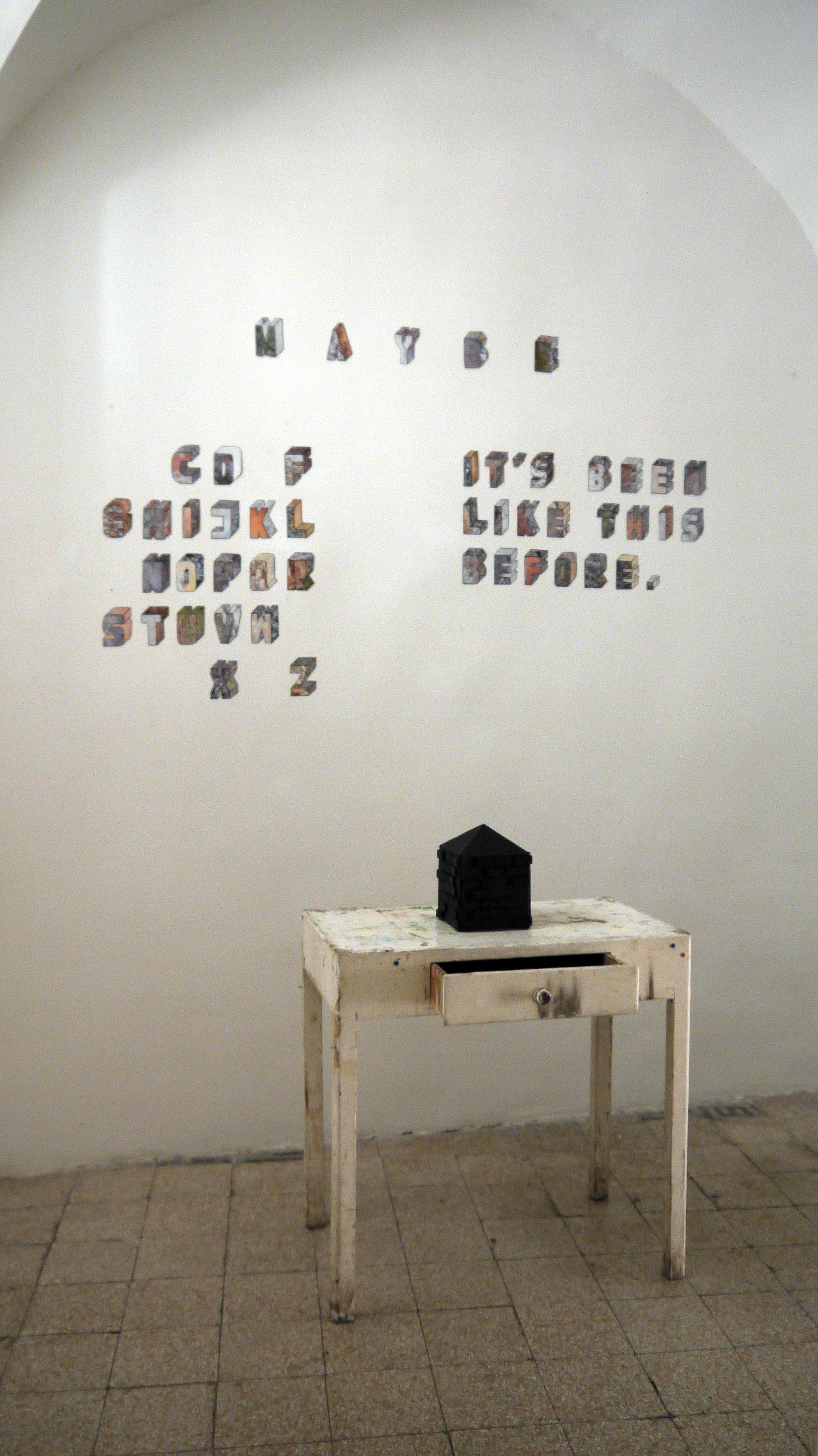
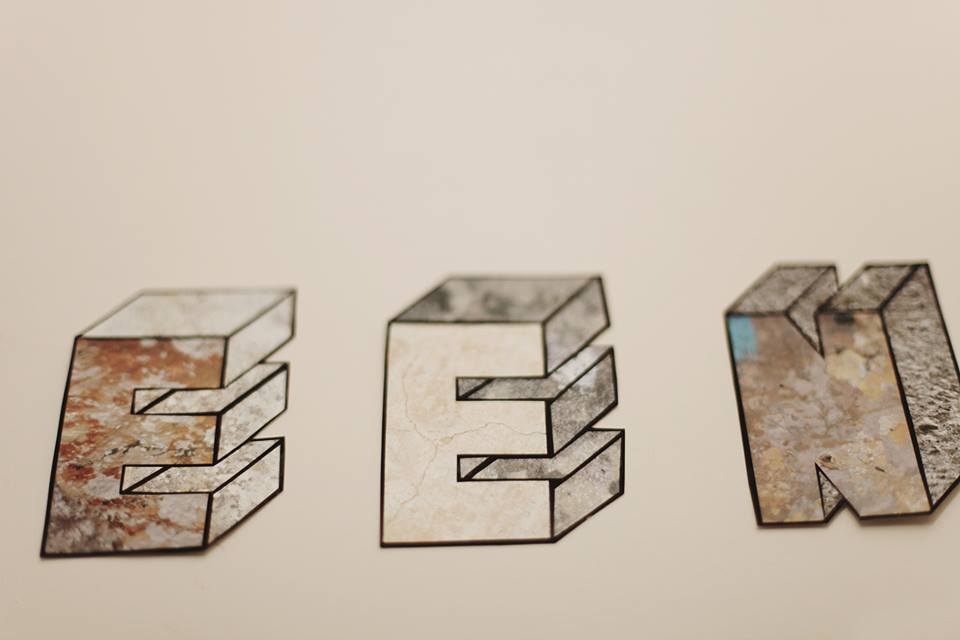
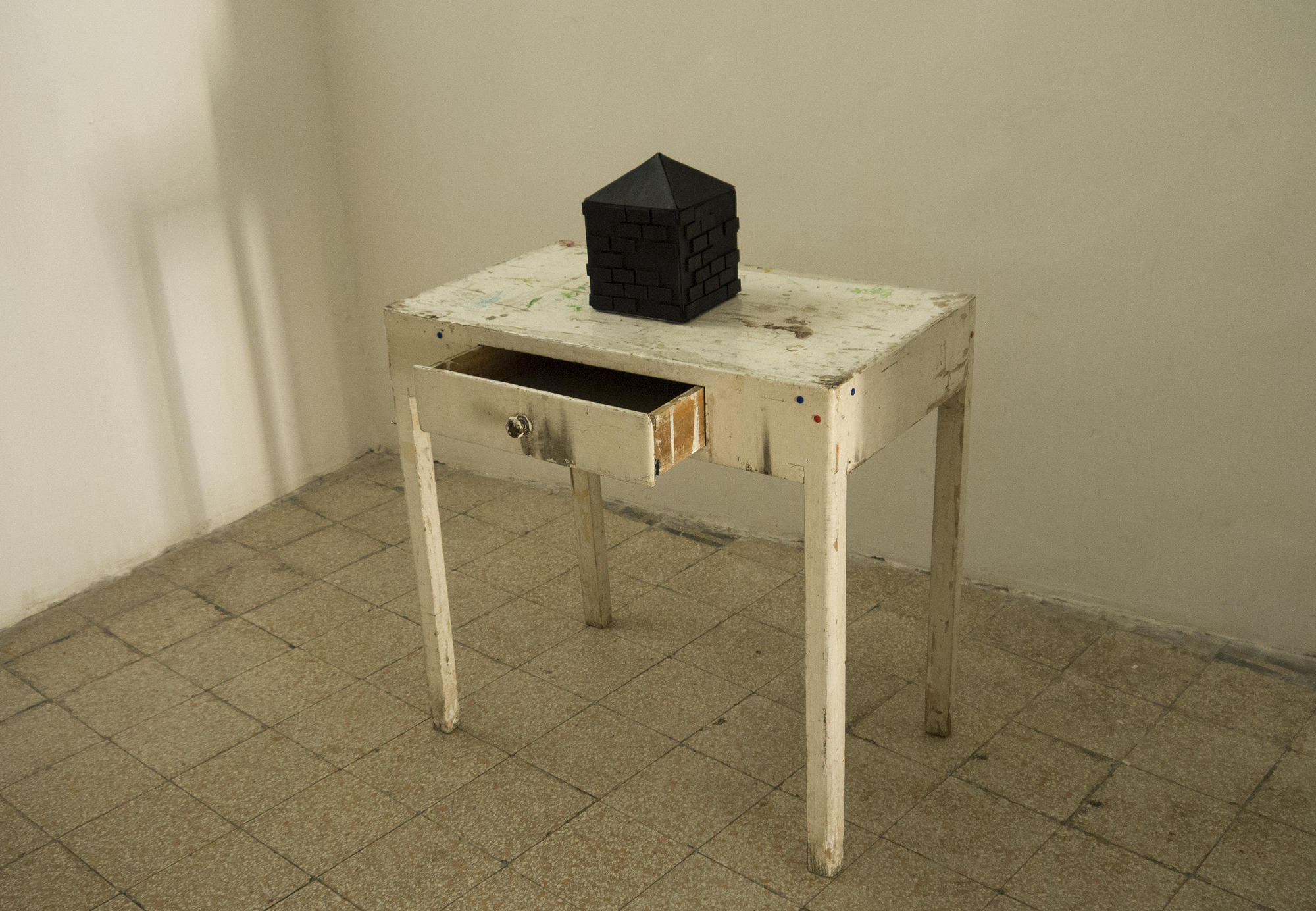
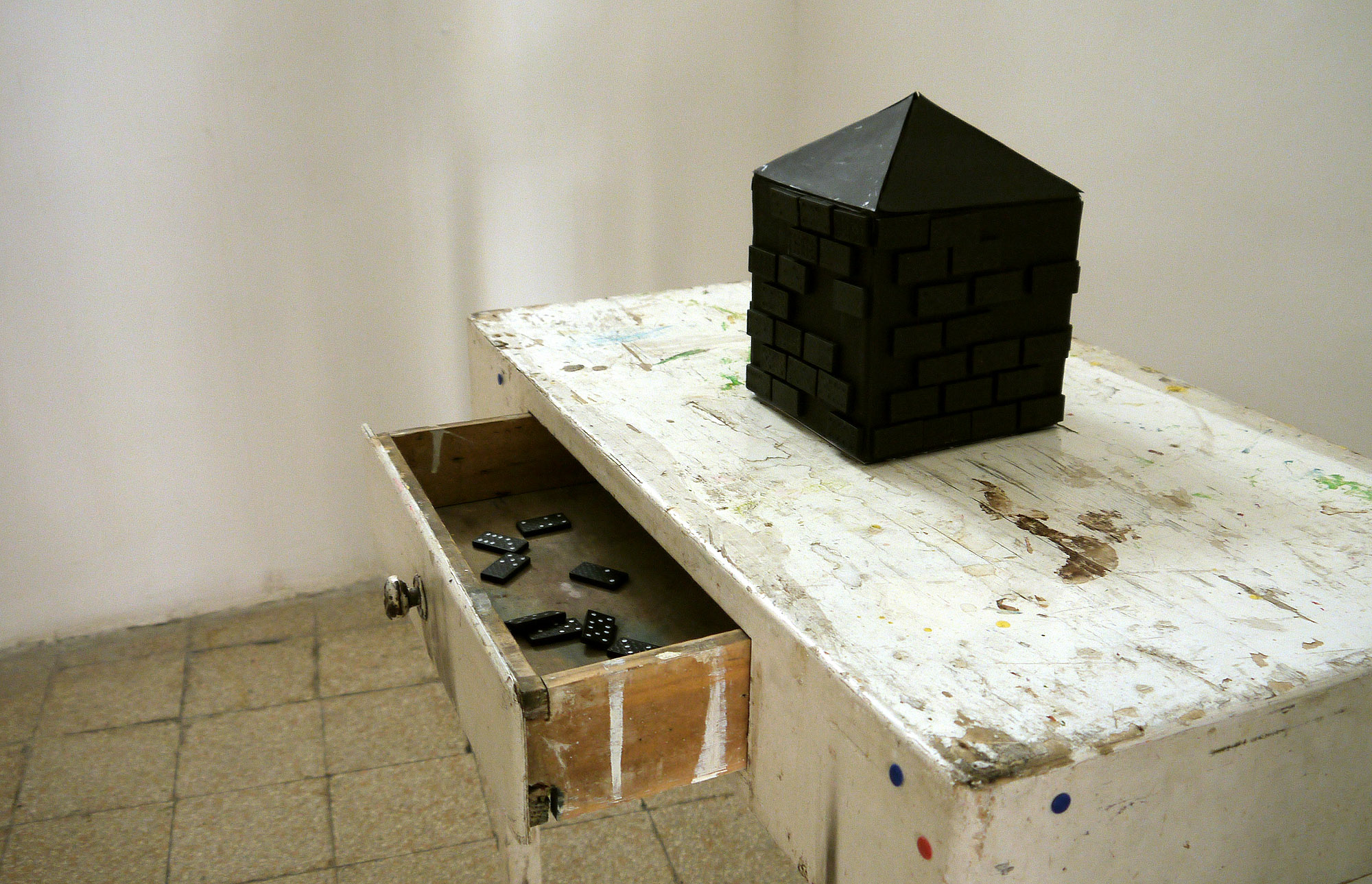
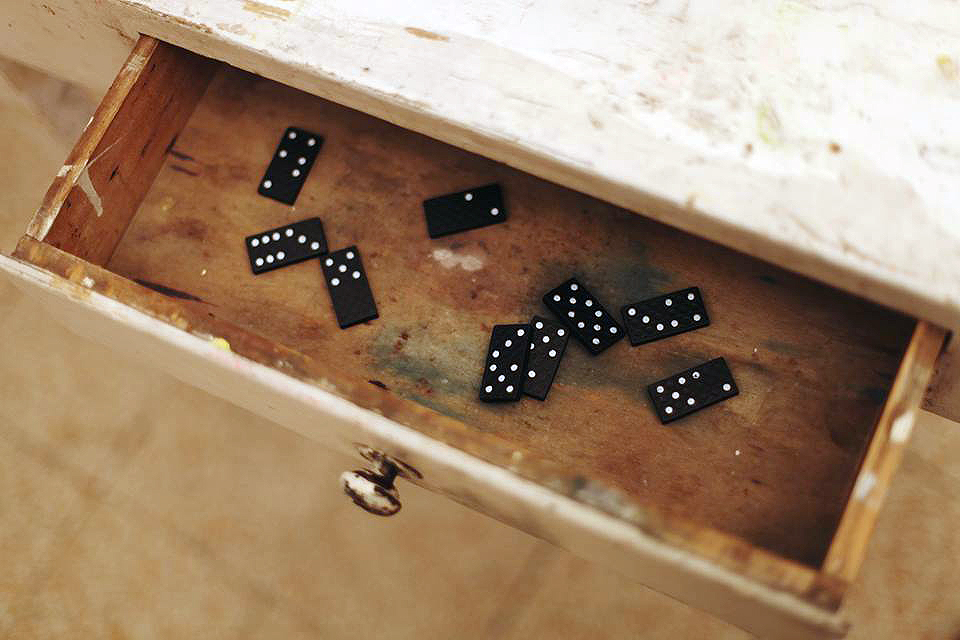
2012
Barbara Bartos, USA/Romania
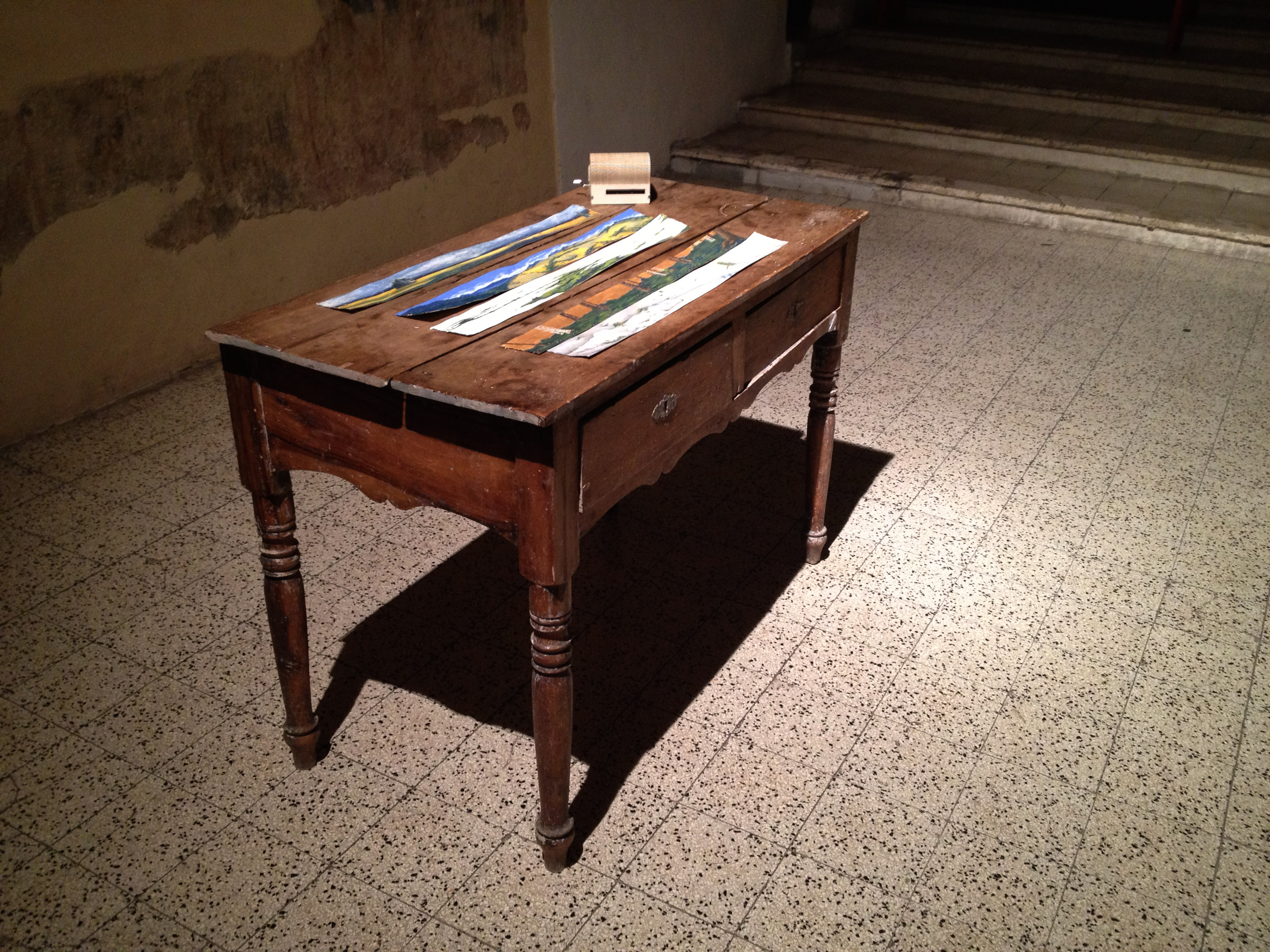
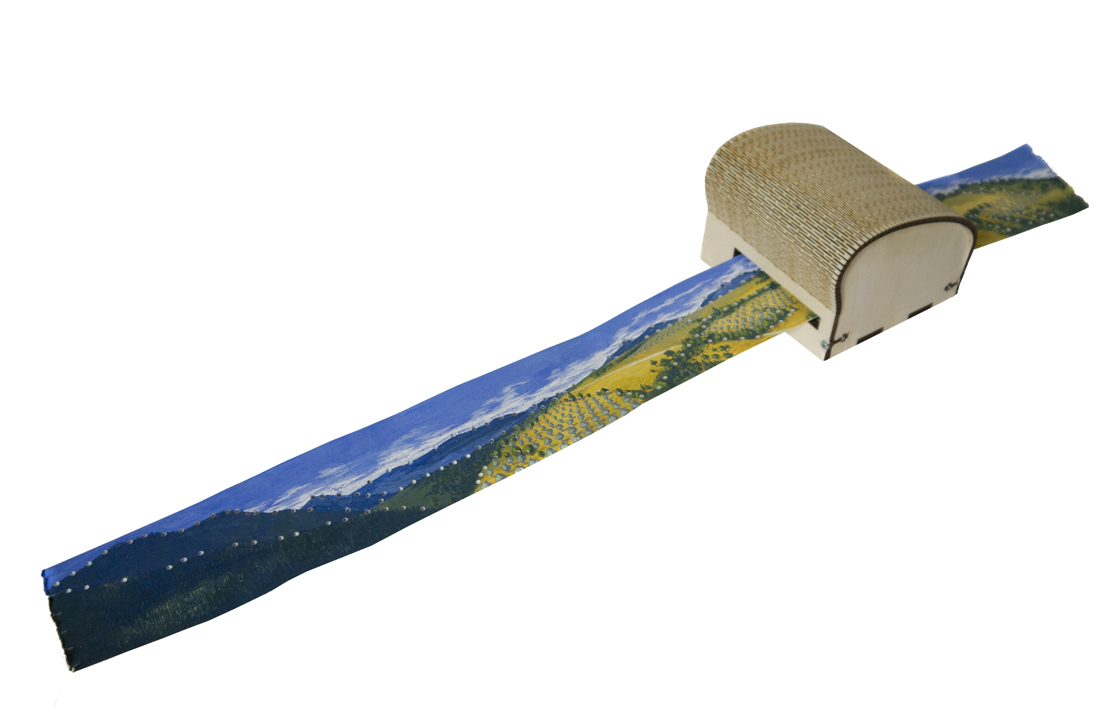
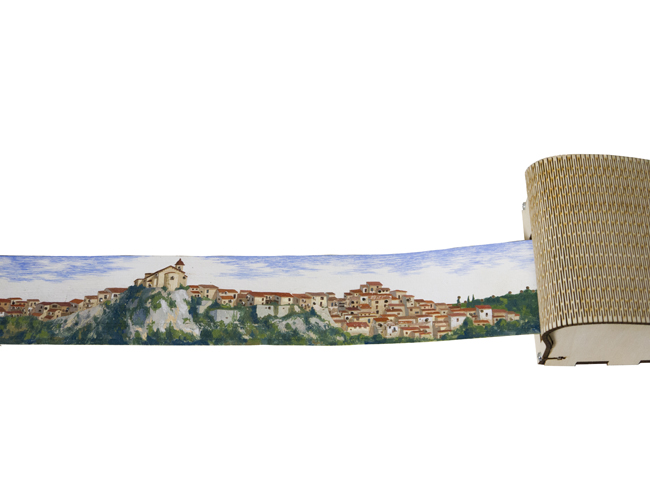
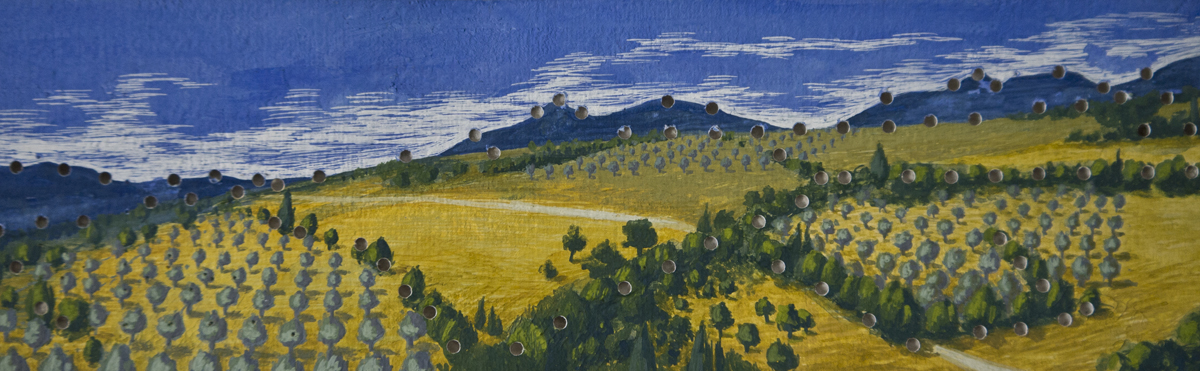
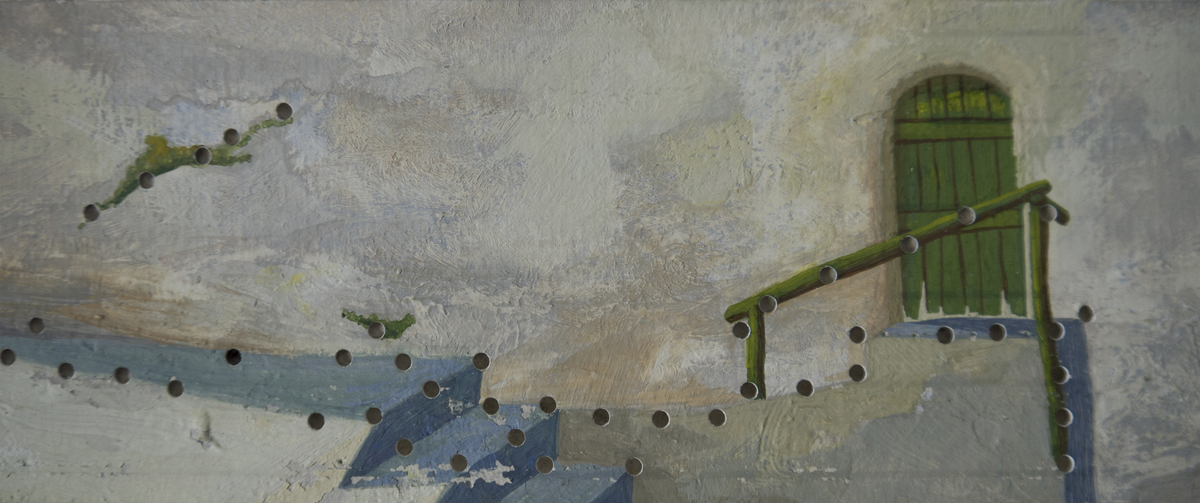
This project explores and experiments with the idea that an image has its own unique melody, and conversely that a musical score can also carry visual meaning. I began experimenting with a simple setup in which I use a music box to play perforation drawings that act as a scores.
Each painting/score is a visual and audible translation of a space that I’ve experienced directly. This series evolves with every new place that I travel to and together they become a polyphonic illustration of all the spaces I inhabited. I take the unique features of the local landscape and translate them into images that can be listened to. I look at this as a translation project, one that reveals an unexpected synchronicity not only between visual and audible perception, but also between nature and culture. Through a cumulative process, each musical drawing contributes to the meta-polyphony that nature and culture can generate at one point in space.


Julie Chapple, Canada
cargocollective.com/juliannechapple/Multimedia-Projects
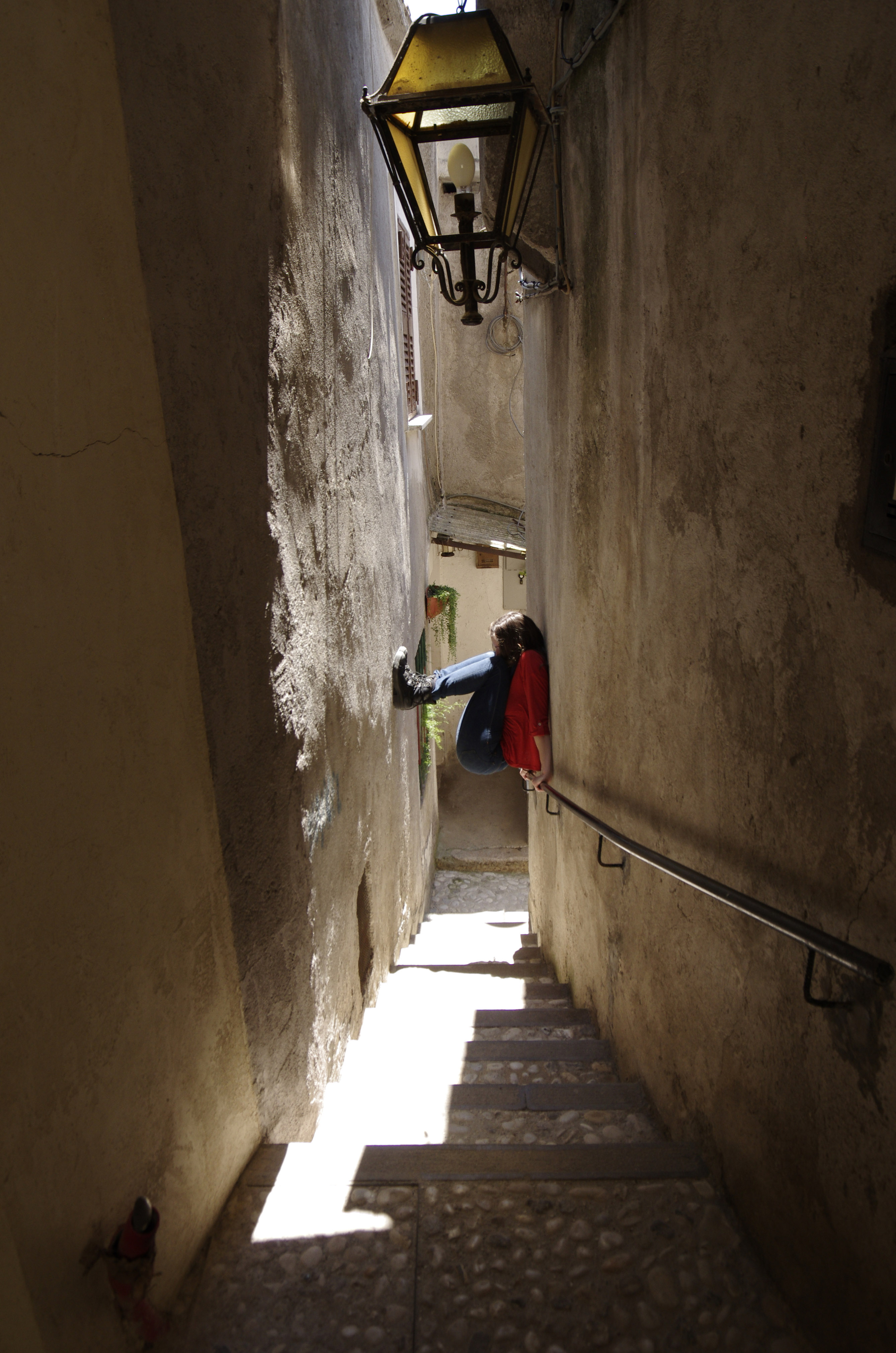
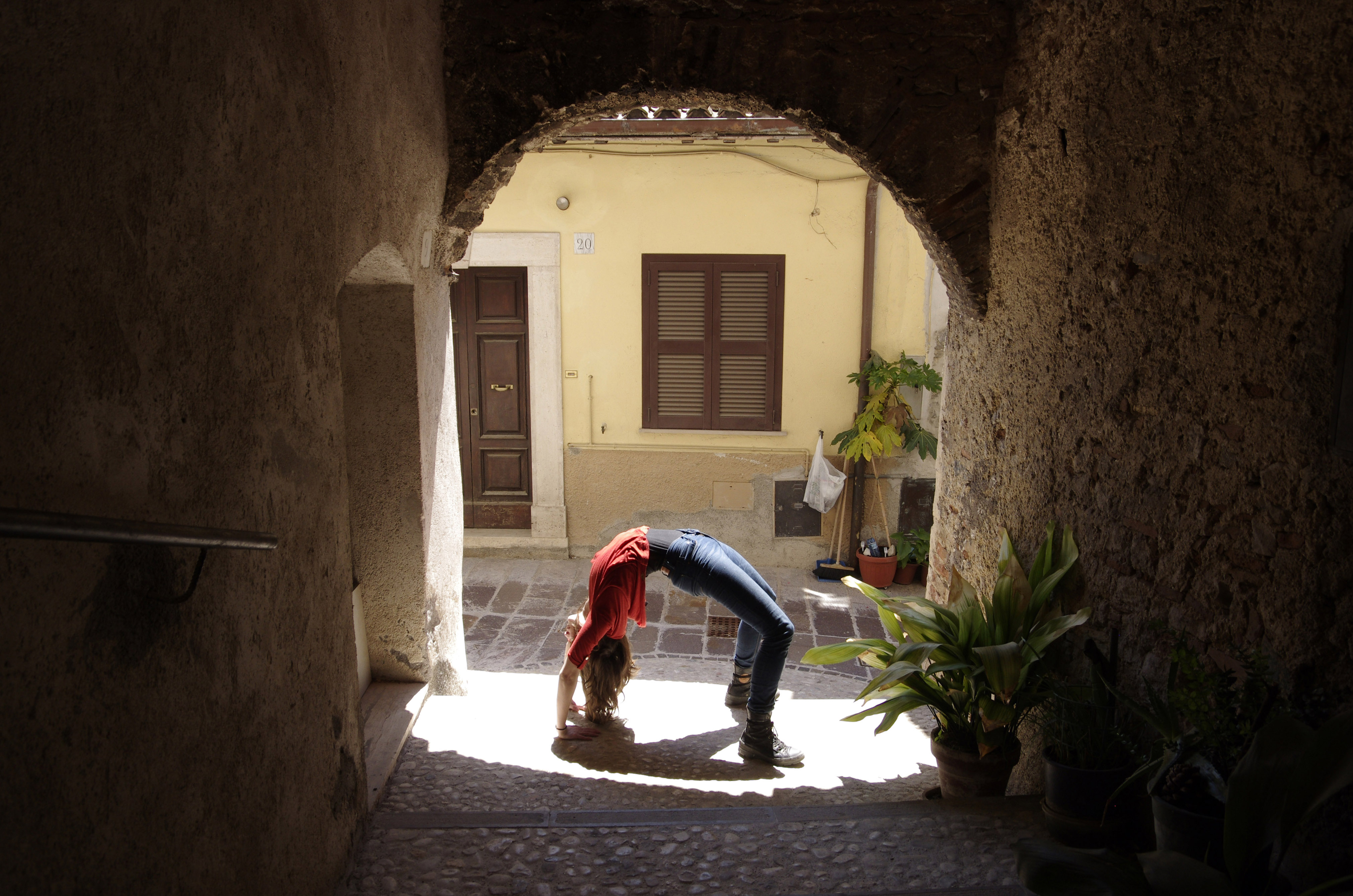
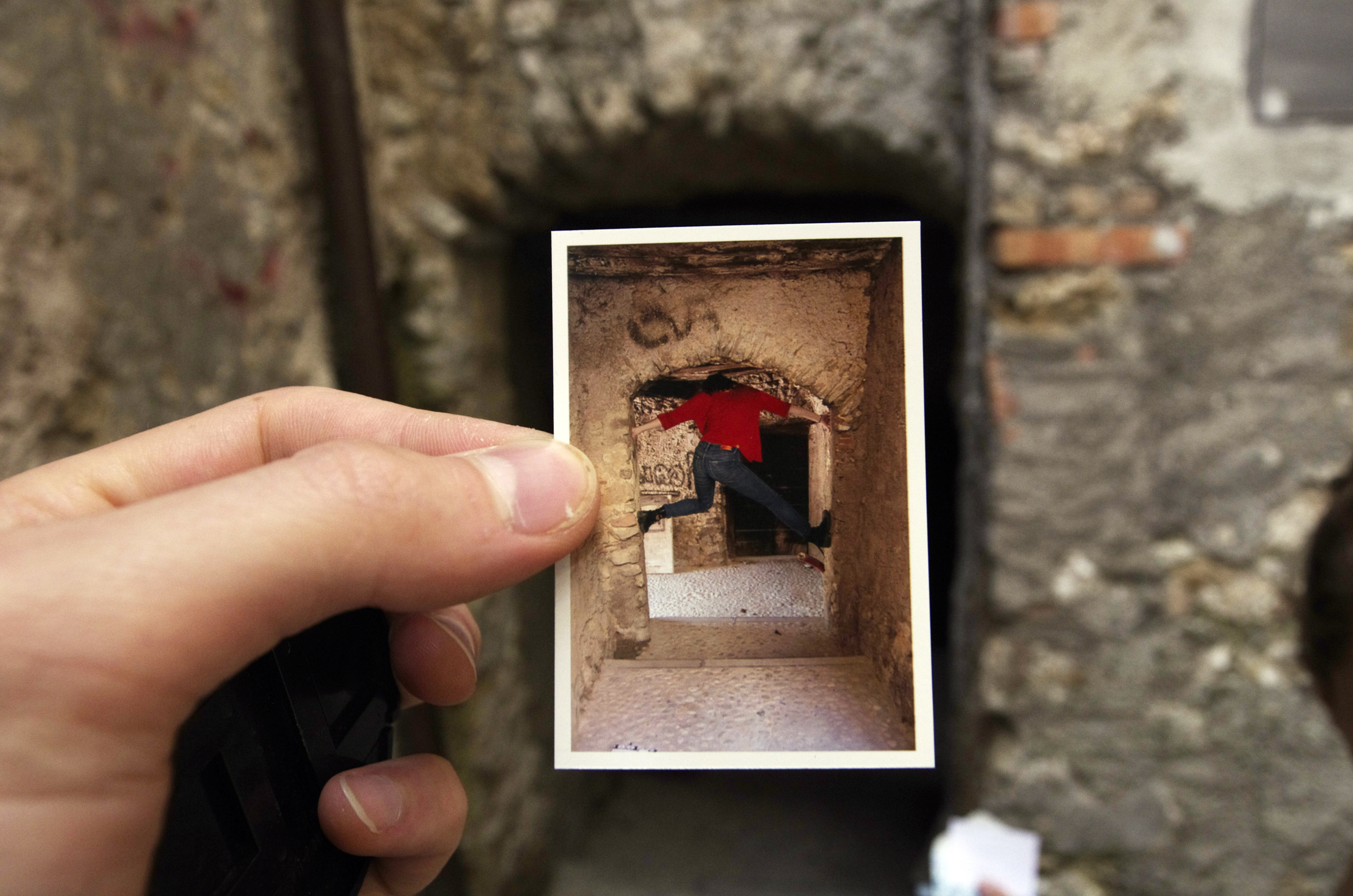
While exploring the village, I found spots with unique architecture or features and took photos of myself interacting with the space. On the back of each photo, I wrote an Italian verb that simply described the action depicted. Each photo was placed in a colourful envelope and slipped into a waterproof casing. I then hid each one in the spot where the photo was taken. My hope is that the people that stumble across these little presents will be reminded to enjoy the space and body that they are in.
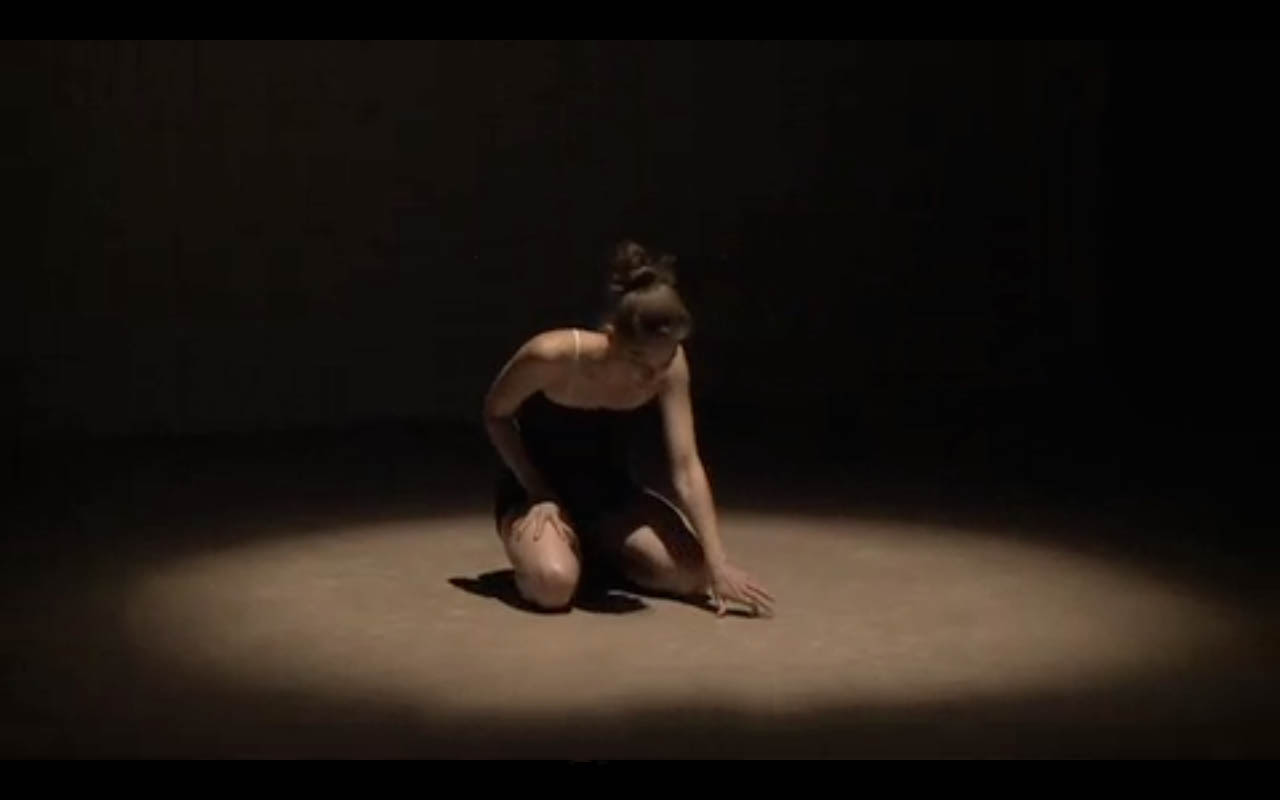
Katarina Djordjevic, Serbia
Nicola Gibbons, New Zeeland
Jay Hyung Kim, South Korea


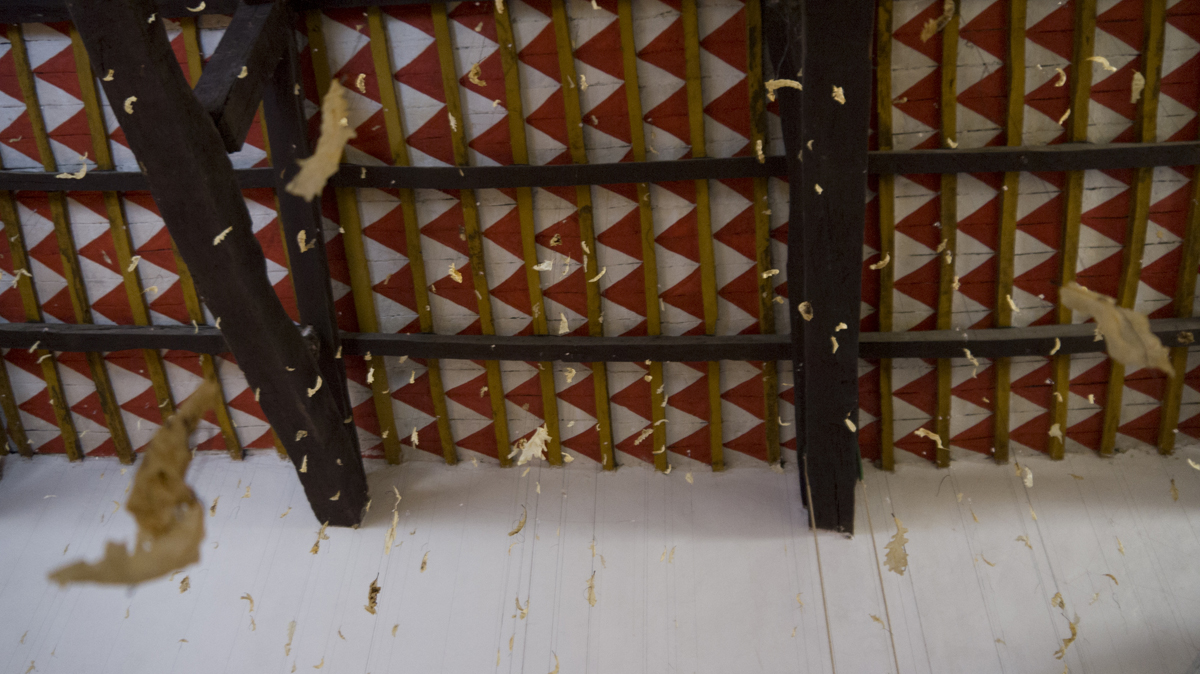
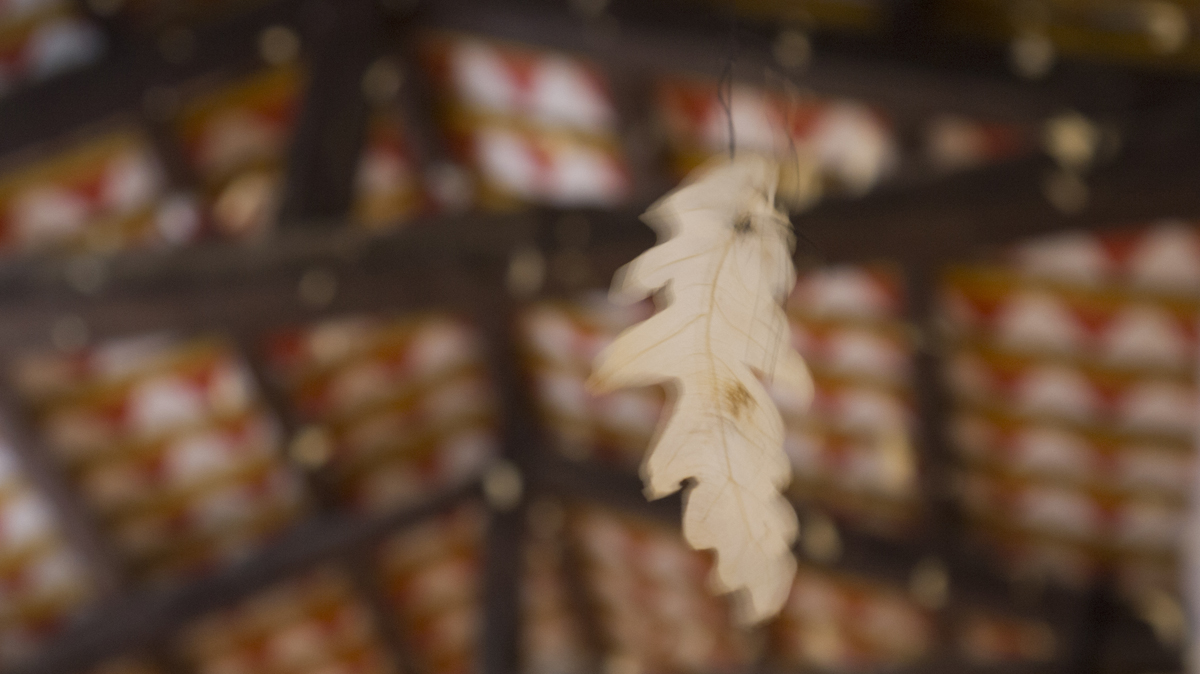
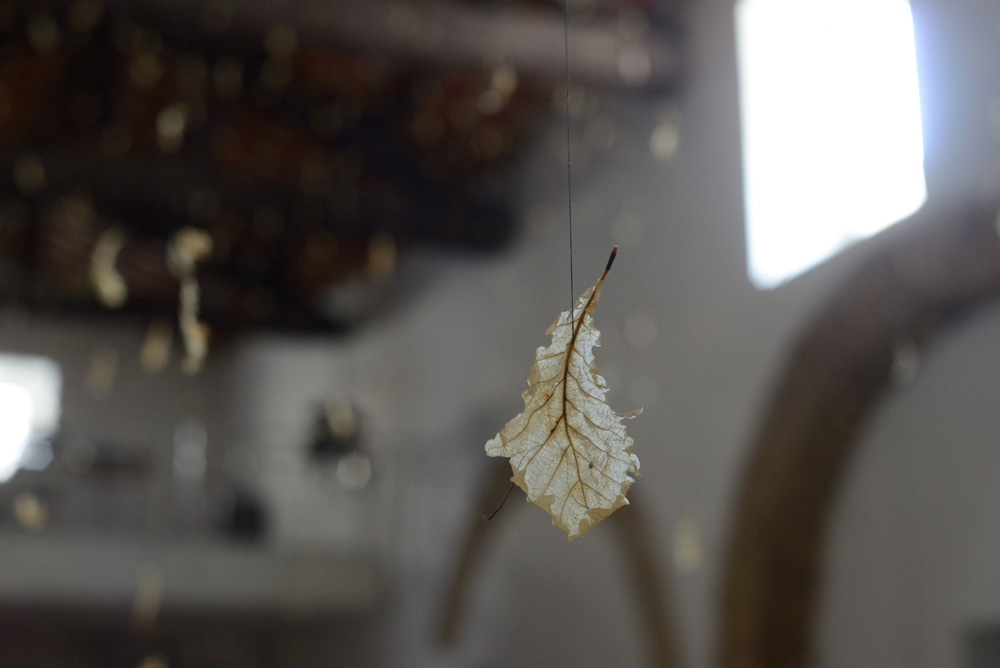
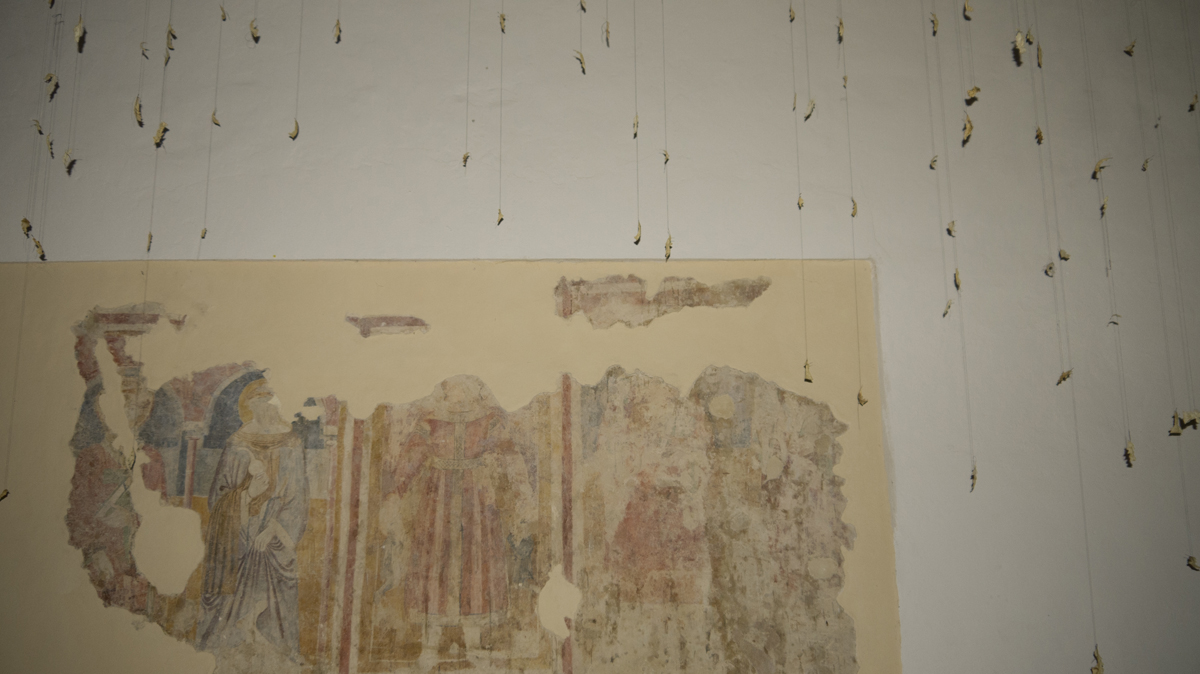
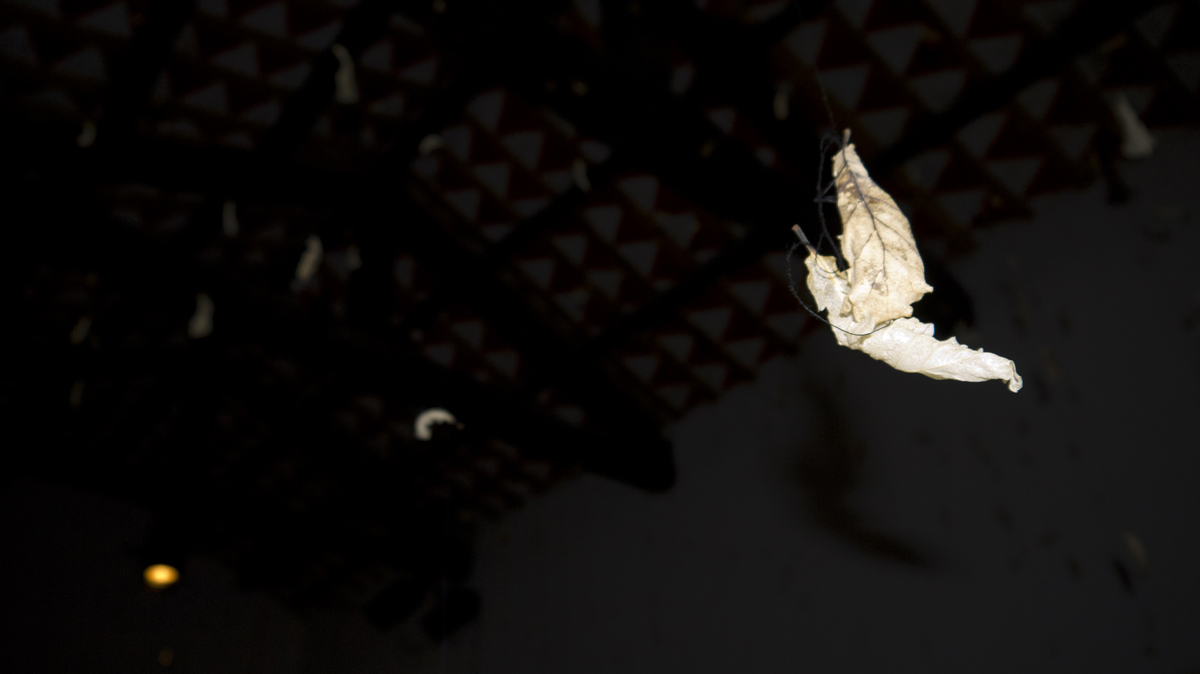
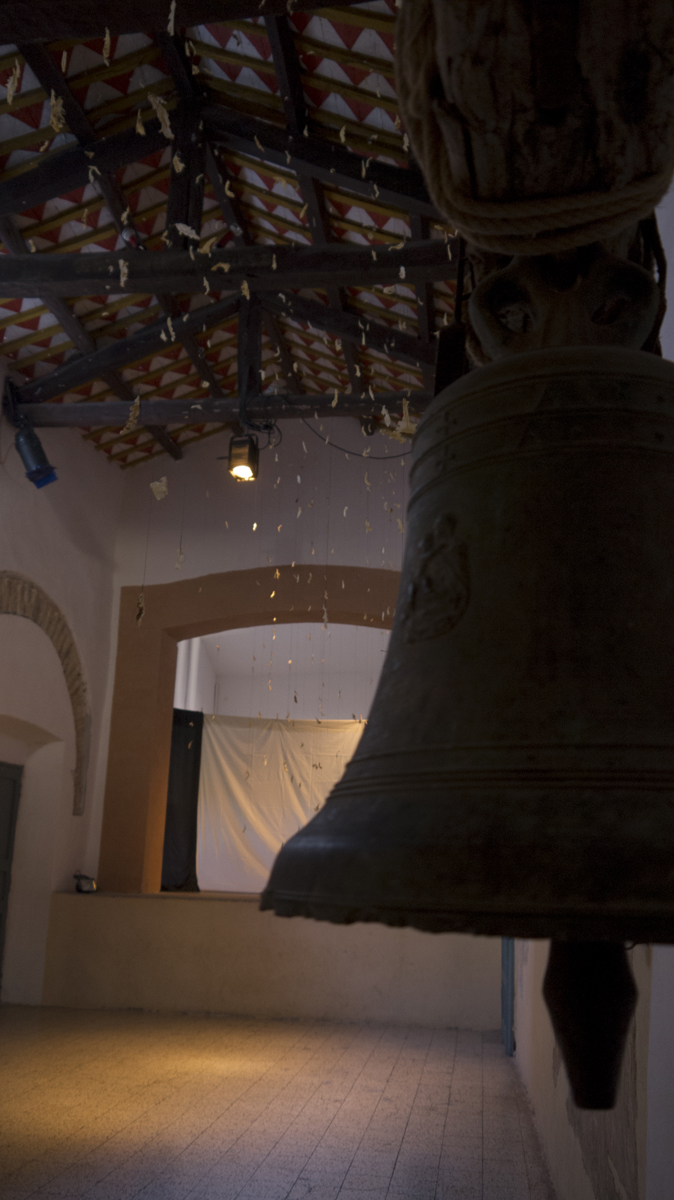
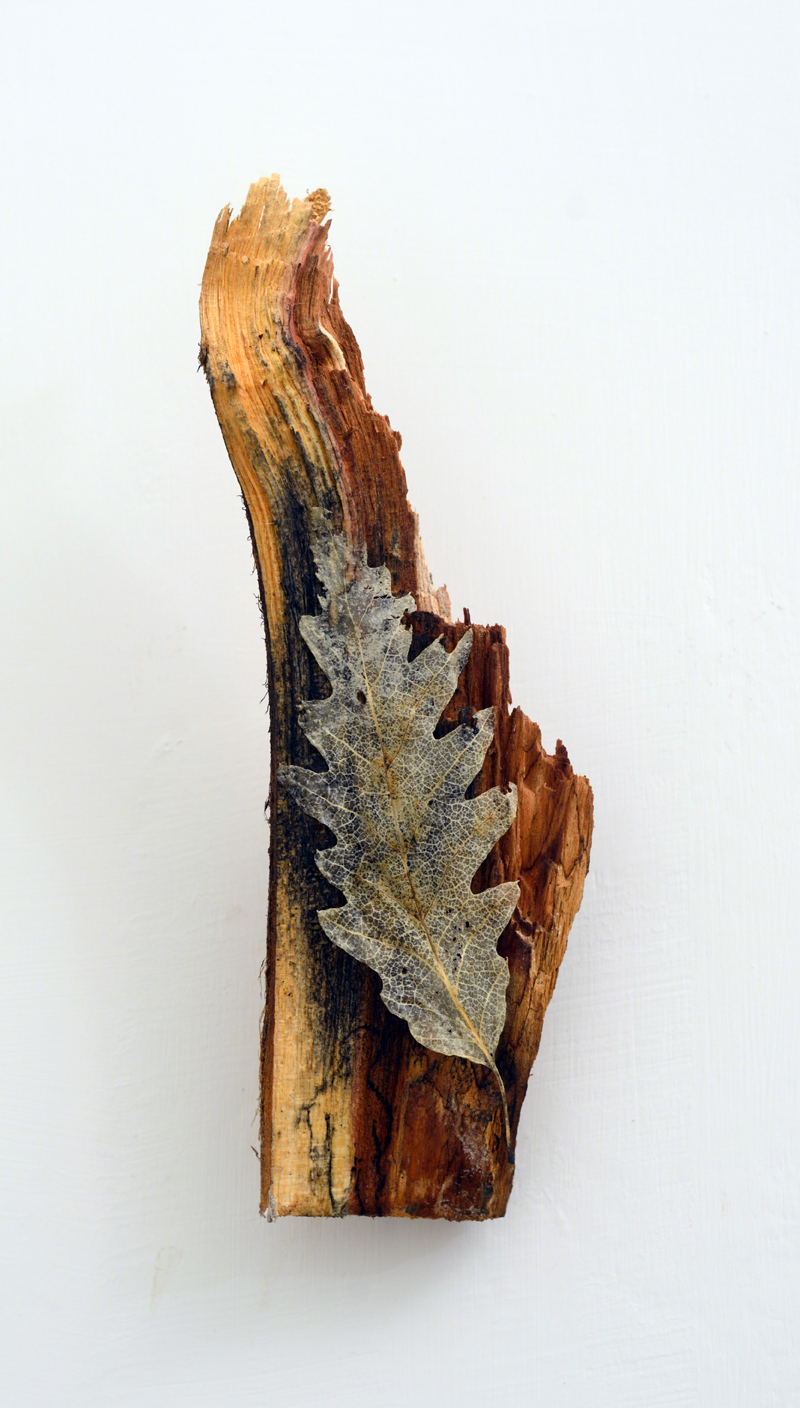
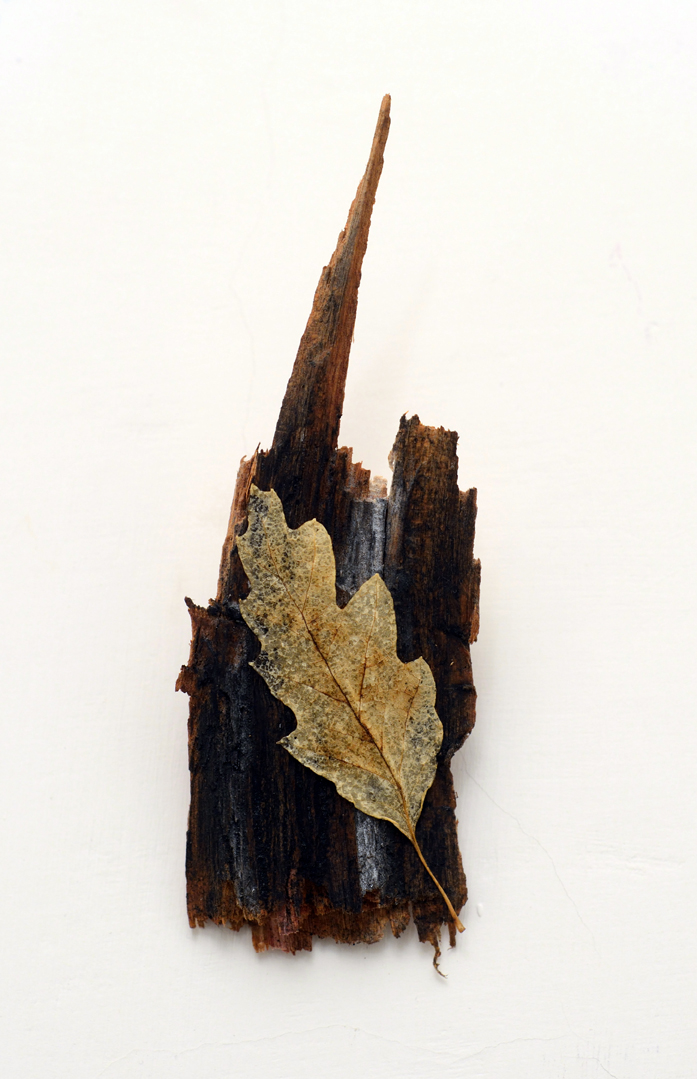
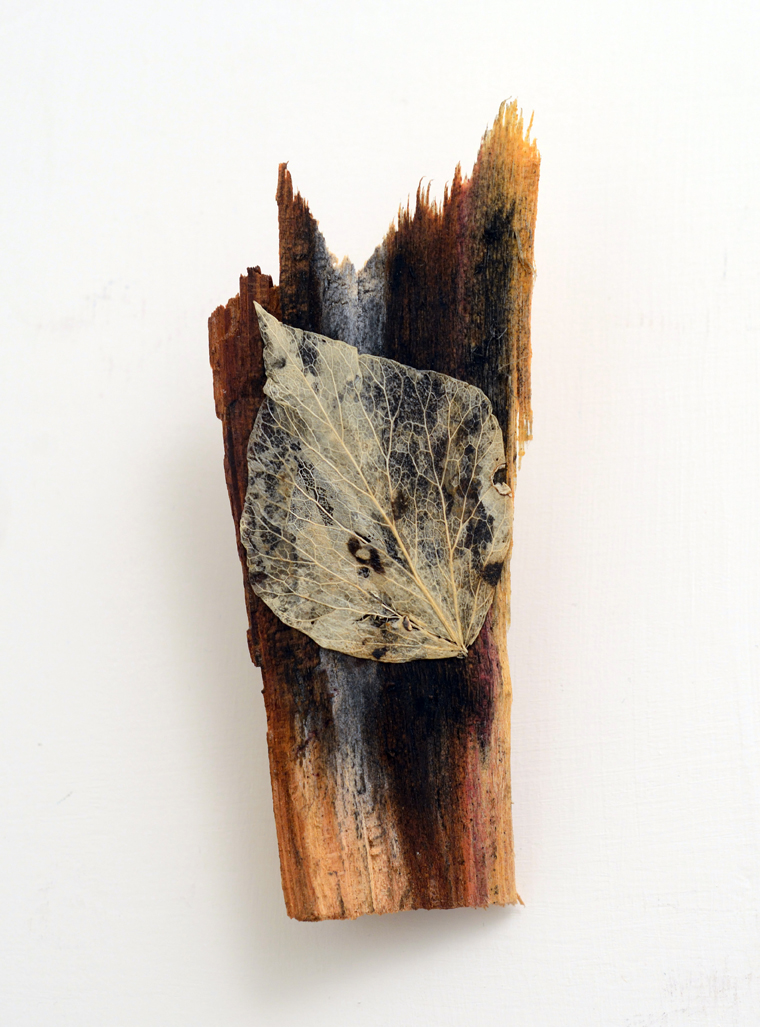
Lydia Larson, USA
Eunyoung Namu Lee, South Korea
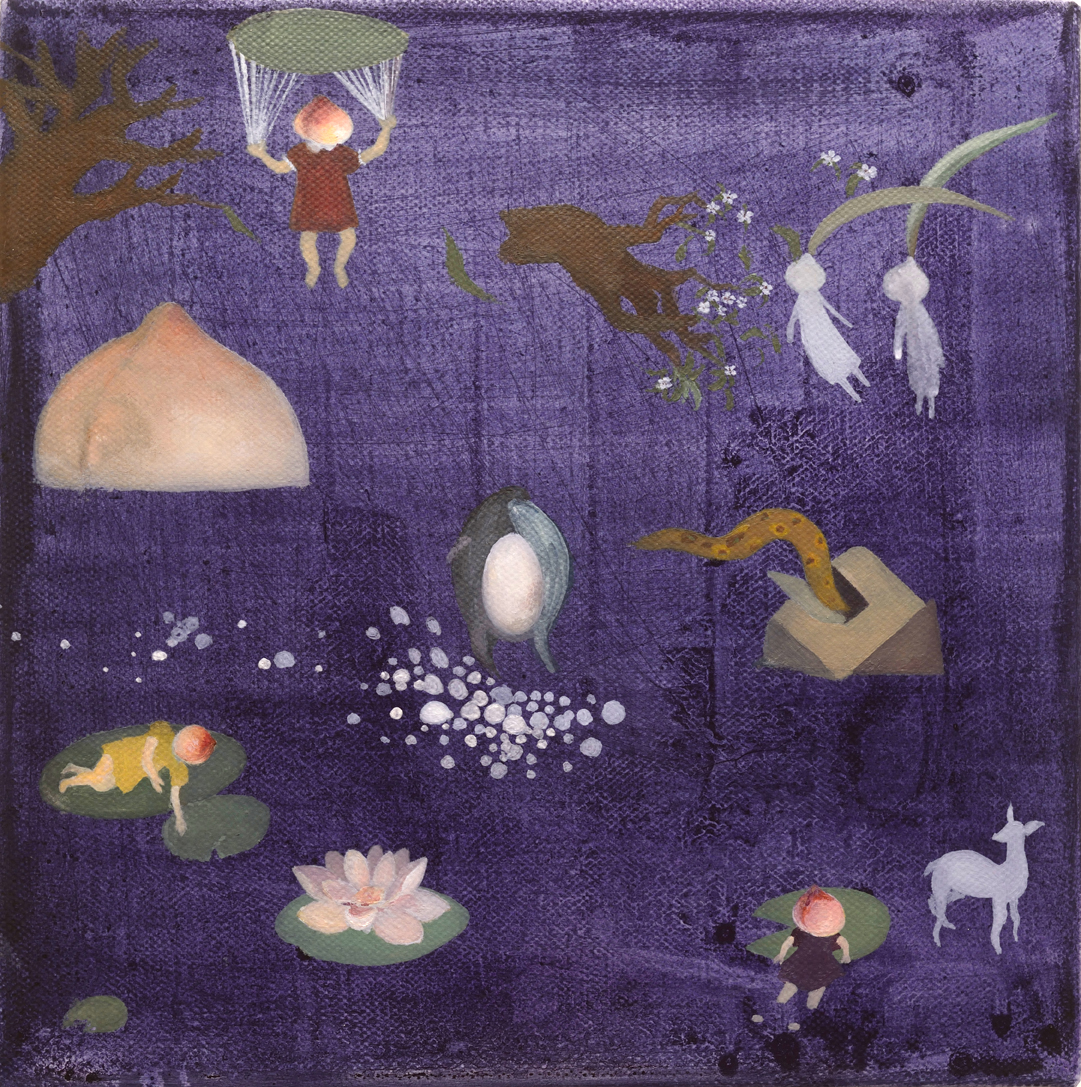
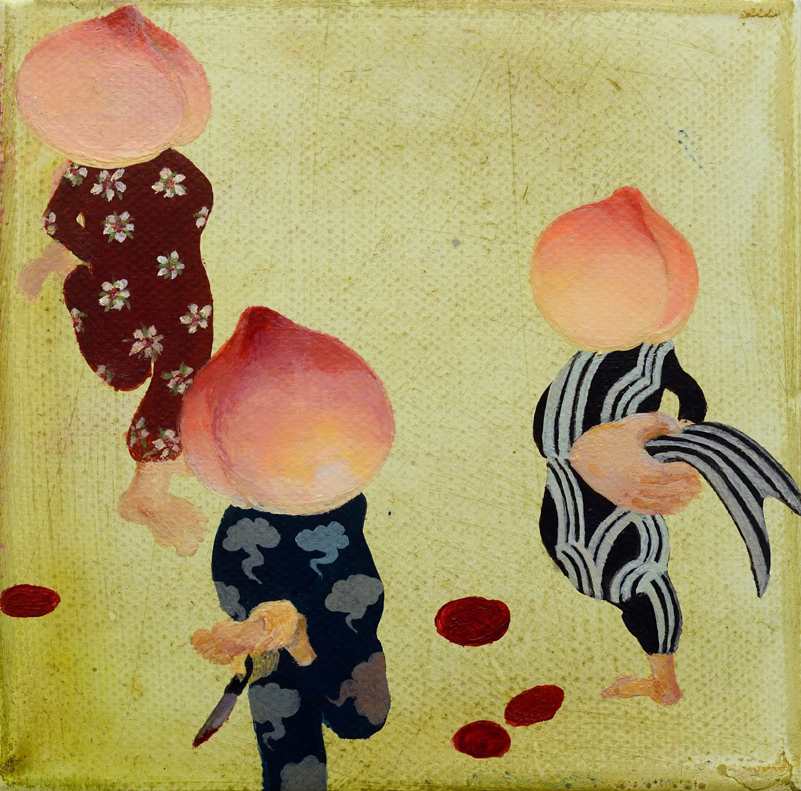
Tamara Scherbak, Canada
Ed Spence, Canada
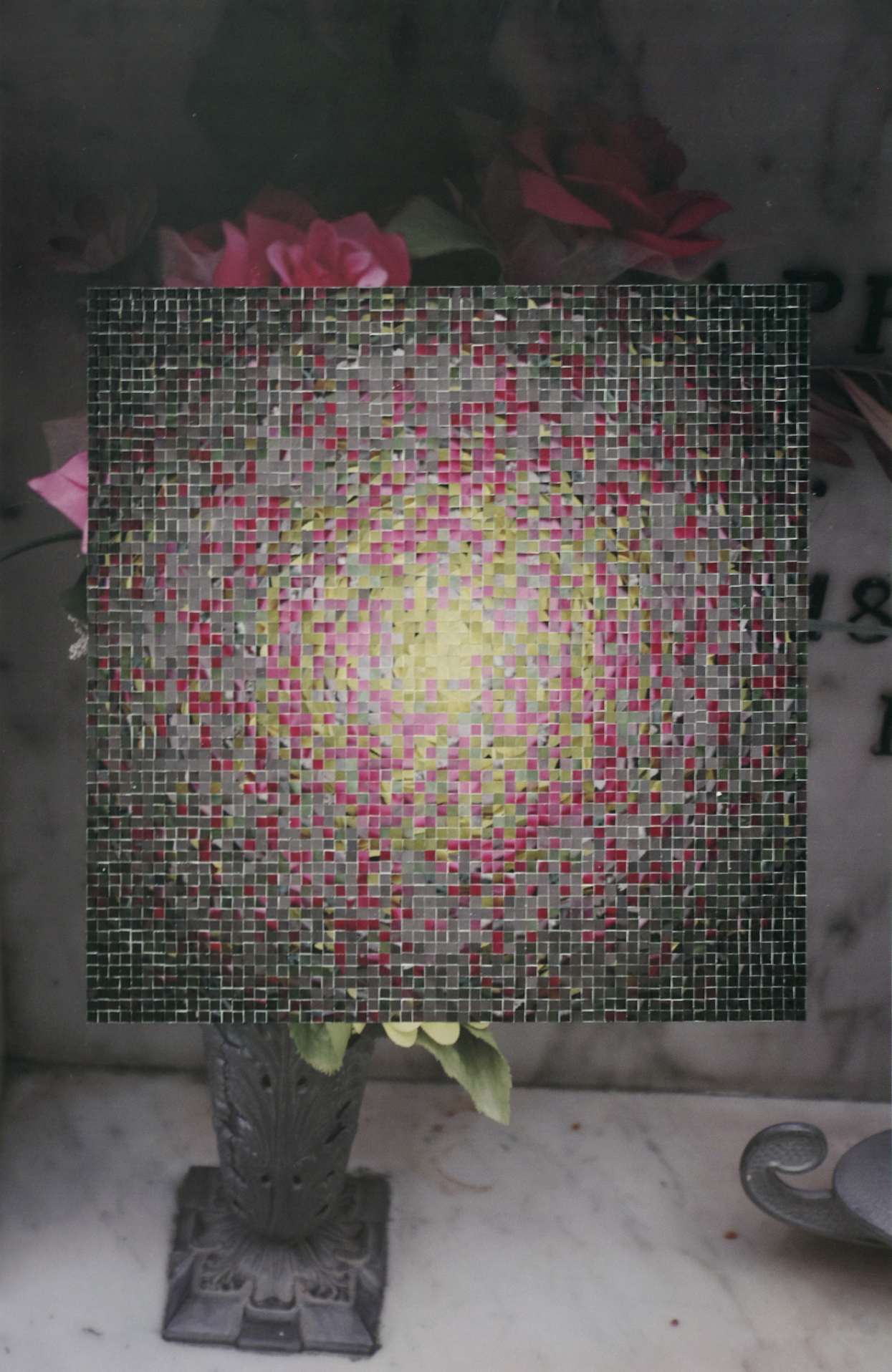
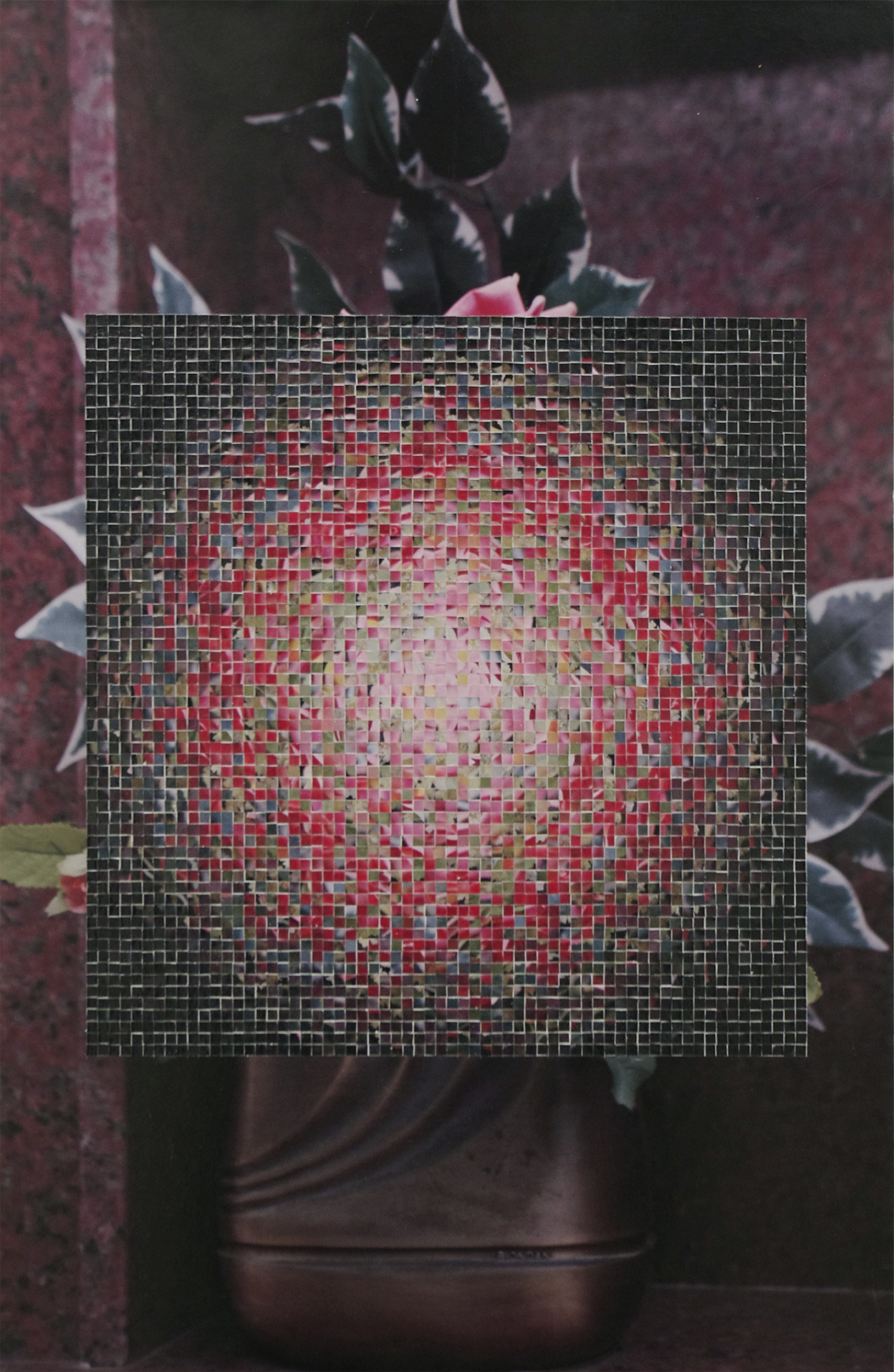
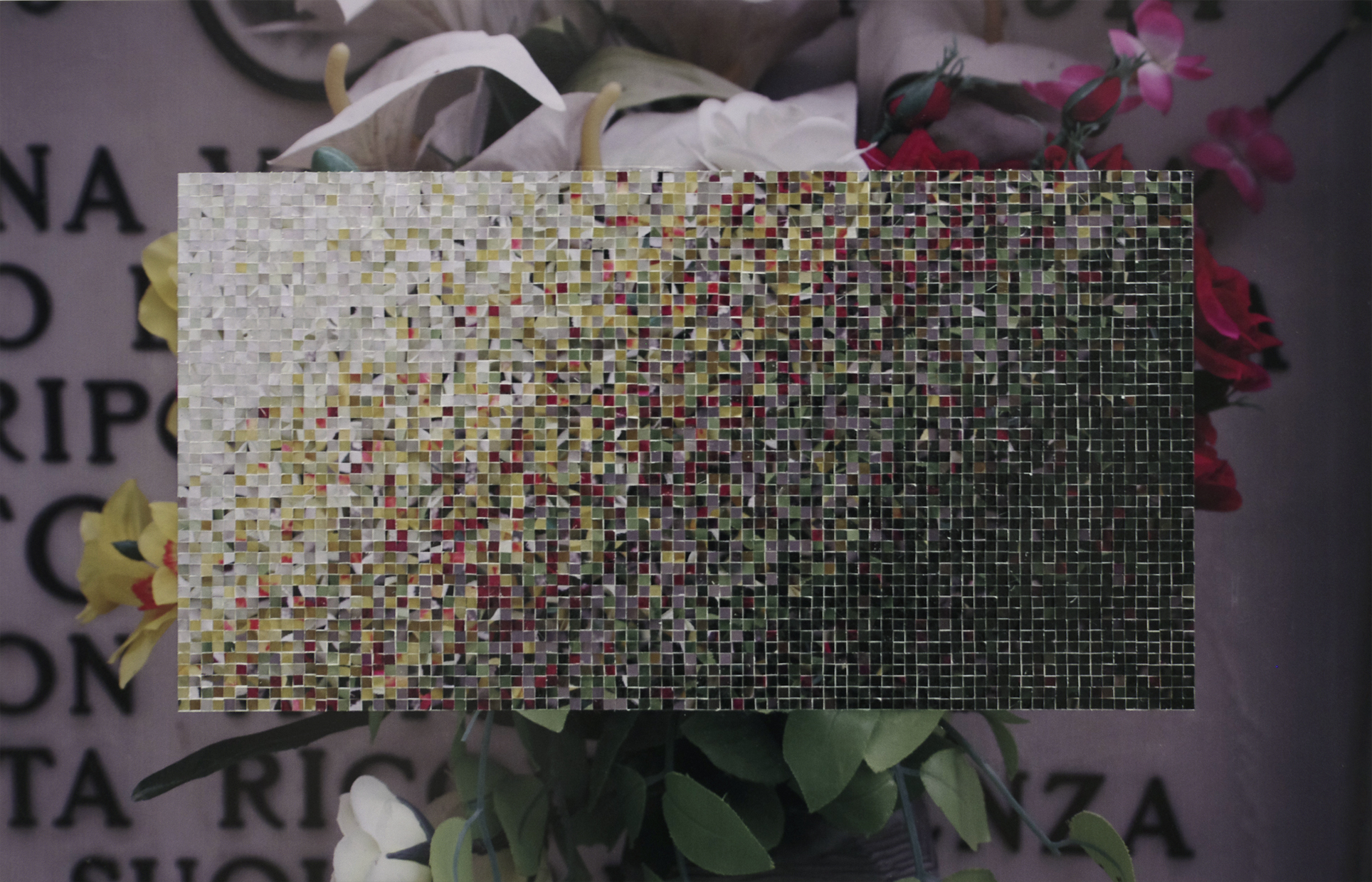
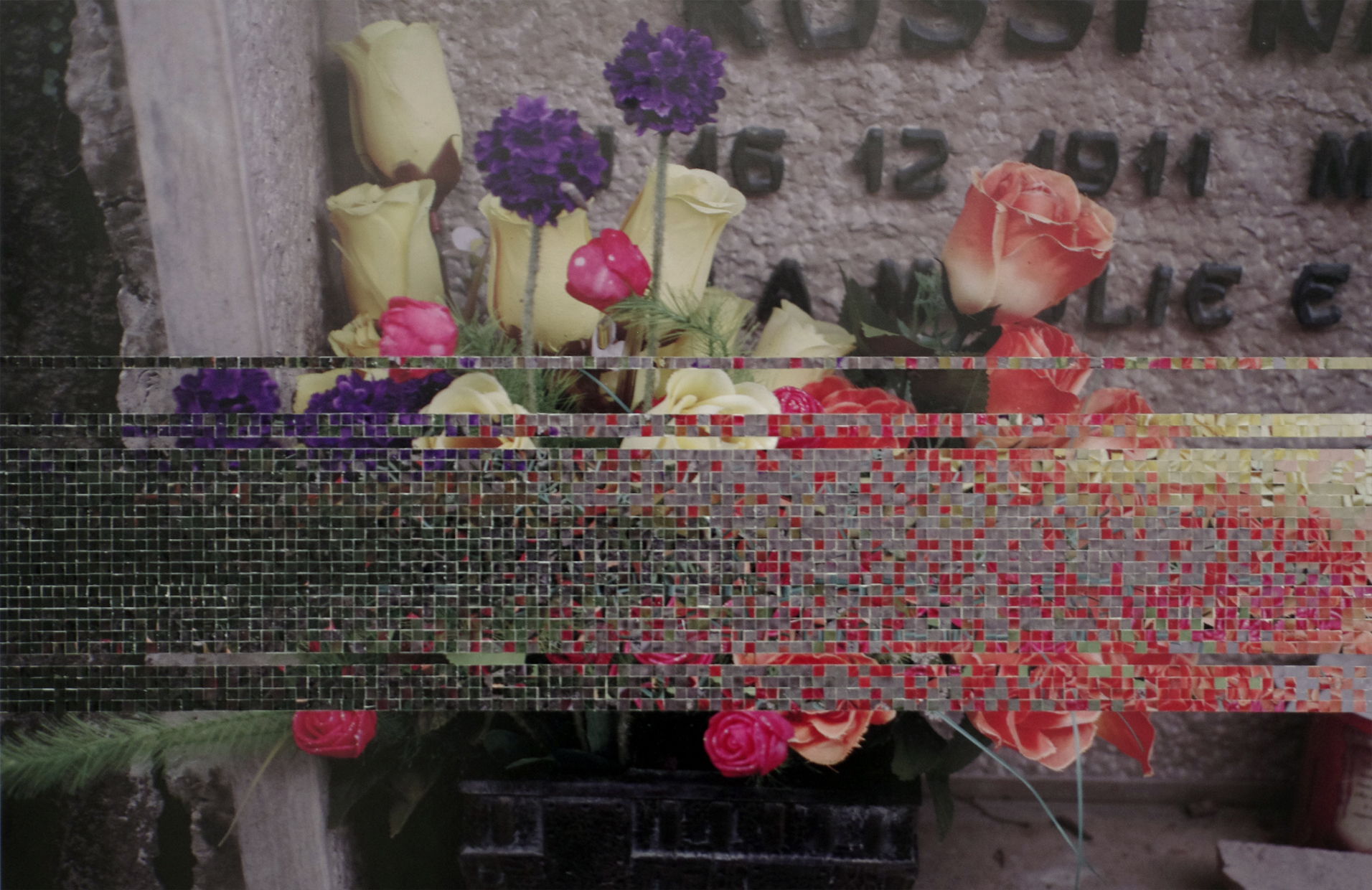
In the series of post-digital photo-based collages entitled, Origins, I have used a knife and a ruler to dissect the information within the image. The hand-generated pixels are reorganized in accordance to a new logic structure resulting in an abstraction of the original image. Much like a histogram, the colour information is reinterpreted and presented in alternative configurations that allow for multiple readings.
John Skinner, UK
Mary Skinner, UK
Seiko Tachibana, Japan/USA
Nina Thibo, Holland
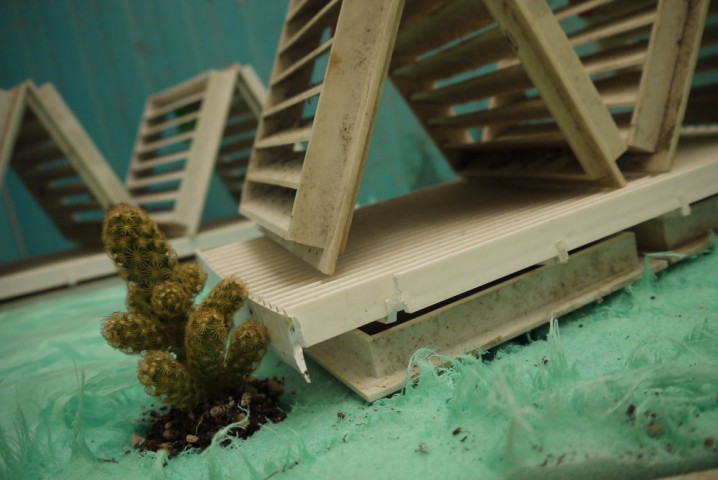
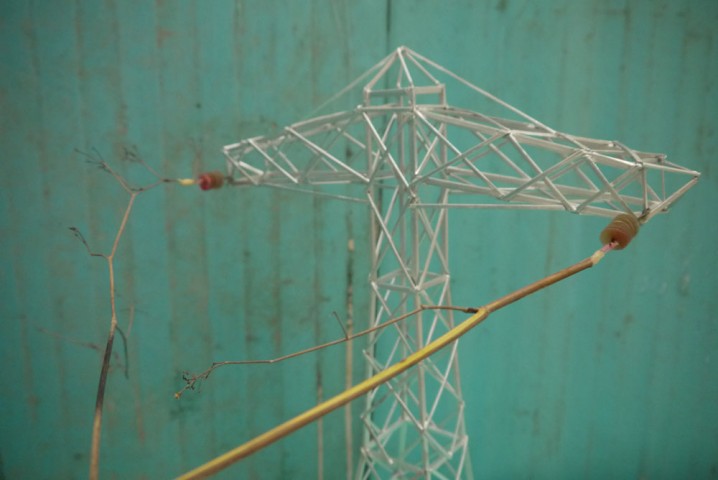
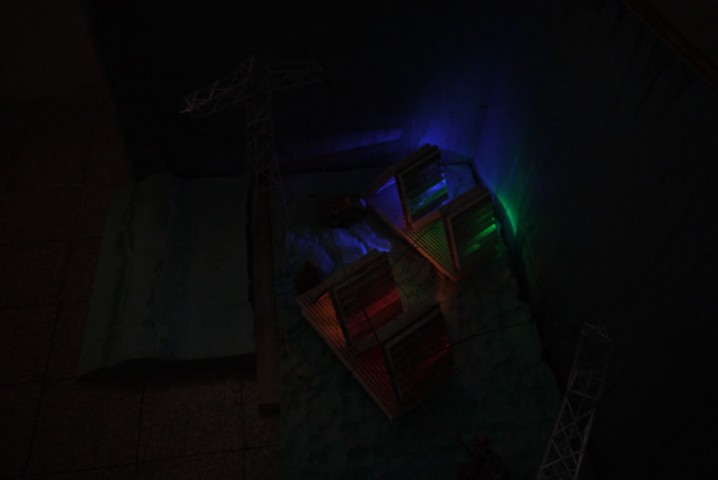
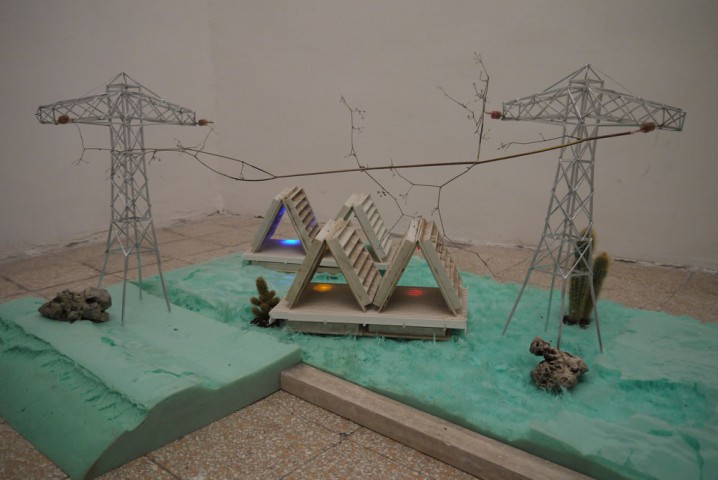
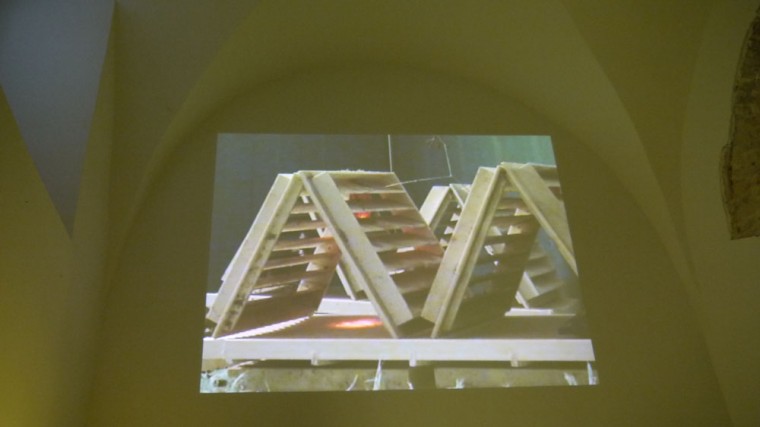
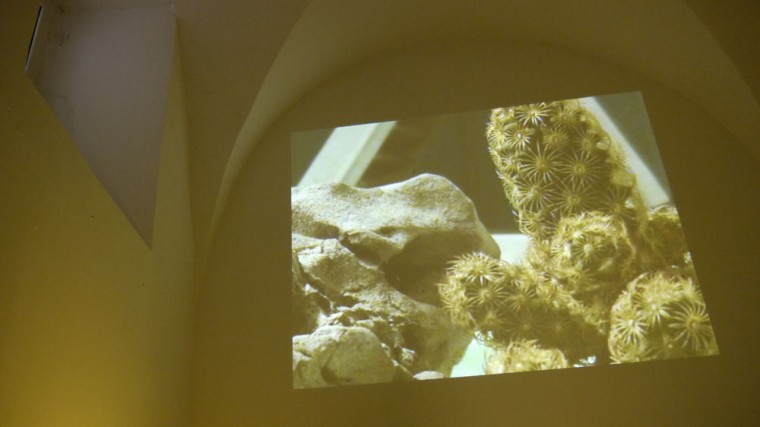
In this futuristic landscape, a possible (architectural) scenario for the future is represented. The power pylons are now transporting energy through plants. The commodified shelter/barracks are meant to take refuge in. Barracks were originally a temporary shelter or hut, but are nowadays more specilized buildings for permanent military accomodation, the word may apply to separate housing blocks or to complete complexes. Their main object is to separate soldiers from the civilian population and reinforce discipline, training and esprit de corps. The shelters pictured in the installation, have become commodities for civilians who have become refugees.

Serry Park, South Korea
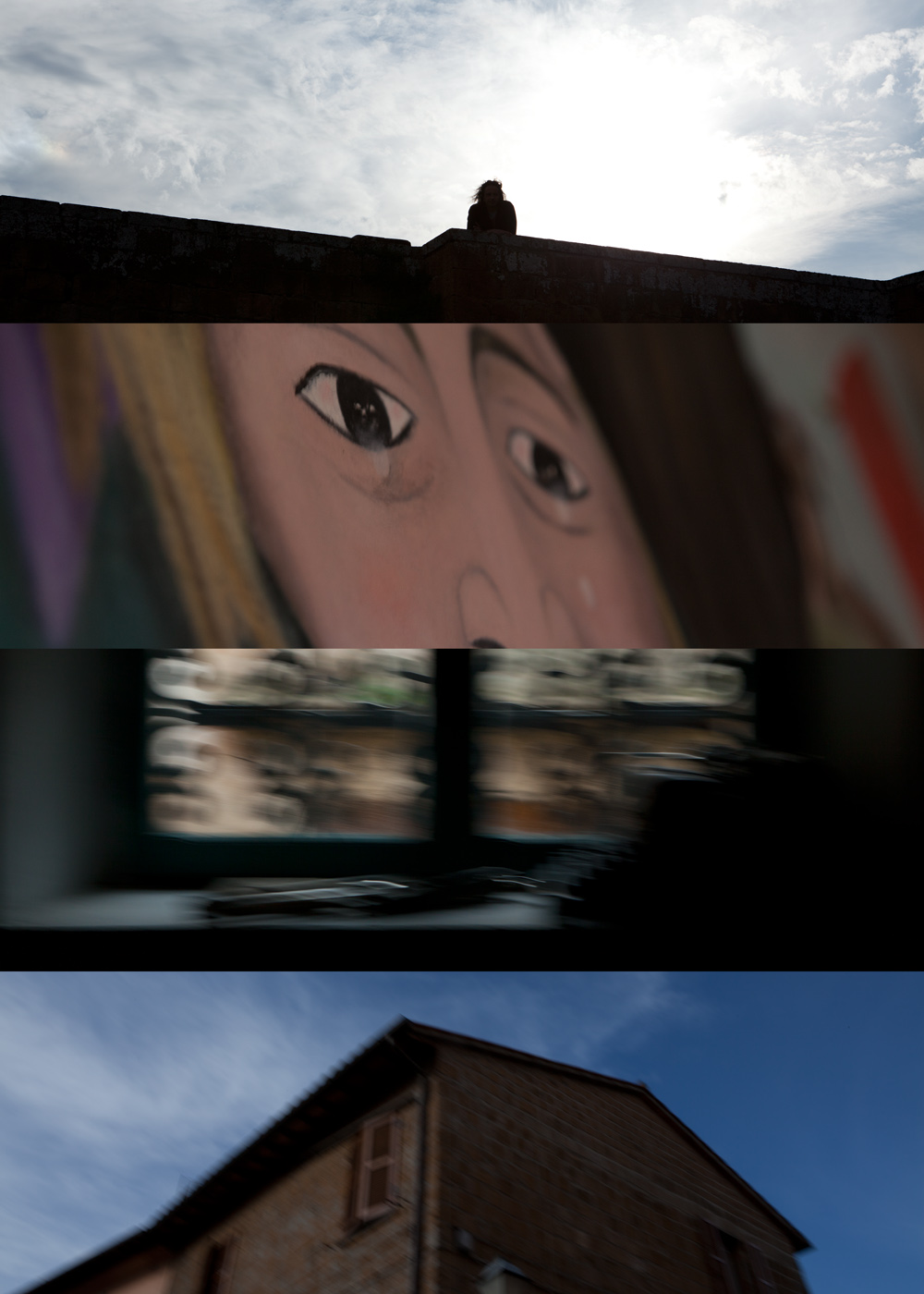
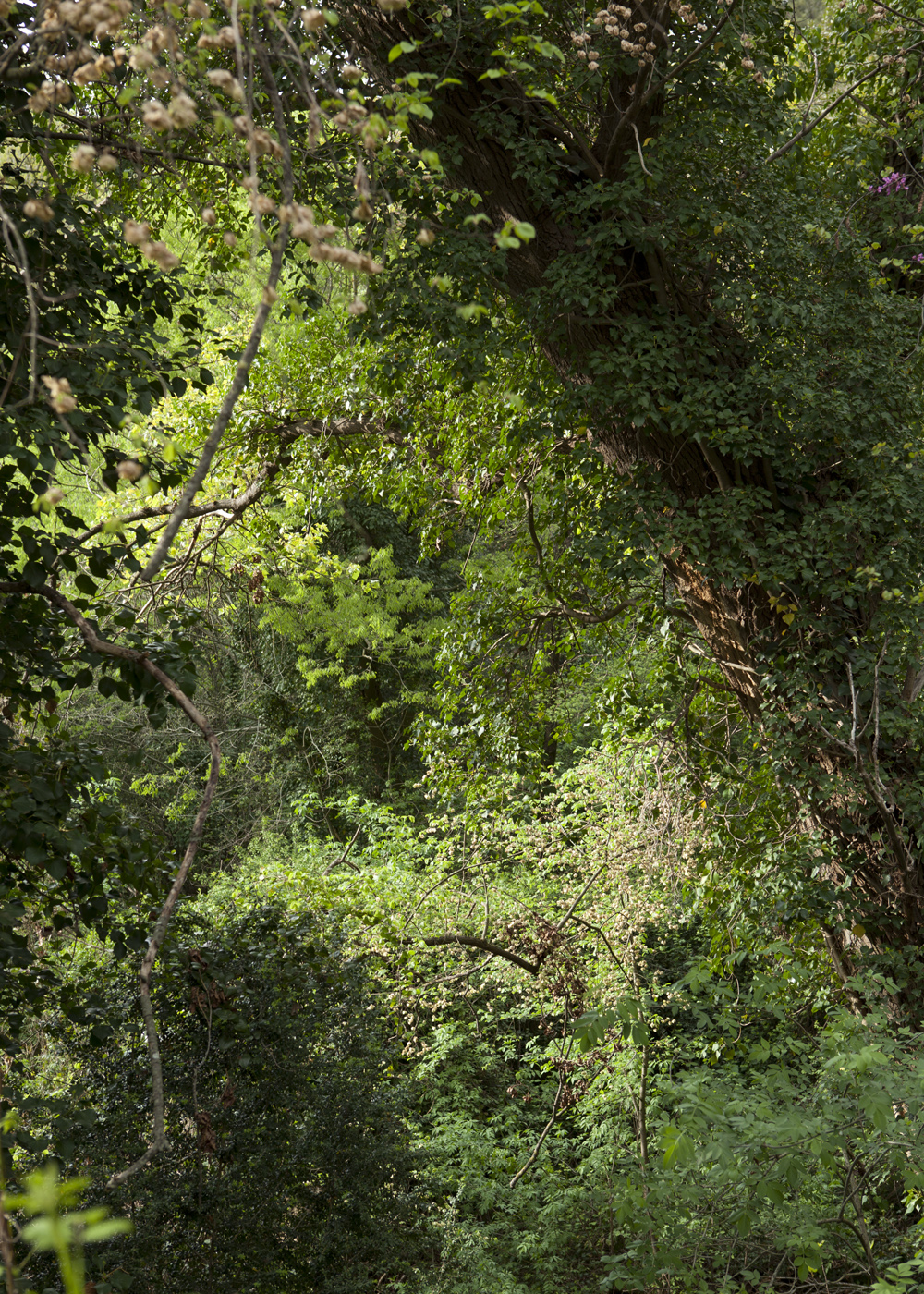
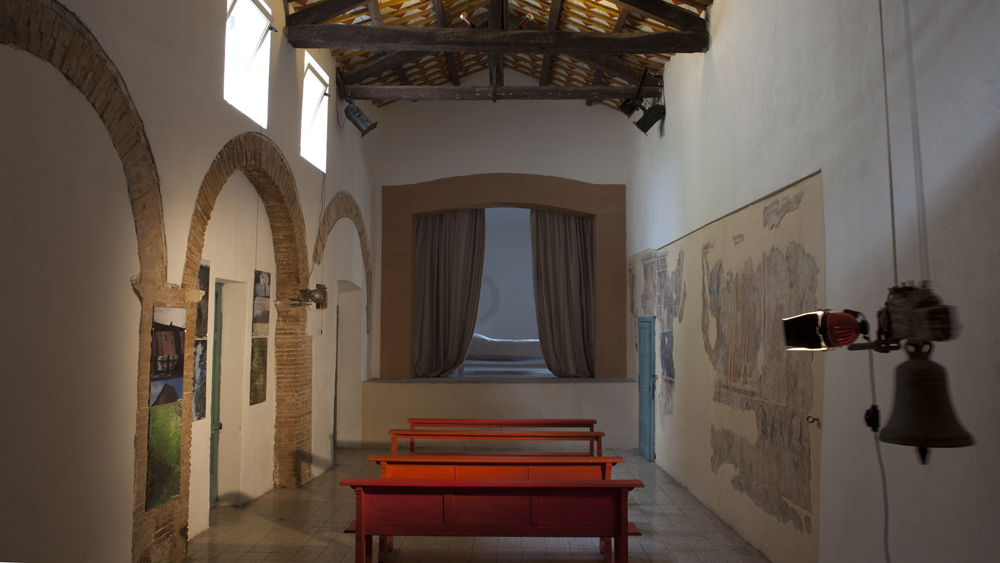
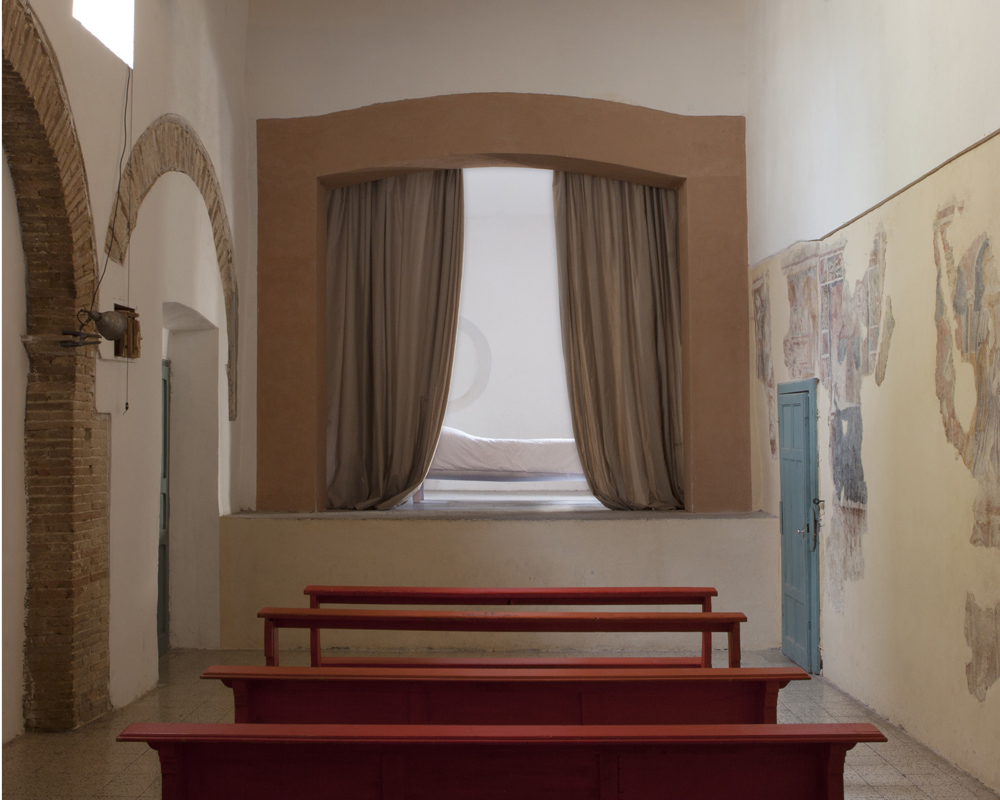
We see a lot in our dreams. And I am very fascinated to my dream because the scenes I have in dreams is random, unpredictable, but at the same time, honest. The imaginary journey of my dreams is able to become visible in Toffia where has a lot of historical and aesthetic values.

Xia Gao, Cina
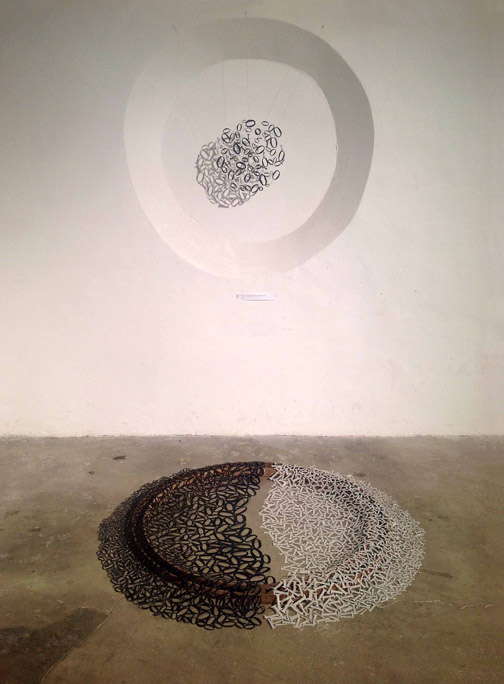
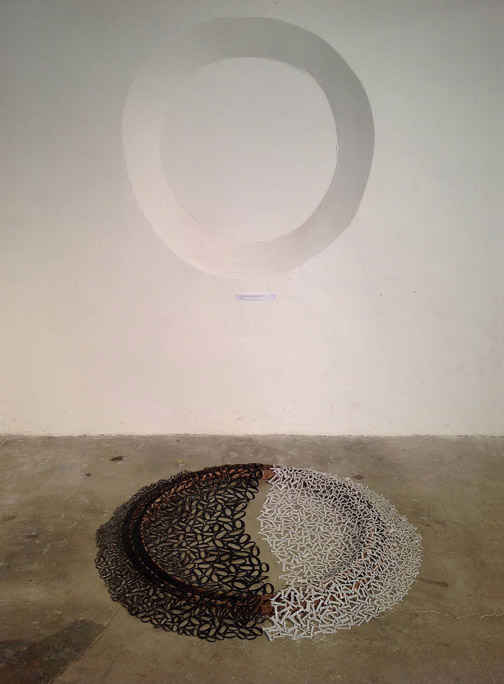
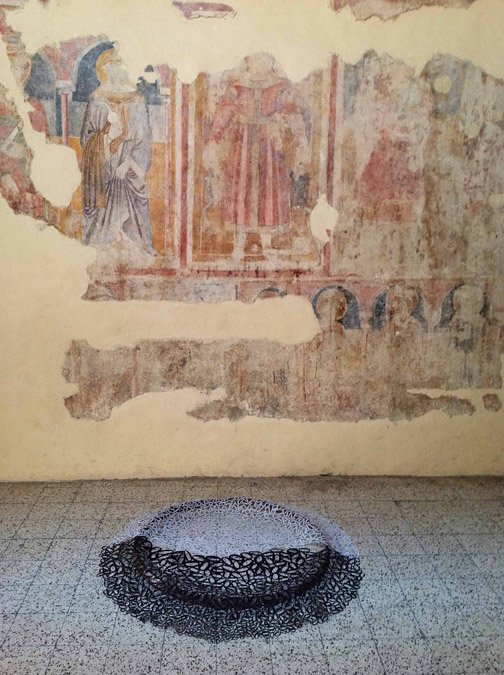
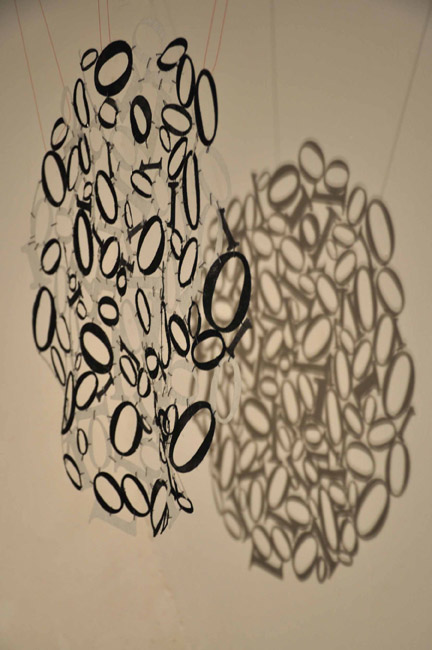
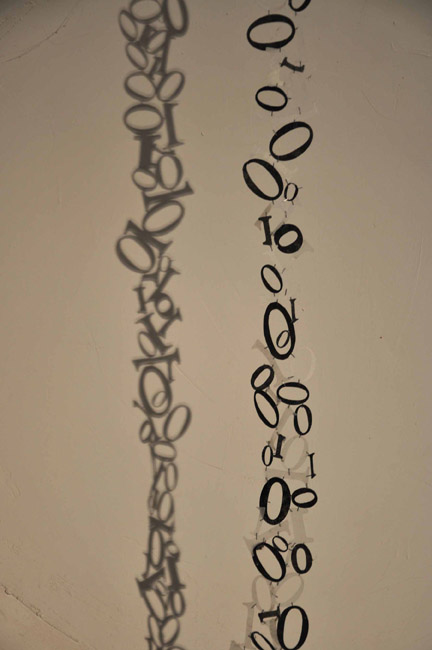
Binary world is my overdue reflection on gender role confusion when I had my career development override my family interest. It expresses the tension and collaboration, division and integration between genders. It was developed at my 33officinacreativa residency in Toffia, Italy, a site related piece.

2011
Christina Thwaites, UK
2010
Diana Martin
Alán Carrasco, ES
2009
Nicholas Lalau, BE
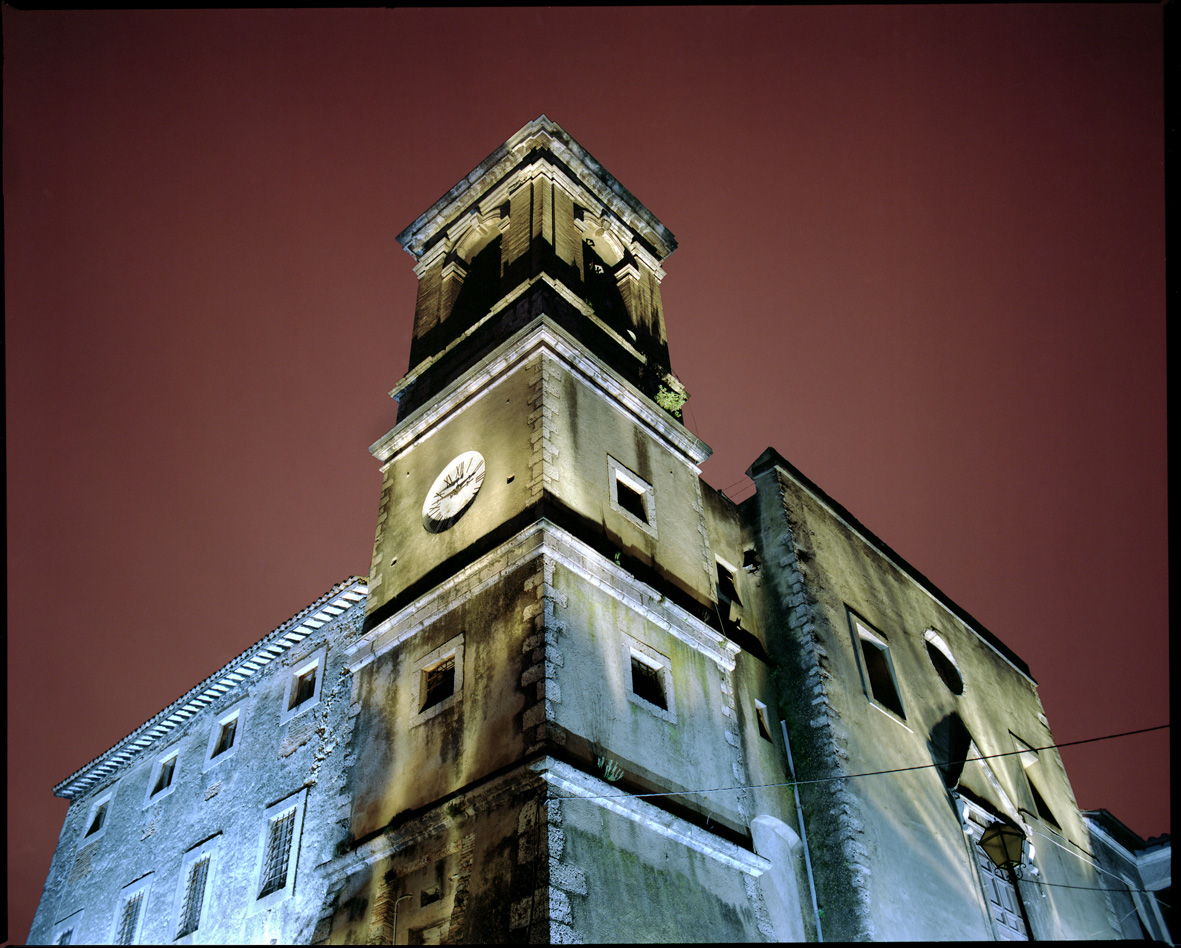
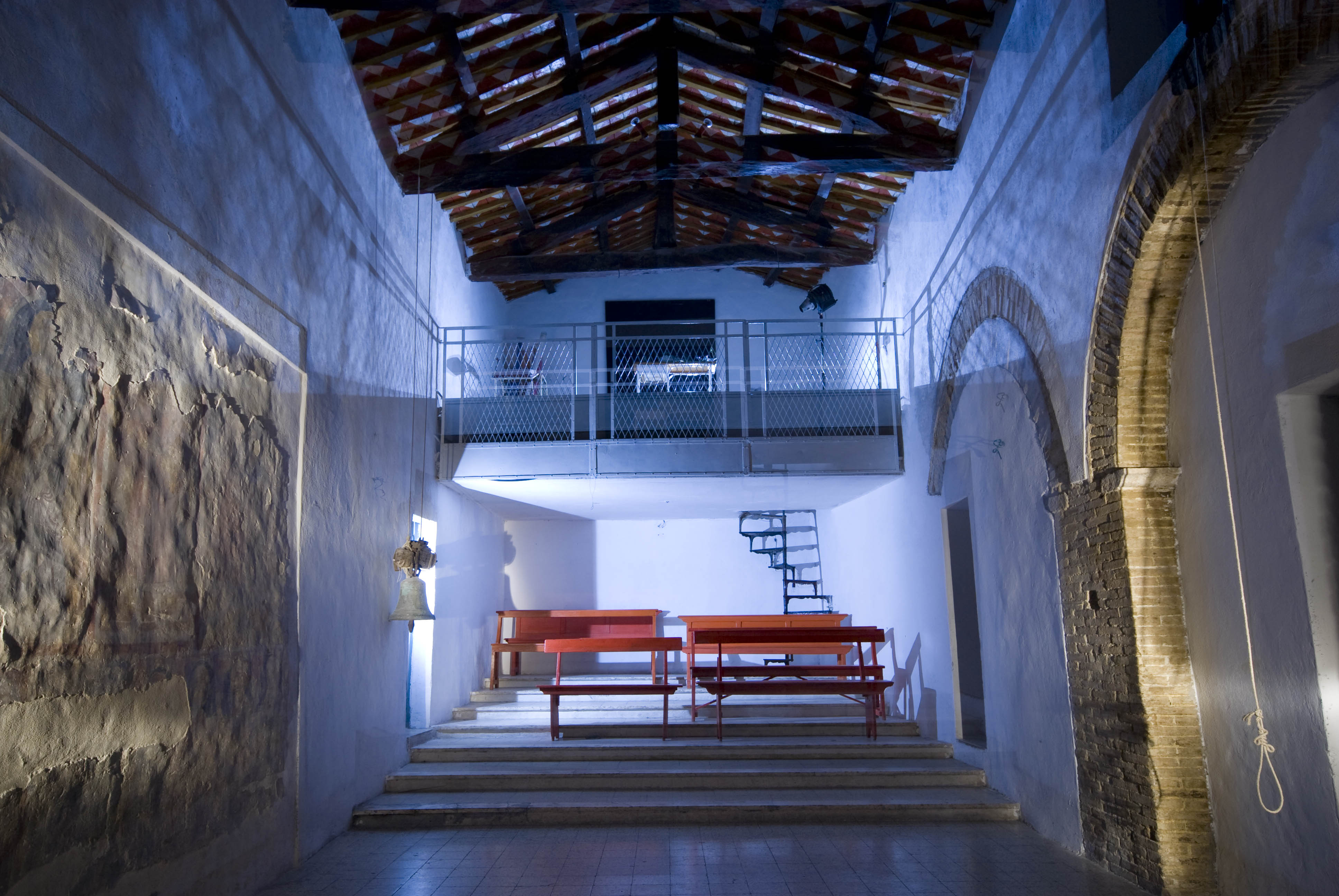
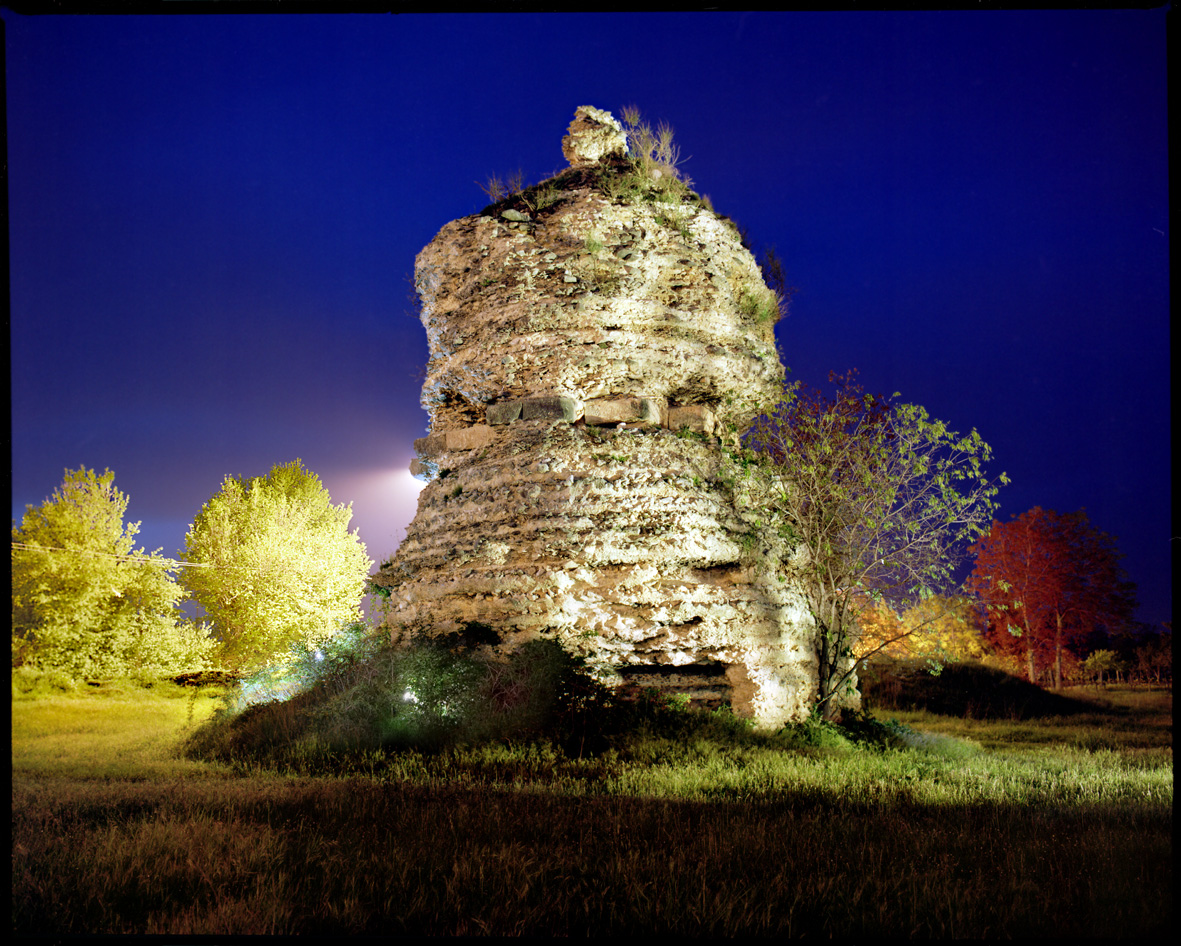
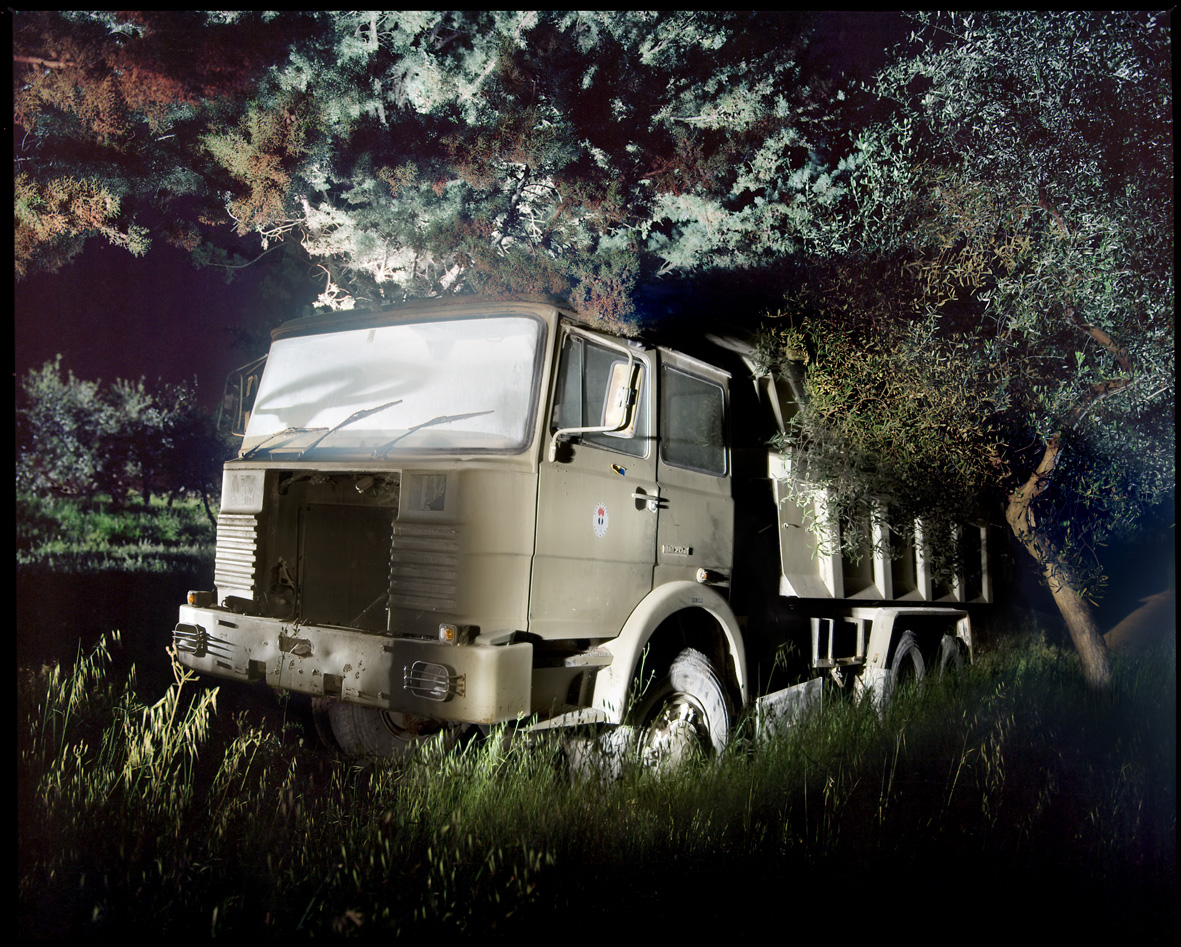
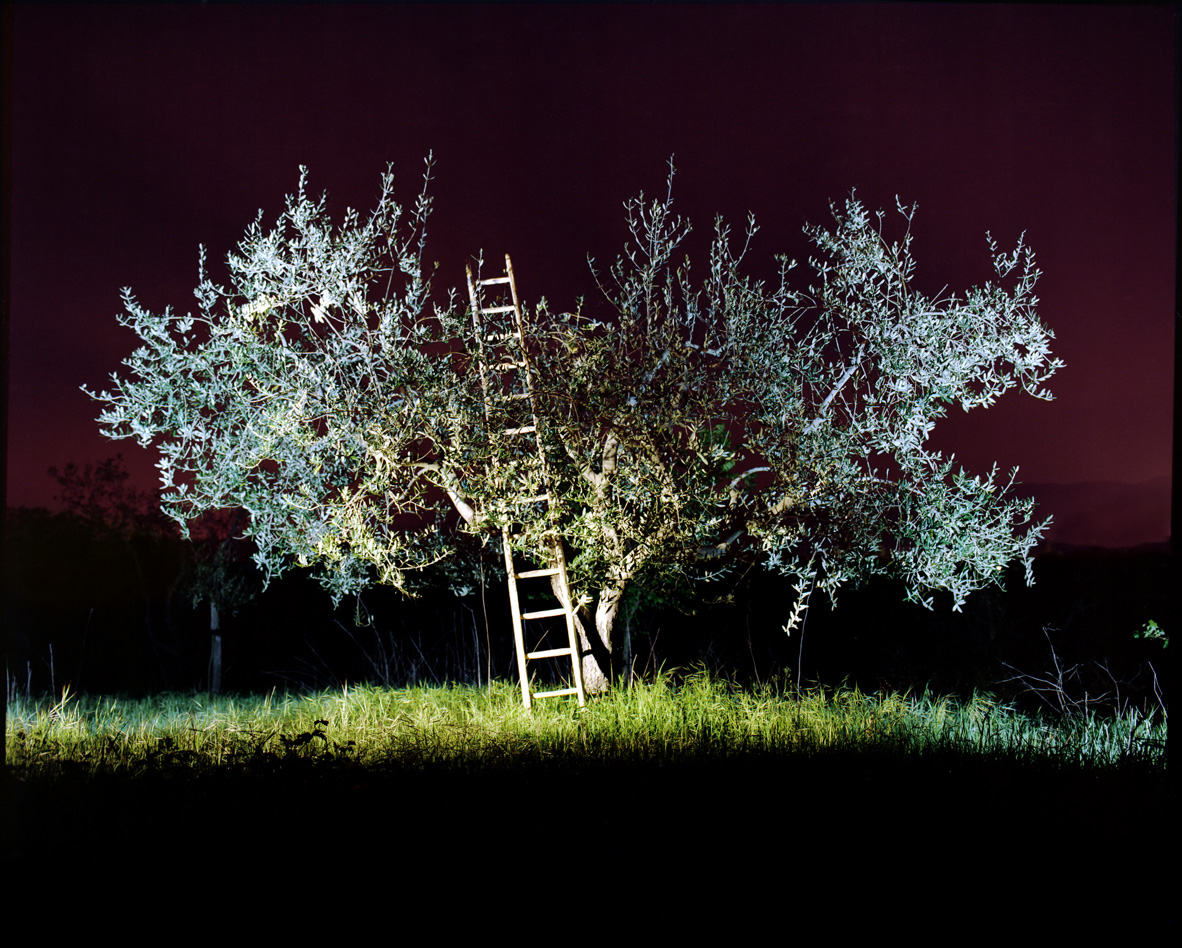
A twilight performance that enabled local residents to discover the darker side of places they know only too well. It is an itinerant work – having already passed through various towns in Germany and Poland. Invented by Lalau himself the photographic method revolves around a particular way of lighting a subject at night and a lengthy period of exposure. Local people were asked to get involved in taking the photograph itself which means it is no longer an instant or spontaneous art.
Sarah De Wilde/Stephanie Jannsens/Sanja Tomic, BE
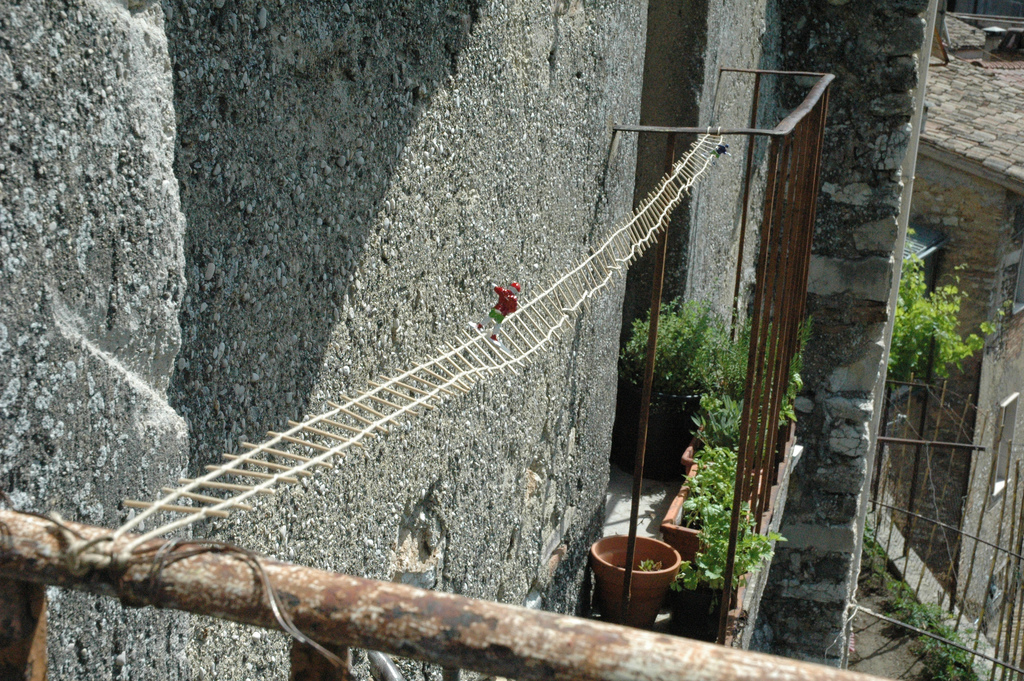
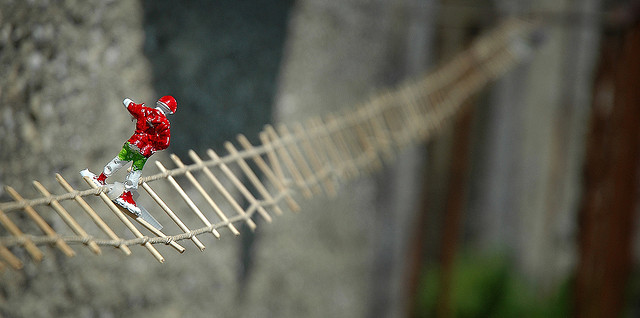
How to Build a Bridge? is a collaborative performance that centers on the exchange of knowledge and an exploration of the conditions needed to open up a meaningful dialogue – the thousands f ways to bridge what is real and what is pure fantasy, to build one between one country and another, or between two very different people. These are all ways that can bring us closer together in a spirit of greater understanding and hospitality. The trio lived together in a tent in Toffia, their round-the clock improvisation creating a piece of living art.
2008
Jeffery Lee Thau Yin, CN
Andrew Pok Chong Boon, CN
Tan Poh Mui, CN
Seah Yark Beow, CN
Sai Hua Kuan, CN
Wang Ruobing, CN
Wong CH Yvonne, CN
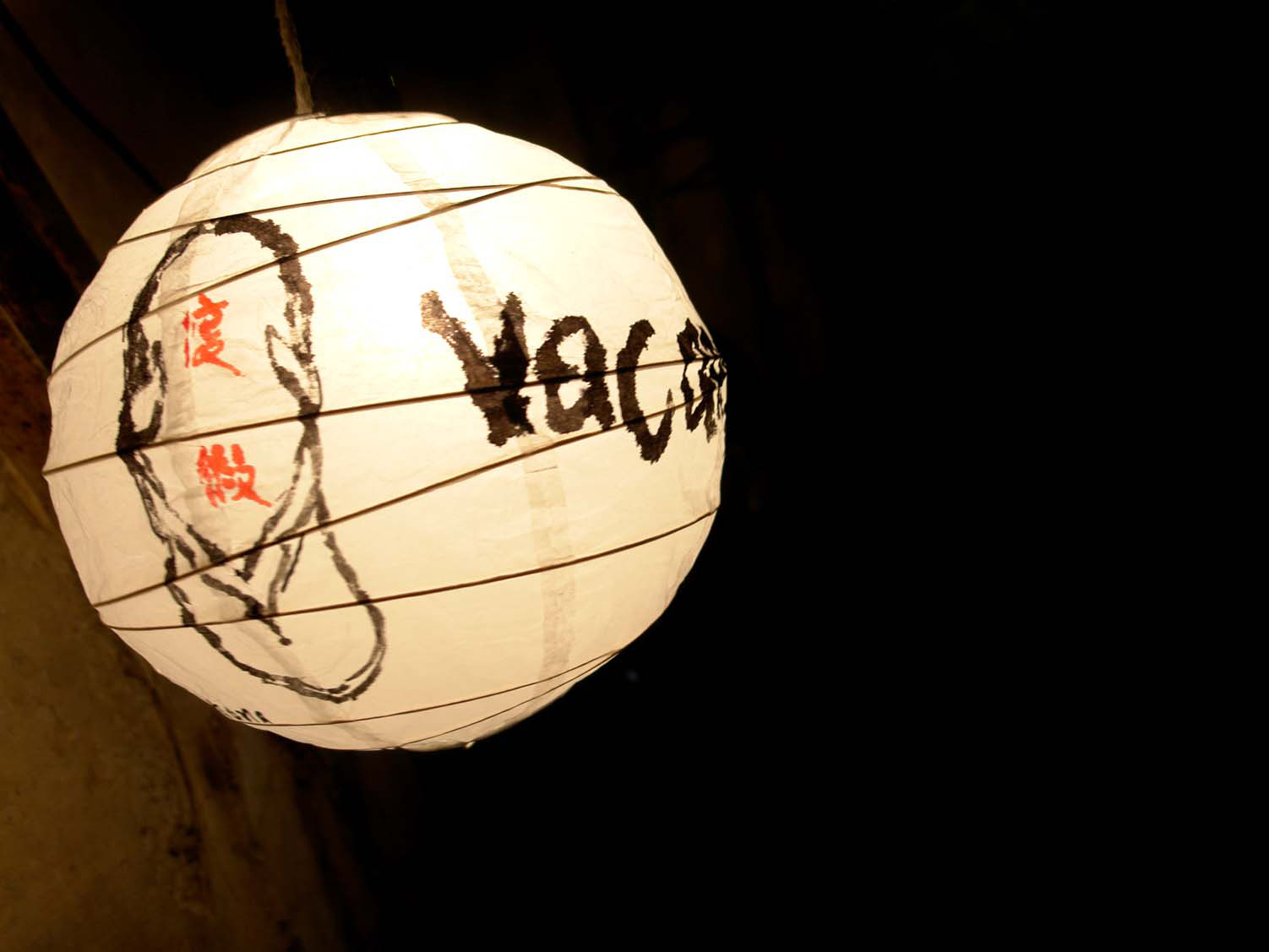
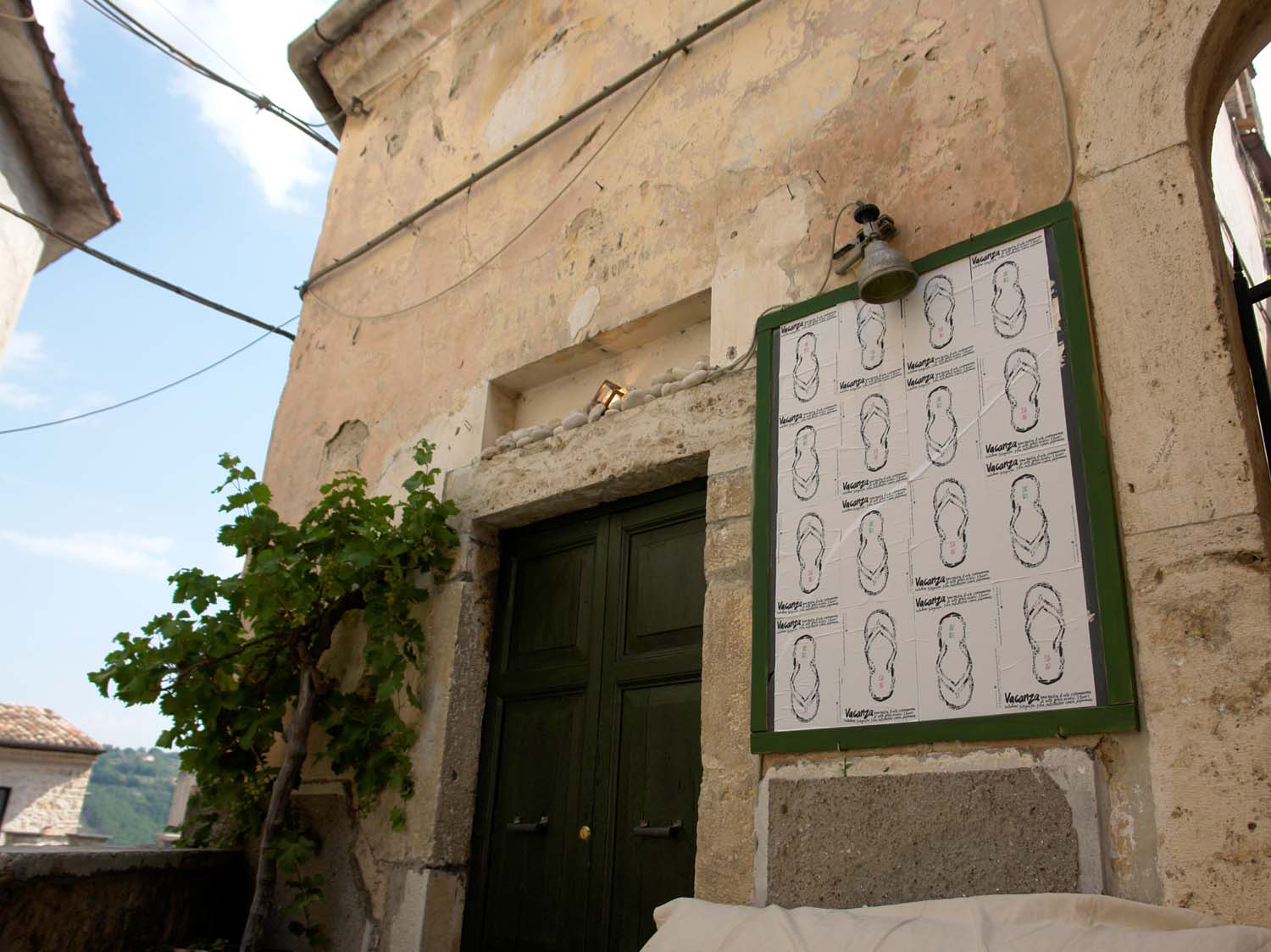
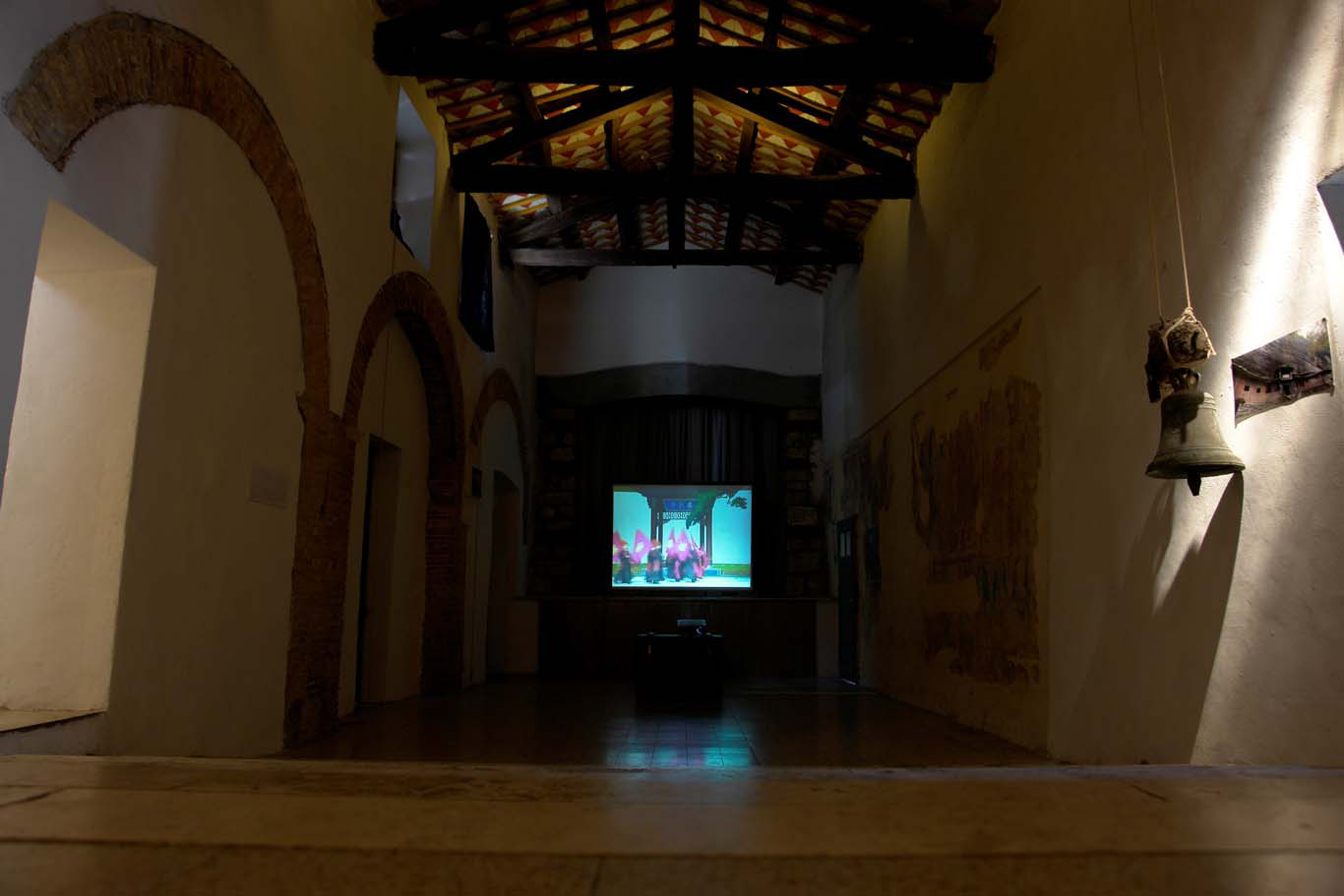
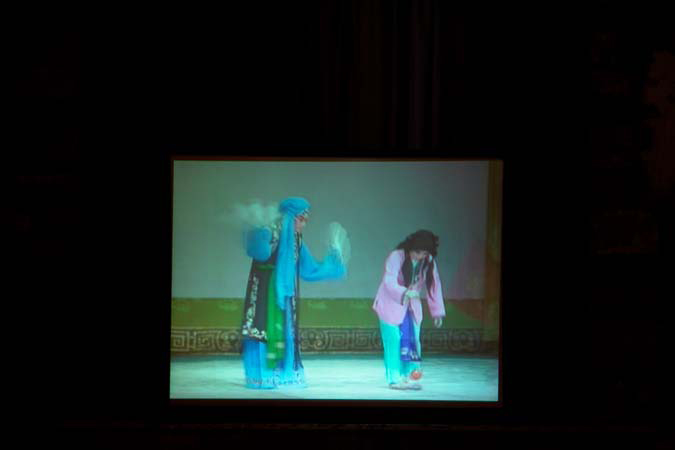
“Holiday”, by artists from the Chinese Diaspora is, indeed, an experimental and controversial attempt in fusing two rich and enduring civilizations of Chinese and Medieval European culture. Art by Chinese artists has gathered great momentum in recent years, appearing throughout the international art scene since the 1990s, most frequently in the sophisticated big cities such as Roma, Berlin, London and New York. In this sense, an exhibition of Chinese artists in the remote medieval village of Toffia is worthy of exploration.
Participating Chinese artists Seah Yark Beow, Tan Poh Mui, Andrew Pok Chong Boon and Lee Thau Yin Jeffrey are originally from Malaysia, Sai Hua Kuan is from Singapore, and Wang Roubing is from China. Today, they are all anchored and receiving their education in the UK. The exhibition “Holiday”, therefore, brings with it a multinational, multicultural and yet globalized context to Toffia’s residents.




2007
Taro Furukata, JP
Fiete Stolte, DE

 33OC
33OC 